The rooms that feel most alive are rarely from one era. To mix vintage and modern decor well, give the room a calm contemporary base, choose a few old pieces with real character, and tie everything together with a shared color, material or proportion. Keep the old pieces spread through the room, light them with care, and let one piece lead.
This guide walks through that method step by step. It covers ratios, scale, color, lighting, sourcing and preservation, with the mistakes that most often make a mixed room feel confused instead of curated.
TL;DR
- Start with a quiet, neutral backdrop and modern base pieces, then add vintage in the accessories, lighting, art and one or two statement furniture pieces.
- Ratios such as 80/20 are starting points, not laws. Many designers want vintage to read as deliberate, so one lone antique rarely works.
- Match scale and proportion first, style second. A common thread such as color, finish or shape does the rest.
- Spread old pieces around the room instead of grouping them, and light them gently: fragile textiles and prints need far less light than wood or metal.
- Ask for a condition report and underside photos before buying vintage furniture online.
Table of Contents
- Why the mix works
- Start with the backdrop, not the furniture
- Ratios: what 80/20 does and does not tell you
- Match scale before you match style
- Find a common thread
- Use contrast on purpose
- Where each type of piece belongs
- Do not cluster: dot old pieces around the room
- Limit the number of styles
- Light the mix, and protect it
- Buying vintage without regrets
- Room by room: where to begin
- Our perspective
- Find pieces that bridge the eras
- Common mistakes to avoid
- FAQ
- Sources
Why the mix works
A room furnished entirely from one catalog can look polished and still feel oddly blank. A room furnished entirely with antiques can feel like a museum. The mix solves both problems.
Designer Michael Tomei describes the aim as a captivating narrative built from pieces of different periods. That era-agnostic approach makes a home look collected and helps it outlast trends. Another designer interviewed by Dowsing & Reynolds says she wants to walk into a room and feel hugged and immediately at ease, while her eyes still find something varied to enjoy.
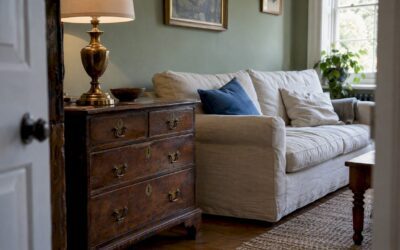
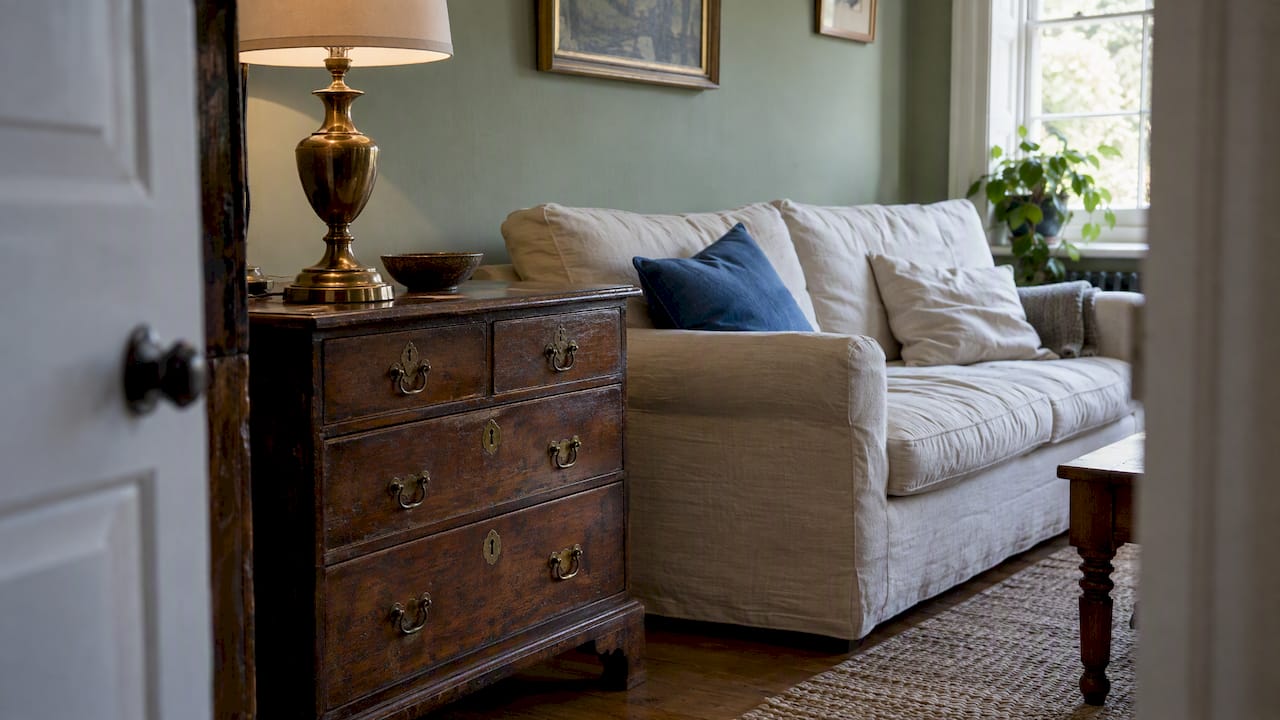
That second part is what we call visual rest. When textures, shapes and patinas change from object to object, the eye travels around the room instead of snagging on one period theme. A worn brass lamp beside a crisp linen sofa does this quietly. Nothing shouts, yet everything is slightly different.
A word on terms. “Vintage” loosely means decades old, “antique” usually means a century or more, and “modern” or “contemporary” covers new pieces with clean lines. You do not need to be strict. The principles below hold whether your old piece is a 1970s rattan chair or a Georgian chest.
Start with the backdrop, not the furniture
Before you place a single piece, look at the shell of the room. Designers quoted by Good Housekeeping suggest a clean, neutral background, sometimes called a monastic backdrop, so mixed-era pieces can breathe and clutter does not build up. Warm whites, soft greiges, pale plaster tones and muted greens all do this job.
If you are choosing paint at the same time, our guide to living room color palettes designers love shows how a restrained palette lets a single antique glow.
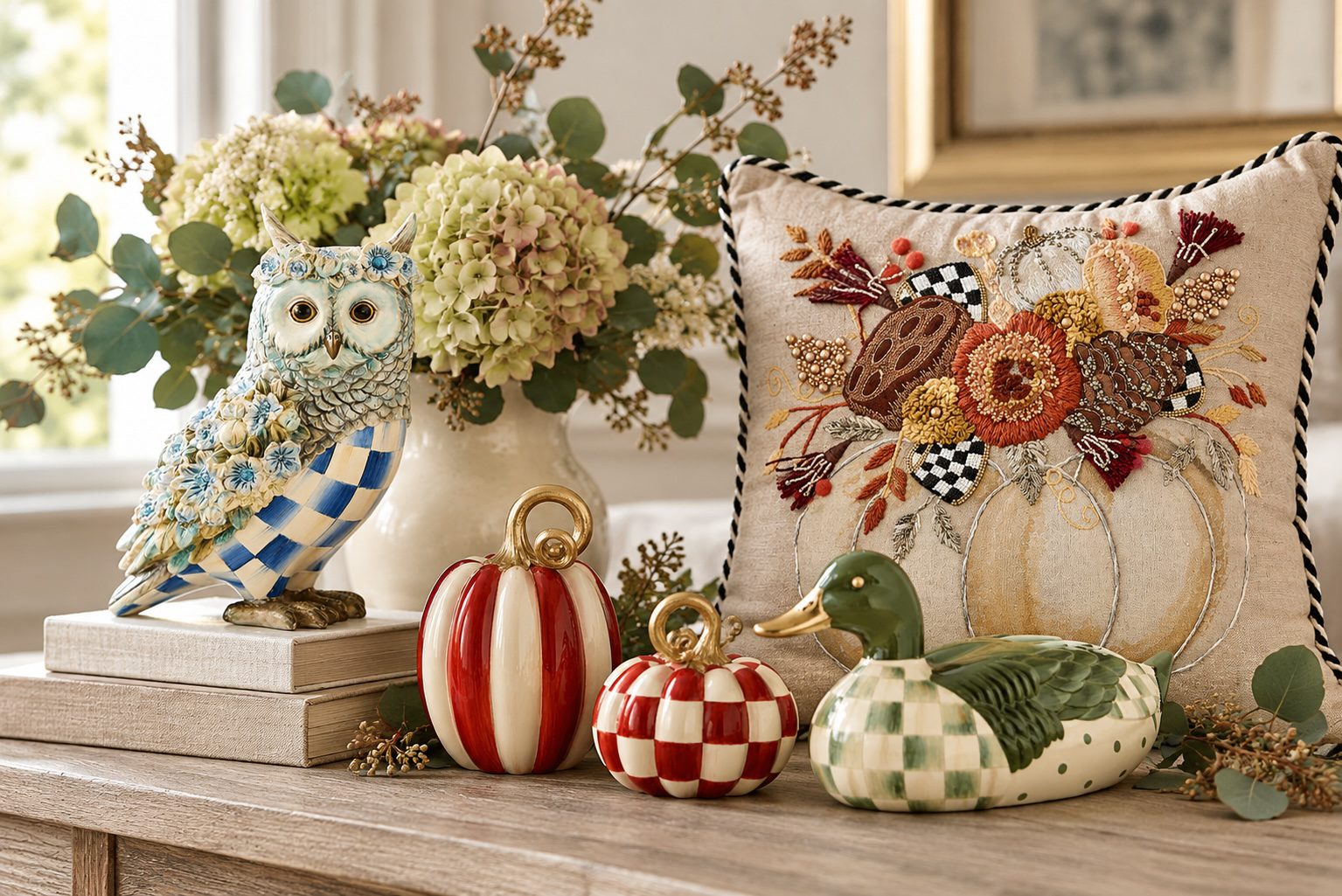
The same logic applies in miniature. A calm, natural surface lets a handcrafted object read as the hero. A neutral holiday scheme, for instance, can be lifted by one handmade hardwood decoration with visible knots and grain. One textured, imperfect piece against a quiet background is the whole principle at small scale.
Ratios: what 80/20 does and does not tell you
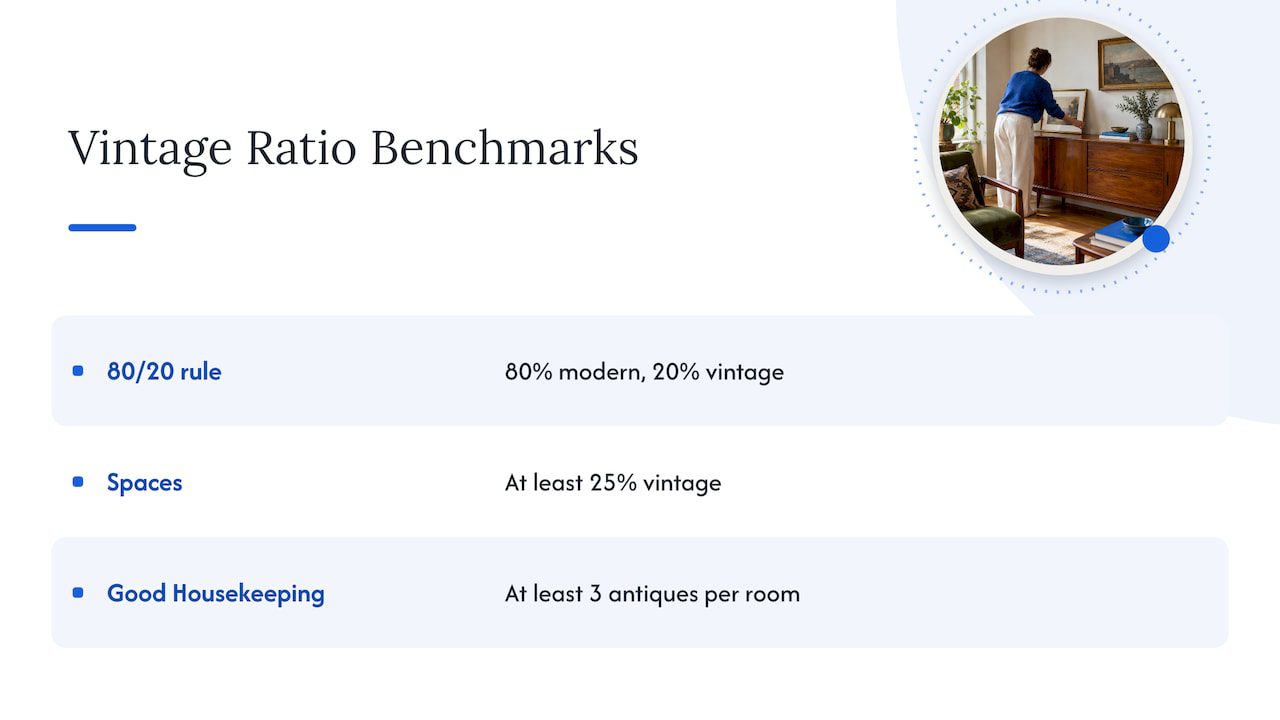
Search this topic and you will meet the 80/20 rule: roughly 80 percent modern, 20 percent vintage. It is a sensible default if you do not collect antiques, and it matches the habit of many designers who keep modern pieces as the base and lean on vintage for accessories, lighting and art.
But designers do not agree on the number. The Spaces suggests vintage pieces should make up at least 25 percent of a room to feel purposeful instead of incidental. Good Housekeeping’s experts go further and recommend at least three significant antique pieces per room, so the vintage element looks intentional.
So treat the ratio as a question about intent. Ask: would a visitor assume the old piece was chosen, or that it was left over? One antique in a room of new furniture can look like an accident. Three, spread out and echoing each other in color or material, look like a point of view.
A quick way to count
Walk the room and list the major items: seating, tables, storage, lighting, rugs, art, accessories. Mark each as old or new. If nothing in the vintage column is large enough to be noticed from the doorway, add one anchor, such as a sideboard, a lounge chair or a big mirror.
Match scale before you match style
This is the rule that rescues most rooms. Dowsing & Reynolds advises balancing pieces by scale and proportion rather than by style alone: a large modern sofa wants a coffee table of proportionate weight, even if the table is antique, so neither piece overwhelms the other.
When proportions agree, styles can differ dramatically. When they disagree, even matching styles look wrong. Check three things:
- Height. Seat heights, table heights and the top of a sideboard should relate to one another. Vintage seating is often lower than current sofas.
- Visual weight. A chunky carved chest needs a counterweight, perhaps a substantial modern lamp, not a spindly one.
- Footprint. Older pieces are often smaller. Group a small antique table with a larger rug and art to give it presence.
The same designers note that materials do not need to match, but pieces should share a sense of tone or purpose.
Find a common thread
Designer Tadler is quoted in a guide on mixing modern and antique furniture: the best way to mix eras is to find a common thread, such as a color, a pattern or a theme. That is easy to apply. Pick one thread and repeat it three times across old and new.
| Thread | Vintage example | Modern example |
|---|---|---|
| Color | Faded indigo kilim rug | Navy ceramic lamp base |
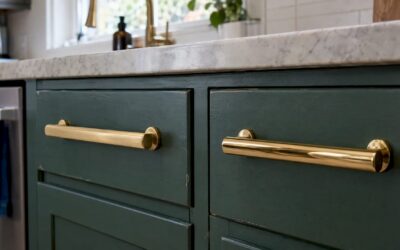
| Material | Patinated brass candlesticks | Brushed brass picture light |
| Shape | Rounded mid-century armchair | Curved boucle sofa |
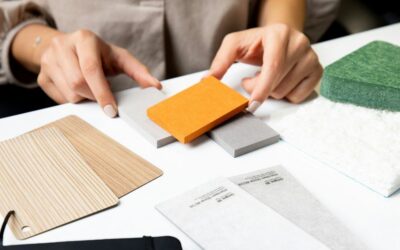
| Texture | Worn leather club chair | Chunky wool throw |
Texture is the most forgiving thread of all. If you want to see how it carries a room, read our piece on turning modern interiors into a warm retreat with texture.
Metal finishes need a little care, because tones that are almost the same look like an error. If you are unsure whether two nickel finishes belong together, our explainer on brushed nickel versus satin nickel helps.
Use contrast on purpose
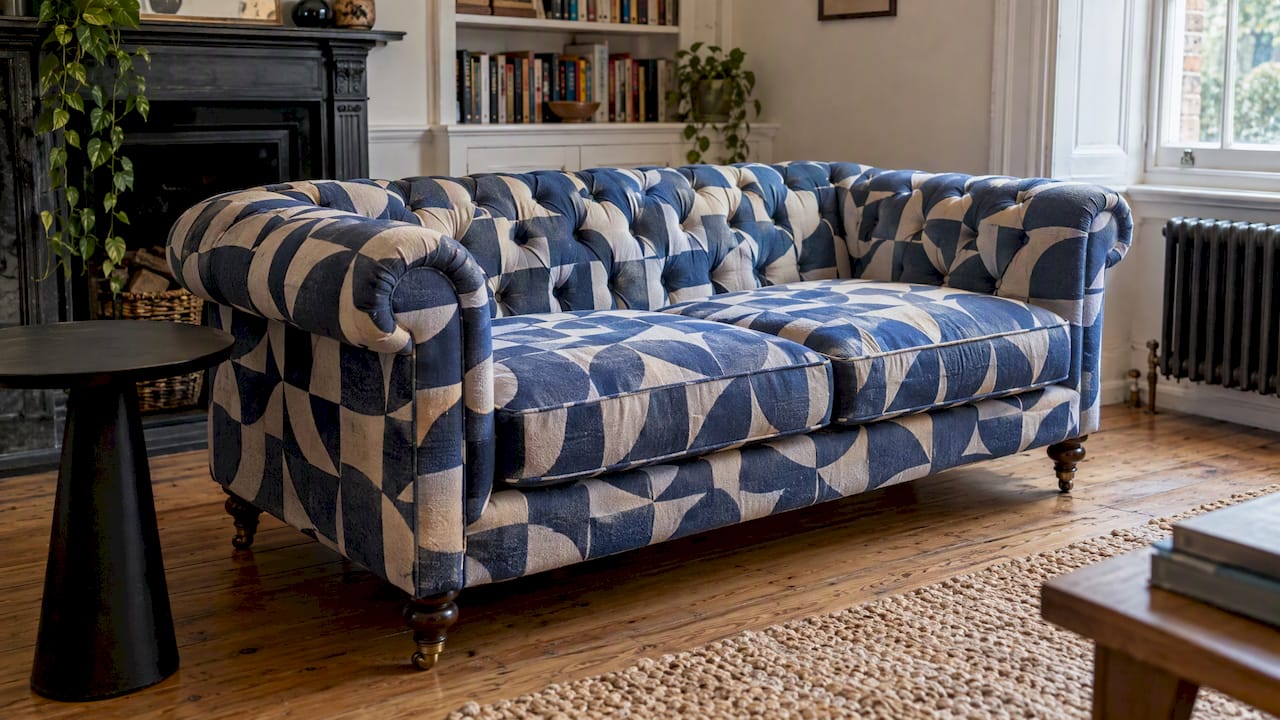
Blending is not always about harmony. Courtney Batten of Paige Studio argues that mixing old and new is not about compromise but about balance, using contrast deliberately. Her example is an ornate Victorian Chesterfield paired with an unexpected contemporary fabric pattern.
The lesson: when you contrast, commit. A tentative half-step looks like a mistake. A traditional silhouette in a bold modern upholstery looks like a decision. Reupholstering is the most efficient bridge between eras, and House & Garden’s guidance on sourcing vintage notes that modern fabrics on historic frames are worth budgeting for when you buy.
Where each type of piece belongs
Designers tend to follow a loose pattern: modern for the base, vintage for the character. That gives a practical map.
- Seating and large upholstery: modern for comfort and durability, with one vintage chair as an accent.
- Lighting: contemporary fixtures are a safe choice, and a vintage lamp or chandelier adds personality. Bunny Williams’ rules for mixing include not forgetting contemporary lighting.
- Tables and storage: the best home for antiques. A sideboard, console or chest has presence and can handle daily life.
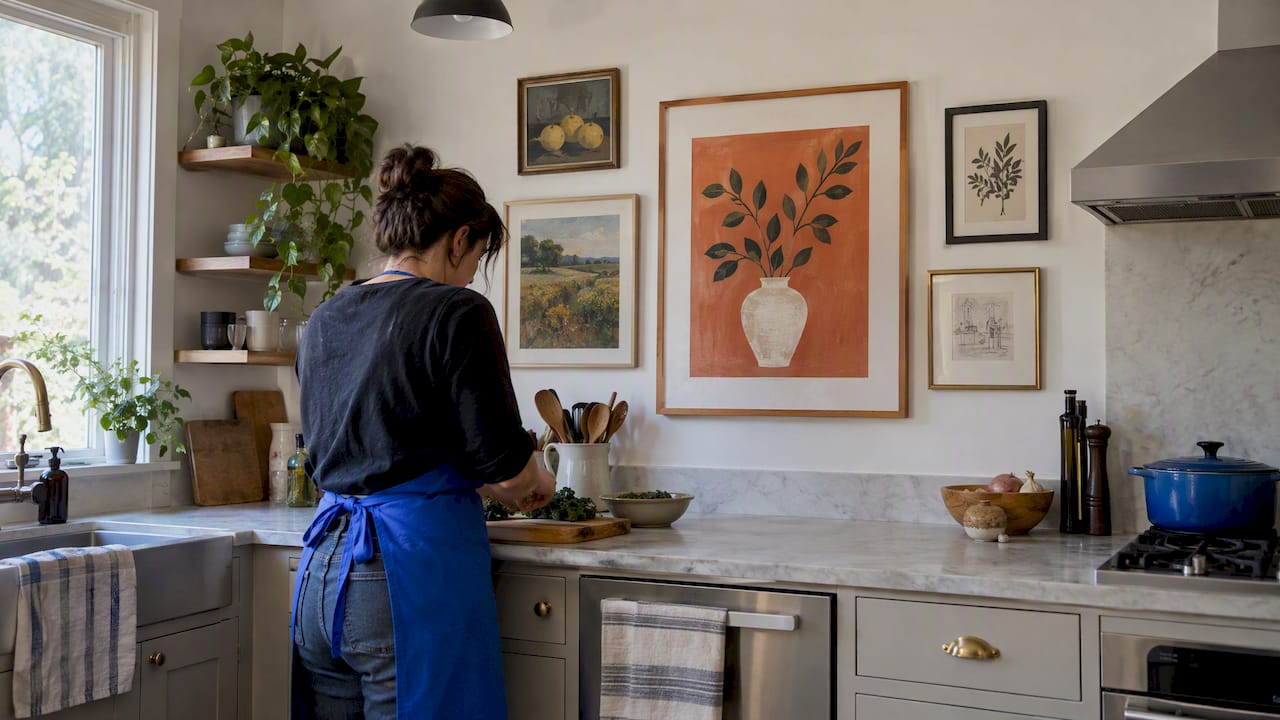
- Art: an easy place to cross eras. A contemporary painting over an antique chest, or a vintage landscape above a modern sofa, always works. For hanging ideas, see our 17 gallery wall ideas and the living room art guide.
- Tabletop and accessories: the lowest-risk zone. Mixing vintage and new glassware or ceramics in the same category looks eclectic but deliberate. The same idea runs through mixed-era dining table styling.
Do not cluster: dot old pieces around the room
The usual mistake is a corner shrine: all the antiques huddled together. The Spaces warns against it and suggests dotting antiques around the room so they feel integrated, not like a museum display.
Think of a triangle. Put one old piece near the entry, one across the room and one at eye level on a wall, with modern pieces between them. The eye then bounces from era to era, and the whole room reads as one story.
Collections are the exception. A tight group of like objects, such as a shelf of vintage pottery, can be strong when it is clearly a collection with a shared color or material.
Limit the number of styles
A mix is not a free-for-all. Good Housekeeping’s sources recommend keeping to two or three styles across the home. A room with mid-century, Georgian and contemporary elements is a mix. A room with seven periods and no repeating thread is a flea market.
If you want a fast way to make an older style fit the present, our list of 12 ways to make vintage decor feel contemporary covers paint, hardware and styling swaps. If your home has a particular decade in its bones, the 1970s house styles guide helps you work with the architecture instead of against it.
Light the mix, and protect it
Good light makes the mix glow, and the wrong light slowly ruins it. Conservation guidance from Museums Galleries Scotland says highly sensitive objects such as textiles, prints and watercolors should get no more than 50 lux, while sturdier wood, furniture and oil paintings can take up to 200 lux. Glass, metal and ceramics are less sensitive. The same document points out that no light level is entirely free of risk, so the practical goal is to reduce exposure.
At home, that translates simply:
- Keep a vintage rug, silk cushion or watercolor out of direct sun, and away from spotlights.
- Use warm, dimmable bulbs and place fixtures so they do not shine straight on delicate pieces.
- Rotate fragile textiles and prints seasonally if the room is bright.
For art in particular, our art lighting guide explains how to get gallery results without damage.
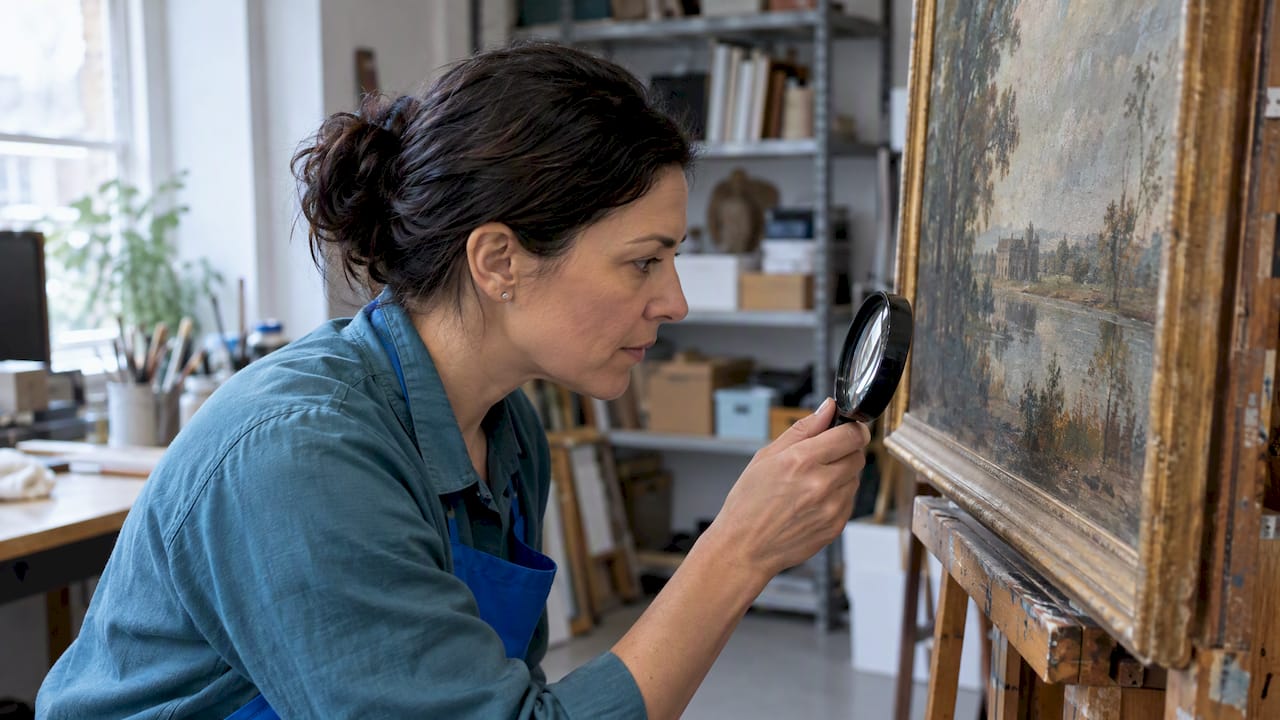
Placement matters too. The Institute of Conservation advises keeping valuable antiques away from radiators and direct sunlight, which can crack wood and fade finishes. It also suggests felt-lined glass tops or coasters for surfaces, and consulting a professional furniture conservator for a piece you are unsure about instead of restoring it yourself, because DIY work can lower its value.
Storage deserves a thought as well. If you rotate heirloom linens or seasonal textiles, storage advice for fabrics, with temperatures of 65 to 70°F is a useful reference for keeping them in good shape between uses.
Buying vintage without regrets
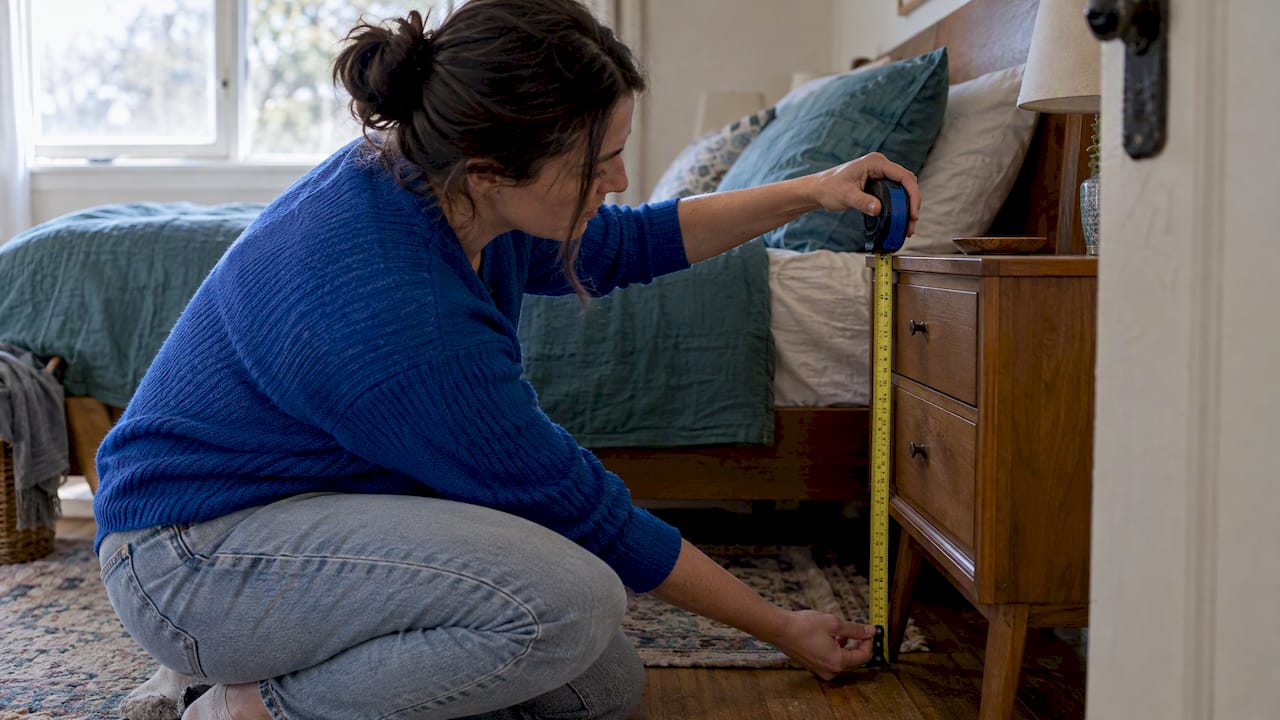
Whether you shop estate sales, dealers or online marketplaces, go in with a plan. Architectural Digest’s designers recommend arriving armed with floor plans and a measuring tape, so you avoid spending on a collectible that does not fit.
For online purchases, House & Garden’s guidance is to request a condition report and photographs of the underside of furniture, where structural weakness and past pest damage tend to hide. Add the cost of reupholstery to your budget when a frame is good but the fabric is tired.
A short checklist before you pay:
- Measure the piece and the space, including doorways and stairs.
- Ask for photos of joints, drawers, the underside and any repairs.
- Ask about finish: original, refinished or painted.
- Price reupholstery or rewiring separately.
- Confirm return terms and shipping insurance for large items.
Vintage also saves money. The same House & Garden advice calls antiques a great leveller: they soften the newness of a space, and there is comfort in owning the only lamp or table with that particular patina.
Room by room: where to begin
Living room. Keep the sofa modern, add a vintage coffee table or side chair, and hang contemporary art. Our family room styling decisions cover how to keep this livable with children and pets.
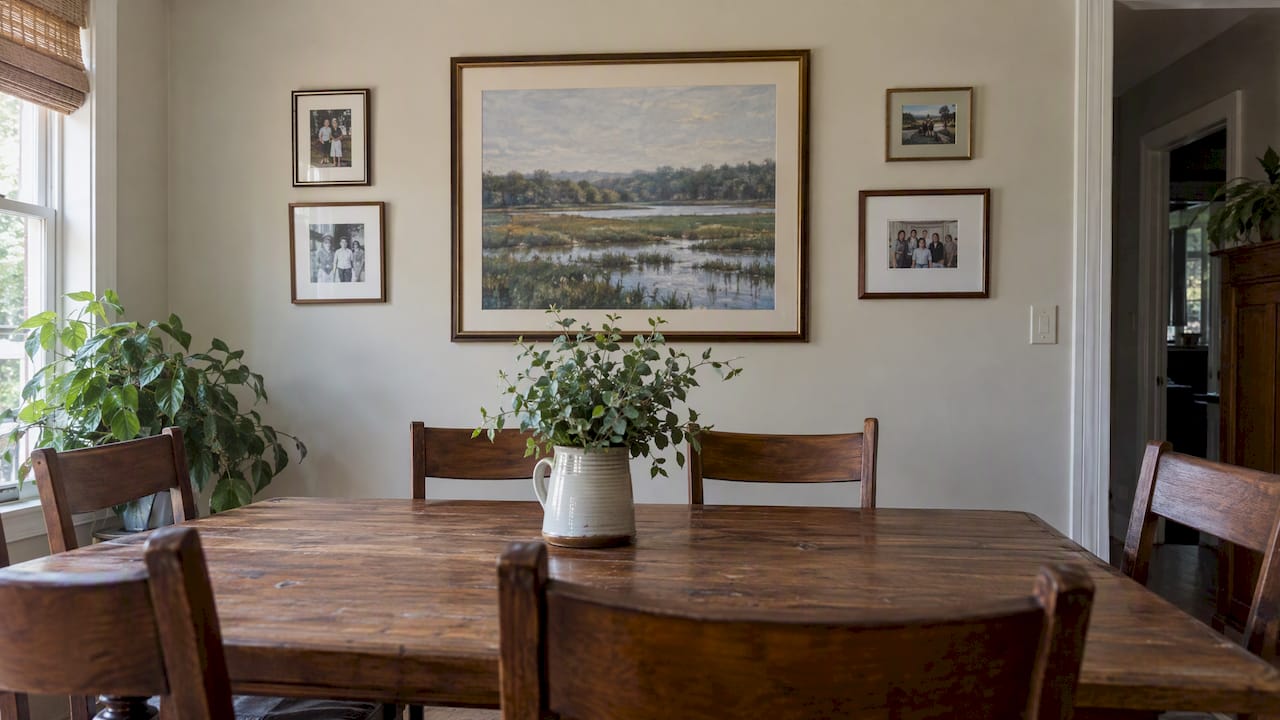
Dining room. An antique table or sideboard works with sleek modern chairs, or the reverse. Mix old and new glassware at the table.
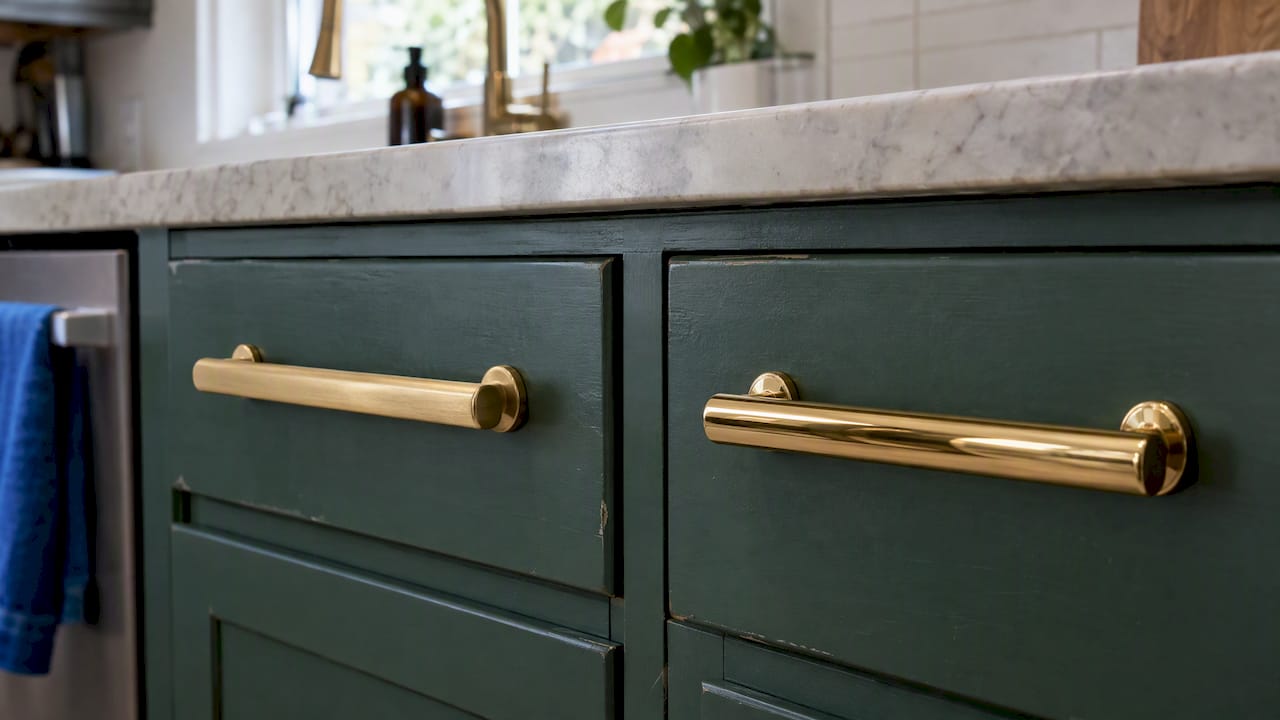
Kitchen. Vintage stools at a contemporary counter, an old runner on new floors, an antique cutting board as decor. For a bigger renovation, see our luxury kitchen design plan.
Small spaces. One strong vintage piece beats several small ones. See space-saving decor that doubles as art.
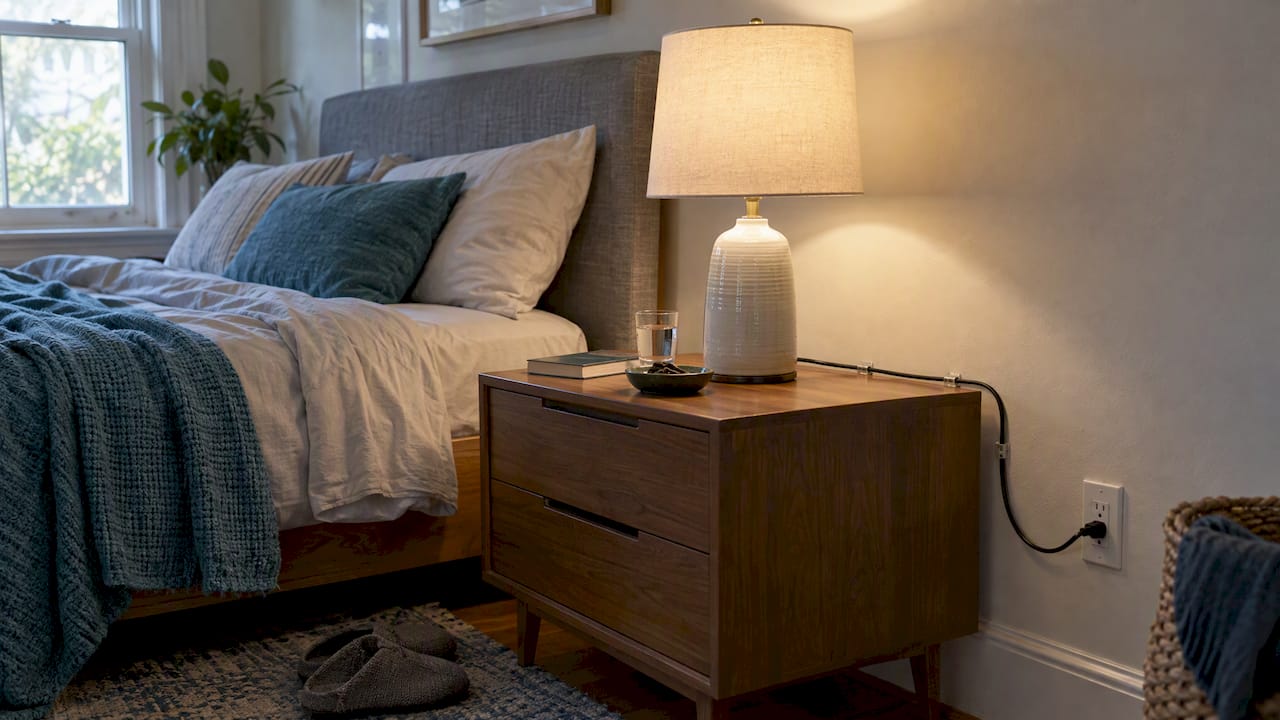
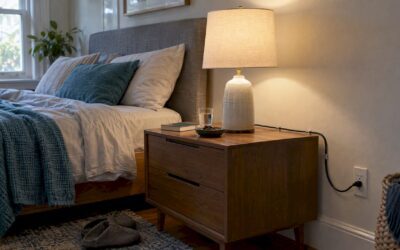
Bedroom. Modern linens, an antique nightstand, a vintage lamp with a new shade.
Our perspective
We spend our days looking at homes, artists and objects, and one pattern keeps repeating: the interiors people remember are the ones with a point of view. Matching sets rarely have one. A mixed room does, because every old piece carries a story and every new piece makes it livable.
Our advice is to begin with the object you love most, whether it is a chair from a grandparent, a flea-market mirror or a painting you could not leave behind, and build calm around it. Neutral walls, honest textures and modern comfort give it room to speak. Art does a lot of the work here: a contemporary canvas is often the easiest bridge between a vintage sideboard and a new sofa.
And be patient. A collected look is built over time, one considered piece at a time, not delivered in a weekend.
— Nealda
Find pieces that bridge the eras
If you want contemporary pieces to sit beside your vintage finds, browse our Store Finds, a curated edit of products we recommend, including wall art and home fragrance. Prefer something one of a kind? Our guide to commissioning art for your home explains how a custom piece can anchor a mixed room.
Common mistakes to avoid
- Too timid. One tiny antique looks like an afterthought. Go for a piece with presence.
- Too matched. A full vintage set in one finish reads as a period room, not a mix.
- Too many threads. If nothing repeats, nothing connects.
- Ignoring scale. Style can vary, proportion should not.
- Neglecting care. Sun, radiators and bad light age old pieces fast.
- Over-restoring. Repairing a treasured piece yourself can lower its value, so involve a conservator if it matters.
FAQ
What is the 80/20 rule for mixing vintage and modern decor?
It suggests about 80 percent modern pieces and 20 percent vintage. It works as a starting point for people who do not collect antiques. Some designers recommend a higher share of old pieces, so judge by whether the vintage looks deliberate.
Can I mix vintage and modern in a small apartment?
Yes, and it often works better there. Choose one or two vintage pieces with good proportions, such as a compact chair or a mirror, and keep the rest simple. Avoid clustering, which makes small rooms feel crowded.
How do I stop a mixed room from looking cluttered?
Start with a neutral backdrop, limit the room to two or three styles and repeat one color, material or shape. Spread old pieces around instead of grouping them. Leave some surfaces empty so the eye can rest.
Is it safe to buy vintage furniture online?
It can be, if you ask for a condition report and photos of the underside, joints and any repairs before you pay. Check return terms and shipping insurance for large pieces. For a valuable item, ask a professional furniture conservator before any restoration.
Sources
- Dowsing & Reynolds: How to Mix Vintage and Modern Interiors
- Good Housekeeping: How to Mix Vintage and Modern Decor, According to Designers
- Architectural Digest: 7 Expert Tips for Decorating With Antiques at Home
- Architectural Digest: Mix-and-Match Dining Table Decor Ideas
- The Spaces: Five tips for working antiques into a contemporary space
- House & Garden: Anna Haines’ dos and don’ts of decorating
- Museums Galleries Scotland: Conservation and Lighting factsheet
- Institute of Conservation: Furniture care