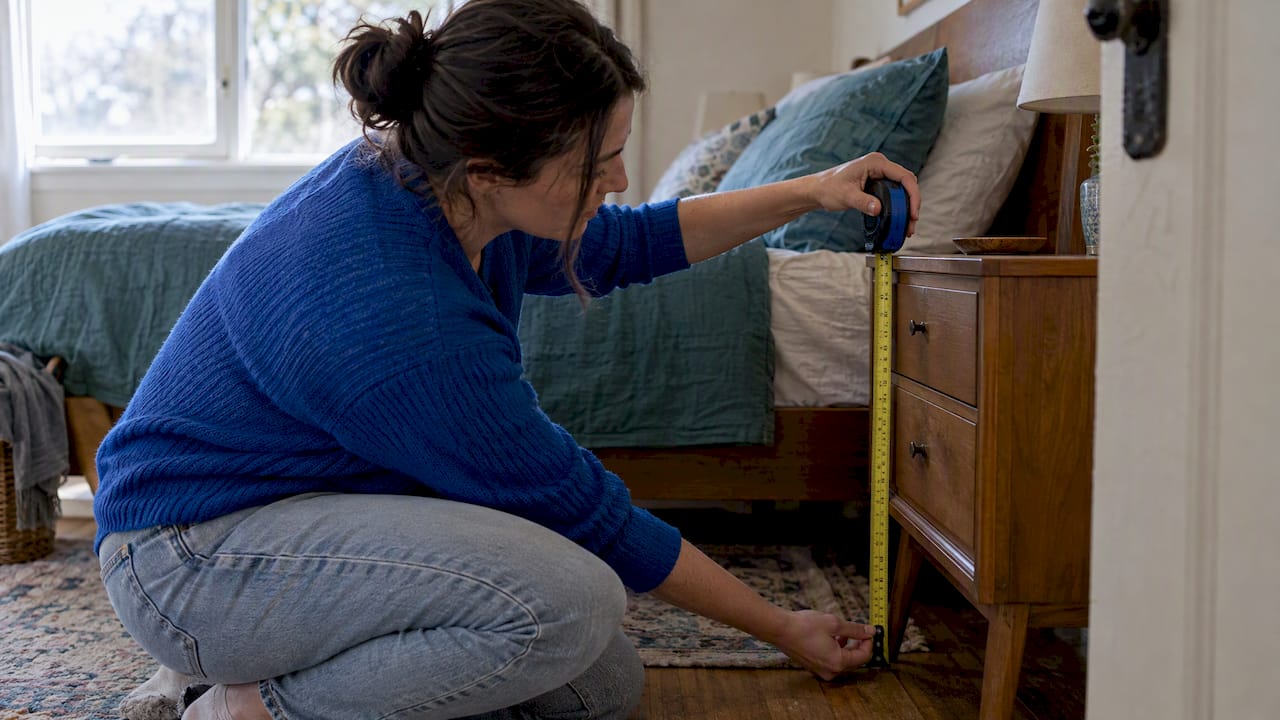
For most beds, the ideal bedside table height falls between 24 and 28 inches, with the top sitting level with your mattress or within about 2 inches of it. That small margin matters: a nightstand too far above or below the mattress top disrupts the reach for a lamp switch or a glass of water. Before you shop, measure your mattress top, topper included, and let that number guide your choice.
TL;DR:
- Low nightstands suit platform beds with mattress tops around 16 to 22 inches; tall pieces from 28 to 32 inches fit pillow tops.
- A thick memory foam topper can add 2 to 4 inches, so measure from the floor to the finished mattress surface, not the frame.
- After measuring, sit up in bed and test the reach for a lamp switch or water glass; body proportions and mattress firmness affect comfort.
- Leave about 24 inches of walkway clearance, place the table 3 to 6 inches from the mattress edge, and choose at least 14 inches of depth.
- Choose a bedside lamp 2 to 3 inches taller than the table, and check that its switch remains reachable from a reclined position.
Table of Contents
- Standard Bedside Table Height Range and What the Categories Mean
- How to Measure Your Bed and Test the Reach
- When to Choose a Taller or Shorter Nightstand
- Width, Proportion, and Placement for a Balanced Setup
- Lamp and Lighting Alignment for Bedside Comfort
- Small Rooms and Compact Alternatives
- Styling Tips for Working With Mismatched Nightstands
- A Measurement-First Approach to Choosing Bedside Tables
- Browse Art in Lifestyle Store Finds for Curated Nightstands and Lighting
- FAQ
- Sources
Standard Bedside Table Height Range and What the Categories Mean
Once you know your mattress height, the next step is matching it against the categories nightstands typically fall into. Most manufacturers build around a few predictable bands, and understanding them helps you read a product spec sheet without guessing.
The standard range sits between 24 and 28 inches, which fits a typical mattress and box spring combination. Below that, low nightstands run from about 16 to 22 inches, suited to platform beds or floor-level frames where the mattress top sits closer to the ground. Tall nightstands climb to 28 inches and beyond, built for deep mattresses, pillow-tops, or beds with a boxspring foundation. Floating nightstands break from fixed categories entirely since they mount directly to the wall at whatever height matches your mattress top.
| Type | Typical height range | Best suited for |
|---|---|---|
| Low | 16 to 22 inches | Platform beds, floor-level frames |
| Standard | 24 to 28 inches | Most queen and king beds with a boxspring |
| Tall | 28 to 32+ inches | Pillow-top mattresses, deep foundations |
| Floating | Mounted to match mattress top | Small rooms, flexible height needs |
These ranges exist because mattress heights vary so widely. A low platform bed might put the mattress top at 18 inches off the floor, while a traditional boxspring setup with a thick mattress can reach past 30 inches. The category labels on a product page are a starting point, not a guarantee, which is why the next step matters more than the label itself.
How to Measure Your Bed and Test the Reach
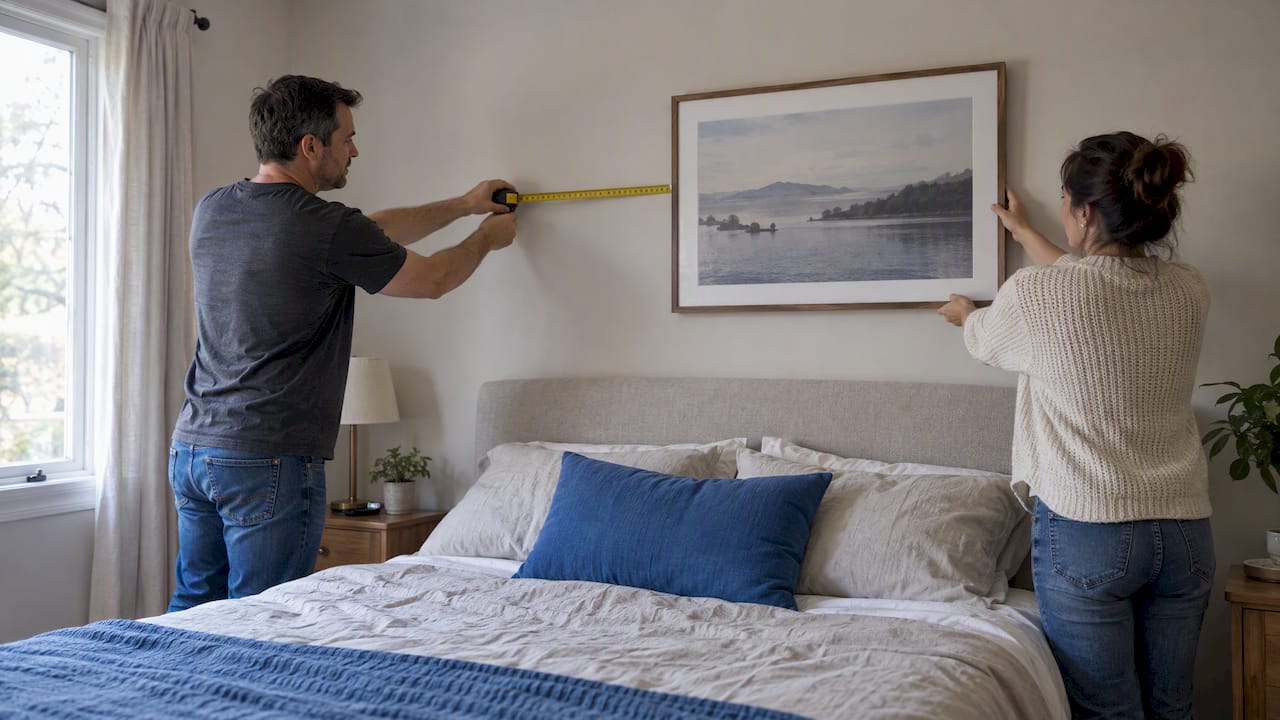
Skipping measurement is the most common reason a nightstand ends up feeling wrong once it’s in the room. The process removes the guesswork.
- Measure from the floor to the top of your mattress, including any topper, since a thick memory foam layer can add 2 to 4 inches you’d otherwise miss.
- Note whether your frame includes a boxspring or platform base, since this often accounts for most of the height difference between two seemingly similar beds.
- Use that final number to set your target: aim for a nightstand within about 2 inches of your mattress top, on either side.
- Sit up in bed and reach toward where the nightstand would stand, checking whether a lamp switch or glass would land comfortably within arm’s reach.
Two quick examples make this concrete. If your mattress top measures 22 inches, you’d look for a nightstand between roughly 20 and 24 inches. If it measures 30 inches, a taller piece in the 28 to 32 inch range keeps the surfaces aligned. The sit-up test catches what measurements alone can miss, since body proportions and mattress firmness both affect how far you naturally reach when half-asleep at midnight.
When to Choose a Taller or Shorter Nightstand
The standard range works for most setups, but certain beds and habits call for stepping outside it. A few scenarios where it pays to adjust:
- Tall mattresses or pillow-tops push the mattress surface higher, so a nightstand in the 28 to 32 inch range keeps the top aligned rather than leaving it several inches below reach.
- Storage needs sometimes favor a taller piece with multiple drawers, since added height can accommodate deeper compartments without sacrificing the surface height you need.
- Low platform beds often sit close to the floor, making a shorter nightstand the better match for a cohesive, grounded look.
- Minimalist bedrooms sometimes favor low profiles intentionally, even when the mattress sits higher, as part of a deliberate visual statement rather than a functional necessity.
- Multifunctional stools can replace a traditional nightstand in rooms where flexibility matters more than storage, though they typically sit lower than a dedicated piece.
The trade-off worth understanding: a nightstand set noticeably below the mattress top means bending down for anything placed on it, while one set too high means reaching up awkwardly from a reclined position. Either extreme also throws off lamp height, which is where the next consideration comes in.
Width, Proportion, and Placement for a Balanced Setup
Height gets most of the attention, but a nightstand that’s the right height and the wrong width or placement still feels off. Proportion ties the whole arrangement together.
- Width scales with bed size: a nightstand around one-third of the bed’s width tends to look balanced, so a queen bed pairs naturally with a wider piece than a twin would need.
- Walkway clearance should allow roughly 24 inches of open floor space beside the bed, enough to move through comfortably without nightstands crowding the path.
- Placement from the mattress edge typically falls between 3 and 6 inches, close enough to reach without the nightstand digging into the mattress itself.
- Depth matters for function: a surface needs enough room for a lamp base and a book without either one hanging over the edge, which usually means at least 14 inches of depth for a standard setup.
Getting these proportions right is less about a strict formula and more about avoiding pieces that visually overwhelm or disappear next to the bed. A nightstand that’s too narrow for a king bed looks like an afterthought, while one too wide for a twin crowds the room.
Lamp and Lighting Alignment for Bedside Comfort
Once the nightstand height is settled, the lamp sitting on top of it needs its own alignment check. Designers tie lamp sizing directly to the surface beneath it for a reason: mismatched proportions make reading in bed harder than it needs to be.
- Lamp height typically runs 2 to 3 inches above the nightstand, which keeps the shade at a comfortable angle for reading without casting harsh shadows across the page.
- Switch height matters as much as lamp height: a switch positioned between 21 and 28 inches off the floor stays reachable from a reclined position, sparing you from patting around in the dark.
- Some designers recommend lamps of at least 30 inches total height when paired with a standard nightstand, since shorter lamps can get lost visually on a taller surface.
- Pairing examples help: a 26 inch nightstand suits a lamp around 28 to 29 inches tall, while a 20 inch low nightstand calls for a shorter lamp to keep the switch within comfortable reach.
Pro Tip: Borrow a clamp-on or portable lamp to test the height and switch placement before committing to a permanent fixture.
Small Rooms and Compact Alternatives
Not every bedroom has space for a full-size nightstand, and that’s rarely a problem worth solving by skipping bedside storage altogether. A few compact approaches hold up well in tight quarters.
- Floating nightstands mount directly at mattress-top height and need only about 10 to 14 inches of depth to hold a lamp, a book, and a glass of water.
- Stools or slim side tables work as substitutes when a full nightstand feels too bulky, trading drawer storage for a smaller footprint and a lighter visual presence.
- Open shelving or single-drawer units offer a middle ground, giving just enough storage without eating into walkway clearance.
- Narrow vertical storage pieces, sometimes just a few inches deep, can slide into gaps a standard nightstand wouldn’t fit.
For more compact ideas that double as decor rather than clutter, our piece on space-saving decor for small rooms walks through options that work well beside a bed. Parents furnishing a nursery often face the same space constraints, and small-space setup guidance built for nurseries offers useful principles that carry over to any tight bedroom layout.
Styling Tips for Working With Mismatched Nightstands
Not every bedroom has matching nightstands on both sides, and that’s not necessarily a flaw to fix. A little styling intention turns mismatched heights into something that reads as deliberate.
- Balance visual mass by pairing a shorter nightstand with a taller lamp, or vice versa, so the combined height on each side feels roughly equal even when the furniture doesn’t match.
- Stack books or boxes on the shorter piece to bring its visual weight closer to its taller counterpart without changing the furniture itself.
- Align wall fixtures like sconces at the same height on both sides when the nightstands themselves sit at different heights, anchoring the eye to a consistent line.
- Know when to lean into it: intentional mismatching works when the pieces share a material or color story, but avoid it when the difference feels accidental rather than curated.
Pro Tip: If your nightstands differ in height, use lamp height as the equalizer rather than trying to force the furniture to match.
For more ways to think about scale and visual weight near the bed, our guide to pedestal display ideas covers similar principles for balancing uneven surfaces.
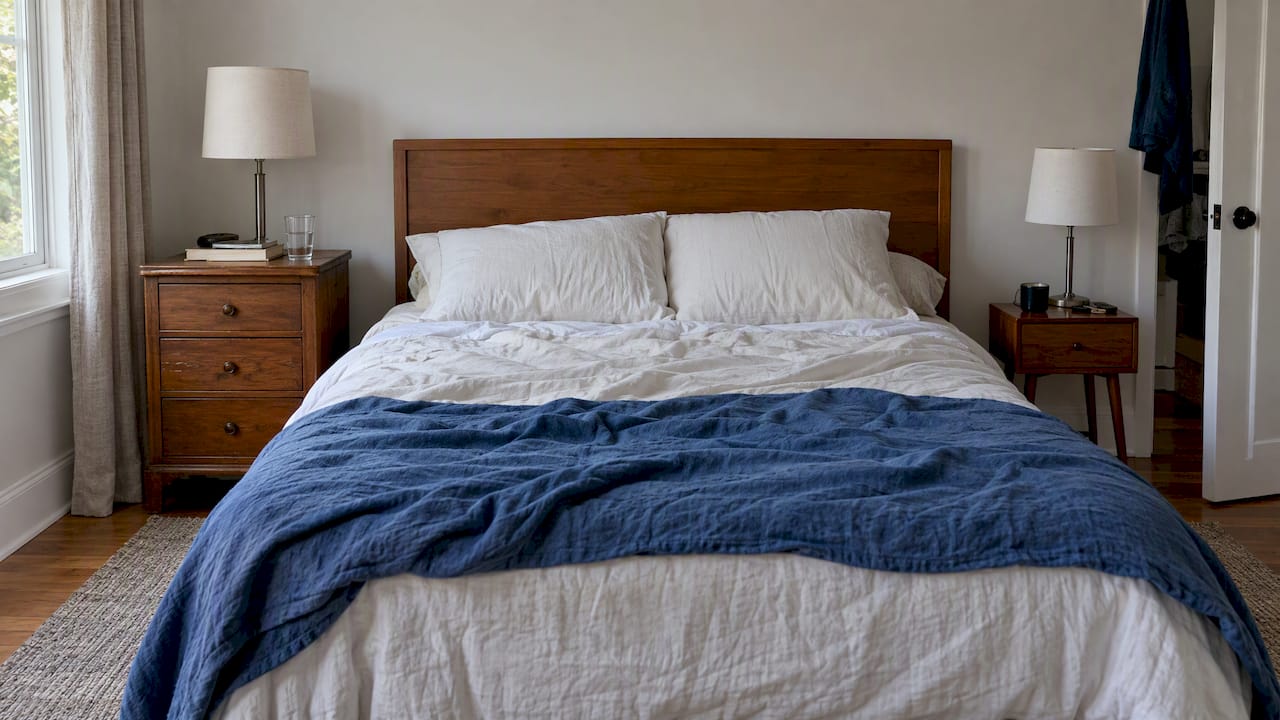
A Measurement-First Approach to Choosing Bedside Tables
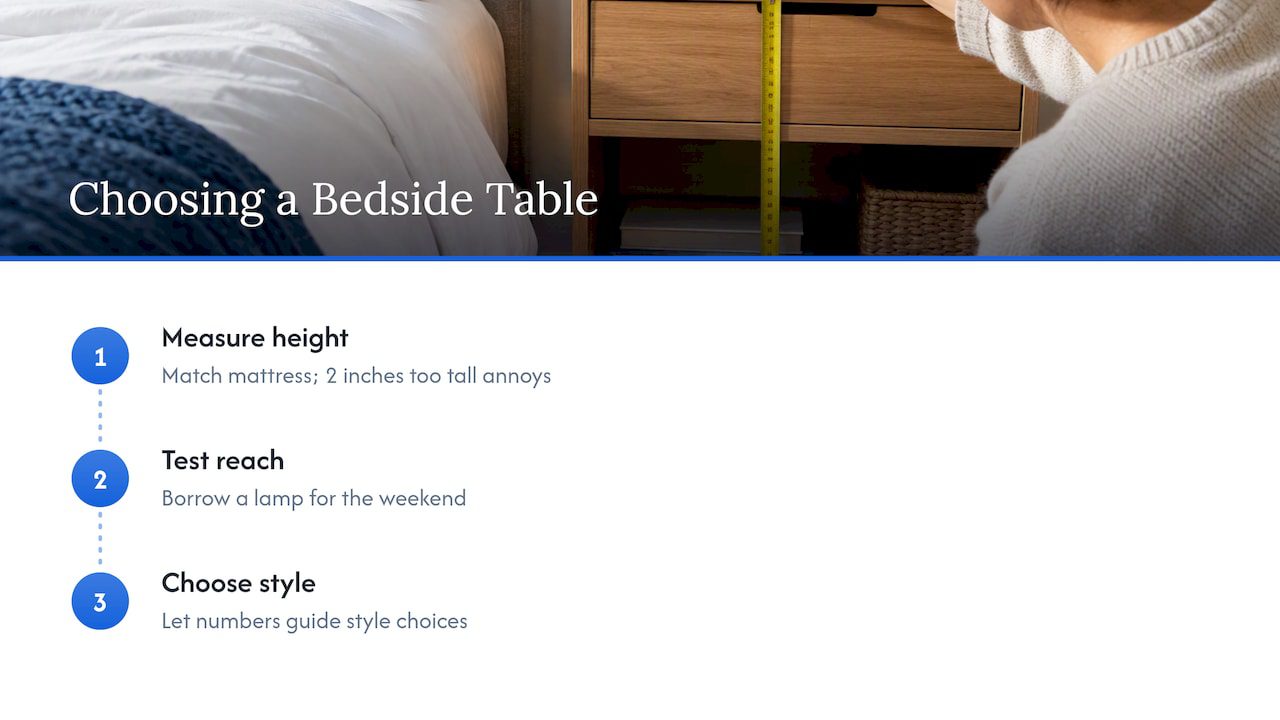
We’ve come to favor nightstands that sit level with the mattress top over anything chosen only for its look. A piece that’s visually striking but two inches too tall turns a nightly routine into a small daily annoyance.
Testing lamp placement before buying matters just as much as measuring the nightstand itself. We’d rather see a reader borrow a lamp for a weekend than commit to a pairing that looks right in a photo but feels wrong at 11 p.m. Measure first, test the reach, and let the numbers guide the style choices that follow.
— Nealda
Browse Art in Lifestyle Store Finds for Curated Nightstands and Lighting
Once you know the height, width, and lamp proportions that fit your bed, finding pieces that match all three gets easier with a curated starting point. Our Store Finds collection brings together curated home and lifestyle products, so you’re not sorting through options on your own.
- Browse curated home and lifestyle products in Store Finds.
Start with Store Finds to see pieces that fit the measurements you’ve just taken.

FAQ
What height should a bedside table be relative to the bed?
A bedside table should sit level with the top of your mattress or within about 2 inches of it, measured including any mattress topper. This keeps a lamp switch, glass of water, or book within comfortable reach from a reclined position.
What is the average height of a bedside table?
Most bedside tables average between 24 and 28 inches tall, which matches the typical height of a queen or king mattress on a boxspring foundation. Taller or shorter variants exist for pillow-top mattresses and low platform beds.
What is the rule of thumb for bedside table height?
The widely used rule is to match the nightstand top to the mattress top, staying within roughly 2 inches either above or below it. Measuring your mattress height first, topper included, makes this rule simple to apply when comparing products.
Is 30 inches too high for a nightstand?
A 30 inch nightstand isn’t too high for a tall mattress or pillow-top setup, where the mattress surface itself sits closer to that height. For a standard mattress around 24 to 26 inches, though, a 30 inch nightstand would sit noticeably above the mattress top and outside the typical range designers recommend.
Sources
- 7 Small Nightstands That Don’t Feel Like a Design Compromise (2026) | Architectural Digest
- How Tall Should a Nightstand Be? 5 Expert Tips
- Nightstand Dimensions: Standard Bedside Table Size (in & cm)
- 6 Tips for Decorating a Nightstand, All Approved by Designers