Brushed nickel and satin nickel are not the same finish, despite their frequent use as interchangeable terms in hardware catalogs and home improvement stores. The core difference lies in manufacturing: brushed nickel uses mechanical abrasion to create visible linear grain marks, while satin nickel is electroplated and buffed to produce a smooth, uniform surface with a soft glow. These distinctions affect sheen, texture, color tone, and long-term maintenance. For homeowners and design enthusiasts choosing fixtures, faucets, or cabinet hardware, understanding which finish serves your space is the difference between a cohesive room and one that quietly feels off.
Are brushed nickel and satin nickel the same finish?
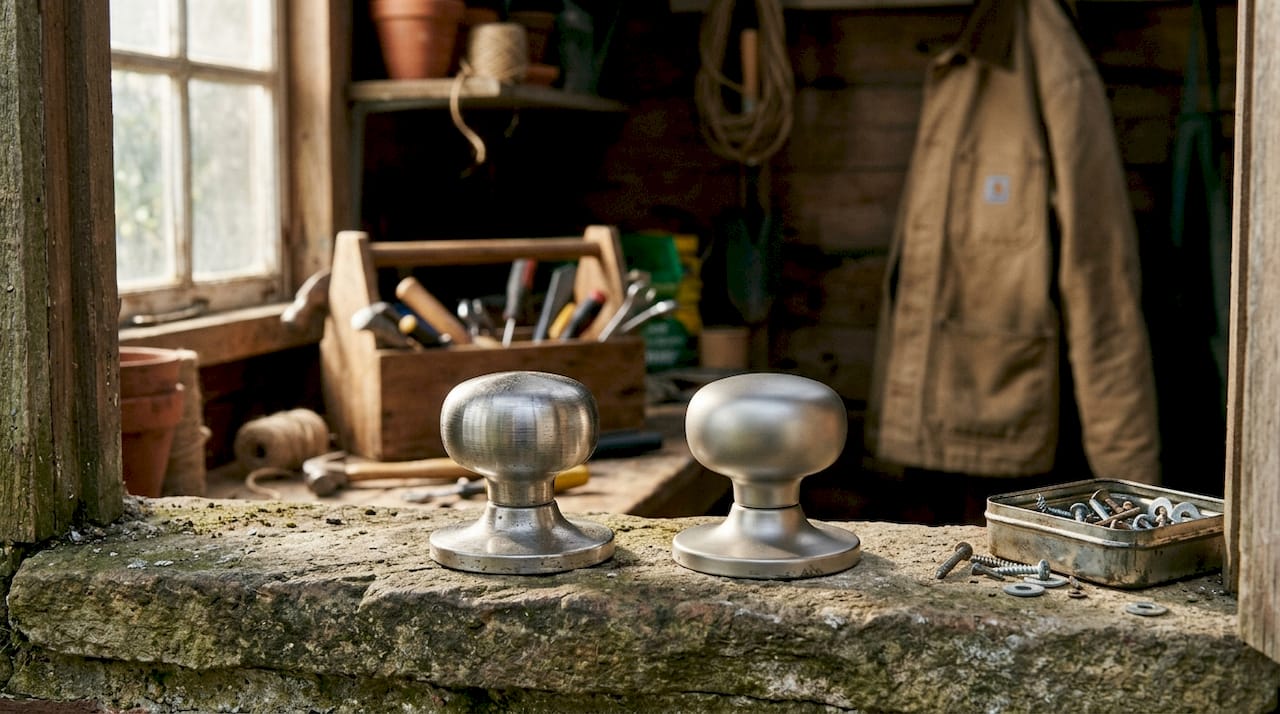
The short answer is no. Brushed nickel has a matte, textured surface with fine linear grain marks, while satin nickel carries a slight gloss and a smooth, even surface. Both finishes start from a nickel base, but the production process diverges sharply from that point.
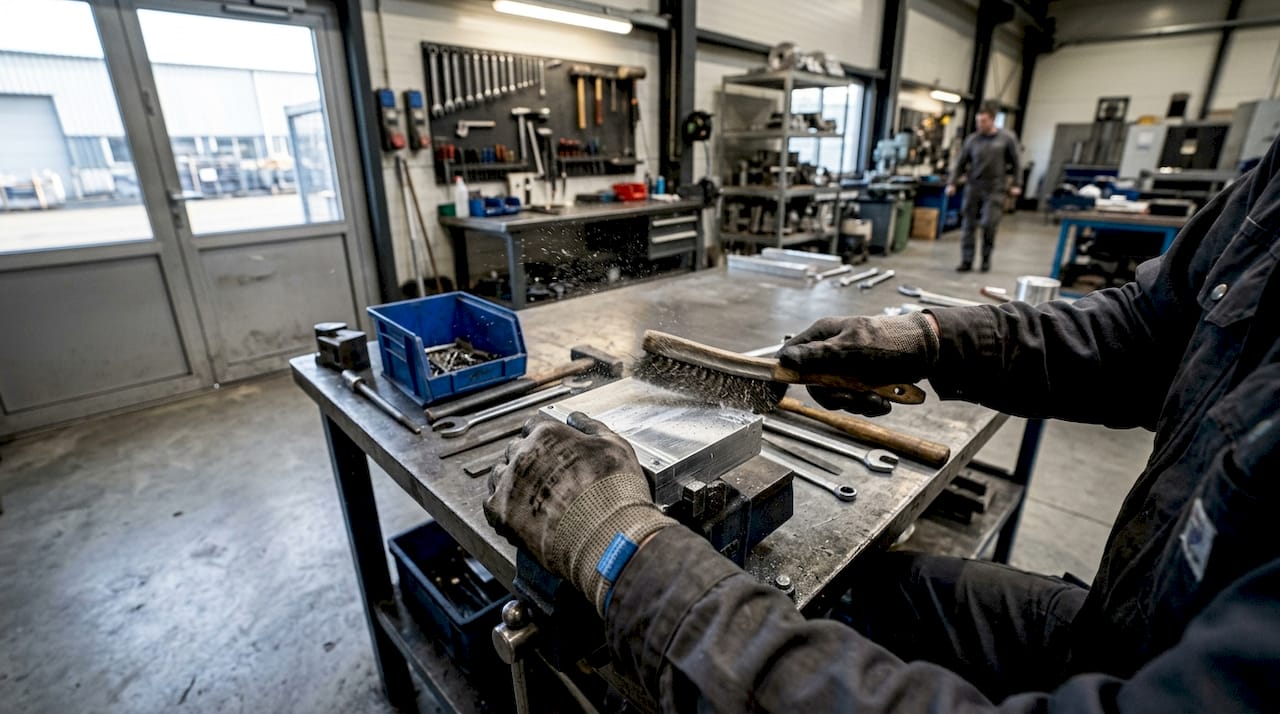
Brushed nickel gets its texture through mechanical abrasion. A wire brush or abrasive pad moves across the metal surface in one direction, leaving behind consistent linear marks. Those marks scatter light rather than reflect it cleanly, producing the characteristic matte depth that reads as cool and modern.
Satin nickel, by contrast, is achieved through electroplating followed by fine buffing. The result is a surface with no visible grain. Light reflects off it softly and evenly, giving the finish a quiet luminosity. That subtle glow is what designers often describe as a “refined warmth” rather than a hard shine.
| Feature | Brushed nickel | Satin nickel |
|---|---|---|
| Manufacturing method | Mechanical abrasion | Electroplating and buffing |
| Surface texture | Textured with linear grain | Smooth and uniform |
| Sheen level | Matte to low sheen | Soft, even glow |
| Light behavior | Diffused, scattered | Soft reflection |
| Visual character | Depth and texture | Refined luminosity |
Pro Tip: Hold a small hardware sample near your window in natural daylight. Brushed nickel’s grain becomes clearly visible as light rakes across it. Satin nickel will appear smooth and gently luminous. This quick test prevents costly mismatches before you commit to a full set of fixtures.
How do color tone and design style differ between the two finishes?
Color tone is where the two finishes diverge most noticeably in a real room. Brushed nickel carries a cooler, grayish tone that pairs naturally with stainless steel appliances, concrete surfaces, and the clean lines of modern or industrial interiors. Satin nickel reads warmer, with a slightly golden-silver quality that feels at home in traditional, transitional, or farmhouse spaces.
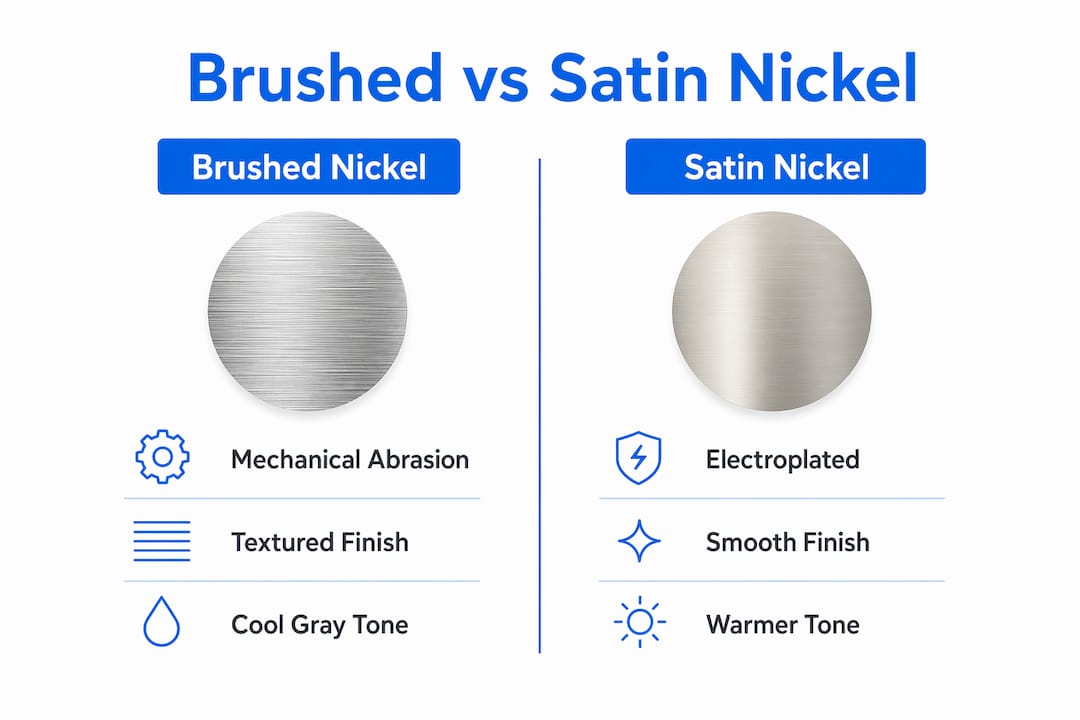
This tonal difference matters more than most homeowners expect. A brushed nickel faucet placed next to satin nickel cabinet pulls will not simply look “slightly different.” Under most lighting conditions, one will appear cooler and one warmer, and the contrast will read as an error rather than an intentional design choice.
Interior design experts note that neither finish is objectively superior. The choice is about mood and function. Brushed nickel brings texture and modernity. Satin nickel brings warmth and refinement. Choosing between them is less a technical decision and more an aesthetic one rooted in how you want a room to feel.
“Satin nickel provides a tailored, refined glow, while brushed nickel offers depth and texture. Choosing between them aligns with the desired mood and space function rather than any measure of quality.” — Interior design experts, as cited by design research on nickel finishes
Practical style pairings worth knowing:
- Brushed nickel works well with matte black accents, exposed concrete, subway tile, and stainless steel appliances in kitchens and modern bathrooms. Modern industrial interiors often use brushed nickel as a unifying hardware finish.
- Satin nickel complements warm white cabinetry, shaker-style millwork, marble countertops, and antique brass accents in transitional or classic spaces.
- Undertone awareness is the key skill. If your tile or countertop has warm beige or cream tones, satin nickel will feel cohesive. If your palette runs cool gray or white, brushed nickel is the more natural fit.
What are the maintenance, durability, and cost differences?
Brushed nickel is the more forgiving finish in high-traffic areas. Its textured surface diffuses light and hides fingerprints and water spots more effectively than satin nickel’s smooth face. In a busy kitchen or a family bathroom, that practical advantage is real and daily.
Satin nickel requires slightly more frequent wiping to maintain its characteristic glow. Smudges and water marks show more readily on its smooth surface. That said, satin nickel is not a high-maintenance finish by any measure. A soft cloth and mild soap keep it looking polished. The difference between the two is a matter of degree, not kind.
Durability in both finishes depends heavily on the quality of the underlying plating. Thin plating, regardless of finish type, will wear through at edges and high-contact points over time. Choosing hardware from reputable manufacturers with solid brass or zinc alloy bases extends the life of either finish significantly.
Cost and availability break down as follows:
- Brushed nickel is widely stocked across price points, from entry-level hardware lines to premium artisan collections. Its broad availability makes brand coordination easier.
- Satin nickel carries a slightly higher price in most product categories and is less universally available. Fewer brands offer it, which can complicate matching hardware across a renovation.
- Brand consistency matters more with satin nickel. Because no universal manufacturing standard governs these finishes, satin nickel from two different brands can look noticeably different side by side. Brushed nickel tends to be more consistent across manufacturers.
- Sample testing before purchasing a full set of hardware is the single most effective way to avoid costly mismatches, particularly with satin nickel.
Pro Tip: When coordinating hardware across multiple brands, order one sample piece from each brand before buying in bulk. Place them side by side under your kitchen or bathroom lighting. Satin nickel tones vary enough between manufacturers that what looks identical online can appear mismatched in person.
Can you mix brushed nickel and satin nickel in the same room?
Mixing these two finishes in the same space is generally not recommended. Consistent finishes yield more professional results, and the tonal and textural gap between brushed and satin nickel is wide enough to create visual discord rather than intentional contrast.
The specific problem is this: when the two finishes sit near each other, one tends to make the other look wrong. The cooler, matte brushed nickel can make satin nickel appear slightly dirty or yellowed. The warmer, smoother satin nickel can make brushed nickel look flat and dull. Neither effect is what you want.
That said, mixing metals intentionally is a recognized design technique. The key distinction is that mixing brushed nickel with satin nickel is mixing the same metal in two conflicting treatments, not mixing different metals for contrast. Pairing brushed nickel with matte black or warm brass reads as deliberate. Pairing brushed nickel with satin nickel reads as accidental.
Pros and cons of mixing the two finishes:
| Consideration | Mixing brushed and satin nickel |
|---|---|
| Visual cohesion | Low. Undertone and texture differences create discord. |
| Design intent | Difficult to read as deliberate. Often appears as a mistake. |
| Practical workaround | Use one finish per zone (e.g., brushed in kitchen, satin in bath). |
| Better alternative | Mix different metals (brass and brushed nickel) for intentional contrast. |
When zoning by room is not possible, the safest approach is to pick the finish that dominates your largest fixture, typically the faucet or main light fitting, and carry that finish through all smaller hardware in the same space. You can find practical guidance on using texture in interiors to understand how surface variation affects spatial harmony.
Key Takeaways
Brushed nickel and satin nickel are distinct finishes with different textures, tones, and ideal applications. Choosing the right one depends on your design style, maintenance preferences, and the lighting conditions in your space.
| Point | Details |
|---|---|
| Not the same finish | Brushed nickel is mechanically abraded; satin nickel is electroplated and buffed smooth. |
| Color tone differs | Brushed nickel reads cool and gray; satin nickel reads warmer with a golden-silver quality. |
| Maintenance advantage | Brushed nickel hides fingerprints and water spots better in high-use kitchens and bathrooms. |
| Cost and availability | Brushed nickel is more widely stocked and consistent across brands than satin nickel. |
| Avoid mixing the two | Mixing both finishes in one room creates visual discord rather than intentional contrast. |
Why I always tell homeowners to test before they commit
The most common mistake I see is homeowners choosing a finish from a photo on a product page, ordering a full set of hardware, and then discovering the tone is completely wrong for their space. It happens with both finishes, but it happens more with satin nickel because its warmth is subtle and lighting-dependent.
My honest observation after years of writing about interior design is this: the brushed versus satin nickel question is not really about which finish is better. It is about which finish belongs in your specific room, under your specific lighting, next to your specific materials. A satin nickel faucet in a warm, cream-toned bathroom with soft incandescent light is quietly beautiful. That same faucet in a cool, gray-tiled bathroom with LED lighting can look slightly brassy and out of place.
The advice I return to consistently is simple. Order samples. Place them in the room. Live with them for a day. Brushed nickel’s grain can range from barely visible to quite pronounced depending on the manufacturer, and that variation affects how the finish reads at different times of day. Satin nickel’s warmth shifts noticeably between morning and evening light.
The finish you choose is a quiet decision with a lasting effect. Get it right by testing in context, not by trusting a screen.
— Nealda
What Artinlifestyle recommends for your next decor step
Choosing between nickel finishes is one piece of a larger design picture. At Artinlifestyle, the editorial team curates design ideas that show how texture, tone, and material work together to create spaces that feel considered and calm.
For homeowners ready to move beyond the finish decision and into the full design vision, Artinlifestyle’s feature on warm interior textures shows how surface choices, including metal finishes, interact with fabric, stone, and light to shape a room’s mood. For those drawn to the clean lines where brushed nickel thrives, the bathroom faucet guide offers curated fixture picks across both finishes. Good design decisions compound. One well-chosen finish leads naturally to the next.
FAQ
Are brushed nickel and satin nickel interchangeable?
No. Brushed nickel and satin nickel differ in texture, sheen, and color tone. Using them interchangeably in the same space typically creates visual discord rather than a cohesive look.
Which finish is easier to keep clean?
Brushed nickel is easier to maintain in high-use areas. Its textured surface diffuses light and hides oils and water spots more effectively than satin nickel’s smooth face.
Which finish suits a modern kitchen better?
Interior designers recommend brushed nickel for modern and industrial kitchens because its cool, gray tone pairs naturally with stainless steel appliances and contemporary cabinetry.
Is satin nickel more expensive than brushed nickel?
Satin nickel typically carries a slightly higher price and is less widely available across brands. Brushed nickel is found across more product lines and price points, making brand coordination simpler.
Can you mix brushed nickel and satin nickel in one room?
Mixing the two is generally discouraged. The difference in undertone and texture means one finish tends to make the other look dull or off-color, which reads as an error rather than a deliberate design choice.