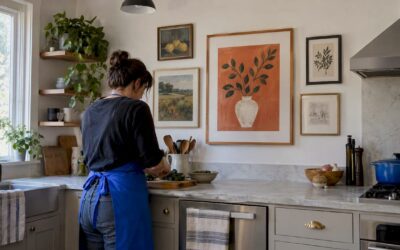
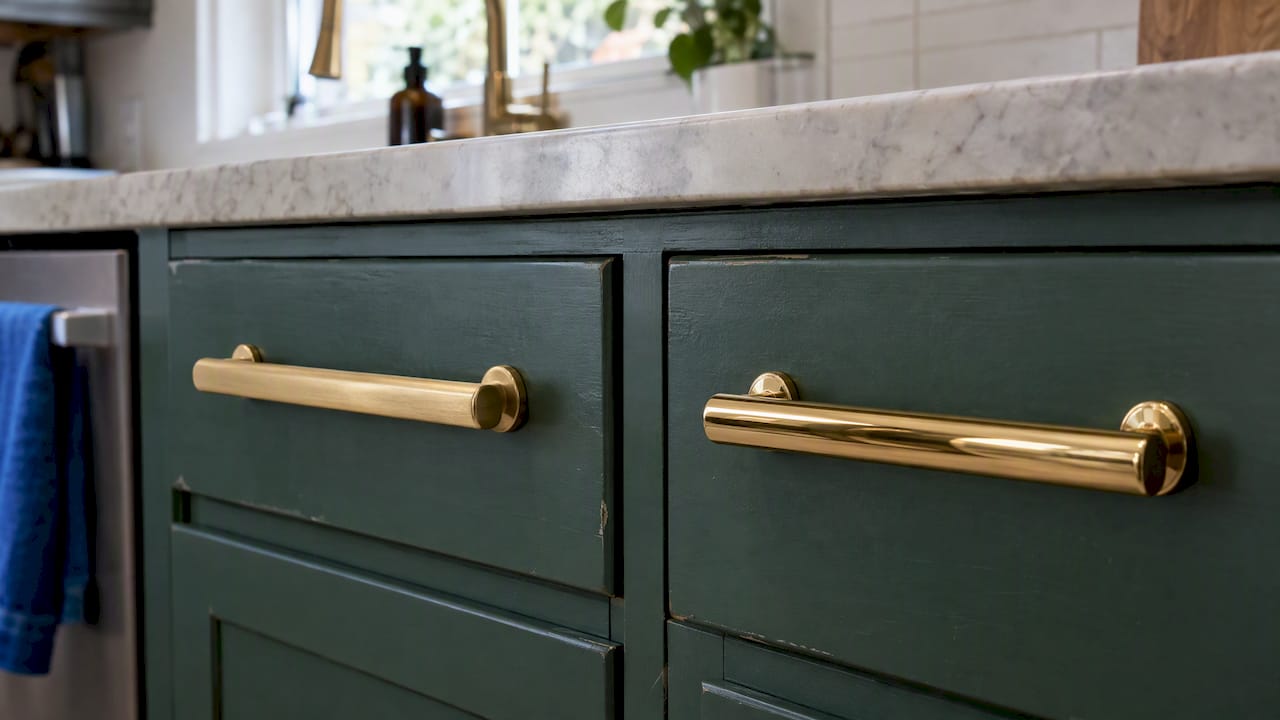
Polished brass is bright, mirror-like and formal. Brushed brass, often sold as satin brass, is soft, low-sheen and far more forgiving of fingerprints and water spots. If you want drama and don’t mind wiping, choose polished. If you want warmth that quietly gets on with daily life, choose brushed. The finer print is in the coating, the undertone and the room around it, and that is where most regrets begin.
TL;DR
- Polished brass is a buffed, mirror-like, highly reflective surface. It makes a statement and shows every touch.
- Brushed (satin) brass has a fine directional grain that diffuses light. It hides fingerprints and suits busy kitchens and baths.
- Lacquered vs. unlacquered matters as much as sheen. Lacquer freezes the look for a while; raw brass evolves.
- Brushed and satin are functionally the same family, but brand labels vary, so compare physical samples before you match fixtures.
- Mixing metals is welcome. Brass sits comfortably beside bronze, black and nickel when one metal leads.
Table of Contents
- What actually separates the two finishes
- Fingerprints, water spots and daily life
- Lacquered or unlacquered: the choice that changes everything
- Brushed brass vs. aged and antique brass
- Brass vs. gold: reading the undertone
- Brass vs. bronze hardware
- Is polished brass outdated? Is brushed brass a trend?
- Room by room: where each finish earns its place
- How to care for each finish
- Matching brass with other finishes
- A simple way to decide
- Our perspective
- Find brass pieces worth living with
- FAQ
- Sources
What actually separates the two finishes
Both start as the same alloy of copper and zinc. The difference is what happens to the surface afterward.
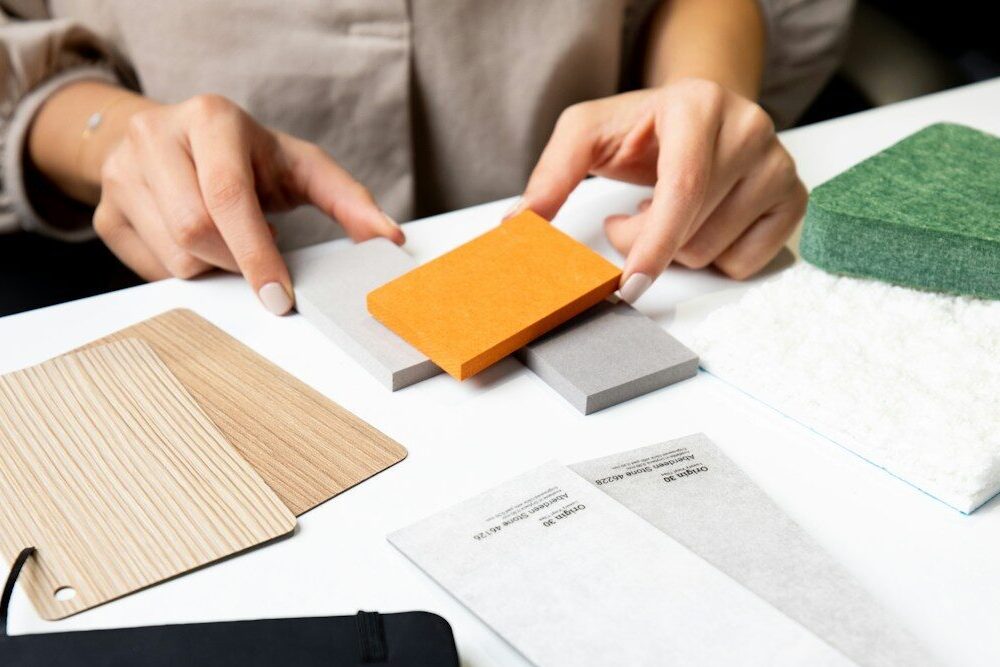
Polished brass is buffed until it reflects. Allied Brass describes it as bright, mirror-like gold, classic and formal. Light bounces off it, so a polished pull or faucet acts like a small piece of jewelry: it catches the window, the pendant light, the candle on the counter.
Brushed brass is abraded in one direction with a fine abrasive, leaving a soft grain. The same source calls satin brass, which is often sold as brushed brass, a soft, low-sheen gold with a fine grain, and one of the most popular finishes today. Instead of reflecting a room, it absorbs and diffuses it. Think of it as the difference between a glossy lacquered tray and a linen napkin: both are lovely, but they do very different jobs.
| Polished brass | Brushed / satin brass | |
|---|---|---|
| Surface | Mirror-bright, reflective | Soft grain, low sheen |
| Mood | Formal, glamorous, traditional | Relaxed, contemporary, understated |
| Fingerprints and water spots | Show readily | Largely disguised |
| Best in | Powder rooms, formal dining, statement lighting | Kitchens, family baths, cabinet hardware |
| Color read | Bright, yellow-gold | Warmer, more muted gold |
| Risk | Looks dated if the rest of the room is not curated | Can read flat in very dim rooms |
Fingerprints, water spots and daily life
This is the practical question that decides most purchases. A polished surface is smooth, so oils and water sit on top of it and the reflection magnifies them. A brushed surface scatters light, so the same marks vanish into the grain.
That is why brushed brass tends to win in places hands and water go constantly: kitchen faucets, cabinet pulls, the handle on the refrigerator-side pantry door, a bathroom sink that three people use before 8 a.m. Polished brass is easiest to love where touch is occasional: a sconce, a mirror frame, a pendant, a decorative cabinet knob in a powder room.
If you are choosing for a family kitchen, our guide to the best kitchen hardware trends shows how finishes behave beside different cabinet colors, and our touch-activated pull-down faucet roundup is a useful look at faucet silhouettes before you choose a finish for them.
Lacquered or unlacquered: the choice that changes everything
Here is the distinction many shoppers miss. Sheen is only half the story. Whether the brass is sealed matters just as much, and arguably more, according to Allied Brass.
Lacquered brass carries a clear protective coating that holds the appearance in place. It is the low-maintenance, fixed-look option, and most brushed and polished brass sold at big retailers is made this way. The catch: lacquer is not forever. Brassshelf notes that the coating typically degrades, yellows or peels within roughly three to seven years depending on UV and environmental exposure, and that once it fails it usually has to be stripped and reapplied.
Unlacquered brass is left raw. It oxidizes, darkens and develops a patina. It is not a no-effort finish, but it has a living quality. High-touch spots such as drawer pulls develop patina faster than low-contact areas, and that variation is the point, a record of use rather than a defect.
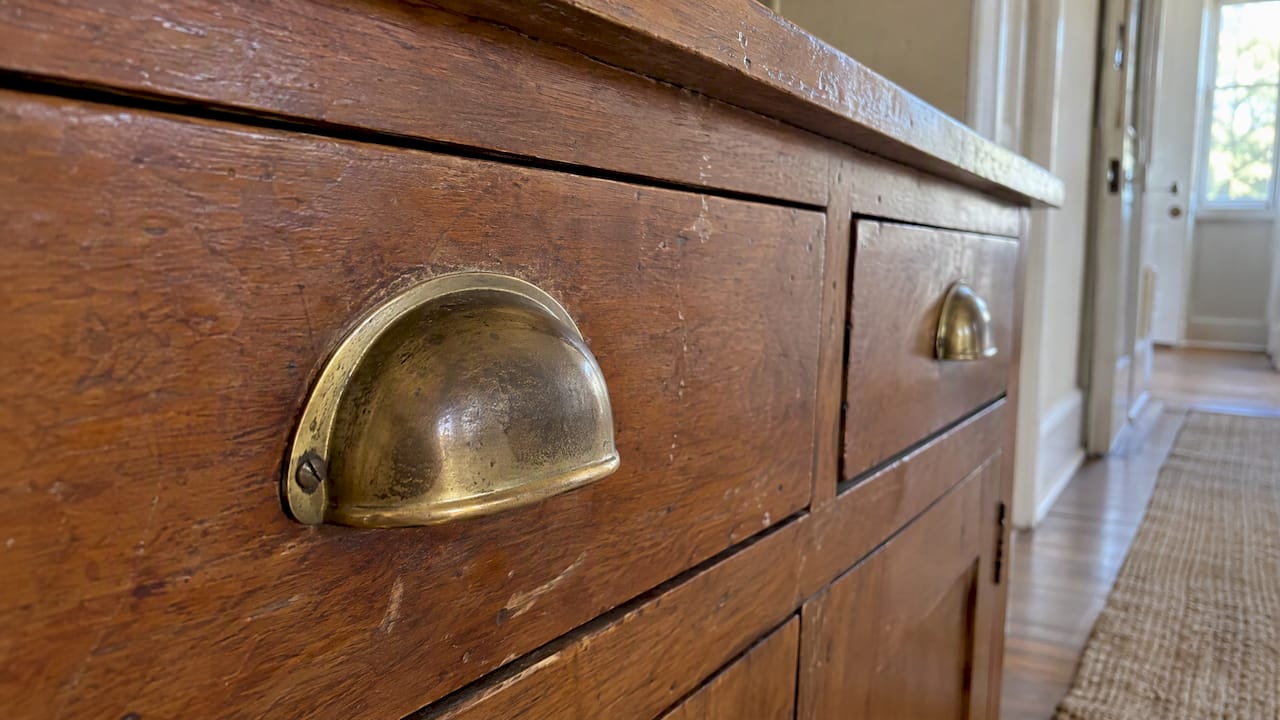
So when readers ask whether unlacquered brass beats polished brass, the honest answer is that they are answering different questions. Polished describes how a surface was finished. Unlacquered describes how it will age. You can have polished and unlacquered, which starts brilliant and mellows toward a deep, warm tone, or brushed and lacquered, which stays steady far longer.
Which pairing suits which person
- Polished + lacquered: glamour with a lower upkeep burden, until the coating tires.
- Polished + unlacquered: the most dramatic transformation. Expect to polish occasionally if you want the bright look back.
- Brushed + lacquered: the safest everyday choice. Consistent, soft and forgiving.
- Brushed + unlacquered: a calmer aging story, since the grain hides the marks of use while the color deepens.
Brushed brass vs. aged and antique brass
Aged or antique brass is brass deliberately darkened to a brown-gold tone, as Allied Brass describes. It is a different mood again: less bright, more library than boutique. Brushed brass is still a gold tone, just a softer one. Aged brass leans brown, hides wear well, and works beautifully with plaster walls, dark wood and heritage-style architecture.
Designer Lamb, quoted in the Ottawa Citizen, uses lacquered or antique brass to add warmth to kitchens, noting that unlike polished brass, a lacquered brass can develop a natural patina over time. If you love the lived-in look but dread the unpredictability of raw metal, an antique finish is a reasonable middle path.
Brass vs. gold: reading the undertone
Shoppers often compare brass with “gold” hardware and find the names overlap in confusing ways. Brass is an alloy with a yellow-green-leaning warmth. Retail gold finishes are usually a plated or coated look, and tend to be cleaner, pinker or more champagne. Brushed gold can look brighter or more uniform than brushed brass, which tends to be more saturated and more earthy.
The practical rules:
- Hold samples together, in your own light, morning and evening. Two finishes that match in a showroom can split apart at your window.
- If a label says “gold,” ask whether it is solid brass or plated. Solid brass is brass all the way through; plated finishes are a surface layer.
- Remember that terminology varies by maker. The same finish can be named brushed brass by one brand and satin brass by another, and Allied Brass advises comparing physical samples rather than trusting names.
Brass vs. bronze hardware
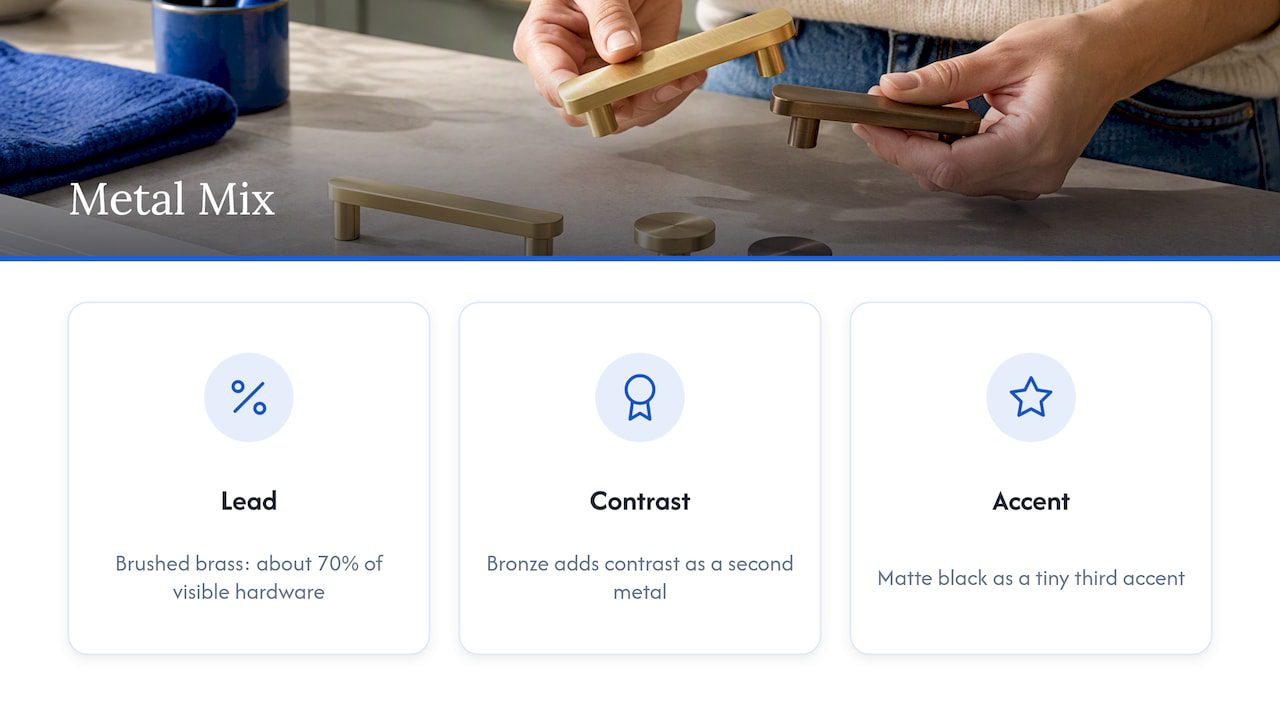
Bronze is a different alloy, chiefly copper with tin, and in home hardware the word usually describes a color family: oil-rubbed, champagne or deep brown finishes. Brass reads gold; bronze reads brown or smoky. They are excellent companions. Experts quoted by the Ottawa Citizen say that mixing metals such as brushed brass with bronze or even matte black adds depth and moves a room away from a cookie-cutter look.
A trade report in KBB Focus likewise cites brushed brass, brushed bronze and matte black as increasingly popular options for homeowners seeking a statement. A simple way to do it: let one metal lead (about 70 percent of what you see), add a second for contrast, and keep a third as a tiny accent.
Is polished brass outdated? Is brushed brass a trend?
Polished brass had a heavy run in the 1980s and early 90s, and that memory is why some people recoil. But the finish is not the problem. Context is. Polished brass in a room of heavy drapery, oak and etched glass feels of its era; polished brass against plaster walls, simple lines and one confident piece of art feels deliberate.
Brushed finishes are the safer, more versatile bet. Industry voices cited by Brassshelf say brushed metals bridge contemporary and traditional aesthetics, which is why they pair so easily with different cabinetry. Hardware makers also point to brushed gold, champagne bronze and brushed golden brass as warm metallics pairing well with warm wood cabinetry. Since trends move, the better test is whether you still like it with the rest of the room removed.
For wider context on where kitchens are heading, see this look at kitchen design trends, then compare it with our 2026 home trends guide.
Room by room: where each finish earns its place
Kitchen
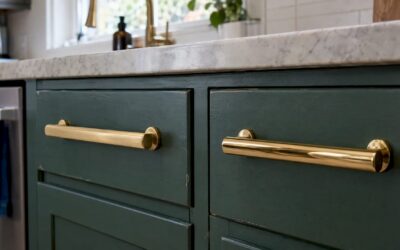
Brushed brass is the workhorse here: faucet, pulls, cabinet latches. It hides the splash zone and the cook’s fingerprints. Add one polished element, such as a pot-filler or a pendant, if you want a flash of shine. Warm brushed finishes look especially good against walnut, white oak and deep green or navy cabinets. Our kitchen remodel guide covers materials in more depth.
Bathroom
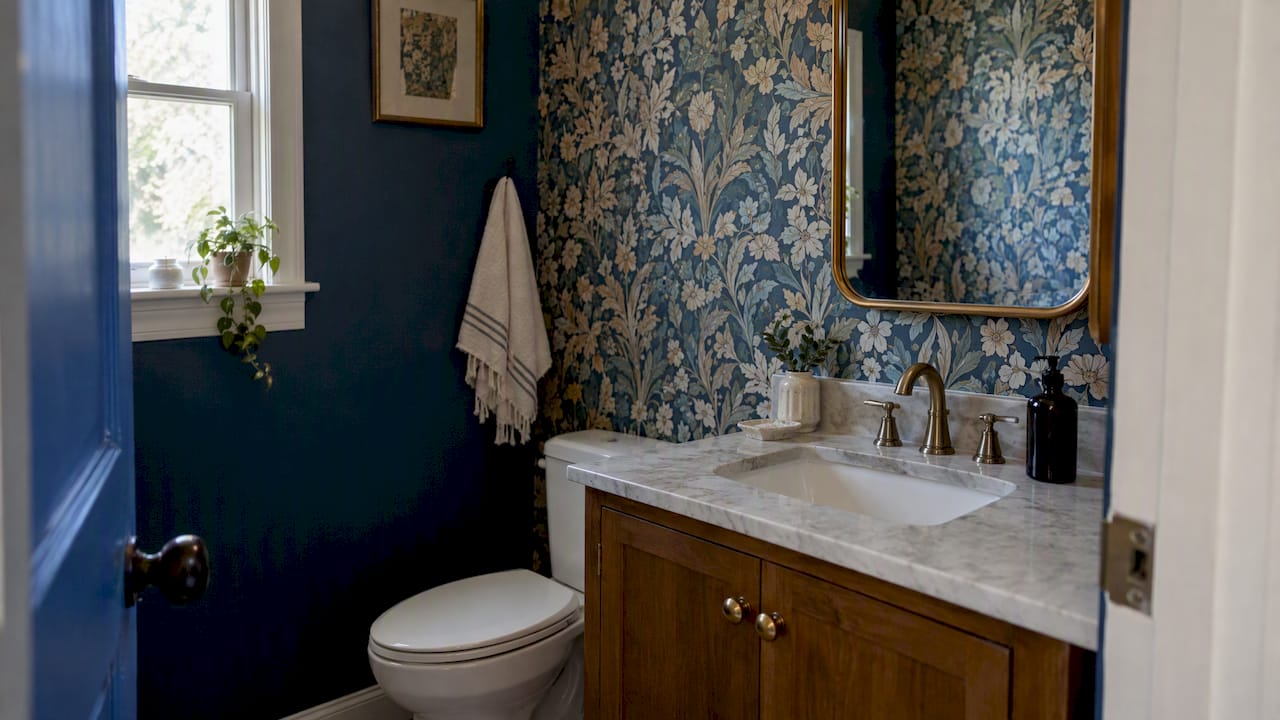
Water is where polished brass is most demanding. A brushed or satin faucet will look presentable between cleanings. In a powder room, though, a polished faucet beneath a good mirror can feel like the room’s small luxury. Keep the plumbing finishes consistent within sightlines: faucet, shower trim and towel bar should be from the same family, or deliberately different.
Living and dining rooms
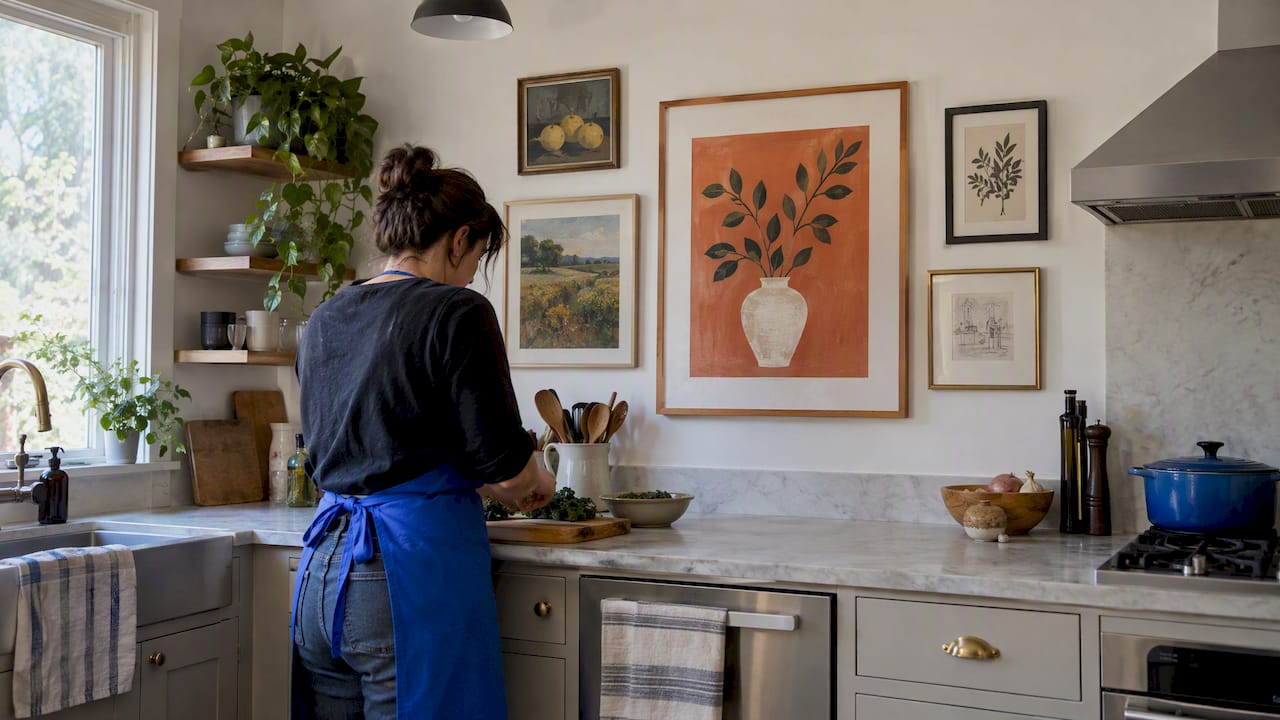
This is polished brass’s natural territory: a floor lamp, a console edge, a mirror frame, picture lights. A polished piece reflects candlelight, which suits dinner. For art walls, a brushed brass frame is a soft partner that never competes with the canvas. Our gallery wall ideas can help you choose frames and spacing.
Doors and hardware you touch constantly
Entry sets and levers get touched hundreds of times a week. Brushed unlacquered brass will gradually darken where hands land, which can look gorgeous on a front door. If you want uniformity, choose lacquered brushed.
How to care for each finish
Start gentle, always. For lacquered brass, a soft cloth with warm water and mild soap is usually enough; abrasive pads and metal polish can strip the coating. For unlacquered brass, decide what you want first. Leave it to darken, and just wash it. Or polish it back to bright, which is possible with periodic effort.
If you inherit older fixtures and are not sure whether they are lacquered, the US National Bureau of Standards consumer guidance, Consumer Information Series 9, advises removing any lacquer with lacquer thinner and washing with warm water and detergent before trying to remove tarnish. Test a hidden spot first, and ask the manufacturer before treating a finish you cannot identify.
For guidance on caring for the surfaces around your hardware, such as tile, stone and glass, these surface restoration best practices are a handy reference, and keeping cleaners away from the metal itself is wise.
A few habits protect any brass:
- Wipe splashes promptly, especially around faucets with hard water.
- Skip acidic or ammonia-based sprays on lacquered pieces.
- Dry with a soft microfiber cloth to avoid micro-scratches on polished surfaces.
- Never mix techniques: a polish meant for raw brass can mark a lacquered piece.
Matching brass with other finishes
Brass is generous. It warms cool palettes and gains richness from warm ones. Some pairings we return to:
- Brushed brass + matte black: crisp and graphic, a favorite in modern kitchens.
- Brushed brass + bronze: layered, moody, resilient.
- Polished brass + marble or glass: classic glamour, best used sparingly.
- Brass + nickel: possible when the undertones are deliberately separated. If you are weighing a cooler metal, our explainer on brushed nickel and satin nickel walks through the same naming confusion.
- Brass + indigo or deep blue: a long-running favorite for pillows, ceramics and lamp bases.
A simple way to decide
- Choose the room’s lead metal before you choose a finish.
- Order samples of two finishes, brushed and polished, and hang them where they will live.
- Decide on coating. Want it to stay put? Lacquered. Want it to evolve? Unlacquered.
- Match function to finish. High-touch, high-splash: brushed. Low-touch, high-impact: polished.
- Live with the samples for a week. Watch them at 8 a.m. and 8 p.m.
Our perspective
We look at brass the way we look at any material in a room: as a textural amplifier. Polished brass is a sparkle; brushed brass is a hush. Most homes need both, in different proportions, and that is where good styling lives. In our reading and in the kitchens and interiors we feature, the finishes that last are not the loudest ones but the ones with a clear role. We nearly always advise choosing brushed for the fixtures people touch, then adding a single polished piece where light can do the talking.
We also encourage readers to treat patina as a feature, not a flaw. A home that records how you live in it feels warmer than one that stays showroom-perfect. But if you are the sort of person who wants a house that never changes, choose a lacquered brushed finish and enjoy the calm.
— Nealda
Find brass pieces worth living with
If you are ready to try brass in small doses before committing to a whole kitchen, browse our curated Store Finds for decor and accessories, and use our home trends guide to see how metals fit into each room.
FAQ
Is polished brass better than brushed brass?
Neither is better; they suit different jobs. Polished brass is brighter and more formal but shows fingerprints and water spots. Brushed brass is softer and hides daily use, which makes it the easier choice for kitchens and family bathrooms.
Is satin brass the same as brushed brass?
Nearly. Both have a fine directional grain and a low sheen, and Allied Brass notes that satin brass is often sold as brushed brass. Names vary by brand, so compare samples side by side before you buy across manufacturers.
How long does lacquered brass last?
The clear coating usually lasts around three to seven years, depending on sunlight and environment, according to Brassshelf. After that it may yellow or peel and need stripping and reapplication. Unlacquered brass has no coating to fail, but it changes color.
Can I mix brushed brass with other metals?
Yes. Designers cited by the Ottawa Citizen describe mixing brushed brass with bronze or matte black as a way to add depth. Let one metal lead, and keep the others to supporting roles.
Sources
- Types of Brass Finishes: A Plater’s Guide, Allied Brass
- What Is the Brass Finish? Brassshelf
- Goodbye cookie-cutter rooms, Ottawa Citizen
- How the trend for personalisation is impacting the brassware market, KBB Focus
- 2025 Trends We’re Excited About in Decorative Hardware, Modern Hardware
- Consumer Information Series 9: corrosion, facts for the consumer, NIST