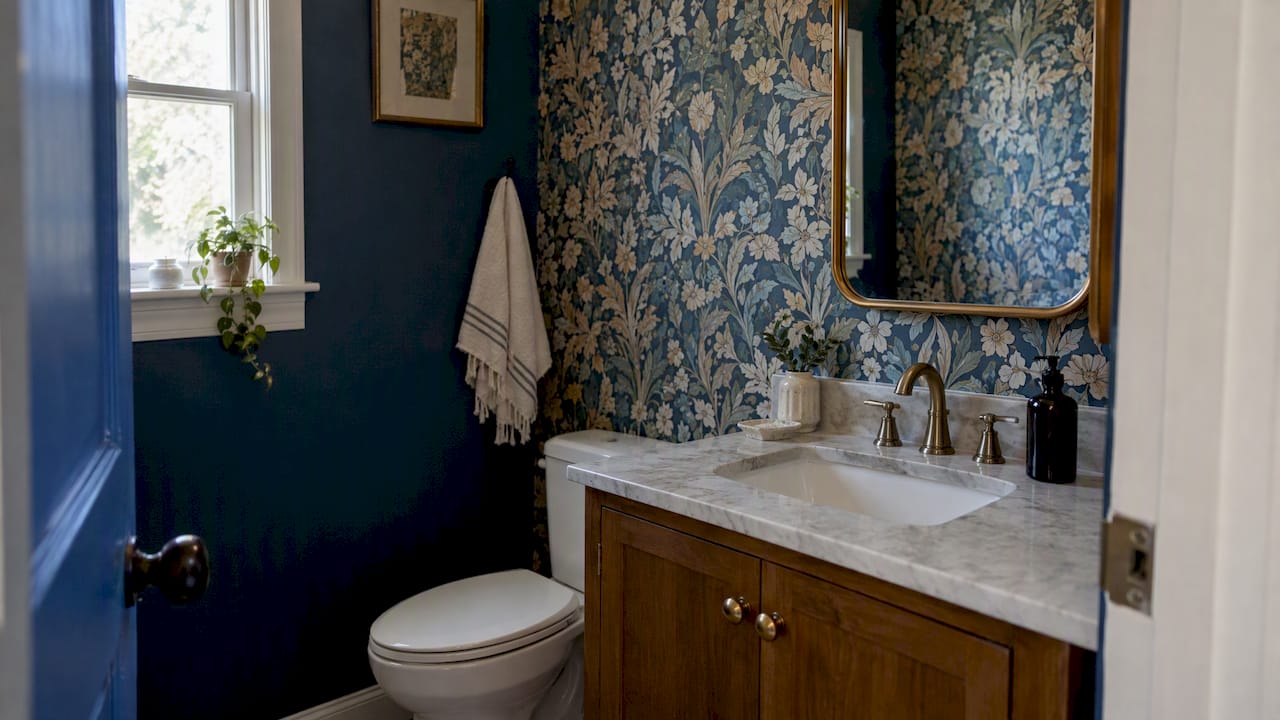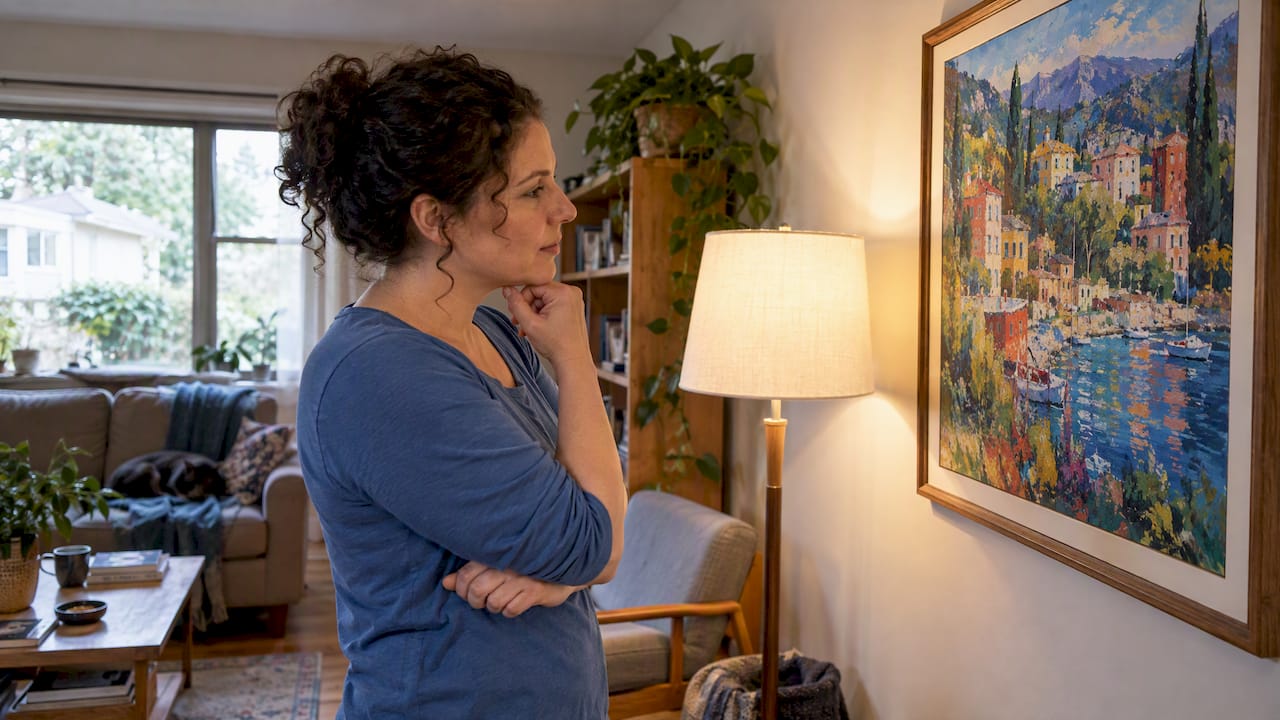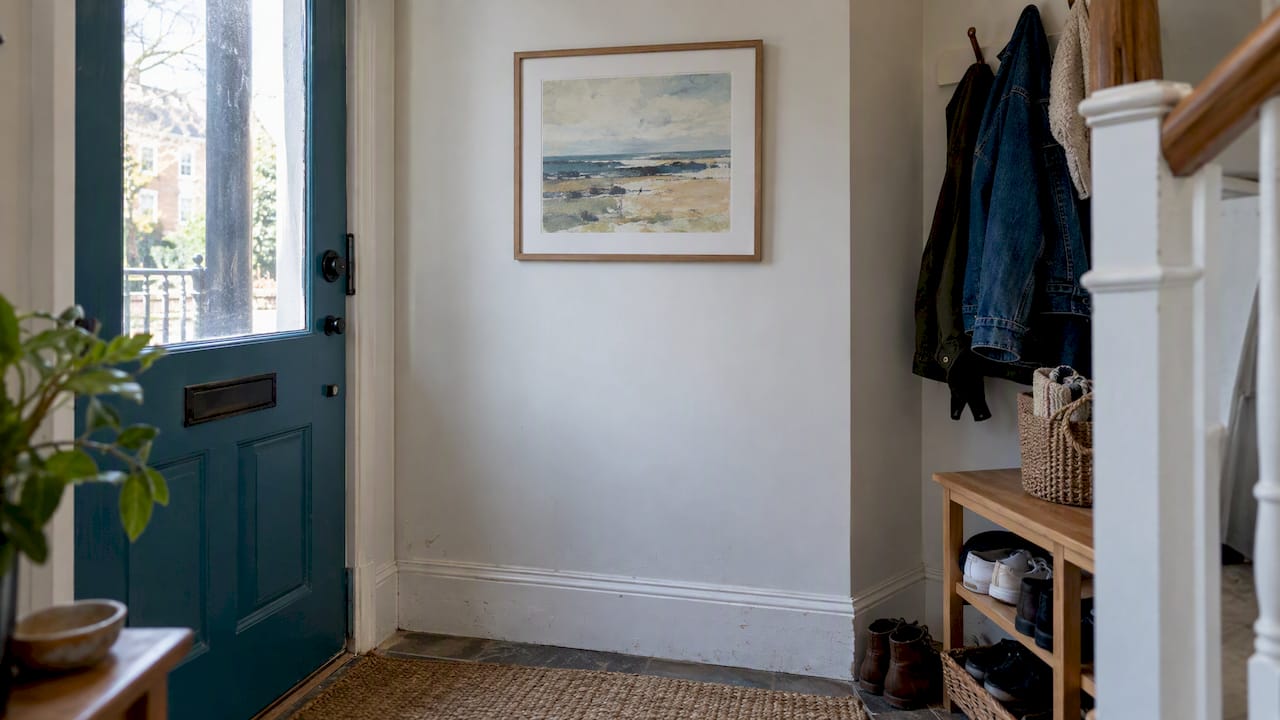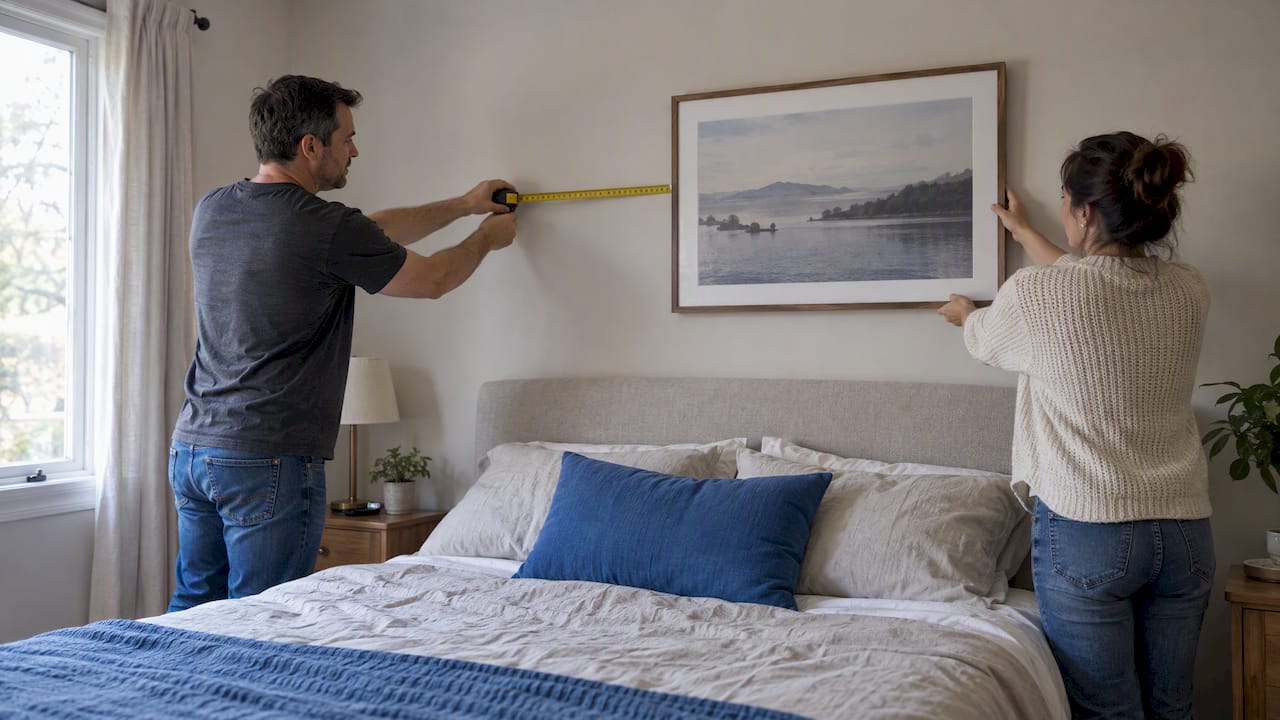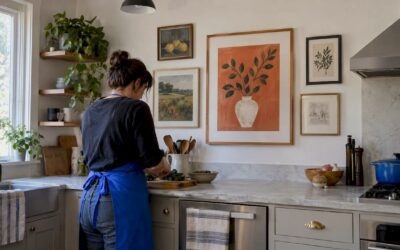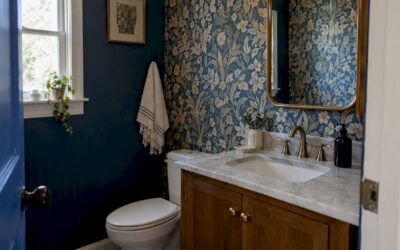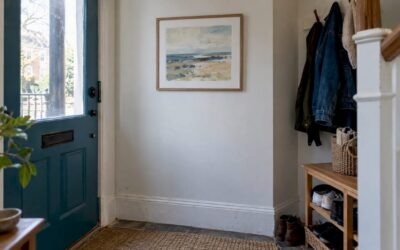
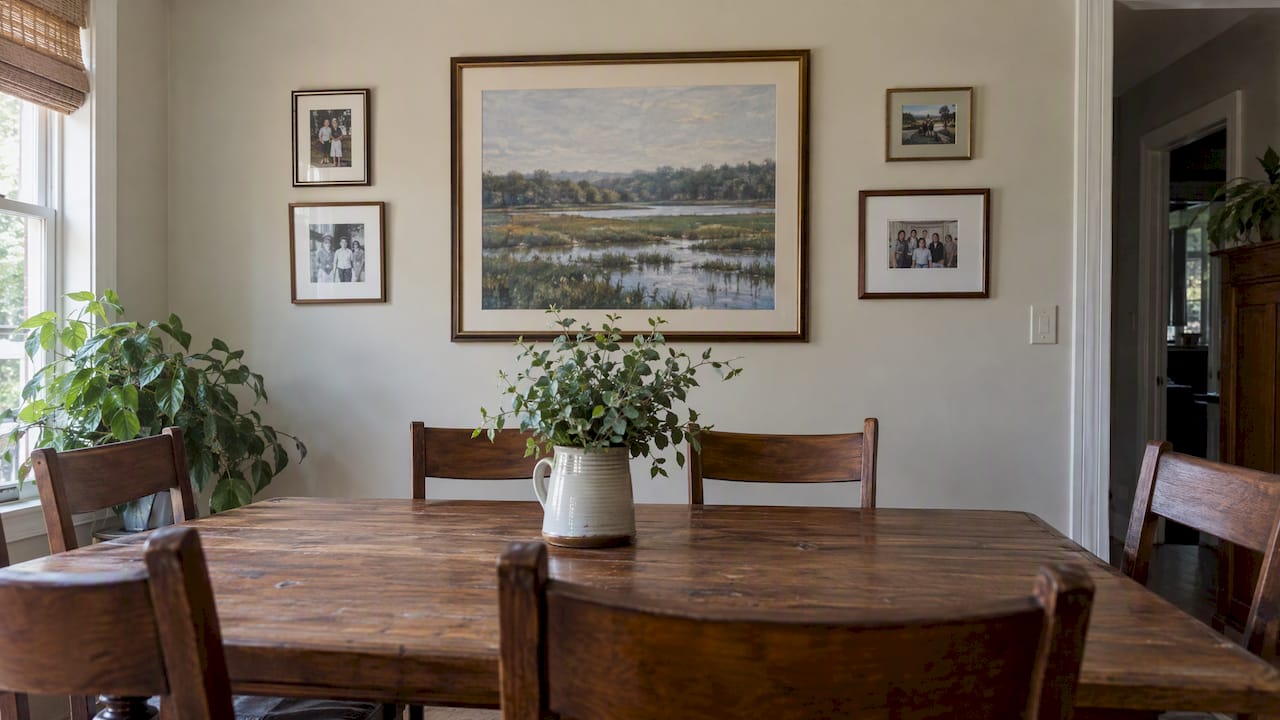
A single large statement piece or a well-composed gallery wall will do the most for almost any dining room. Hang either with its center about 57 inches from the floor, and keep 6–8 inches between a sideboard and the bottom of the frame. For a room that feels like yours, add photos, textiles, or a sculptural object.
TL;DR:
- For a gallery wall, start with the largest or boldest piece, use an odd number of works, and repeat a color or frame finish.
- Choose adjustable picture lights, track heads, or directional recessed fixtures, then use warm bulbs on a dimmer to reduce glare and shift the room’s mood.
- Keep original art away from splash zones and prolonged intense light; rotate sensitive pieces or use UV filtering glazing, and leave a gap for airflow.
- Prints, framed photographs, and sealed canvases handle dining room wear better than fragile originals; acrylic glazing weighs less and resists shattering in large frames.
- Tape a paper template before hanging, then match hardware to the artwork’s weight and wall material; heavy pieces need a stud or rated anchor.
Table of Contents
- 1. Which dining room art ideas are worth copying?
- 2. How high and how big should dining room art be?
- 3. How do you build a gallery wall that feels cohesive?
- 4. How do you mix styles, colors, and materials in a dining room?
- 5. How should you light dining room art?
- 6. Which materials hold up best in a dining room?
- 7. Why we trust scale first and taste second
- 8. Where can you find curated dining room art?
- FAQ
- Sources
1. Which dining room art ideas are worth copying?
The strongest ideas share one trait: they are chosen for the wall first and the taste second. Here are some approaches we return to again and again, each with a short way to pull it off.
- Statement single artwork: Choose a piece that feels well-proportioned above the furniture, so it anchors the wall instead of floating. Our guide to oversized art ideas goes deeper on scale.
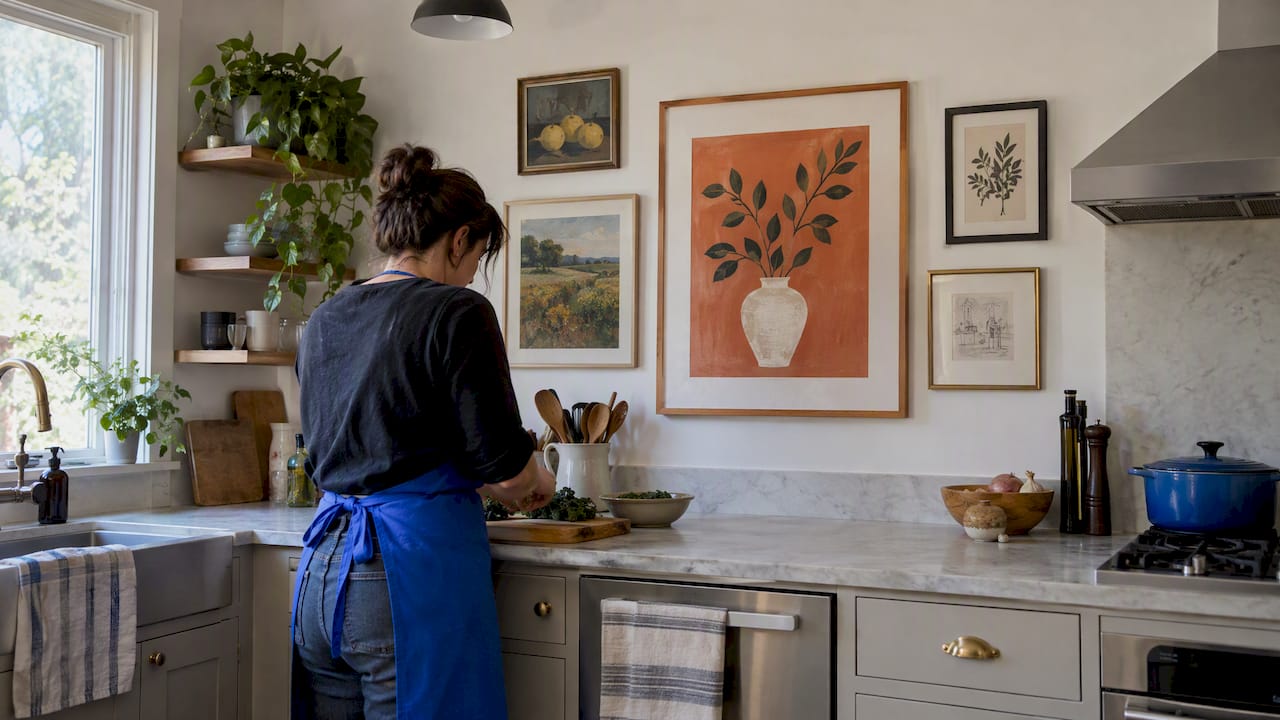
- Gallery wall: Begin with one commanding anchor piece, then mix frame styles and media around it. Layout details follow in their own section below.
- Panoramic or horizontal work: A long landscape or abstract suits a buffet wall, where height is limited but width is generous.
- Mirror as art: A round, arched, or sunburst mirror with a sculptural frame does two jobs. It adds shape to the wall and bounces candlelight back across the table.
- Triptych or multi-panel set: A multi-panel set with narrow gaps creates rhythm across a wide span, and the set reads as one idea.
- Textile and mixed-media art: A framed length of fabric or a woven panel brings warmth to rooms full of wood, glass, and tile.
- Shallow wall sculpture or plate arrangement: Where the wall allows some depth, ceramics and relief pieces add shadow and shape.
- Rotating mini-exhibition: Keep a small collection and swap pieces with the seasons, so the room never goes stale.
- Tabletop coordination: Echo one color or material from your centerpiece in the wall art, so the table and the wall read as one composition. Our piece on dining table centerpieces offers pairings to try.
Readers who share their dining-room dilemmas online often land on the same shortlist: wide mirrors, single large pieces, three-panel sets, or family-photo clusters. That tells us these are the options people actually find livable.
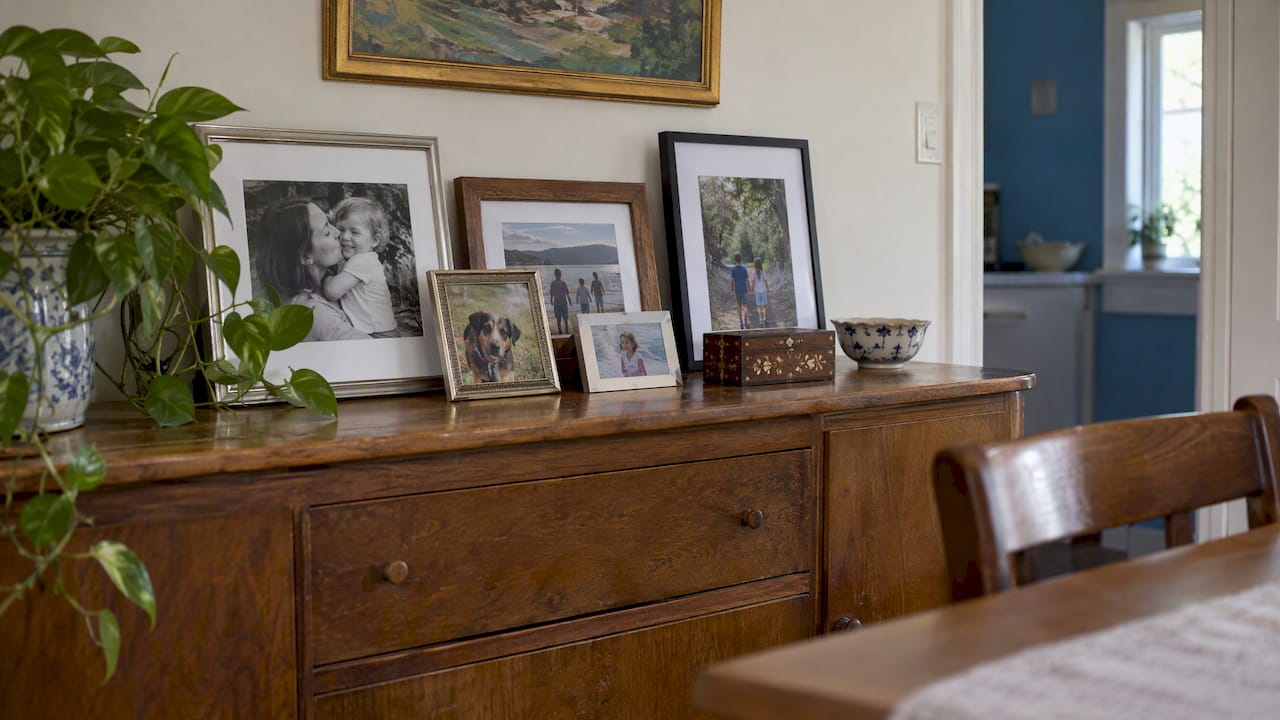
Personal touches matter as much as the pick. Southern Living suggests personal photos and sentimental mementos to make a dining room a welcoming retreat, while elegant art sets a formal room apart. If you want a broad visual reference, a large Pinterest collection of dining art shows statement pieces, botanical still lifes, and colorful abstracts side by side.
2. How high and how big should dining room art be?
Scale is the decision that quietly makes or breaks the wall. Settle it first, and style choices get easier. Follow these steps in order.
- Start at 57 inches. Architectural Digest offers guidance on artwork placement as a general rule. Nudge it up with tall ceilings or high-backed furniture, and down slightly in rooms with low ceilings, since the eye should land comfortably from a seated position.
- Clear the furniture. Leave a comfortable gap between the top of a sideboard or console and the bottom of the frame, per the same guide. Art that hovers too high looks disconnected.
- Mock it up. Cut paper to the artwork’s size and tape it to the wall with painter’s tape. Live with it for a while before you drill.
- Match hardware to weight. Small nails suit light pieces, picture hangers handle medium ones, and heavy works need a stud or a rated anchor with a screw, depending on whether the wall is drywall, plaster, or brick.
- Mark, measure, level. Mark the center point, measure the hanger distance on the frame, transfer that measurement to the wall, and level before fixing.
3. How do you build a gallery wall that feels cohesive?
A dining-room gallery wall works best when it has a clear leader and a loose set of followers. Architectural Digest advises starting with an anchor piece, mixing sizes and media, and using odd-numbered groupings. Here is how we would run it.
- Choose the anchor. Pick the largest or boldest work and decide where it sits. Everything else is arranged around it.
- Gather an odd number of pieces. An odd number of pieces can feel intentional. Vary sizes and orientations, and repeat at least one color or frame finish for cohesion.
- Map it before you drill. Lay everything on the floor, or trace each piece in paper and tape it to the wall.
- Set the spacing. Aim for consistent gaps, with a little more breathing room around the focal work.
- Hang from the center out. Mount the anchor first, then work outward, checking alignment with a laser or long level.
Need a head start? Explore our gallery wall layout templates and our collection of gallery wall ideas for arrangements to borrow.
4. How do you mix styles, colors, and materials in a dining room?
Decide the mood before you buy a single frame: formal, casual, dramatic, or playful. The mood then points you to a color temperature, warm for intimacy and cool for crisp calm. Architectural Digest also notes that a gallery should balance warm and cool colors and vary the weight of each piece, and that a good wall tells a story about the people who live there.
- Balance heavy with light. Pair a dark, dense painting with airy line art so no single piece overwhelms the room.
- Add texture. Woven textiles, reliefs, and metalwork soften rooms dominated by hard finishes like glass and polished wood.
- Repeat an accent. A shared frame finish, a recurring color, or a motif ties very different works together.
- Bring in sculptural accents. A carefully chosen traditional piece can anchor a modern room; HD Asian Art explains how to blend Asian art into contemporary interiors with respect for its origins.
5. How should you light dining room art?
Good light can make art a flattering feature at the table, alongside the food. Choose fixtures that you can aim and dim.
- Adjustable sources: Picture lights, track heads, or directional recessed fixtures give even illumination without glare on glass.
- Warm bulbs on a dimmer: Warm temperatures flatter both skin and canvas, and dimming lets the room shift gently from weekday supper to dinner party.
- Limit direct exposure: Prolonged, intense light is hard on originals. Rotate sensitive pieces, or use UV-filtering glazing.
- Plan for the steam: Dining rooms see humidity from hot dishes, so keep originals out of splash zones.
Pro Tip: Leave a small gap behind each frame so air can circulate; it reduces condensation risk near a steaming table.
6. Which materials hold up best in a dining room?
A dining room is a working room, so favor art that forgives the occasional splash and swing of a chair. Prints, framed photographs, and sealed canvases are lower-risk than fragile originals, and they let you change your mind without regret.
- Glazing choice: Acrylic is lighter and shatter-resistant, which suits large frames. Glass resists scratches and feels more traditional. Either can be bought with anti-reflective properties.
- Renter-friendly hanging: Removable hanging systems protect walls, while heavier works deserve rated anchors.
- Texture without bulk: Textile panels and shallow-relief pieces add depth and warmth without demanding overbuilt hardware.
- Easy cleaning: Sealed surfaces and framed glazing wipe clean, which matters near the table.
7. Why we trust scale first and taste second
The mistake we see most is falling for a piece before measuring the wall. We would rather you settle scale first, then choose style to fit it, because a small, beautiful work on a large wall will always look apologetic. Quick mockups help: paper templates, or temporary Command strips for trials, show you what the room will feel like before any commitment. Then collect slowly. A dining room that grows over seasons, with pieces rotated in and out, feels lived in and deliberate, never bought in a single afternoon.
— Nealda
8. Where can you find curated dining room art?
Choosing scale, frame, and coordination is the part that exhausts most people, and it is exactly what we narrow down for you. Our curated Store Finds offer product picks to explore alongside the approaches in this article. That cuts the decision fatigue, so you spend your energy on the wall instead of the endless scroll. Browse the picks for a shortlist you can hang right away, or use them as a guide for sourcing similar pieces elsewhere. Start with Store Finds, measure your wall, and tape up a paper template before you commit.
FAQ
What kind of art looks good in a dining room?
Large statement pieces, coordinated gallery walls, and mirrors with sculptural frames all work well. Pick scale first, then choose colors that suit the mood of your room. Personal photos and sentimental pieces can make the space feel warmer, as Southern Living suggests.
What kind of pictures should I put in a dining room?
Choose images that suit conversation and appetite: botanical still lifes, abstracts in warm tones, landscapes, and family photographs. Avoid anything harsh or so busy that it competes with the people at the table. Sealed prints and framed photographs also hold up best in a room that sees steam and splashes.
What should I put in the middle of my dining room table?
Choose a centerpiece low enough for guests to see over, and echo one color or material from the wall art so the two read as one composition. Our guide to everyday table centerpieces offers practical options.
What are the rules for dining room art?
Hang the center of a piece at about 57 inches from the floor, and leave 6–8 inches above a sideboard, following Architectural Digest’s hanging guidance. Choose an odd number of pieces for groupings, and mock up the layout with paper before you drill.
Sources
- What’s The Best Way to Hang a Picture? Our Expert Guide to Displaying Art in Your Home | Architectural Digest
- Southernliving
Recommended
- Formal Dining Room Revival: Start With Lighting and Chairs
- 57 inch Rule: Hang From a Picture Rail Without New Holes
- Dining Table Centerpieces That Work Every Day
- Luxury Dining Room Ideas That Impress Every Guest