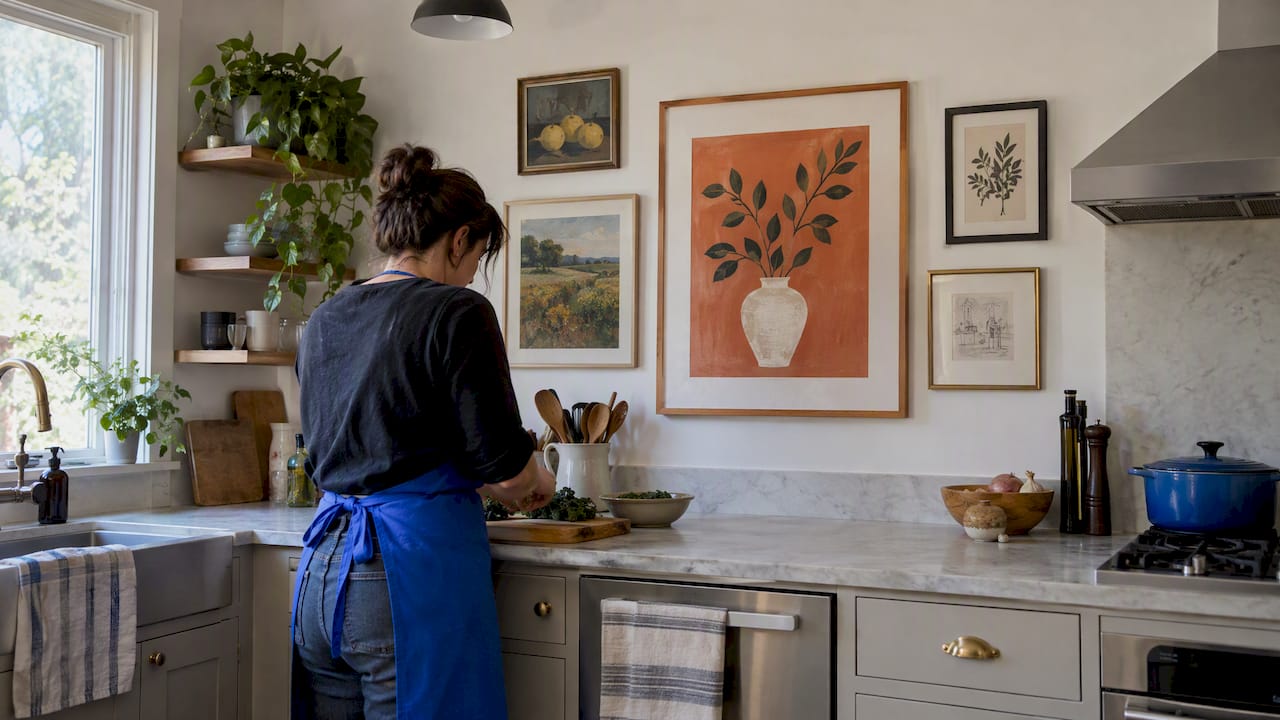
For most kitchens, the right approach comes down to three options: a compact gallery wall for layered personality, a single large focal print for instant polish, or functional art like a herb wall or plate display for a renter-friendly, space-conscious fix. A gallery wall suits open shelving and wide walls, a focal print works best above a sofa-free run of counter or an island, and functional art earns its keep in small galley kitchens where every surface needs a job. The ideas below pair with the sizing and material guidance that follows, so you can move from inspiration to a wall that actually holds up to steam and grease.
TL;DR:
- Center the main piece at eye level, roughly 57 to 60 inches from the floor; above counters, measure 6 to 8 inches from the surface.
- Near stoves, choose metal prints or photographs with acrylic fronts; avoid unframed paper and leave an air gap behind frames to limit trapped moisture.
- Space gallery frames 2 to 3 inches apart, and size the full grouping to about two thirds of the wall segment for a balanced fit.
- In narrow kitchens, choose slim vertical pieces, mirrors, or shelves that combine decor with storage, and avoid bulky frames and crowded color palettes.
- For rental kitchens, use removable hanging strips or small finish nails, and choose framed or laminated prints that can be wiped clean.
Table of Contents
- 1. Top Kitchen Wall Art Ideas You Can Adapt This Weekend
- How to Arrange, Size, and Place Kitchen Wall Art
- Materials and Care: Finishes That Handle Steam, Grease, and Heat
- Design Principles From Art in Lifestyle: Gallery-Wall Formulas and Small-Space Color Moves
- Art Ideas Suited for Small Kitchens and Tight Walls
- Choosing a Theme That Matches Your Kitchen’s Style
- Mixing Textures and Mediums Without Creating Visual Clutter
- Seasonal and Rotating Art Ideas That Keep the Kitchen Feeling Fresh
- Lighting That Makes Kitchen Wall Art Actually Stand Out
- When to Buy Original Art vs. Curated Prints
- Curated Picks to Bring These Kitchen Wall Art Ideas Home
- FAQ
- Sources
1. Top Kitchen Wall Art Ideas You Can Adapt This Weekend
Kitchen walls ask more of art than any other room. They need to survive humidity, grease spatter, and the occasional dropped spoon, while still contributing warmth to a space that doubles as the heart of the home. The ideas below range from five-minute styling fixes to weekend projects, each suited to a different layout, budget, and level of commitment.
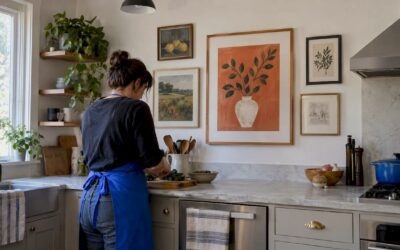
- Mixed-frame gallery wall: Combine several frames in two or three finishes (black, brushed brass, natural wood) with matching mat width for cohesion, even when the art inside varies.
- Single large focal print or canvas: One oversized piece, sufficiently large to act as a deliberate design choice rather than an afterthought, especially above a breakfast nook or open counter run.
- Vintage or decorative plate display: Hang mismatched plates in a loose cluster or a tight grid for texture that nods to old-world kitchen styling without needing a single frame.
- Herb wall or hanging planters: Living greenery mounted in simple holders doubles as art and gives you something to actually use at dinnertime.
- Cutting board and utensil display: Group wooden boards, a few copper pots, or vintage utensils on hooks for a composition that earns its wall space twice over.
- Framed recipe prints or handwritten family recipes: A grandmother’s handwriting, blown up and framed, turns sentiment into kitchen-friendly art that guests actually stop to read.
- Typography or motto art: A short phrase in a clean serif or hand-lettered style fills awkward narrow walls where a full composition would feel cramped.
- Styled open shelving: Arrange cookbooks, ceramics, and a small plant in varied heights, leaving breathing room between groupings so the eye has somewhere to land.
- Chalkboard or painted memo wall: A chalkboard panel for menus or grocery lists adds function and a rotating, low-stakes creative outlet.
- Woven or textile wall hangings: A small macrame piece or woven wall basket introduces softness against hard cabinetry and tile.
- Mirrors as kitchen art: A round or arched mirror bounces light across a dim galley kitchen while reading as a design statement.
- Vintage metal or enamel signs: Reproduction advertising signs or enamel plaques bring a lived-in, collected feel without the fragility of canvas.
- Market or ingredient photography: Close-up shots of citrus, bread, or produce markets inject color and texture that echoes what is already on the counter.
- Small sculptural shelves: A narrow floating shelf with one or two ceramic or wood objects adds three-dimensional interest between flatter pieces.
Pick two or three ideas that fit your layout rather than attempting all of them. A gallery wall and a herb display rarely compete for attention; a gallery wall and a large focal print often do.
How to Arrange, Size, and Place Kitchen Wall Art
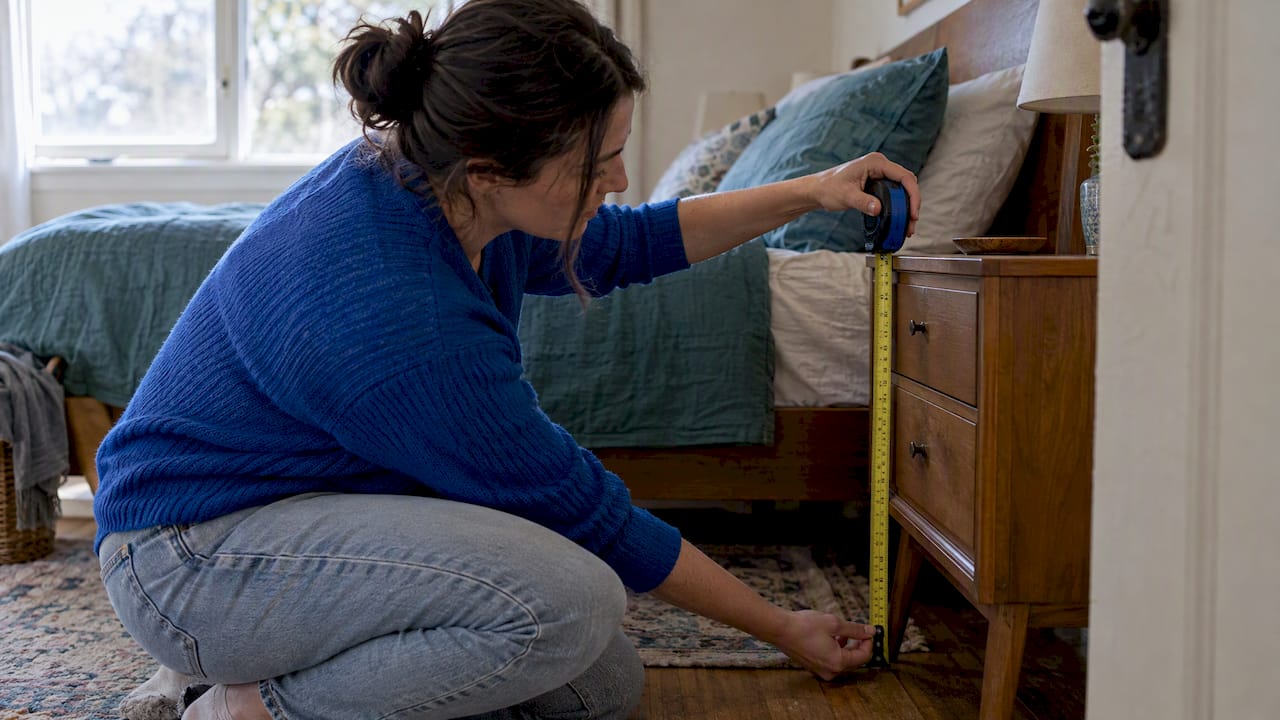
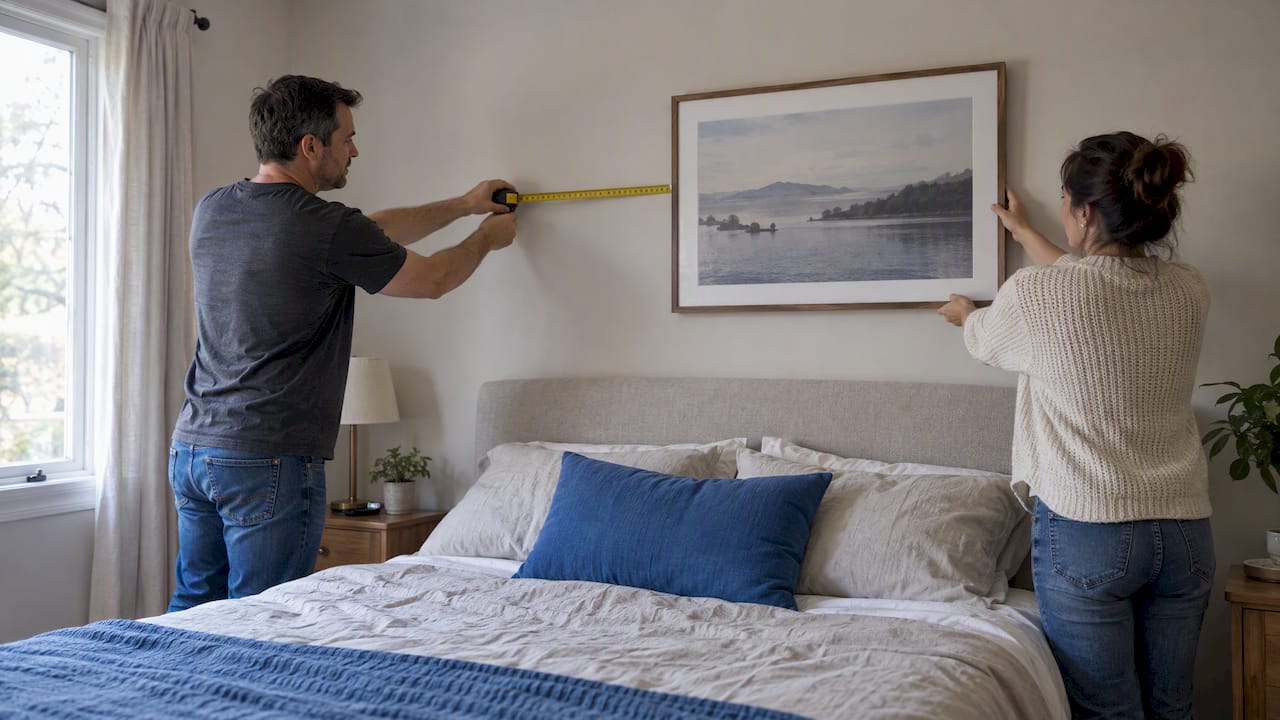
Art reads as intentional when it respects the lines already in the room. Center the main piece of a grouping at standard eye level, roughly 57 to 60 inches from the floor to the artwork’s center, unless it hangs directly above counters or an island, in which case measure up 6 to 8 inches from the counter surface instead.
For gallery walls, leave consistent spacing between frames so the grouping reads as one composition rather than scattered pieces.
- Space frames 2 to 3 inches apart for a tight, cohesive salon-style cluster.
- Use a grid layout with equal spacing when you want a calmer, more modern feel.
- Keep art at least 3 inches above a stove hood or backsplash to avoid grease exposure.
- Size a single piece above a sink or stove to cover no more than two-thirds of the available wall width, leaving margin on both sides.
- Choose removable hanging strips or small finish nails for rented kitchens where wall damage matters.
Pro Tip: Align the outer edges of a gallery wall with a cabinet edge or the counter’s front line: that one shared edge makes a varied grouping look planned instead of accidental.
Materials and Care: Finishes That Handle Steam, Grease, and Heat
Kitchen conditions are tougher on art than any other room in the house, so the format matters as much as the image. Framed prints under glass or acrylic glazing resist moisture and wipe clean without damaging the paper underneath. Metal prints and acrylic-faced photography hold up especially well near stovetops, since both resist warping from ambient heat and humidity. Treated or sealed wood pieces, including cutting board displays, tolerate grease better than raw wood or unsealed paper ever will.
- Avoid hanging unframed paper art directly beside the stove or sink; grease and steam will warp and discolor it over time.
- Wipe glass or acrylic-faced pieces with a damp microfiber cloth; avoid ammonia-based cleaners on acrylic, which can cloud the surface.
- Leave a small air gap behind frames, using bumper pads, so moisture does not collect between the art and the wall.
- Consider lamination or acrylic glazing for budget prints. Both upgrades cost little and add years of durability.
Design Principles From Art in Lifestyle: Gallery-Wall Formulas and Small-Space Color Moves
In a narrow galley kitchen, a tight three-frame cluster might work centered over a single counter run. Above an open-plan island, a wider five- or seven-frame spread with more breathing room between pieces may work.
- Measure the wall segment first, then size the grouping to roughly two-thirds of that width before buying frames.
- Pair the ratio with lighter neutral paint in small kitchens, since pale backgrounds let a gallery read as full without feeling heavy.
- For printable layouts and shoppable templates, our gallery wall guide walks through the measuring and spacing in more detail.
Art Ideas Suited for Small Kitchens and Tight Walls
Small kitchens punish anything bulky, so the best art choices there do double duty or sit flush against the wall. Flat, frameless options like printed acrylic panels or thin metal prints add almost no depth, which matters in a galley kitchen where elbow room is already scarce.
A single narrow vertical piece, taller than it is wide, makes better use of slim wall segments between cabinets than a wide horizontal print ever could. Mirrors remain one of the most effective small-kitchen moves: a round mirror near a window bounces available light across the room and reads as intentional decor rather than a practical fix.
Space-saving decor that pulls double duty, like a magnetic knife strip styled with small art magnets, or a floating shelf that holds both cookbooks and a single framed print, lets a tight kitchen feel finished without adding clutter. Monochrome or limited color palettes, paired with one or two pieces rather than a sprawling gallery, help a small kitchen feel larger rather than busier.
Skip oversized, heavily matted frames in tight spaces. A thinner profile and a lighter color story will always read as more spacious than a bold, heavy composition crammed into a narrow wall.
Choosing a Theme That Matches Your Kitchen’s Style
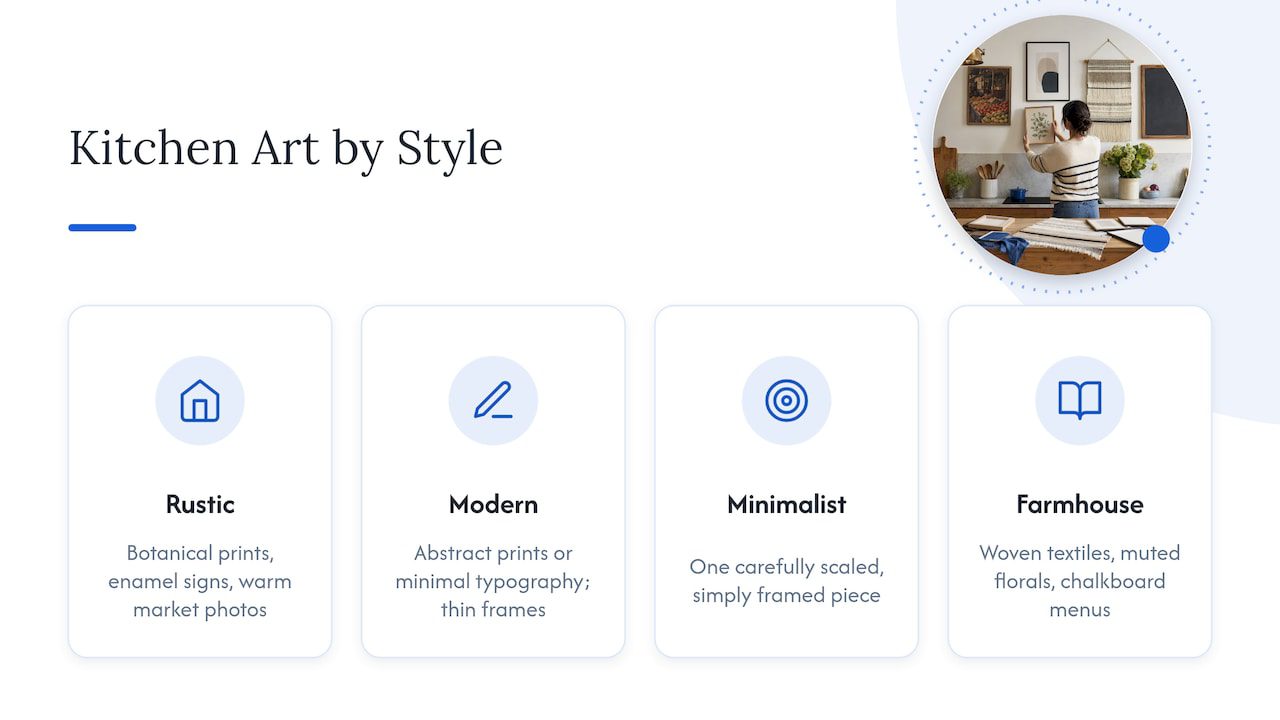
Art should echo the kitchen’s existing materials, not fight them. A rustic kitchen with exposed beams and butcher block counters pairs naturally with botanical prints, vintage enamel signs, or warm-toned market photography; the goal is texture and age, not polish.
Modern kitchens with flat-panel cabinetry and quartz counters call for cleaner lines: abstract prints, minimal typography, or a single oversized photograph in a thin black or brushed-metal frame. Avoid heavy ornate frames here, since they compete with the room’s simplicity rather than complementing it.
Minimalist kitchens benefit most from restraint. One piece, carefully scaled and simply framed, does more work than a gallery wall ever could in a space defined by clean surfaces and negative space. Farmhouse kitchens sit comfortably between rustic and vintage, favoring woven textiles, muted florals, or a chalkboard menu panel that feels functional rather than purely decorative.
Whatever the style, consistency matters more than matching every frame exactly. A rustic kitchen with one sleek modern print can still work, as long as the color palette ties the pieces together.
Mixing Textures and Mediums Without Creating Visual Clutter
A wall full of flat prints, however well chosen, tends to feel one-note. Mixing mediums, a framed print beside a woven hanging beside a small ceramic shelf, gives the eye more to explore and makes the kitchen feel collected over time rather than purchased all at once.
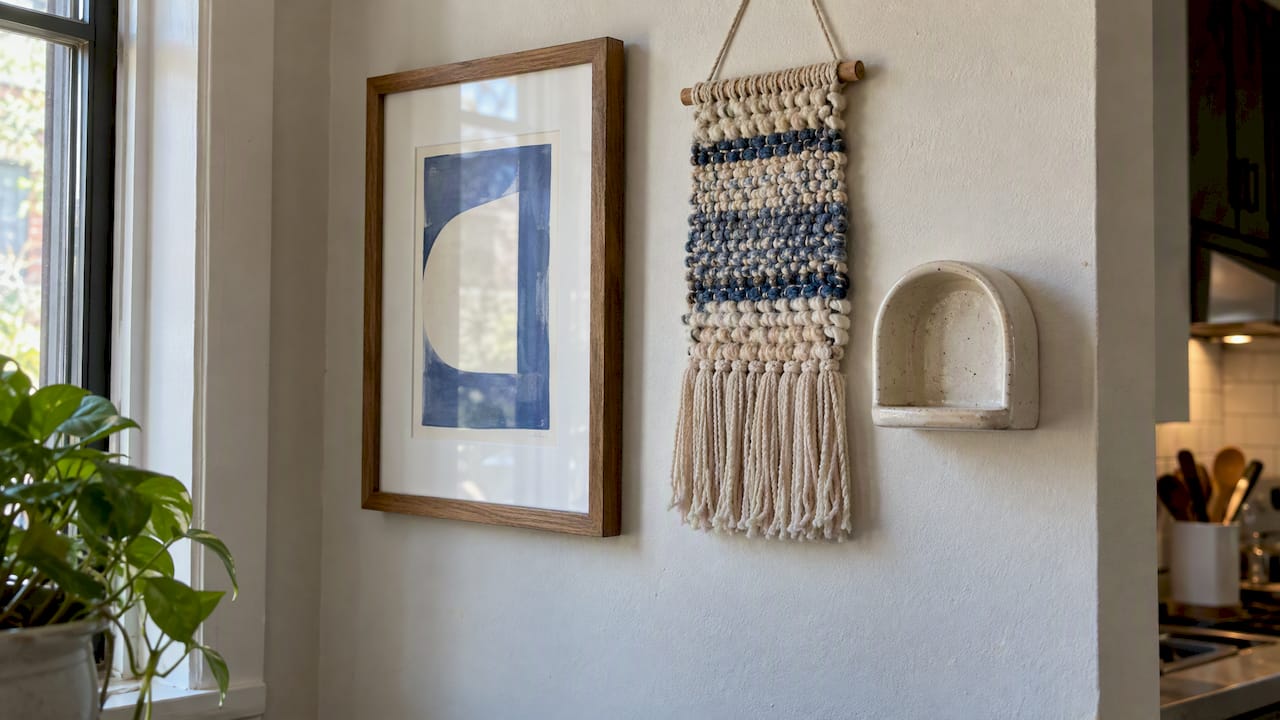
The easiest way to mix textures without creating chaos is to anchor the grouping with one consistent element, usually color or frame finish. A woven piece in warm terracotta tones sits comfortably beside a framed print with the same palette, even though the materials differ completely.
Limit a single wall to two or three distinct mediums. Paper, wood, and textile together feels intentional; paper, wood, textile, metal, and ceramic all crowded onto one wall starts to feel like a yard sale. Vary the depth too: a flat print beside a slightly raised woven piece beside a shelf with a three-dimensional object creates gentle shadow play without needing any single item to be large or dramatic.
Seasonal and Rotating Art Ideas That Keep the Kitchen Feeling Fresh
A kitchen wall does not need to stay static. Swapping two or three pieces seasonally, a citrus print in summer, a warm botanical in fall, keeps the room feeling considered without requiring a full redecorate.
The easiest rotation system uses a consistent frame size and finish across several interchangeable prints, so swapping the art inside takes minutes rather than rehanging anything. A clip frame or a simple poster frame with a front-loading back makes this especially fast.
Chalkboard panels and open shelving naturally support rotation since they are designed to change: a chalkboard menu updates weekly, and a styled shelf can shift with the seasons by swapping in different ceramics, a small pumpkin in fall, or fresh greenery in spring. For readers who want a template to build this kind of flexible display, our gallery wall layout guide includes printable plans sized for easy swaps.
Lighting That Makes Kitchen Wall Art Actually Stand Out
Even the best-chosen piece disappears under flat, overhead kitchen lighting. A small picture light mounted above a focal print, or a puck light tucked under a cabinet and aimed at a gallery wall, adds the kind of directional glow that makes art read as a feature rather than wallpaper.
Warm-toned LED bulbs, rather than cool white, flatter most kitchen art and echo the warmth already present in wood cabinetry or brass fixtures. Avoid placing art directly under a bright, unshaded overhead fixture, since the glare can wash out color and flatten texture.
For galleries near windows, consider how daylight shifts across the wall during the day. A piece that looks balanced at noon may sit in shadow by evening, so a small supplemental light source keeps the display consistent regardless of the hour.
When to Buy Original Art vs. Curated Prints
Invest in one piece that earns permanence, usually the largest or most personal item on the wall, and fill the rest with curated prints you can swap as taste shifts. That split keeps a kitchen feeling collected rather than either sparse or overdone, and it lets you test a trend, like market photography or bold typography, before committing real money to it.
— Nealda
Curated Picks to Bring These Kitchen Wall Art Ideas Home
Once you know which approach fits your kitchen, sourcing the actual pieces is the slower part. Our Store Finds collection gathers curated prints, removable art, and space-saving decor, including several of the plate displays, textile hangings, and typography pieces referenced above, so you can shop by the idea rather than starting from scratch.

Most pieces are designed for simple, drill-free mounting, which matters most in rental kitchens where wall damage is a real concern.
| Idea type | Where to start |
|---|---|
| Gallery wall templates | Gallery wall layout guide |
| Space-saving decor | Store Finds collection |
| Custom or durable materials | Tumbleweed Stained Glass |
If a kitchen wall calls for something more custom, like a durable glass or framed piece built to a specific size, our partners at Tumbleweed Stained Glass showcase the kind of craft work worth considering for a one-of-a-kind focal piece. Browse the shop, pick two or three ideas that match your wall, and start with the piece that matters most before filling in the rest.
FAQ
What are some creative wall art ideas for a kitchen?
Mixed-frame gallery walls, vintage plate displays, herb walls, and framed recipe prints all work well because they combine visual interest with a function suited to the room. Typography art and styled open shelving are also easy, low-cost ways to add personality without committing to a full gallery.
What are some good paint ideas for a small kitchen?
Lighter neutrals like warm white, cream, or pale yellow help a small kitchen feel larger, since limited, monochrome palettes reduce visual clutter. A small pop of saturated color on a single wall or alcove can still read as intentional without overwhelming the space.
What kind of art do you put in a kitchen?
Kitchen-friendly formats include framed recipe prints, decorative plate displays, herb walls, and gallery walls, since these hold up well to steam and daily activity while adding personality. Metal and acrylic prints are also good choices near stoves and sinks because they resist grease and moisture better than unsealed paper.
How do you decorate a kitchen wall?
Start by choosing one approach, a gallery wall, a single focal print, or functional art like a herb display, based on your wall size and layout. Center the grouping at standard eye level or just above the counter line, and keep the composition to roughly two-thirds of the available wall width for a balanced look.
Does a single large print work better than a gallery wall?
Either can work well; a single large print creates quick cohesion in a busy kitchen, while a tight gallery wall builds more personality over time. A well-proportioned focal piece often reads as more polished in smaller or busier kitchens than a loosely matched grouping.
Sources
- Paint Colors for Small Rooms | Sherwin-Williams
- 18 kitchen wall art ideas to inspire you | Apartment Therapy
- Ina Garten’s old-world kitchen art is 2027’s coziest trend | Homes & Gardens