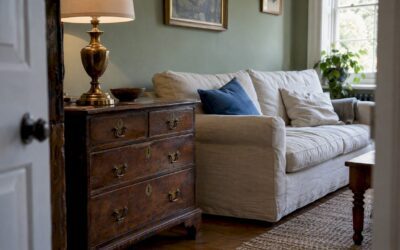
The best playroom art does two jobs at once. It gives children something to look at, touch and make, and it gives the adults who walk through the room a reason not to wince. The way to get there is simple: hang a few well-chosen pieces at a child’s eye level, give your kids’ own work a proper home, keep everything lightweight and secure, and let the walls change as your children do.
Below, we walk through the ideas that hold up in real homes: what to hang, where, in what frame, and how to keep a room full of toys from tipping into visual noise.
TL;DR
- Hang art at your child’s eye level, not yours, and keep it in light frames, canvas or adhesive-backed pieces instead of glass.
- Give children’s own artwork a contained display, such as a picture ledge, a rail or a cork strip, and rotate it often.
- Choose broad, lasting themes (maps, nature, abstract shapes) for store-bought art, so the room can grow from toddler to tween without a redo.
- Anchor tall storage to the wall before you style anything above or around it.
- Fewer, larger pieces and one organized gallery read calmer than many small prints scattered everywhere.
Table of Contents
- Start With the Child, Not the Frame
- Hang Art Where Children Actually Look
- Make Space for the Children’s Own Art
- Choose Store-Bought Art That Can Grow Up
- Frames, Materials and Finishes That Survive Play
- Safety Comes Before Style
- Playroom Gallery Wall Ideas That Stay Calm
- Playroom Art for Small Spaces
- A Simple Weekend Plan
- Our Point of View
- Find Pieces Worth Hanging
- FAQ
- Sources
Start With the Child, Not the Frame
A playroom is the one room in the house where the wall is part of the activity. Children look up from a block tower, lie on the rug and stare at the ceiling, or park themselves beside a shelf for an hour. That changes the brief. You are not decorating a showpiece. You are arranging a backdrop for play.
So begin with three questions:
- Who uses the room most? A toddler sees the world from about knee height. A nine-year-old reads, builds and draws at a table. Art placed for one will be invisible to the other.
- What already fills the room? Toys, books, bins and your kids’ artwork bring plenty of color on their own. As This Girl Know notes, blank walls can feel unfinished, yet covering every inch with bright prints quickly looks busy.
- How long should it last? Characters come and go within a season. A map, a landscape or a bold abstract can stay for years.
Hold those three answers in mind and the choices that follow get easier.
Hang Art Where Children Actually Look
In most rooms we hang art so its center sits near standard eye level for an adult. In a playroom, drop that logic. Place the main pieces where a child sees them while sitting or standing at play, and you will find they are noticed, discussed and loved.
A few practical habits help:
- Work in a band. Choose a horizontal strip of wall at kid height and keep most pieces inside it. It reads as intentional rather than random.
- Add one higher moment. A single large piece above the band gives adults something to enjoy from standing height and draws the eye upward, which makes the room feel taller.
- Test with a child. Sit on the floor, then stand. If a piece disappears from both positions, move it.
If you are planning a cluster, our gallery wall layout guide shows how paper templates let you map the arrangement before you put a single nail in the wall. It is a far gentler process than patching test holes.
Make Space for the Children’s Own Art
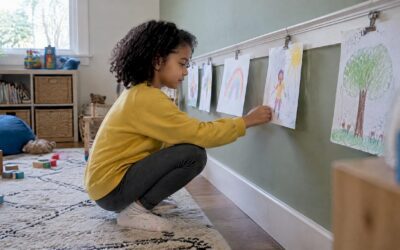
This is the idea we would put first, and it costs almost nothing. Early childhood educators call it process-focused art: no step-by-step instructions, no sample to copy, and no right or wrong way to create. The work belongs entirely to the child, and displaying it says that the work matters.
For a home, the lesson is straightforward. A wall that shows what your children made is a warmth multiplier. It tells them this is their room, and it grows alongside their skills and interests in a way no store-bought print can.
The design challenge is keeping it elegant. Taped paper sprawls. Contained display does not. Consider:
- A picture ledge. Shallow shelves let you lean a few pieces, swap them in seconds and layer in a small sculpture or a favorite book cover.
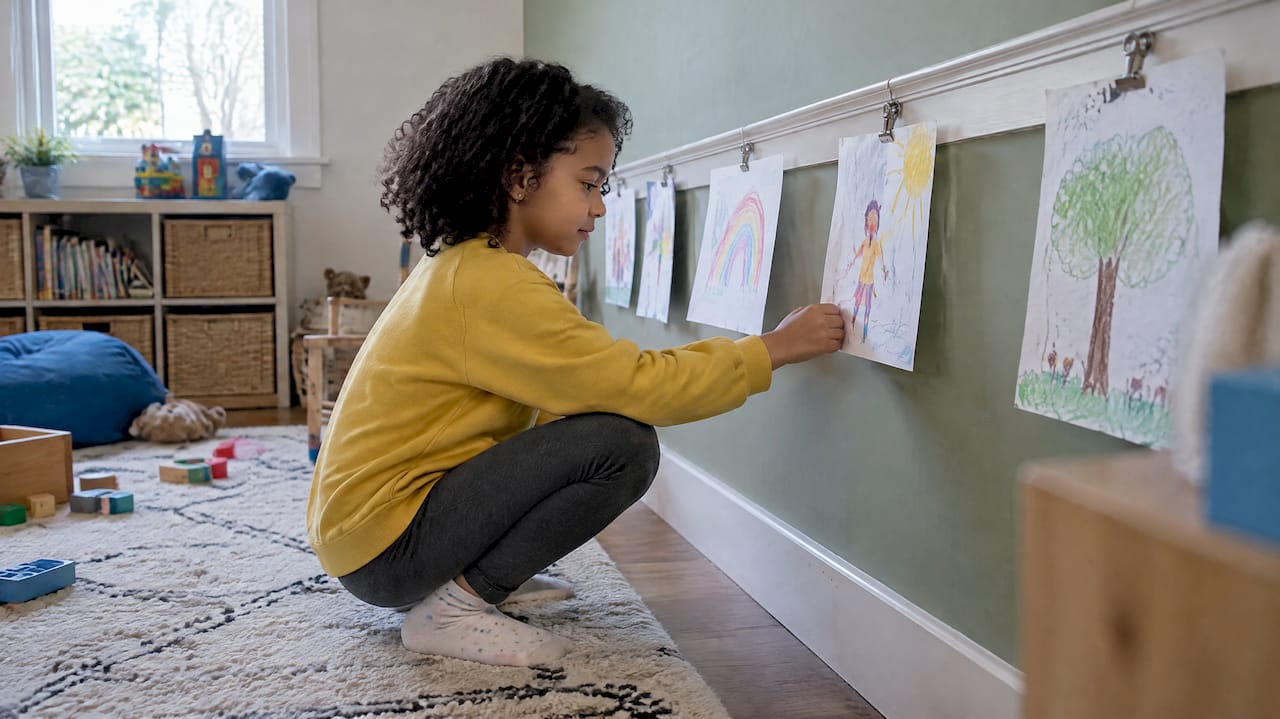
- A display rail with clips. A slim rail or a wire with clips turns one line of wall into a changing exhibition.
- A cork strip or pin board. Frame it like a piece of art and it becomes the anchor of the wall rather than a scrap of clutter.
- A single large frame with a swappable mat. Keep one big frame for the piece of the month. Children quickly understand that this is the featured work.
If your home has a picture rail, our guide to hanging from a picture rail without new holes pairs neatly with this approach, since hooks can be moved as the gallery changes.
Rotate, Don’t Pile Up
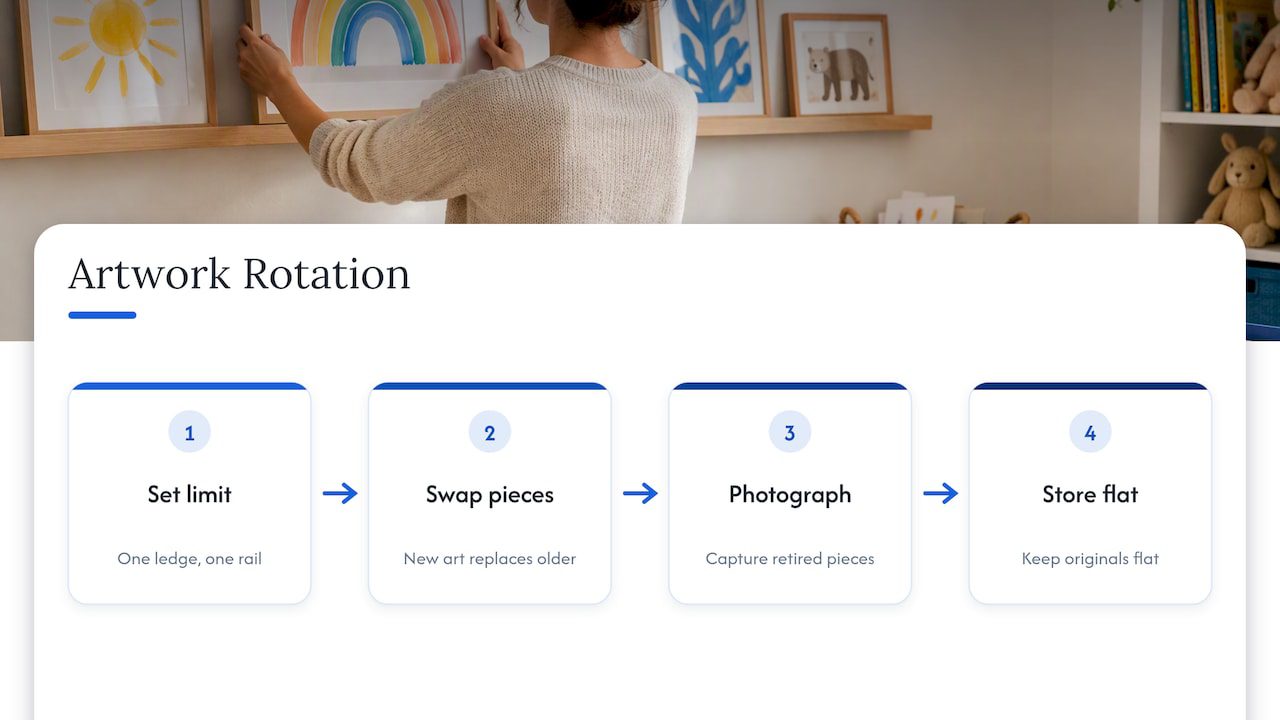
A rotating gallery keeps the room fresh without constant purchases. Agree on a limit, say one ledge and one rail, and when something new goes up, something older comes down. Photograph the retired pieces, then store the originals flat. Our guide to art storage at home for small spaces covers inexpensive ways to keep paper work from curling or fading.
The conversation that surrounds rotation is half the value. Asking a child why they chose this week’s piece builds the confidence that process art is meant to nurture. If you want to go further into child-led creativity at home, this guide to creative exploration for ages 5 to 13 offers a useful look at how kids build curiosity through hands-on making.
Choose Store-Bought Art That Can Grow Up
What you buy should earn its place. Children’s passions can change fast, and a wall of one character becomes a chore to replace. Design professionals tend to favor broad themes, and a retailer of playroom wallpaper murals lists the same families: maps, rainbows, animals and roads. We would add abstract geometry and nature scenes to that list.
These themes work because they carry no expiry date:
| Theme | Why it lasts | Best spot |
|---|---|---|
| World or regional map | Learning tool for a toddler, travel inspiration for a tween | Above a reading nook or table |
| Botanical or animal prints | Calm, familiar subjects that suit many palettes | Near shelves, in a set of two or three |
| Abstract shapes and color fields | Read as grown-up art, never babyish | Largest blank wall |
| Landscapes and skies | Add visual rest in a busy room | Opposite the toy storage |
| Typographic or alphabet prints | Fun now, easy to retire later | Low, in a small frame |
If your child is still very young, you may find our thinking on nursery wall art useful as a starting point. One strong print often beats several small ones, and that principle carries into the playroom.
Let One Piece Carry the Color
Playrooms rarely lack color. What they lack is a place for the eye to rest. Choose one large piece with a confident palette and let it set the tone, then keep the surrounding wall quiet. When toys, rugs and bins supply the rainbow, a calm piece of art can supply the pause.
Frames, Materials and Finishes That Survive Play
A playroom tests everything. Balls fly, doors slam, and someone will inevitably lean on the wall. Choose materials accordingly.
- Skip glass at low heights. The U.S. Consumer Product Safety Commission’s guidance on securing furniture and TVs to protect children is clear about prioritizing child safety in the room. In practice, we reach for canvas, prints on wood, acrylic-free lightweight frames and adhesive-backed decals wherever small hands can reach.
- Think matte. Glossy surfaces throw reflections that make art hard to see. A matte or washable flat wall finish absorbs light and gives pieces a quieter backdrop. Check the manufacturer’s cleaning claims for the specific product before you rely on it.
- Use decals for the lowest zone. Removable decals let children interact with the wall, and they come off when the stage passes.
- Pick wipeable surfaces. Canvas and sealed prints take a damp cloth far better than uncoated paper.
Safety Comes Before Style
This is the part that is easy to skip and the part that matters most. Art is rarely the hazard in a playroom; the furniture around it can be.
The CPSC reports that falling furniture, TVs and appliances send thousands of children to the emergency room every year, and that tip-overs can happen even when adults are nearby. The agency’s Anchor It! campaign urges families to secure top-heavy furniture and to anchor TVs that are not wall mounted, following the manufacturer’s instructions.
Here is how that shapes your art plan:
- Anchor first, style second. Secure every dresser, bookcase and storage unit before you hang or lean anything on or above it.
- Never use a shelf as a ladder. If you add a picture ledge, keep it shallow and fix it to the wall with proper anchors for the wall type.
- Keep heavy pieces out of reach and above play zones. Large framed work belongs high and securely fixed. Put lightweight pieces low.
- Check cords and clips. Wire and string displays should sit above the height where a toddler can pull on them, or be replaced with rigid rails.
If you are unsure about wall studs, hardware, or the weight your drywall can hold, ask a licensed handyman or contractor. For a stability question about a specific dresser, follow the maker’s instructions and check CPSC recall notices for that model.
Playroom Gallery Wall Ideas That Stay Calm
A gallery wall can be the most striking thing in a playroom, or the most chaotic. The difference is structure.
Keep One Rule Constant
Pick one thing to repeat: the frame color, the mat width, or the spacing between pieces. Everything else can vary freely. A consistent two-inch gap, for instance, makes an eclectic mix feel curated.
Mix Three Kinds of Pieces
A balanced playroom gallery usually combines:
- one or two bought pieces with a strong, lasting theme,
- a few family photographs or travel postcards, and
- a rotating slot for the children’s work.
That third slot is what separates a playroom from a hallway. For more layout thinking at scale, our collection of art gallery wall ideas for blank spaces offers arrangements you can adapt.
Consider a Doodle Zone
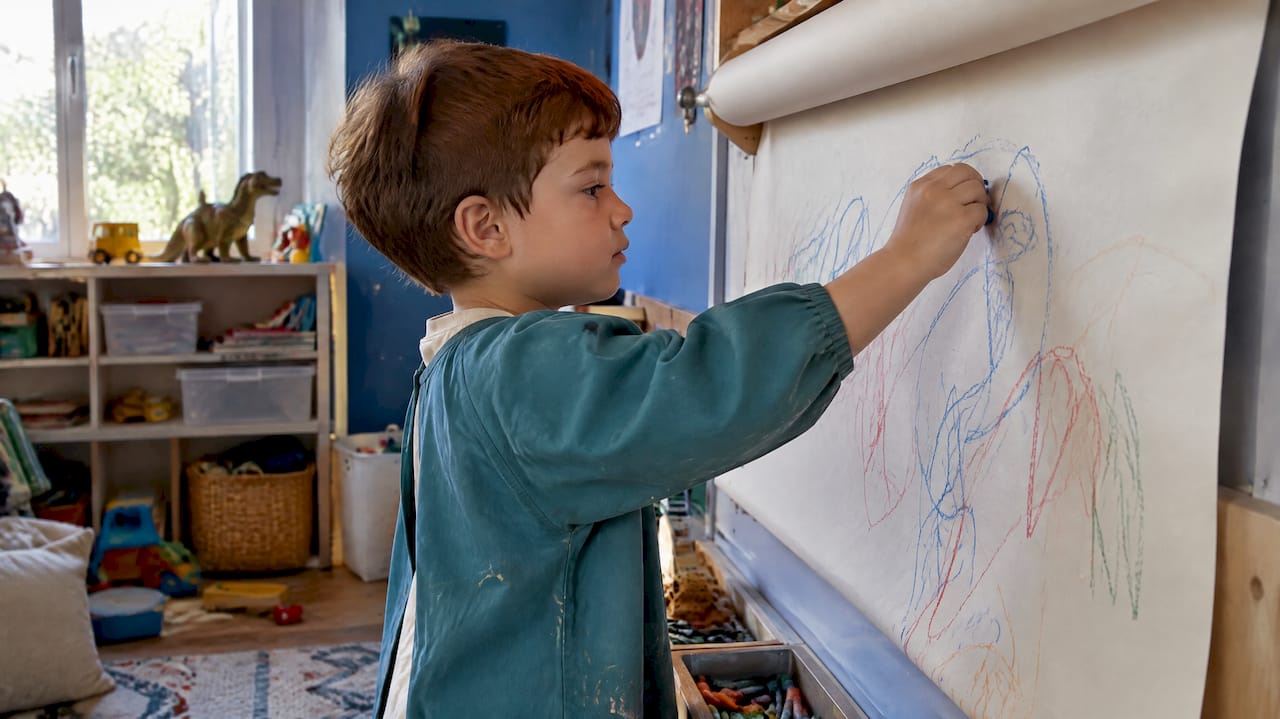
If your family loves mess in the best sense, one wall can be handed over entirely. This Girl Know describes doodle walls as open surfaces, sometimes reaching the ceiling, that invite drawing. A chalkboard panel or a large paper roll on a rail gives the same freedom with easier cleanup.
Playroom Art for Small Spaces
Not every family has a dedicated room. Good Housekeeping’s roundup shows designers converting closets, crawl spaces and garages into play zones, and the same logic applies to art: define the zone with the wall.
- Frame the corner. A large piece or a ledge gallery above a toy basket marks the play area without a single wall or door.
- Go vertical. A tall, narrow print or a column of three small ones takes little floor space and draws the eye up.
- Let décor double as art. Our list of space-saving decor that doubles as art has smart ideas for rooms short on square footage.
- Keep the palette tight. In a shared living area, choose art that echoes the adjoining room’s colors so the play corner feels like a part of the home.
A Simple Weekend Plan
- Saturday morning: clear the walls, anchor tall furniture, and decide your eye-level band with your child’s help.
- Saturday afternoon: choose one large anchor piece and, if you wish, two smaller companions in a lasting theme.
- Sunday morning: install a ledge, rail or cork board for the children’s work, and let them select the first display.
- Sunday afternoon: step back, remove one thing, and sit on the floor to check the view.
Removing one thing at the end is the quiet secret of rooms that look finished.
Our Point of View
We come to playrooms as editors who care about art and about how people live with it. Our view is that a child’s room deserves the same thoughtfulness as any other room, just with a different measure of success. Does it invite play? Does it feel warm? Does it bring a little calm to the eye?
We think the most sophisticated playroom is not the one with the most expensive print. It is the one where the wall belongs to the child: a lasting, well-made piece or two to give the room a spine, and a generous, orderly place for the work they make themselves. Texture, color and scale should work together, so that the room is lively without being loud. Choose art that can mature, hang it where small eyes can find it, and keep safety quietly in the background so that the beauty can do its work.
— Nealda
Find Pieces Worth Hanging
When you are ready to shop, our Store Finds page collects curated picks from across the design world, including pieces that suit family spaces. For more ideas that move beyond the playroom, our guide to 2026 home trends across every room helps you keep the rest of the house in step.
FAQ
What kind of art works best in a playroom?
Choose art with broad, lasting themes such as maps, animals, nature scenes and abstract shapes, and add a dedicated spot for your child’s own work. These themes stay interesting from toddlerhood into the tween years, so you will not need to redo the room when a favorite character fades.
How high should I hang playroom art?
Hang the main pieces at your child’s eye level, whether they are sitting on the rug or standing. Keep a single larger piece higher if you like, but make sure heavy or framed items are securely fixed and out of reach of play.
Is it safe to use glass frames in a playroom?
It is better to avoid glass in zones where children run, climb or throw things. Canvas, prints on wood, lightweight frames and adhesive-backed decals are more forgiving. If you love a glass-framed piece, hang it high on a secure fixing.
How do I display my kids’ artwork without clutter?
Use a contained system: a picture ledge, a display rail with clips or a framed cork board. Set a limit on how much can be displayed, rotate pieces regularly, and store the originals flat so the wall stays fresh.
Sources
- How Process-Focused Art Experiences Support Preschoolers, NAEYC
- Secure Furniture and TVs to Protect Children, CPSC
- Anchor It! video, CPSC
- AnchorIt.gov, CPSC
- 15 Playroom Art Ideas to Try, This Girl Know
- Playroom Wallpaper, Giffywalls
- 29 Playroom Ideas for Kids, Good Housekeeping
Recommended
- 14 Kitchen Wall Art Ideas, Sized and Hung for Real Kitchens
- Dining Room Art Ideas: Personalize the Wall, Center Art at 57 Inches
- One A3 Print Beats the Rest: Nursery Wall Art Ideas for New Parents
- Bedroom Art Ideas That Help You Sleep: 2/3 Sizing, 57–60 in Hang Height