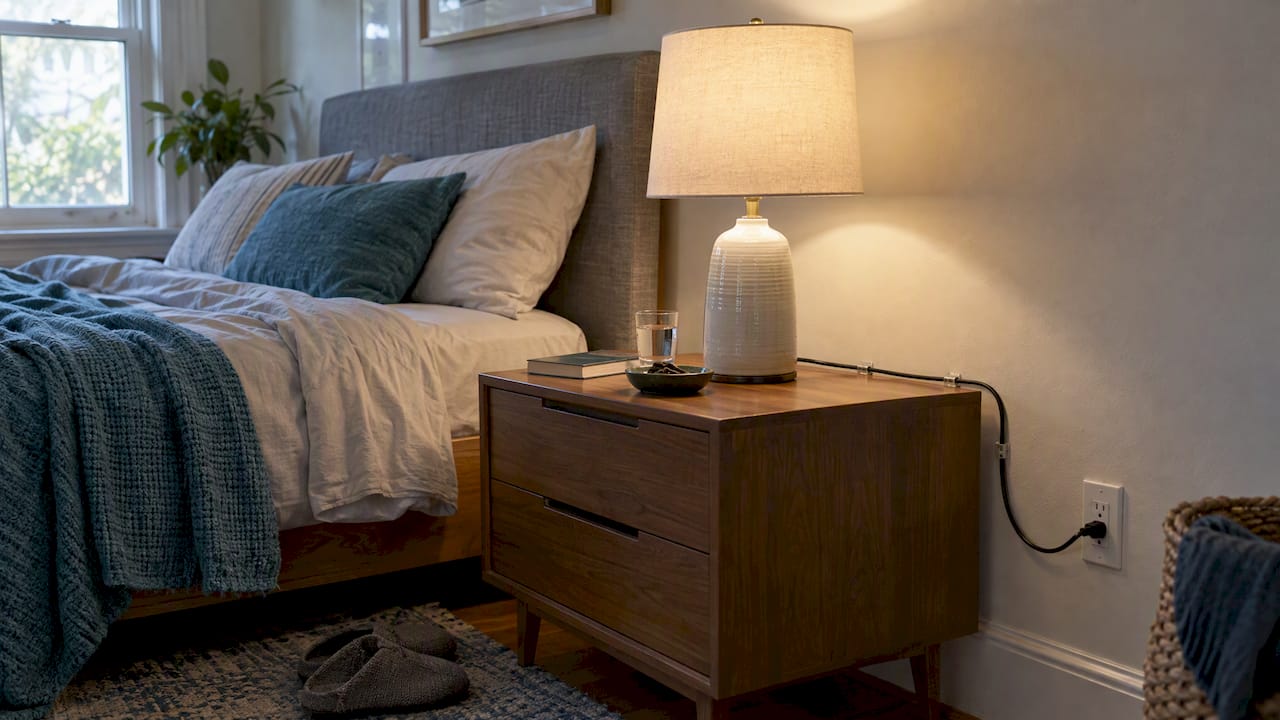
Start with a dimmable ceiling or ambient light, then add a bedside task light sized to your nightstand, and layer in a floor or accent fixture last. Keep three anchors in mind: a table lamp 24–30 inches tall, a sconce mounted 30–36 inches above the mattress, and warm bulbs between 2700K and 3000K. Scroll to the checklist if you would rather start shopping.
TL;DR:
- Choose a table lamp 24–30 inches tall, with the shade bottom just below your eyes when seated in bed, to reduce glare.
- When nightstands are cramped or absent, mount a sconce 30–36 inches above the mattress; renters can use plug in models that need no wiring.
- Use dimmable bulbs at 2700K–3000K for evening, and check reviews before buying dim to warm models because their color shift varies.
- Use an adjustable floor lamp beside a reading chair, under a sloped ceiling, or where no nightstand fits; aim its beam over your shoulder.
- Check each fixture’s maximum wattage, keep cords clear of beds and walkways, and secure them away from children to reduce fire, trip, and strangulation risks.
Table of Contents
- 1. Why should you start with ambient light on a dimmer?
- 2. How tall should your bedside reading lamp be?
- 3. When do sconces and pendants beat table lamps?
- 4. When does a floor lamp become the bedside light?
- 5. How do you layer light, color temperature, and controls?
- 6. Which bedside lighting suits your bedroom style?
- 7. What are the safety and measurement checks before you install?
- 8. Your one-page bedside lighting checklist
- 9. A design-first take on practical lighting
- 10. Where can you find curated bedside lighting?
- FAQ
- Sources
1. Why should you start with ambient light on a dimmer?
Think of ambient light as the quiet stage on which every bedside lamp performs. When the room has a soft general glow, the contrast between a bright reading bulb and dark corners drops, and your eyes stop working so hard. That is the whole reason we begin overhead.
A dimmer turns one fixture into several moods. Full brightness helps you make the bed or find a lost earring. A low setting lets you wind down without the jolt of a switch click.
- Fit a dimmer to your ceiling fixture so reading mode and sleep mode are one slide apart.
- No ceiling fixture? A large flush mount or a cluster of small pendants can fill the gap.
- Still nothing overhead? Place lamps on opposite sides of the room so light overlaps instead of pooling.
Whichever route you take, choose bulbs rated for dimming. A mismatched bulb flickers or buzzes, and nothing ruins a calm bedroom faster.
2. How tall should your bedside reading lamp be?
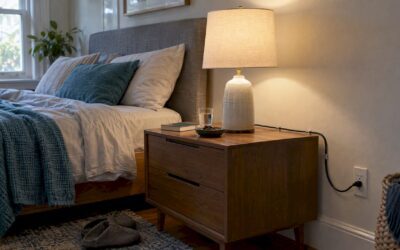
Lamp scale is where most bedside setups go wrong. A table lamp generally works best at 24 to 30 inches tall, and nightstands commonly measure 24 to 26 inches. A reliable rule: pick a lamp the same height as the nightstand or 2–3 inches taller, so the bottom of the shade lands near your eye level when you sit up in bed. That placement keeps the bulb from glaring into your face.
For visual balance, choose a shade that leaves room on the nightstand for your water glass and book.
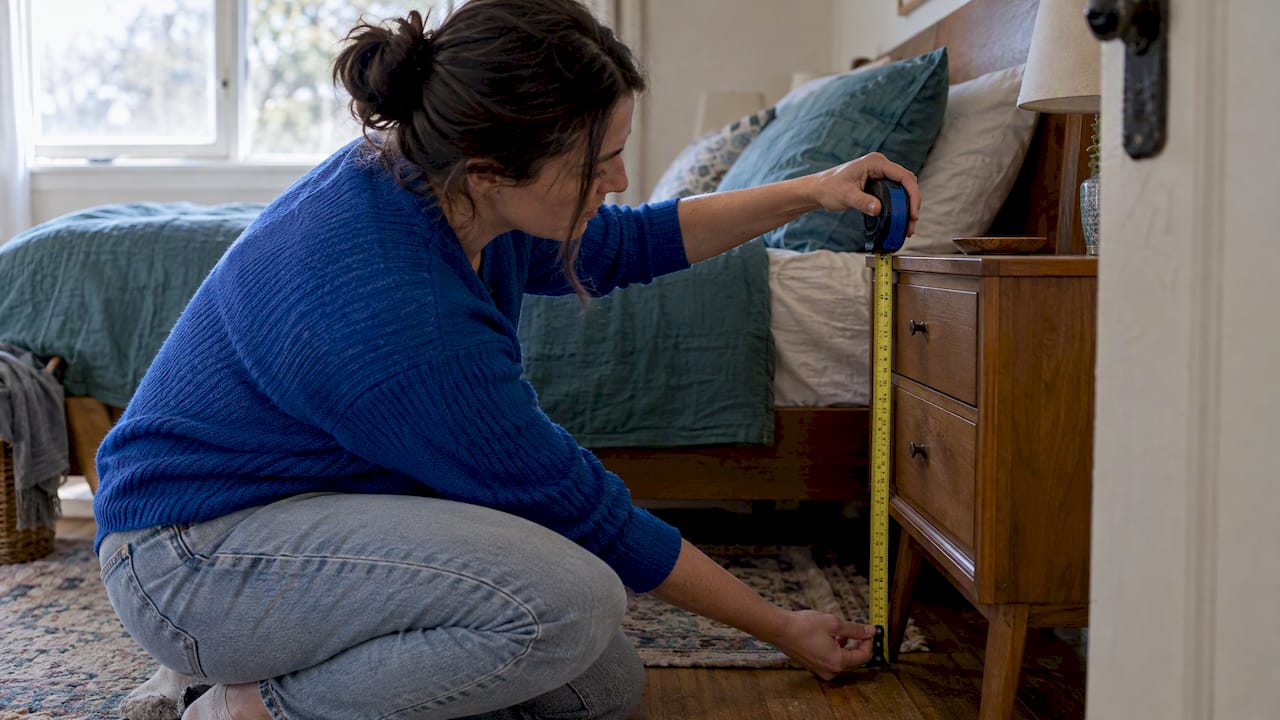
- Measure your nightstand height and note it down.
- Add 2–3 inches to find your ideal lamp height.
- Check the switch: a base touch control, in-line cord switch, or pull chain beats hunting under a shade. An easy on-off switch is the most practical feature a reading lamp can have.
- Choose a cord length that lets you route it safely and tidily.
Pro Tip: Sit up in bed with a pillow behind you and have someone hold the lamp in place before you buy. The shade bottom should sit just below your eyes.
3. When do sconces and pendants beat table lamps?
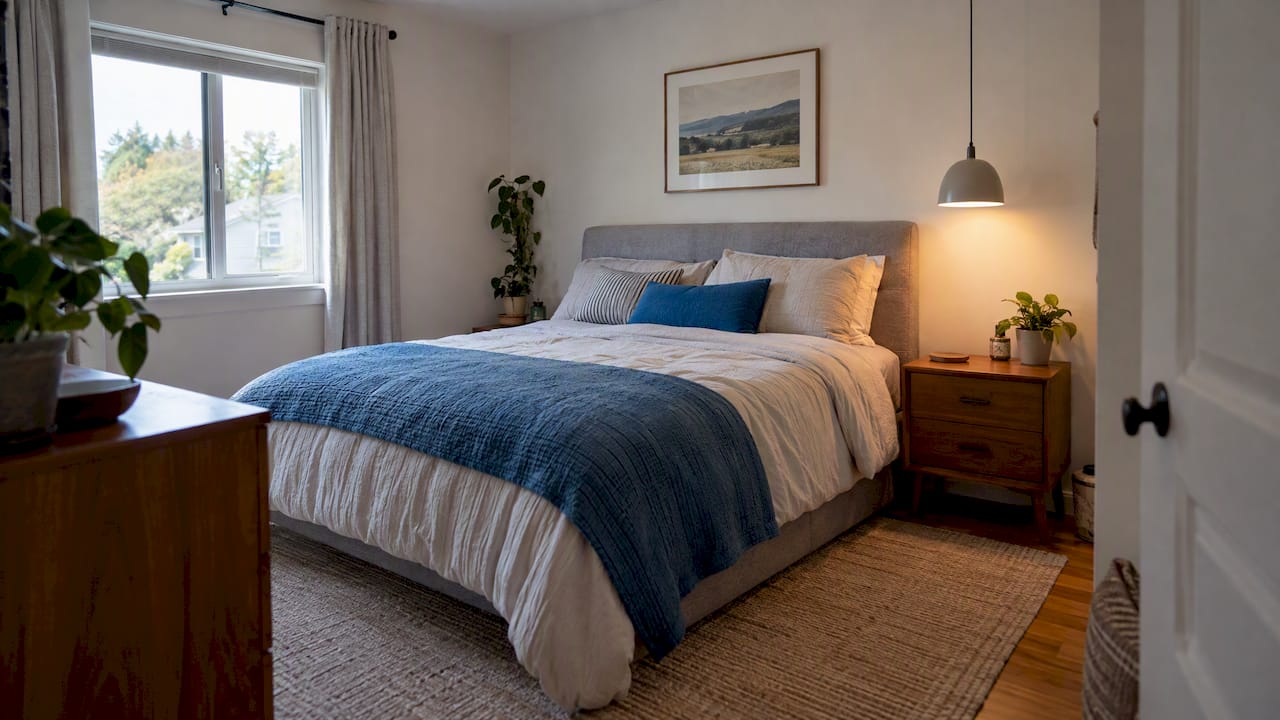
When your nightstand is slim, crowded, or nonexistent, the wall becomes your best surface. Sconces free up the tabletop for books, plants, and a small piece of art, and they bring light to a more flattering height. Our guide to bedroom sconce height for reading walks through the installation steps in detail.
The mounting target is 30 to 36 inches above the mattress, which usually works out to about 5 feet from the floor. That keeps the fixture within reach and out of your sightline.
- Choose swing-arm or adjustable heads when you read in bed, because you can aim the beam at the page and away from a sleeping partner.
- Pick fixed decorative sconces when you want sculptural character and only need a soft glow.
- Plug-in sconces suit renters, since they need no wiring. Hardwired versions look cleaner but call for an electrician.
A pair of pendants hung low on either side of the headboard is a bolder option, as long as the drop leaves room to sit up without bumping your head.
4. When does a floor lamp become the bedside light?
Sometimes the best bedside lamp has no bedside at all. Floor lamps shine when the bed sits beside a reading chair, under a sloped ceiling, or against a wall with no room for a nightstand. A sculptural floor lamp can double as decor, giving a corner the presence of a quiet piece of furniture.
- Choose an arc or adjustable task model for targeted reading, so the light falls over your shoulder onto the page.
- Match scale to the bed. A slim lamp beside a king bed looks lost, while a heavy drum shade swamps a twin.
- Treat a statement pendant or chandelier as a centerpiece, but confirm it works with your dimmer and suits your ceiling height before you commit.
Place the base where nobody will catch a foot on it at night, and keep the cord tucked along the wall.
5. How do you layer light, color temperature, and controls?
Good bedside lighting works at three heights: overhead, bedside, and low accent. Designers layer lamps at multiple heights to give a bedroom depth and a cozy, lived-in look. Color temperature ties the layers together.
- Aim for 2700K to 3500K in the bedroom, with 2700K–3000K for the evening hours.
- Consider dim-to-warm bulbs, which shift warmer as they dim, much like an old incandescent. Testing shows that dimming behavior varies across products, so read reviews before buying.
- Use smart bulbs or smart dimmers to save presets, such as a bright reading scene and a low unwind scene.
Most participants in a home lighting study used 2700K or 3000K interior lights for bedtime activities, and interior task lighting contributed more to evening eye exposure than outdoor light. In plain terms, the bulb in your bedside lamp matters more than you might think.
6. Which bedside lighting suits your bedroom style?
Match the fixture’s finish to the room, then check that it still does its job. Our bedroom trends offer more direction on where finishes are heading.
- Modern and minimalist: sculptural lamps in matte finishes, simple pendants, and neutral shades that let the form speak.
- Cozy and traditional: ceramic bases, textured linen shades, and brass or warm-metal accents that glow like candlelight.
- Boutique and hotel-inspired: matching pairs on each nightstand, a layered overhead light, and tactile materials such as velvet, rattan, or fluted glass.
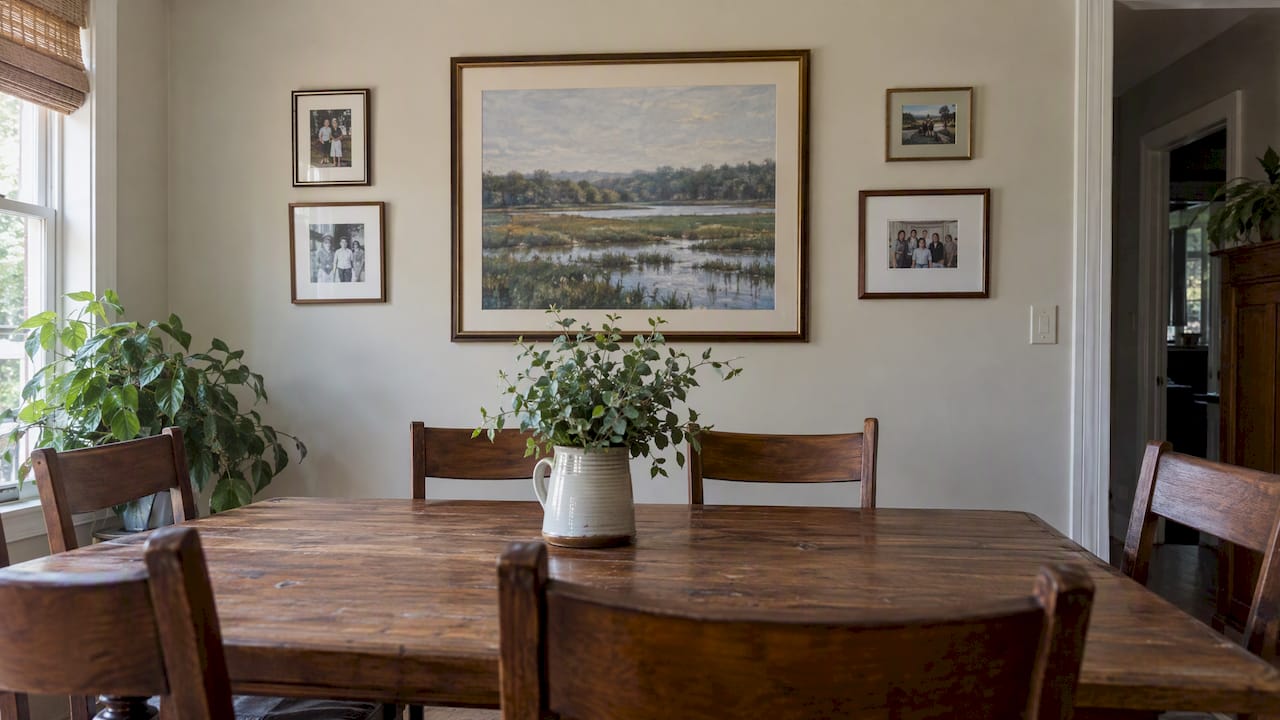
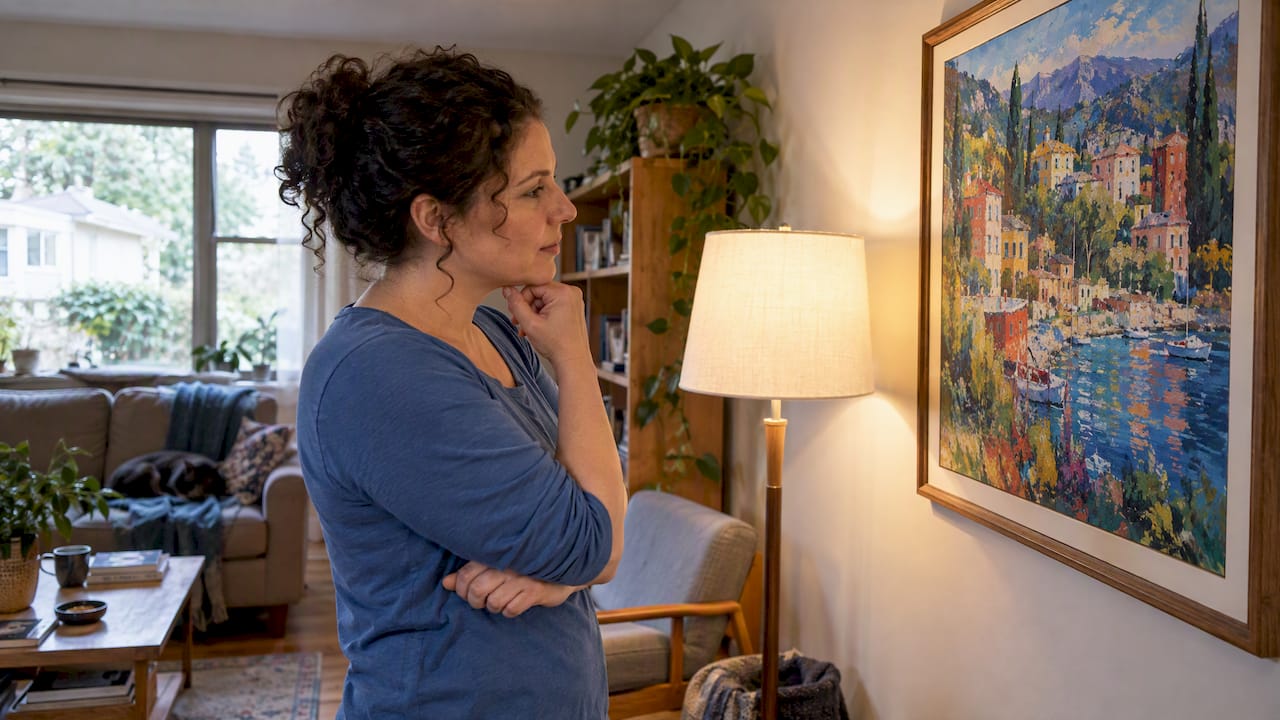
If artwork hangs above the bed, let the lamps support it rather than compete. Our notes on bedroom art sizing and hang height help you keep shade height and frame placement in proportion.
7. What are the safety and measurement checks before you install?
Style comes second to safety once a cord or a bulb is involved. Run these checks before you plug anything in.
- Read the fixture’s maximum wattage and never exceed it. If you aren’t sure, use a bulb rated at 60 watts or less, as the CPSC advises.
- Route cords away from the bed and walkways, and never let furniture pinch them. The CPSC advises securing cords so nobody trips over them.
- In rooms with small children, keep cords out of reach and fastened to the wall. A CPSC advisory on wall-mounted children’s lamps flags cord strangulation risks and tells owners of recalled lamps to stop using them.
- Measure the nightstand, add 2–3 inches for lamp height, and mark your sconce height against the mattress top with painter’s tape.
Pro Tip: Little ones need very dim bedrooms too. This guide on why newborns need darkness pairs well with a low-wattage, dimmable bedside setup.
8. Your one-page bedside lighting checklist
Keep this list on your phone while you shop or hang fixtures.
- Begin with an ambient source on a dimmer.
- Pick a bedside task light sized to your nightstand and reading habits.
- Choose warm, dimmable bulbs at 2700K–3000K and confirm where the switch sits.
- Check wattage and route cords safely.
| Decision | Target |
|---|---|
| Table lamp height | 24–30 inches |
| Sconce mounting height | 30–36 inches above mattress |
| Bulb color temperature | 2700K–3000K for evening |
| Lamp vs. nightstand | Same height or 2–3 inches taller |
9. A design-first take on practical lighting
Lighting is a decor choice that changes how other objects in the room look, so I treat a lamp as sculpture first and measurement second. Proportion, material, and glow matter as much as the numbers, and a thoughtful bedside setup considers both. Always test brightness in your own room before you buy, since evening light there is nothing like a showroom’s. Send us photos and questions; we love seeing how you light your space.
— Nealda
10. Where can you find curated bedside lighting?

Our Store Finds collect design-minded picks in one place, so you can browse lamps and accessories without sorting through endless listings.
- Browse design-minded picks chosen for their look.
- Pick pieces that balance style with practical details.
Start with Store Finds and build your bedside setup from there.
FAQ
What type of lighting is best for a bedroom?
A layered setup can work well: a dimmable ambient light, a bedside task light for reading, and an optional floor or accent lamp. Choose warm bulbs, using the suggested range of 2700K to 3500K as a guide for bedrooms.
What styles of bedside wall lights exist?
The main types are swing-arm sconces for adjustable reading light, fixed decorative sconces for soft ambient glow, and plug-in sconces that skip hardwiring. Pick based on how much you read and whether you rent.
How high should a bedside lamp be?
Aim for a table lamp between 24 and 30 inches tall, matched to your nightstand. The bottom of the shade should sit near your eye level when you are seated in bed, which keeps glare out of your eyes.