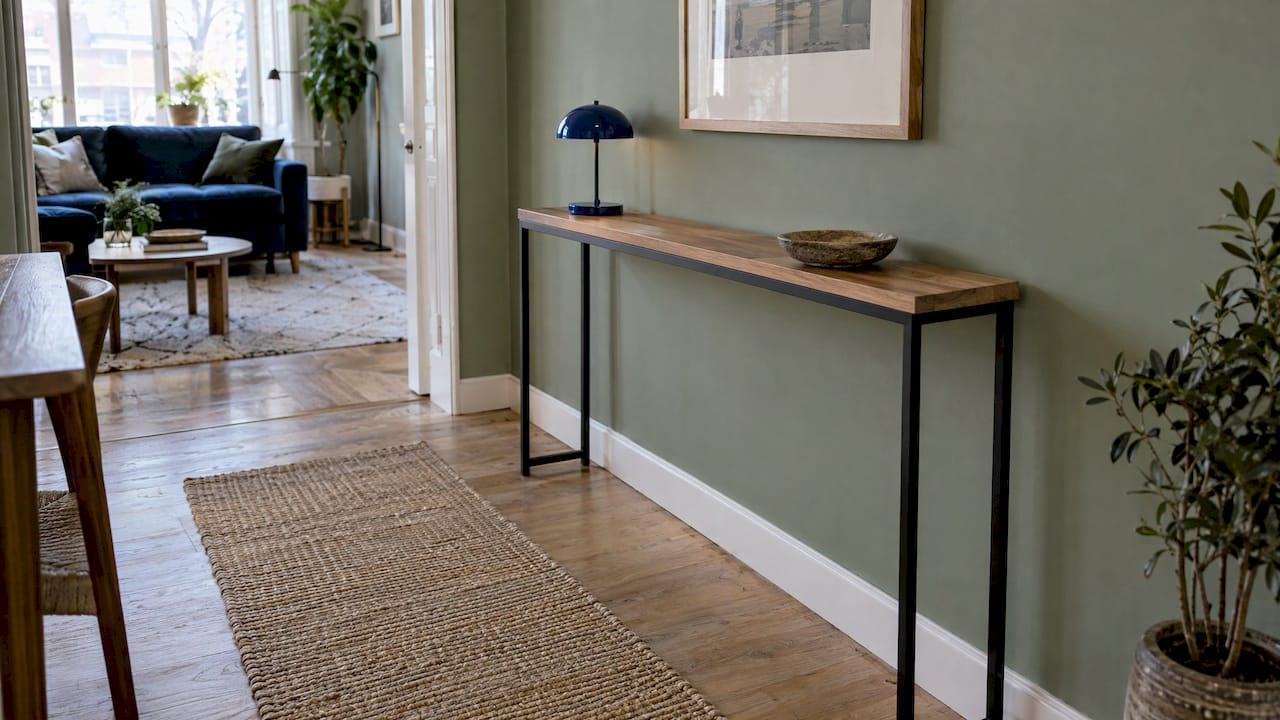
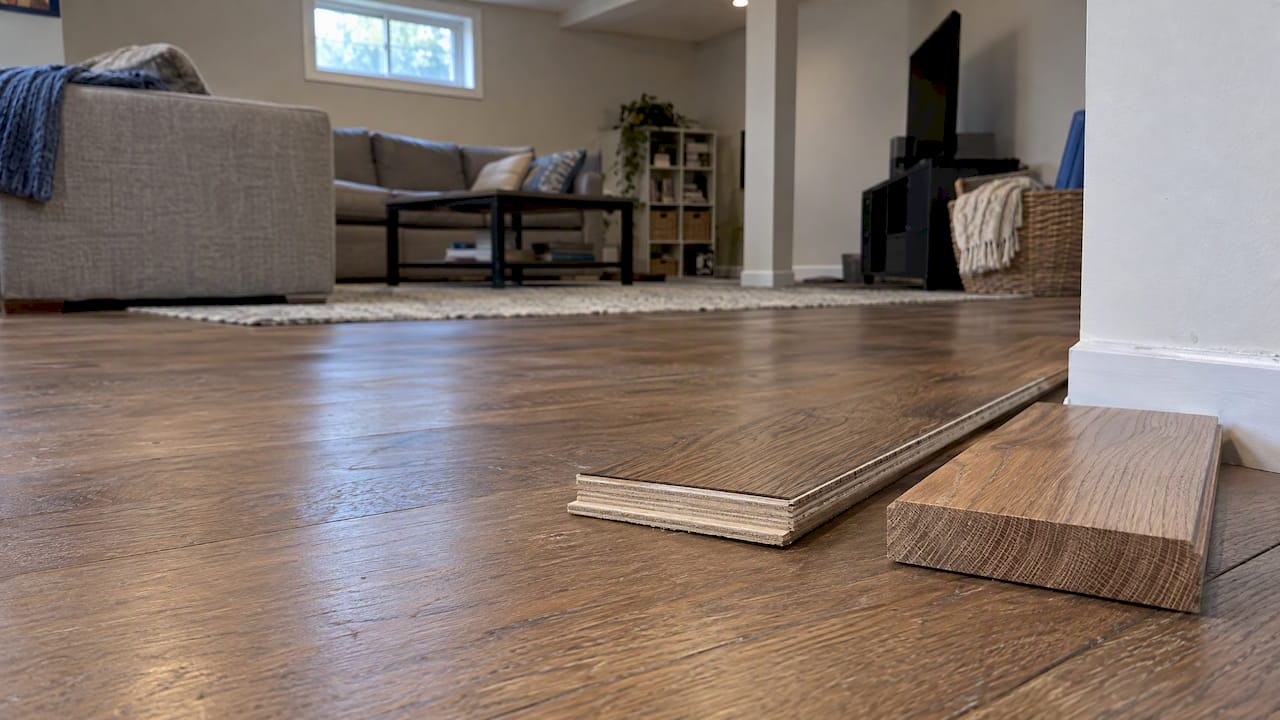
Engineered wood is generally the smarter fit for basements, bathrooms, and other moisture-prone rooms, while solid wood remains the better long-term choice for floors you expect to refinish again and again over decades. Both materials can look identical on the surface, since engineered boards wear a real hardwood layer, so the decision usually comes down to where the floor lives and how long you plan to keep it. Cost often lands close between the two once installation is factored in.
TL;DR:
- Engineered boards with thicker hardwood wear layers allow more sanding, while plywood cores generally handle humidity swings better than HDF cores.
- Engineered flooring can go over concrete and radiant heat, but standing water can still cause delamination, so it is not waterproof.
- Test moisture in the subfloor and boards before delivery, acclimate flooring as the manufacturer directs, and confirm readings before installation.
- Engineered flooring often costs less to install because floating or glue installation needs less labor, while solid hardwood may carry stronger resale appeal.
Table of Contents
- How they’re made: construction differences
- Durability and lifespan
- Moisture resistance and installation suitability
- Refinishing, maintenance, and everyday care
- Appearance, species choices, and finish options
- Cost and value over time
- How to choose for your home: a quick decision checklist
- An Art in Lifestyle perspective: design trade-offs and styling tips
- Editor’s note: Art in Lifestyle perspective
- FAQ
- Sources
How they’re made: construction differences
Solid wood is exactly what it sounds like: a single plank of hardwood, milled from one piece of timber from top to bottom. Engineered wood layers a real hardwood veneer, called the wear layer, over a core of plywood or high-density fiberboard (HDF), with each layer’s grain running in a different direction for added stability. According to NWFA installation guidelines, engineered flooring typically falls within a common range of total thickness, and that wear-layer thickness is what determines how many times you can sand and refinish it down the road.
When comparing products, a few details matter more than brand names:
- Wear-layer thickness: veneers above a certain thickness threshold, allow for at least one light refinish.
- Core material: plywood cores tend to hold up better under humidity swings than HDF cores.
- Ply orientation: cross-grain construction is what gives engineered boards their resistance to warping.
Durability and lifespan
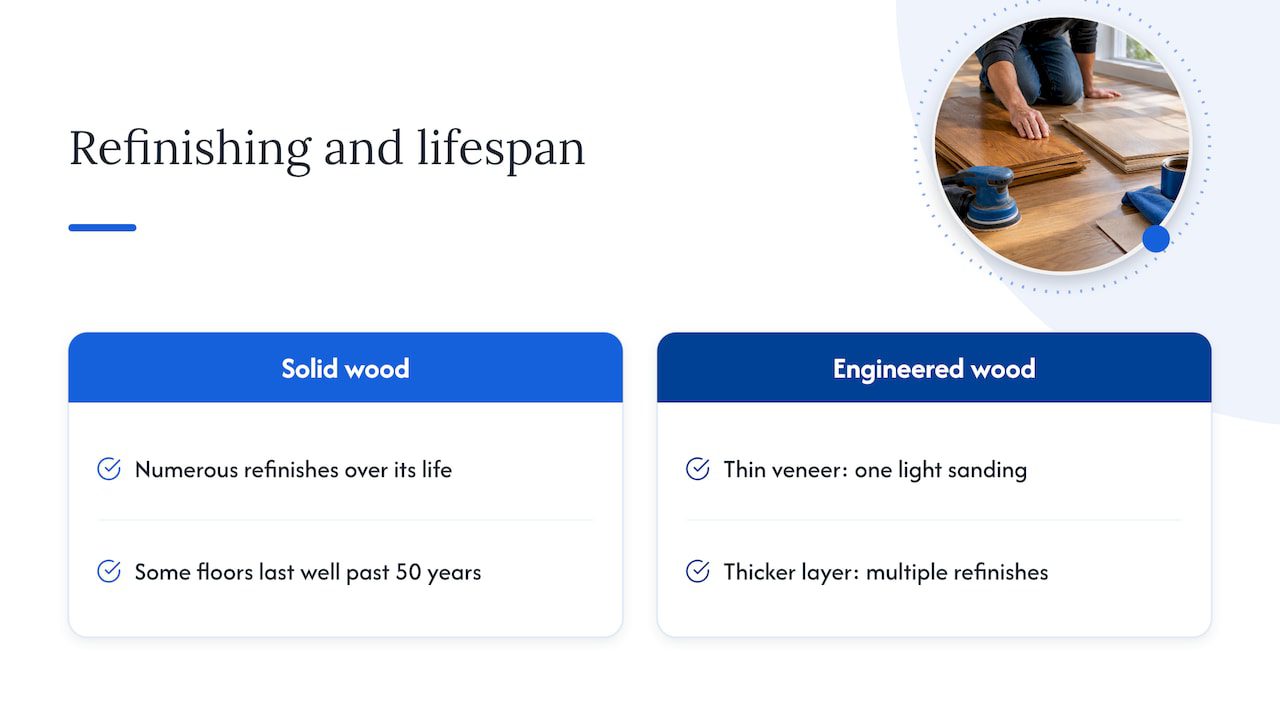
A well-maintained solid hardwood floor can be sanded and refinished numerous times over its life, which is why some last well past 50 years in older homes. Engineered wood’s lifespan depends entirely on wear-layer thickness: a thin veneer might tolerate one light sanding, while a thicker one supports multiple refinishes before the layer is exhausted, a limit NWFA guidance ties directly to the lamina’s depth.
Janka hardness is a useful reference point here. It measures how much force a species resists before denting, which helps explain why white oak shrugs off dropped pans better than softer woods like pine. But NWFA homeowner materials caution that the Janka scale only tells part of the story: finish quality, subfloor prep, and daily foot traffic shape real-world durability just as much as species hardness does. A floor with a soft species but an excellent finish can outlast a harder species poorly installed.
Moisture resistance and installation suitability
Engineered wood’s cross-grain core makes it dimensionally more stable than solid wood, which is why NWFA guidelines generally permit it above-, on-, or below-grade, including over concrete slabs and in basements, when manufacturer instructions are followed. That stability is not the same as waterproofing: The Spruce notes that engineered flooring resists humidity better than solid wood but will still delaminate if standing water sits on it long enough. Solid wood, by contrast, expands and contracts more with humidity shifts, which is why it’s usually reserved for above-grade rooms.
Before any installation, a short sequence protects your investment:
- Test subfloor and board moisture content with a meter before delivery.
- Acclimate boards in the installation room for the manufacturer’s recommended period.
- Choose nail-down for solid wood over a wood subfloor, or glue-down or floating methods for engineered over concrete.
- Confirm the finished moisture reading falls within the acceptable range before the first board goes down.
Pro Tip: If you’re installing over radiant heat, engineered wood is almost always the safer bet since its layered core resists the expansion that radiant heat can cause in solid planks.
Refinishing, maintenance, and everyday care
Caring for either material day to day looks similar: sweep or vacuum regularly, wipe spills quickly, and use a wood-safe cleaner rather than anything wet enough to pool. Keeping indoor humidity in a stable range protects both solid and engineered floors from gaps and cupping over time.
Where they diverge is in long-term repair:
- Solid wood can typically be sanded multiple times over its life, each one potentially restoring the surface.
- Engineered wood can only be sanded as many times as its wear-layer thickness allows, after which the surface layer is gone.
- Minor scratches on either can often be handled with a touch-up kit rather than a full refinish.
- A professional sanding job is worth the cost once scratches are deep enough to catch a fingernail.
Appearance, species choices, and finish options
Because engineered wood wears a genuine hardwood veneer, it can look indistinguishable from solid planks once installed, a point Wood Floors / NWFA makes clear in noting that both are considered real wood when the top layer is genuine. White oak and red oak remain the most common species for both formats, with white oak reading cooler and more muted while red oak leans warmer with a pinkish cast.
A few choices shape the final look:
- Plank width and cut: rift and quarter-sawn cuts produce tighter, more linear grain than plain-sawn boards.
- Prefinished vs. site-finished: prefinished boards install faster with a factory-cured finish, while site-finished floors allow custom stain matching but add project time.
- Sheen level: matte and low-sheen finishes tend to hide scratches better than high-gloss options.
Cost and value over time
Solid hardwood generally carries a higher upfront price than engineered wood of comparable species, though the gap narrows once you factor in installation. Nail-down installation, typical for solid wood, usually costs more in labor than the glue-down or floating methods common with engineered boards, which also makes engineered more approachable for a confident DIY installer.
Several factors drive the price up or down on either material:
- Species selection, with harder, less common woods costing more than oak or maple.
- Plank width, since wider boards generally cost more per square foot.
- Finish type, as hand-scraped or custom-stained finishes add labor cost.
- Installation method, with floating floors typically the most budget-friendly option.
An engineered wood environmental product declaration also documents lower raw material use per plank compared with solid lumber, since engineered construction stretches less hardwood further. Resale value still tends to favor solid hardwood in buyers’ minds, even when engineered performs just as well underfoot, so that perceived premium is worth weighing if resale is a priority.
How to choose for your home: a quick decision checklist
Narrowing the decision gets easier with a short sequence of questions rather than a single either-or debate.
- Assess the room’s moisture risk: basements, bathrooms, and below-grade spaces point toward engineered.
- Test the subfloor’s moisture content before ordering any material.
- Decide how many future refinishes you realistically want; frequent refinishing favors solid wood.
- Pick a wear-layer thickness and species that match your durability and budget needs.
- Choose between a professional installer and a DIY-friendly floating system based on the method required.
A basement or over-concrete installation almost always calls for engineered wood, while a sunlit living room where you expect to live for decades can justify solid oak. Kitchens tend to do well with engineered given spill risk, while furniture pieces, like a solid wood dining table, can lean into solid construction since they aren’t exposed to subfloor moisture the way flooring is. Order samples and live with them in the room’s actual light for a few days before committing to a full order.
An Art in Lifestyle perspective: design trade-offs and styling tips
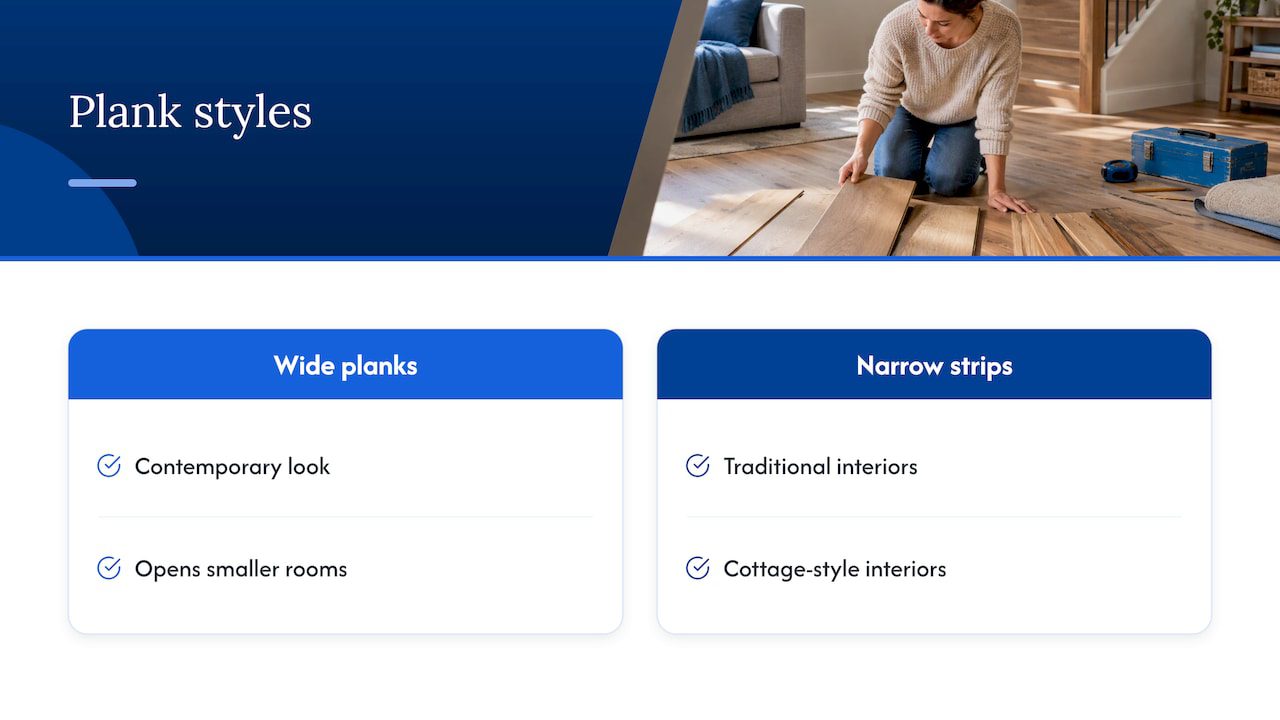
Once the technical decision is settled, the styling choices are where a floor starts to feel like part of the room rather than a surface underfoot. Wider planks read as more contemporary and make smaller rooms feel more open, while narrower strips suit traditional or cottage-style interiors. Matte and low-sheen finishes pair beautifully with the warm, textural palettes we favor in art-forward interiors, since they absorb light rather than bouncing it back in a way that competes with artwork or statement furniture.
Coordinating wood tones with furniture finishes doesn’t require a perfect match. A floor with cooler, muted white oak tones can anchor a room where furniture leans warmer, as long as a few connecting elements, like a rug or a wall color, bridge the two. If you’re pairing wood floors with wood panel walls, varying the tone slightly between floor and wall keeps the room from feeling flat.
Editor’s note: Art in Lifestyle perspective
Longevity and beauty don’t have to compete, but they do ask different questions of a homeowner. A floor that will outlast three sofas and two paint colors earns its keep differently than one chosen purely for how it photographs on day one. We tend to land on a simple test: choose the material that solves your room’s real constraints first, moisture, subfloor, refinishing plans, and let the species and finish solve the aesthetics second. If you’re shaping the rest of the room around your flooring choice, our Store Finds collection is worth a browse for material-forward decor that complements both warm and cool wood tones.
— Nealda
FAQ
Which is good, solid wood or engineered wood?
Neither is universally better: solid wood suits above-grade rooms you plan to refinish repeatedly, while engineered wood suits basements, bathrooms, and installations over concrete thanks to its added stability. The right choice depends on the room’s moisture exposure and how long you intend to keep the floor.
What are the negatives of engineered wood?
Engineered wood can only be sanded and refinished as many times as its wear-layer thickness allows, after which the surface layer is gone for good. It also resists moisture better than solid wood but is not waterproof, and standing water left too long will cause delamination.
Is engineered better than solid wood?
Engineered wood tends to perform better in moisture-prone rooms and over concrete subfloors, while solid wood tends to win out where multiple deep refinishes are expected over decades. Both are considered genuine real wood flooring when the top wear layer is authentic hardwood, so the better option depends on the room rather than one material outperforming the other everywhere.
What are the advantages of using engineered lumber over solid lumber?
Engineered construction offers greater dimensional stability across humidity swings, since its cross-grain layers resist the expansion and contraction that affects solid wood. It also allows installation in basements and over concrete slabs where solid wood generally isn’t recommended, and it typically uses less raw hardwood per plank.
Can I mix wood tones in the same room?
Yes, mixing wood tones works well when you repeat one tone at least twice in the room, such as matching flooring to a piece of furniture or trim. Keeping undertones consistent, pairing warm with warm or cool with cool, helps the mix feel intentional rather than accidental.
Sources
For readers who want to go deeper, these industry resources informed the guidance above and are worth a direct look for installation specifics, environmental data, and homeowner comparisons. If you’re weighing solid wood beyond flooring, our partner’s guide on solid wood interior doors covers similar trade-offs for joinery.
- NWFA installation guidelines (2026)
- Hardwood flooring in your home (Wood Floors / NWFA)
- Solid Hardwood vs. Engineered Hardwood Flooring (The Spruce)