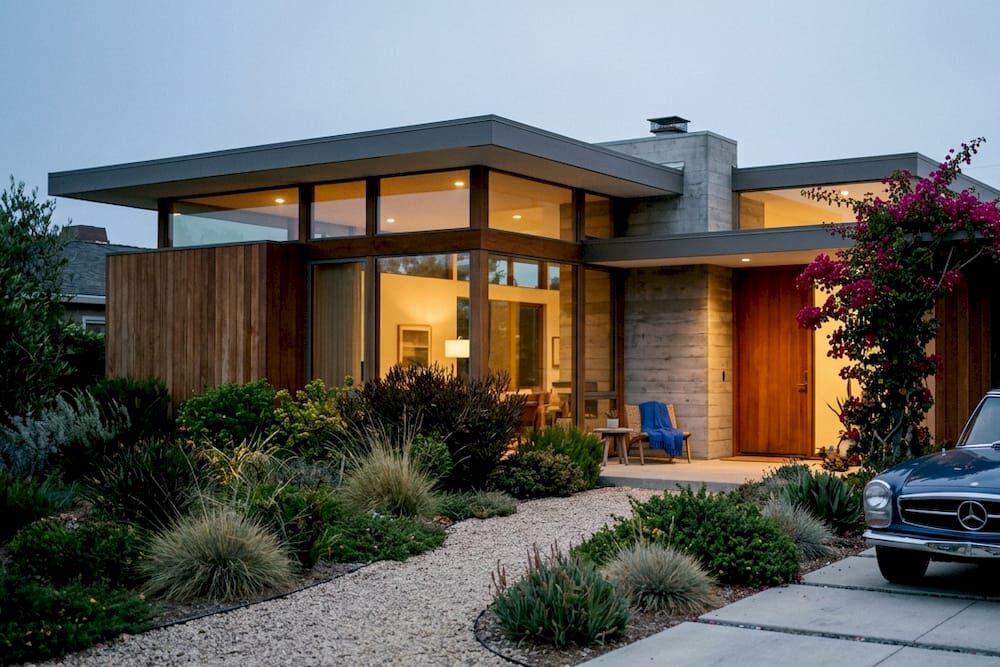
Mid-century modern architecture is defined as the post-war design movement spanning 1945 to 1965, shaped by Bauhaus principles, organic forms, and new industrial materials like molded plywood and tubular steel. The movement’s quiet genius lies in what designers now call “warm minimalism”: geometric precision softened by human scale and natural material warmth. Architects like Ray Kappe, Richard Dorman, and Charles and Ray Eames built homes that felt alive rather than austere. Their work remains the gold standard for anyone drawn to the idea that a house should connect you to the land around it, not separate you from it.
What architectural features distinguish mid century modern homes?
Five core principles define mid-century modern architecture: organic form, functional honesty, post-war materials, indoor-outdoor flow, and saturated accent color. These are not decorative choices. They are structural commitments that shape every decision from the foundation to the furniture.
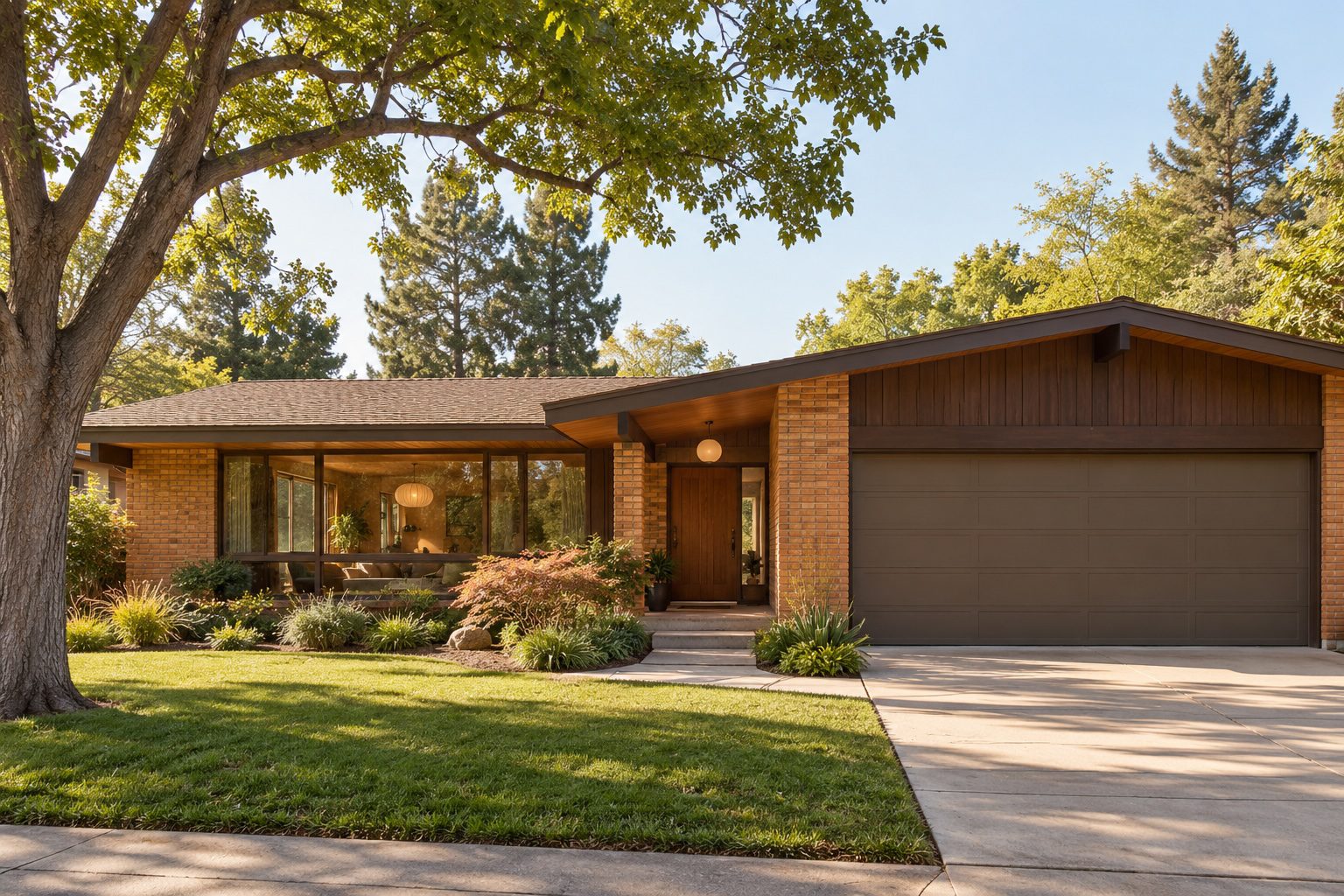
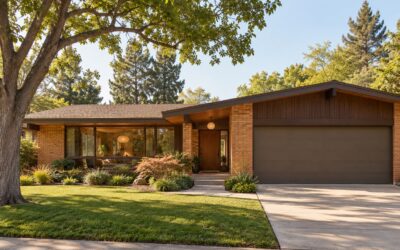
The most visible feature is the floor-to-ceiling glazing that dissolves the boundary between interior and exterior. Open-plan layouts reinforce this connection, allowing light to travel freely through the home. Over 90% of mid-century modern architecture descriptions cite this indoor-outdoor relationship as the style’s defining hallmark.
Post-and-beam construction is the structural backbone of the style. Exposed beams, visible joinery, and honest use of materials are not budget compromises. Exposed structural elements symbolize functional honesty and were always meant to be seen. Natural woods like walnut, teak, and Douglas fir appear with their grain visible, not painted over or hidden behind drywall.
Key identifying features include:
- Post-and-beam framing with exposed structural members
- Floor-to-ceiling glass walls connecting interior rooms to gardens or hillsides
- Flat or low-pitched rooflines with wide overhanging eaves
- Open-plan living areas without load-bearing interior walls
- Natural wood finishes in walnut, teak, and Douglas fir
- Terrazzo or plank flooring as the primary ground plane
- Tapered legs, organic curves, and atomic shapes in furniture as stylistic grammar
Pro Tip: When studying a mid-century modern home, look for a repeating structural module. Richard Dorman used a seven-foot spacing between posts. Once you spot the module, the entire design logic becomes readable.
Who are the most famous mid century modern architects?
The architects who shaped this movement were not just designers. They were thinkers who believed buildings could improve daily life.
Ray Kappe is among the most technically inventive of the California modernists. His hillside homes use tower-supported construction sunk into the terrain, minimizing ground disturbance while maximizing views. Kappe also founded SCI-Arc, the Southern California Institute of Architecture, embedding his ideas into the next generation of designers. What makes his work remarkable is that he anticipated passive solar strategies and energy-efficient forms decades before mainstream adoption.
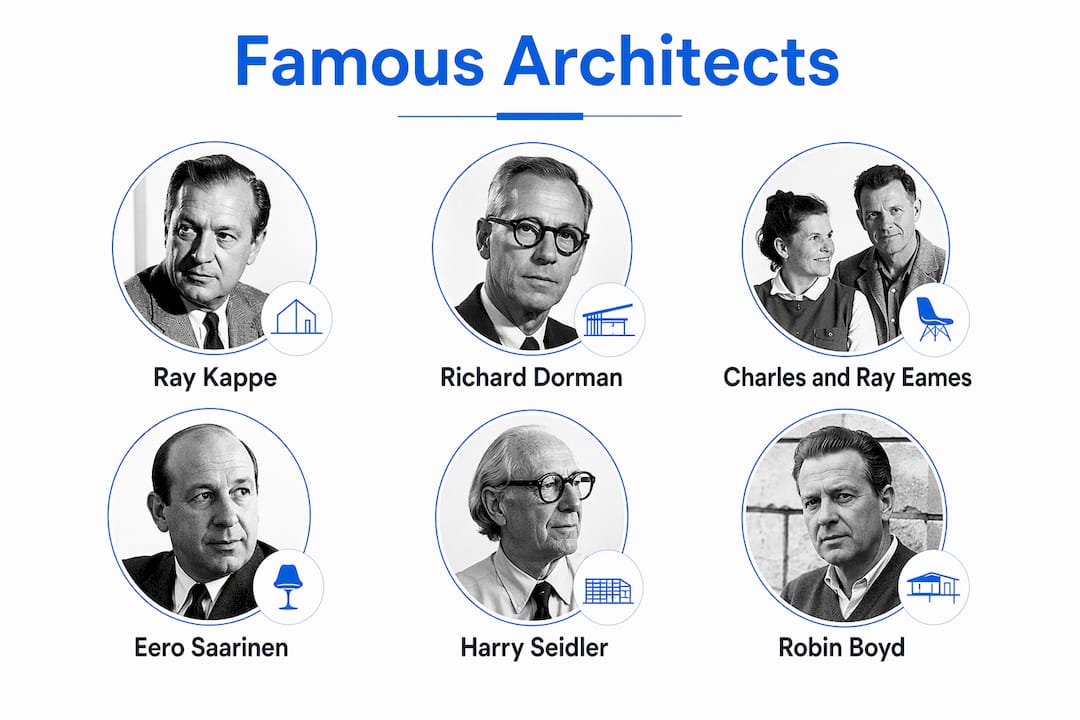
Richard Dorman took a different path. He developed a seven-foot structural module for post-and-beam construction that created wide, airy interiors without conventional framing constraints. His “total design” philosophy meant landscape, exterior, and interior were conceived as one continuous experience. A Dorman home does not end at the front door. It begins there.
Other architects who defined the era:
- Charles and Ray Eames brought the movement’s language into furniture and prefabricated construction, most famously with the Eames House (Case Study House No. 8) in Pacific Palisades, California
- Eero Saarinen pushed organic form to its sculptural limit with the TWA Flight Center and the Tulip Chair, both of which read as mid-century modern in spirit even when they defy its typical material palette
- Harry Seidler carried the Bauhaus tradition to Australia, designing homes that used indoor-outdoor flow as a cultural response to the Australian climate
- Robin Boyd championed a distinctly Australian modernism, critiquing the decorative excess he called “featurism” and advocating for honest, simple forms
Each of these architects approached mid-century modern design from a different geographic and cultural angle. What they shared was a belief that good design serves the person living inside it, not the person photographing it from the street.
What is “High MCM” and how has the style evolved in 2026?
“High MCM” is the dominant 2026 evolution of mid-century modern decor. It replaces the bright primary color palettes associated with the “Mad Men” era with moody walnut woods, textured fabrics, and earthy muted tones. The shift is significant. Where earlier revivals leaned into orange, avocado green, and harvest gold, High MCM favors charcoal, warm taupe, deep olive, and aged brass.
The furniture in a High MCM interior is sculptural and standalone. Matching sets are out. Each piece earns its place through form and material quality rather than belonging to a coordinated collection. Sofas sit low to the ground, preserving sightlines to windows and gardens. Lighting becomes a focal point rather than a utility.
Color palettes that work well with High MCM aesthetics:
- Deep walnut and ebonized oak for cabinetry and shelving
- Warm white or off-white walls as a neutral backdrop
- Earthy terracotta and muted sage as accent tones
- Aged brass and matte black for hardware and fixtures
- Textured linen, boucle, and wool upholstery for tactile depth
For readers who want to explore color combinations that complement this palette, indigo and deep blue tones pair surprisingly well with walnut and warm white in a High MCM context.
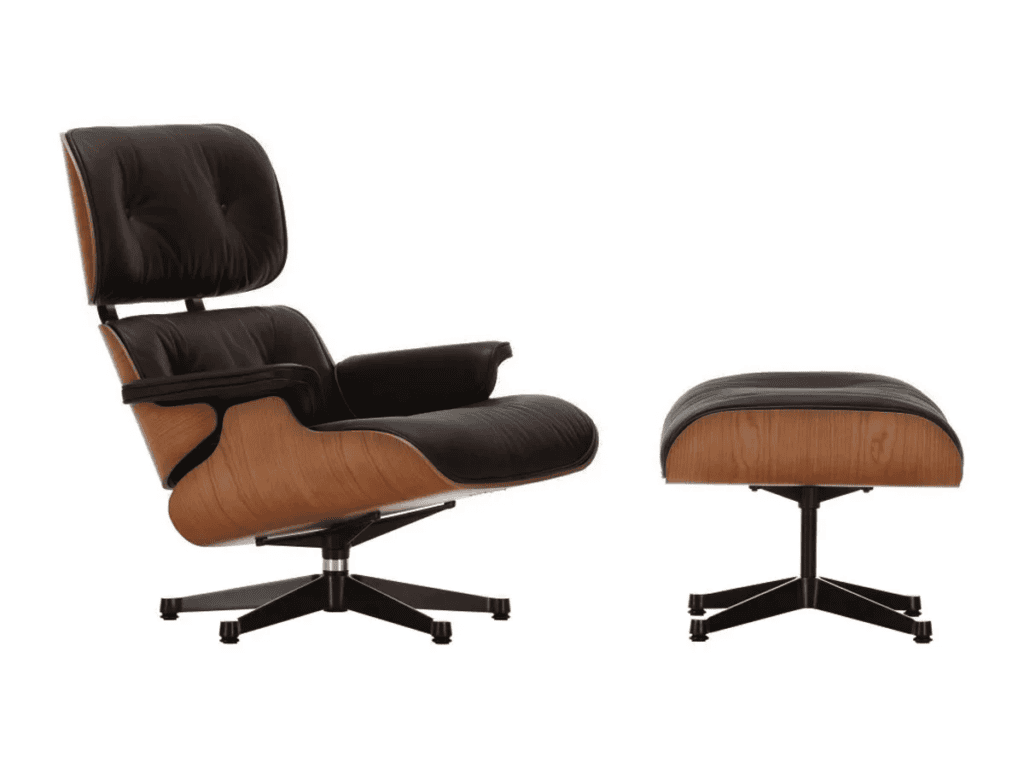
Pro Tip: Mix one or two genuine vintage pieces with new furniture rather than buying an entire vintage room. A 1960s Eames lounge chair paired with a contemporary sofa reads as curated. A room full of period reproductions reads as a costume.
How to create an authentic mid century modern inspired space today
The most common mistake in mid-century modern interiors is treating the style as a shopping list rather than a set of principles. Matching sets, overcrowded rooms, and missing negative space are the three fastest ways to make a space feel like a theme park rather than a home.
Living rooms
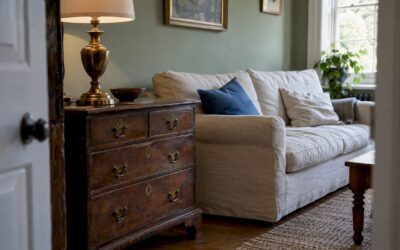
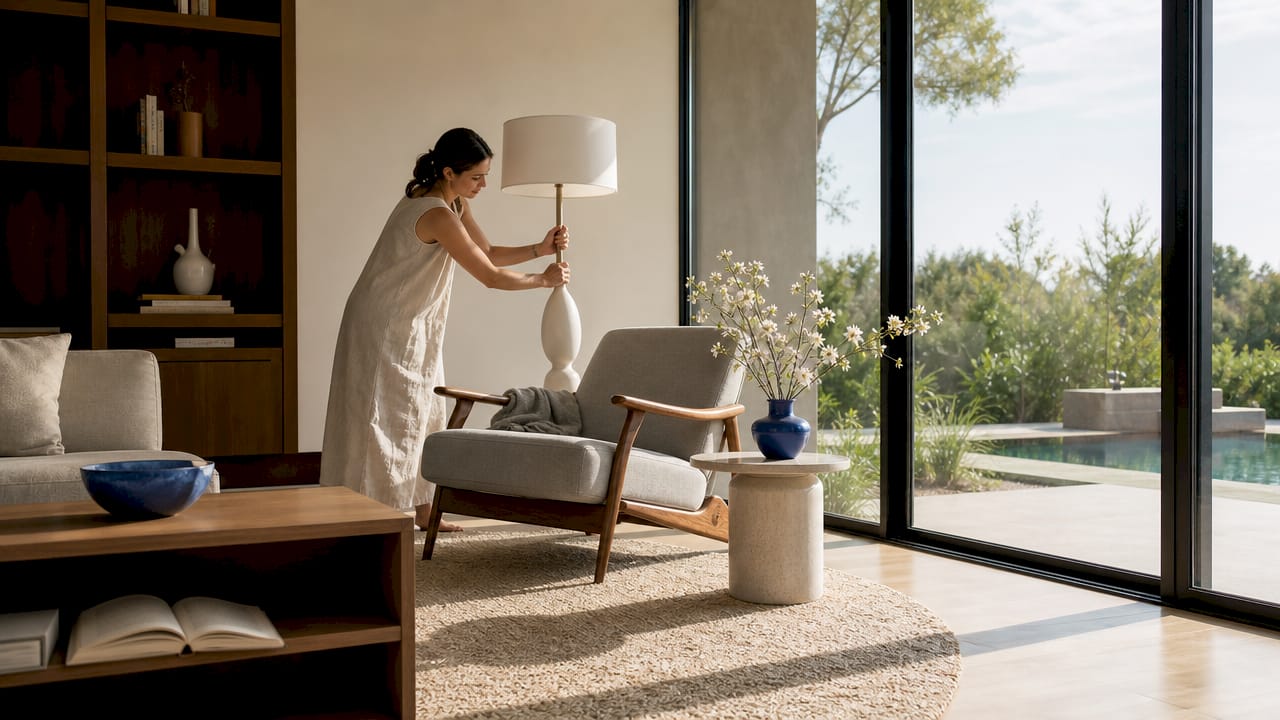
Start with the floor plan. Mid-century modern living rooms use low-profile furniture that does not block natural views. A sofa should sit no higher than 30 inches. Coffee tables should be wide and low. Leave generous negative space between pieces. The room should breathe.
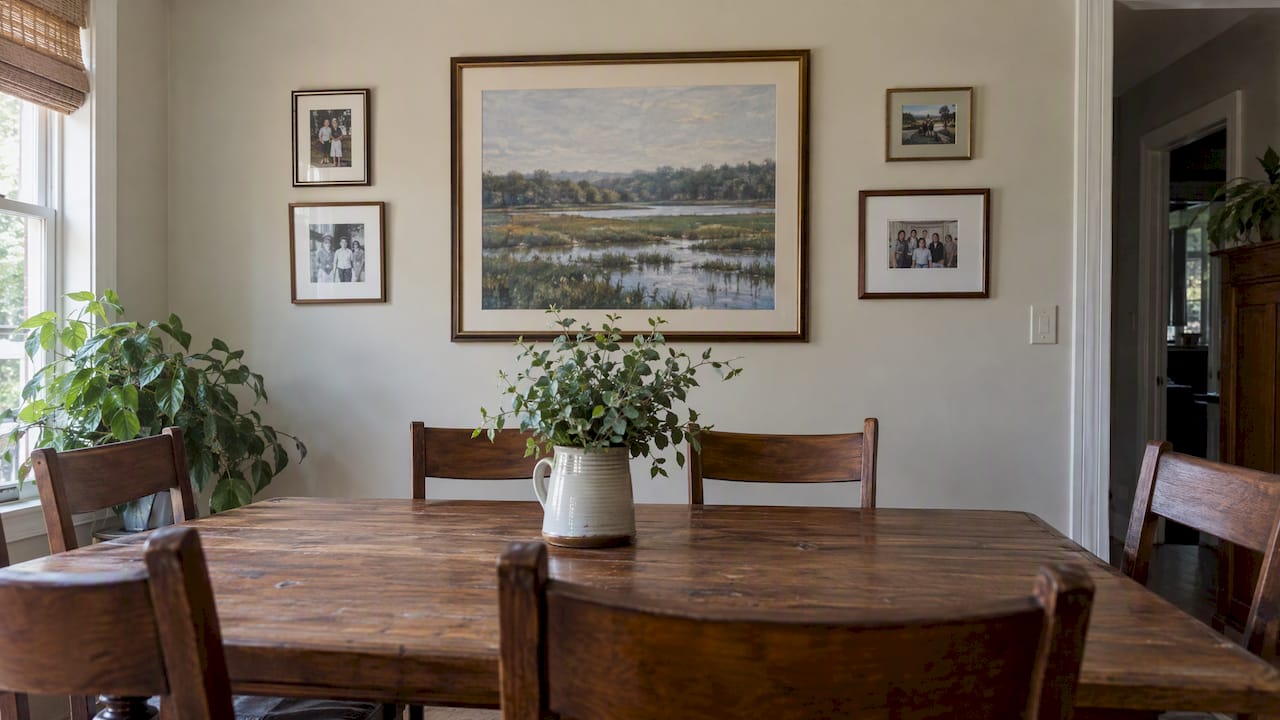
Choose one statement piece, such as an Eames lounge chair or a sculptural floor lamp, and build around it. Art placement matters enormously. A single large canvas or a curated gallery wall arrangement works better than scattered small frames.
Kitchens and dining areas
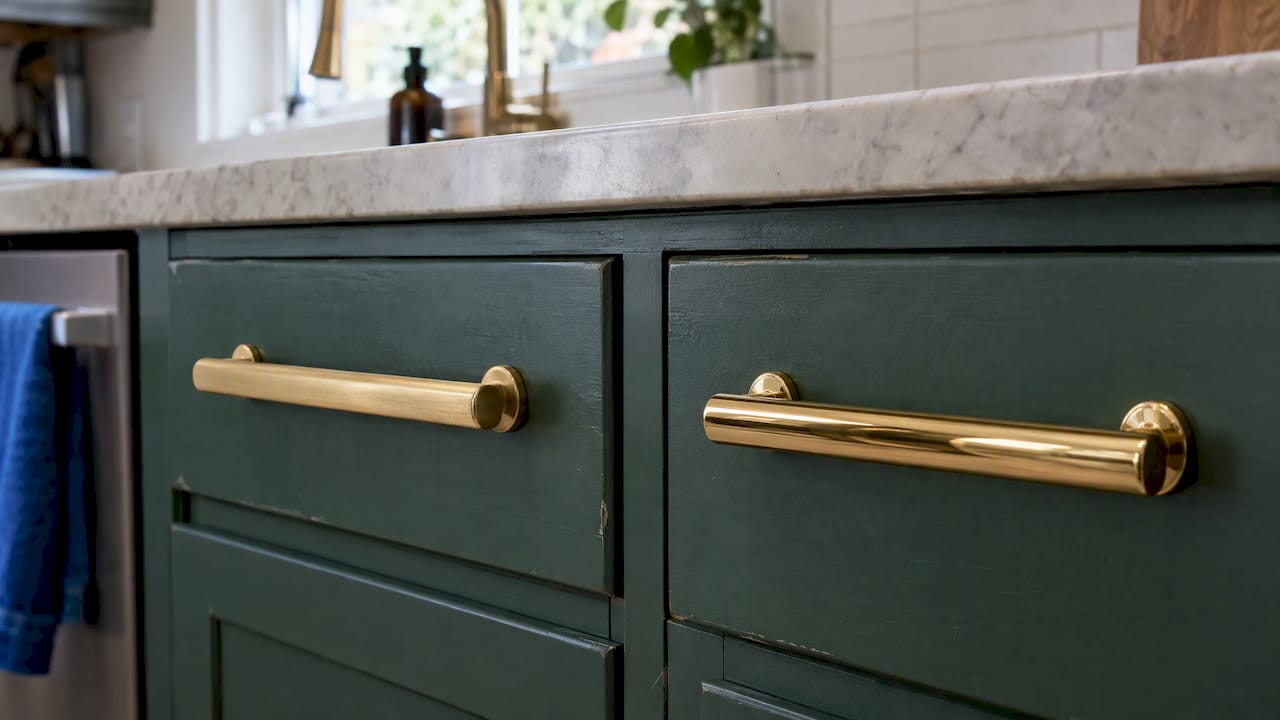
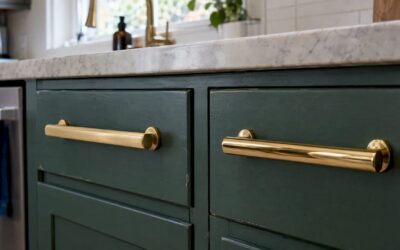
Flat-front cabinetry in walnut veneer or matte lacquer is the correct choice. Avoid ornate hardware. Pulls should be simple, linear, and in brass or matte black. Terrazzo countertops or backsplashes add period authenticity without requiring a full renovation. Dining chairs with tapered legs and molded seats reference the movement’s furniture language directly.
Bedrooms and home offices
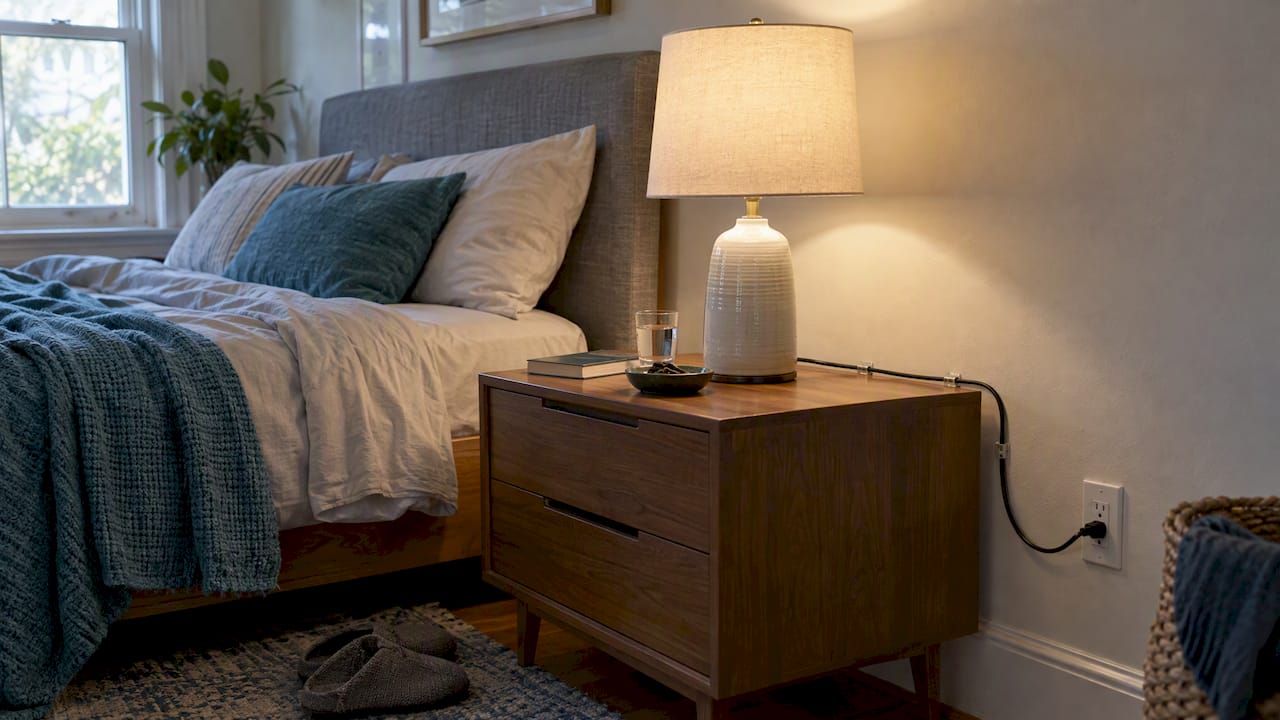
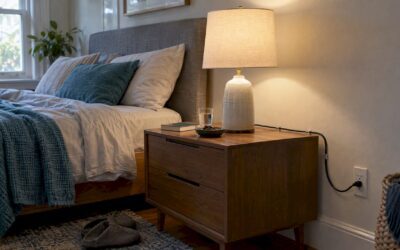
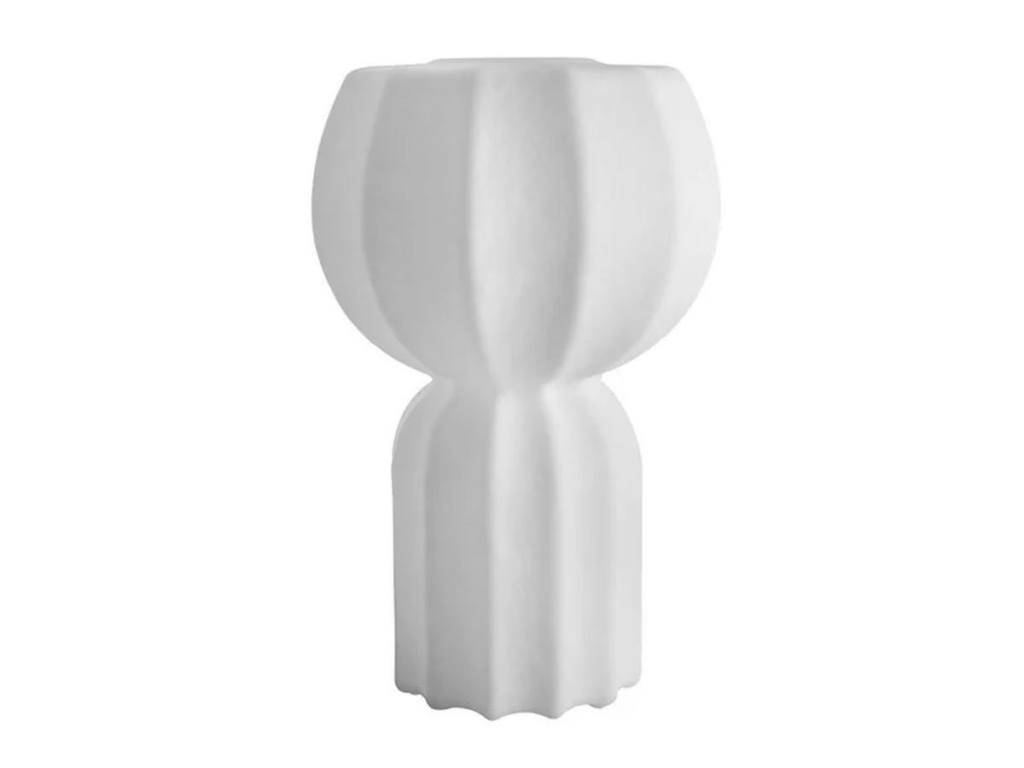
Bedrooms benefit from restraint. A platform bed with a low headboard, a single bedside lamp with a sculptural base, and one piece of art above the bed is often enough. Avoid overhead lighting where possible. Mid-century modern bedrooms rely on layered, warm light sources.
Home offices should prioritize the desk as the focal point. A walnut writing desk with hairpin legs, a task chair with organic curves, and open shelving with visible grain wood panels creates a workspace that feels both productive and calm.
- Choose a structural anchor. Identify the room’s strongest architectural feature, such as a window wall or exposed beam, and orient furniture toward it.
- Select a wood tone and commit. Mixing too many wood species creates visual noise. Walnut or teak as a primary tone, with one contrasting accent, is the right limit.
- Layer texture before color. Wool rugs, linen cushions, and woven throws add warmth without introducing competing colors.
- Edit ruthlessly. Remove anything that does not serve a functional or clearly aesthetic purpose. Negative space is not emptiness. It is visual rest.
- Light from multiple sources. A floor lamp, a table lamp, and one pendant create the layered warmth that overhead lighting alone cannot achieve.
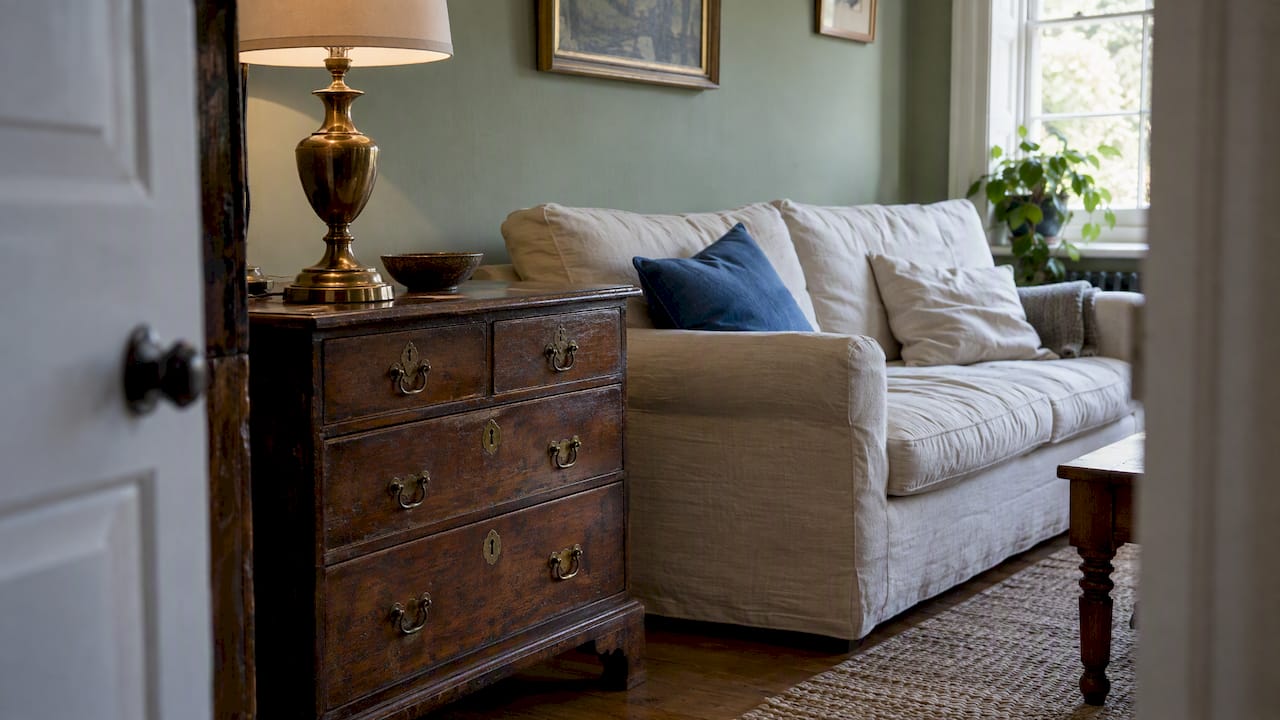
For readers working with vintage decor pieces, the challenge is always integration rather than preservation. A vintage piece should feel at home in a contemporary room, not displayed like a museum artifact.
Window selection also shapes the authenticity of a mid-century modern interior. Aluminum windows align with the movement’s principle of material honesty and support the large glazed openings that define the style.
Key Takeaways
Mid-century modern architecture endures because its five core principles, organic form, functional honesty, post-war materials, indoor-outdoor flow, and accent color, create spaces that feel both purposeful and warm.
| Point | Details |
|---|---|
| Defined time frame | The movement spans 1945 to 1965, rooted in Bauhaus principles and post-war optimism. |
| Structural signature | Post-and-beam construction with exposed members and floor-to-ceiling glass defines the style visually and spatially. |
| Iconic architects | Ray Kappe, Richard Dorman, and Charles and Ray Eames each advanced the movement through distinct structural and material innovations. |
| High MCM in 2026 | The current evolution favors moody walnut, earthy muted tones, and sculptural standalone furniture over bright primary palettes. |
| Authentic application | Avoid matching sets and overcrowding. Prioritize negative space, layered lighting, and one or two genuine vintage anchor pieces. |
FAQ
What is mid century modern architecture?
Mid-century modern architecture is a post-war design movement from 1945 to 1965 defined by Bauhaus-influenced principles, organic forms, natural materials, and a strong indoor-outdoor connection through floor-to-ceiling glazing and open-plan layouts.
Who are the most famous mid century modern architects?
Ray Kappe, Richard Dorman, Charles and Ray Eames, Eero Saarinen, Harry Seidler, and Robin Boyd are among the most recognized architects of the mid-century modern movement, each contributing distinct structural and material innovations.
What does “High MCM” mean in 2026?
High MCM is the current evolution of mid-century modern decor, replacing bright primary color palettes with moody walnut woods, earthy muted tones, and sculptural standalone furniture pieces that emphasize texture and material depth.
What are the key features of mid century modern house plans?
Mid-century modern house plans typically feature post-and-beam construction, flat or low-pitched rooflines, open-plan interiors, floor-to-ceiling glass walls, and a strong orientation toward the landscape or garden.
How do I avoid common mistakes in mid century modern interiors?
Avoid buying matching furniture sets, overcrowding rooms, and neglecting negative space. Prioritize one or two genuine vintage anchor pieces, layer texture through rugs and upholstery, and use multiple low light sources rather than a single overhead fixture.