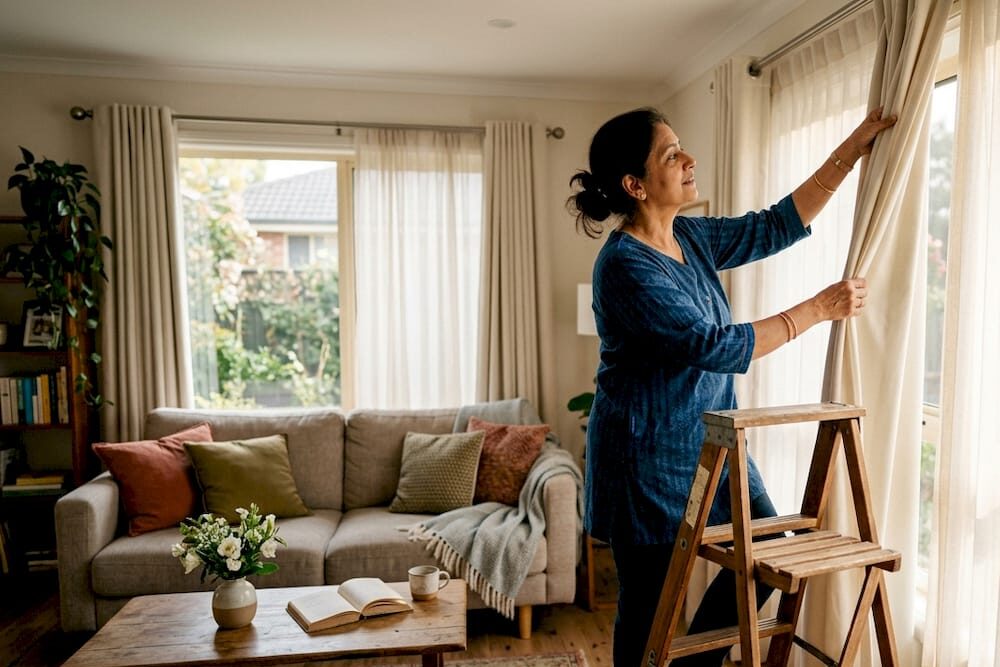
Bedroom curtain decor ideas are the single most underrated tool for shaping how a room feels, functions, and rests. The right window treatment controls light, guards privacy, and sets the entire mood of a sleeping space. Blackout curtains block 90–100% of incoming sunlight, making them the most effective fabric choice for sleep quality. Design professionals also recommend double-track curtain systems for master bedrooms, allowing independent sheer and blackout layers to work together. Curtains are not decoration added last. They are architecture for your windows.
1. Bedroom curtain decor ideas: choosing the right style and fabric
The fabric you choose defines both the look and the performance of your bedroom window treatment. Blackout curtains remain the top choice for light control and privacy, and they work in virtually every design style from minimalist to maximalist. Layered curtains, pairing a sheer panel with a heavier drape, give you the flexibility to filter soft morning light or seal the room completely at night.
Natural fabrics bring their own quiet character to a bedroom. Linen reads as calm and breathable, making it ideal for rooms that lean toward a relaxed, organic aesthetic. Velvet adds warmth and absorbs sound, which makes a bedroom feel noticeably quieter and more enveloping.
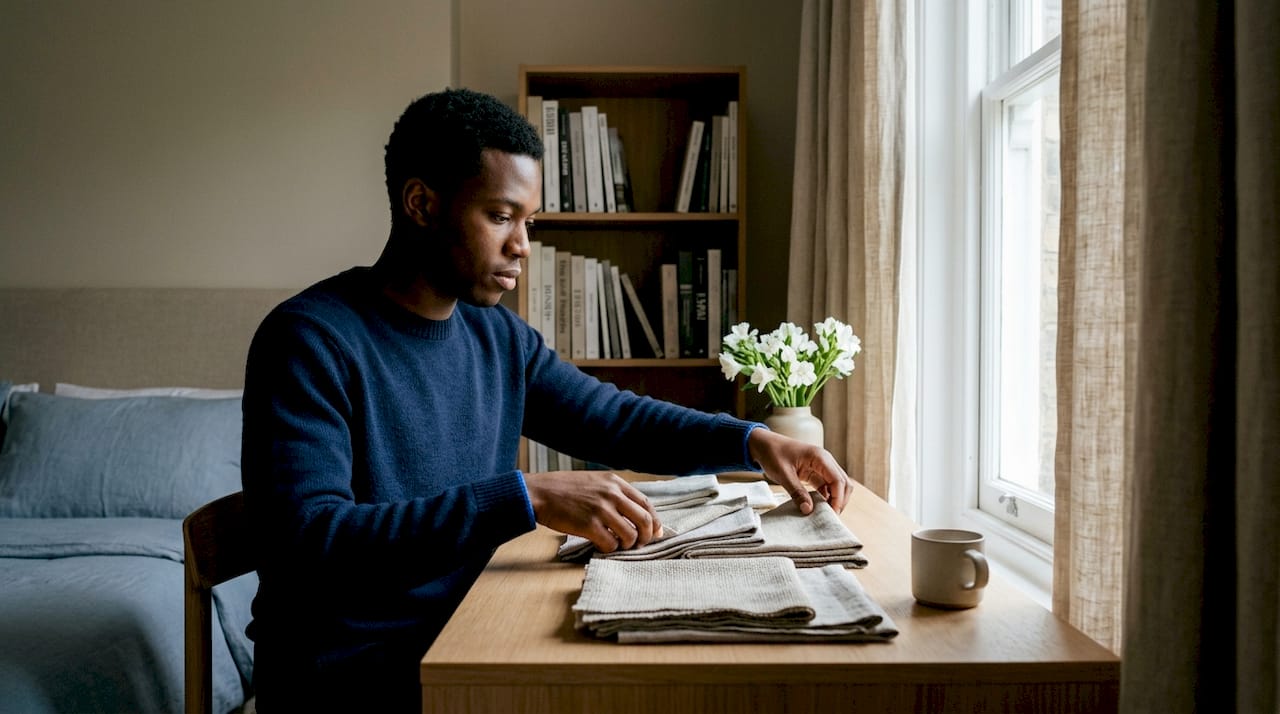
Header style shapes room formality more than most people expect. Pinch pleats create a composed, tailored look suited to traditional or transitional bedrooms. Grommet tops read as architectural and modern, with clean metal rings that suit contemporary spaces. Eyelet headers fall somewhere between the two, offering a relaxed drape without feeling casual.
Pro Tip: Attach a blackout lining to a lightweight decorative fabric instead of buying pre-made blackout curtains. You get the sleep benefits without sacrificing your chosen color or texture.
- Blackout fabric: Best for east-facing rooms and shift workers who need total darkness
- Sheer linen: Filters light softly while maintaining an airy, open feel
- Velvet drapes: Act as warmth multipliers and natural sound absorbers
- Layered panels: Combine sheer and blackout on a double track for full control
- Pinch pleat headers: Add structure and formality to a composed bedroom
- Grommet headers: Deliver a modern, architectural finish with minimal fuss
2. How to hang curtains for maximum visual impact
Curtain placement is where most homeowners lose the most ground. Mounting a rod just a few inches above the window frame makes ceilings feel lower and rooms feel smaller. Hanging curtains from ceiling to floor visually stretches the room upward, creating a sense of height and elegance that no paint color can replicate.
The width of your curtain stack matters just as much as the height. Hang the rod wide enough so the panels stack off the window glass when open. This preserves the full width of the window and floods the room with light during the day.
Ceiling-mounted tracks with returns eliminate the light gaps that standard rods leave at the sides and top of a window. For true blackout performance, this hardware choice is not optional. It is the difference between a dark room and a room with glowing edges at 6:00 AM.
Pro Tip: If your ceiling height is below 9 feet, skip the puddle and let panels just graze the floor. Puddling fabric works beautifully in rooms with ceilings above 10 feet, where the extra length reads as intentional drama.
- Mount the rod or track as close to the ceiling as possible, not just above the frame
- Extend the rod 8–12 inches beyond the window on each side
- Use ceiling-mounted tracks with returns for true blackout performance
- Choose floor-length panels in all bedrooms regardless of window size
- Allow a slight break at the floor for a relaxed, residential feel
3. Creative curtain ideas for color, pattern, and layering
Color is the quietest design decision you can make with curtains, and it carries enormous weight. Matching curtains to the wall color in a small bedroom creates a unified, space-expanding effect. The eye reads the room as one continuous surface rather than a series of interruptions, making the space feel larger and more deliberate.
Deep, saturated colors work differently. Navy, forest green, and charcoal create a cocoon-like atmosphere that signals rest to the brain. These shades absorb light rather than reflect it, which makes a bedroom feel genuinely calm rather than just dimly lit.
Layering sheers with drapes gives you ambient flexibility that a single panel never can. During the day, the sheer filters glare while keeping the room bright. At night, the drape closes over it to create privacy and darkness. This two-layer approach is the closest thing to a perfect bedroom window treatment.
Pattern calibration depends entirely on room scale. In a small bedroom, tonal textures like a tone-on-tone stripe or a subtle weave add visual interest without competing for attention. In a larger room, bold geometric or botanical prints can anchor the window wall the way a piece of art would. For hardware, decorative rods with finials suit rooms where the rod itself is part of the design. Ceiling tracks suit rooms where the curtain should appear to float from the ceiling with no visible mechanism.
| Curtain approach | Best for | Effect |
|---|---|---|
| Wall-matching color | Small bedrooms | Expands perceived space |
| Deep saturated tones | Any size bedroom | Creates cozy, sleep-ready atmosphere |
| Sheer and drape layering | All bedrooms | Flexible light and privacy control |
| Tonal texture patterns | Small to medium rooms | Adds depth without visual noise |
| Bold prints | Large bedrooms | Anchors the window wall as a focal point |
4. How to choose curtains based on light and room size
Window orientation is the most practical starting point for any curtain decision. East-facing windows require high-opacity blackout lining to block early morning sun, which is the most disruptive light for sleep. North-facing windows receive softer, more diffuse light and work well with moderate filtering fabrics like linen or light cotton.
Room size shapes fabric weight and color choices in equal measure. Small bedrooms benefit from light-colored, floor-length curtains hung at ceiling height. The combination of pale color and vertical length makes the room read as larger and more open. Large bedrooms can carry heavier fabrics and bolder patterns without the room feeling crowded.
A double-track system is the designer’s preferred solution for rooms with variable sunlight throughout the day. One track holds a sheer for daytime filtering. The second holds a blackout panel for night. You control each layer independently, which means you never have to choose between light and privacy.
- Identify your window’s orientation before selecting any fabric
- Choose high-opacity blackout lining for east-facing windows
- Use lighter, filtered fabrics for north-facing or low-light rooms
- In small bedrooms, select pale or wall-matching colors and hang at ceiling height
- In large bedrooms, consider heavier fabrics and bolder patterns
- Install a double-track system for rooms where light changes significantly through the day
5. Modern curtain trends worth knowing in 2026
Motorized curtain systems have moved from luxury hotels into residential bedrooms. Motorized systems add convenience and clean lines, removing the need for visible cords or manual pulling. They pair naturally with smart home setups and allow you to program curtains to open gradually with an alarm, which mimics natural sunrise.
Hidden rod systems create a minimalist effect where curtains appear to emerge directly from the wall or ceiling with no visible hardware. This approach suits bedrooms that prioritize visual rest, where every unnecessary element has been removed. The curtain becomes the feature, not the rod.
Double-dressed windows combine Roman shades with full-length drapes to create a layered, cocoon-like bedroom environment. The Roman shade handles daytime light filtering at the glass level. The drape frames the window and adds softness and texture to the wall. Together, they create a bedroom window treatment that functions at multiple levels simultaneously.
“The double-dressed curtain trend offers the best control of light and privacy, creating versatile bedroom ambience that adapts to every hour of the day.”
Sustainable fabric choices are also gaining ground. Organic cotton, recycled polyester, and undyed linen align with eco-conscious homes without sacrificing texture or performance. Acoustic and thermal linings are a quieter trend worth noting. They reduce outside noise and improve insulation, which makes a bedroom measurably more comfortable year-round.
Key takeaways
The most effective bedroom curtain approach combines ceiling-to-floor hanging, a double-track system, and fabric chosen for your window’s light orientation.
| Point | Details |
|---|---|
| Blackout performance | Use ceiling-mounted tracks with returns to eliminate light gaps for true darkness. |
| Hanging height | Mount rods or tracks at ceiling level to maximize perceived room height. |
| Fabric by orientation | Choose high-opacity lining for east-facing windows; lighter fabrics suit north-facing rooms. |
| Color strategy | Match curtains to wall color in small rooms; use deep tones for a sleep-ready atmosphere. |
| Layering for flexibility | A double-track sheer and blackout system gives full control of light and privacy at any hour. |
Most people buy curtains last, after the furniture, the bedding, and the art. That order is a mistake. Curtains cover the largest vertical surface in a bedroom. They shape how light enters, how sound behaves, and how the room feels at 7:00 AM when the sun hits the window. Getting them right early changes every other decision that follows.
The most common error is hanging curtains too low and too narrow. A rod placed just above the window frame makes a room feel like it has a low ceiling, even when it does not. Extending the rod to near-ceiling height and well beyond the window frame costs nothing extra and changes the room completely.
People underestimate the value of layering. A single blackout panel solves the darkness problem but creates a flat, heavy look during the day. Adding a sheer underneath gives the window a life of its own. The room breathes differently when light filters through linen at noon than when it is sealed behind a blackout panel.
One detail that surprises most people: blackout lining is usually ivory or cream, not black. The coating on the fabric blocks light, not the color. This means you can use any decorative fabric you love and add a blackout lining behind it. You are not limited to dark or heavy-looking curtains to get a dark room.
Treat curtains as a textile investment on the same level as a good mattress. They affect your sleep, your privacy, and your daily experience of the room. Pair them with interior texture choices that complement the fabric weight, and the bedroom will feel genuinely considered rather than assembled.
FAQ
What type of curtain is best for a bedroom?
Blackout curtains are the best choice for most bedrooms because they block 90–100% of sunlight and support better sleep quality. Layering a sheer panel with a blackout drape on a double-track system gives you the most flexibility.
How high should bedroom curtains be hung?
Curtains should be mounted as close to the ceiling as possible, not just above the window frame. Ceiling-to-floor panels make the room feel taller and create a more polished, finished look.
What color curtains work best in a small bedroom?
Curtains that match the wall color create a unified, space-expanding effect in small bedrooms. Light, neutral tones keep the room feeling open, while deep tones work better in larger rooms where a cozy atmosphere is the goal.
Do blackout curtains have to be dark in color?
No. Blackout lining is typically ivory or cream, and it is the opaque coating that blocks light, not the fabric color. You can attach blackout lining to any decorative fabric and achieve full light blockage.
What is a double-dressed window treatment?
A double-dressed window combines two distinct layers, such as a Roman shade and full-length drapes, to create flexible light control and a layered, textured look. It is one of the most effective bedroom window treatments for managing both privacy and ambiance.