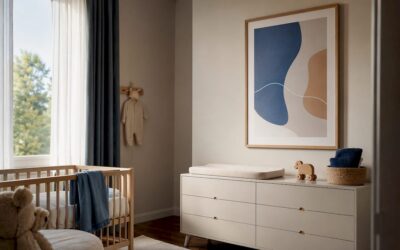
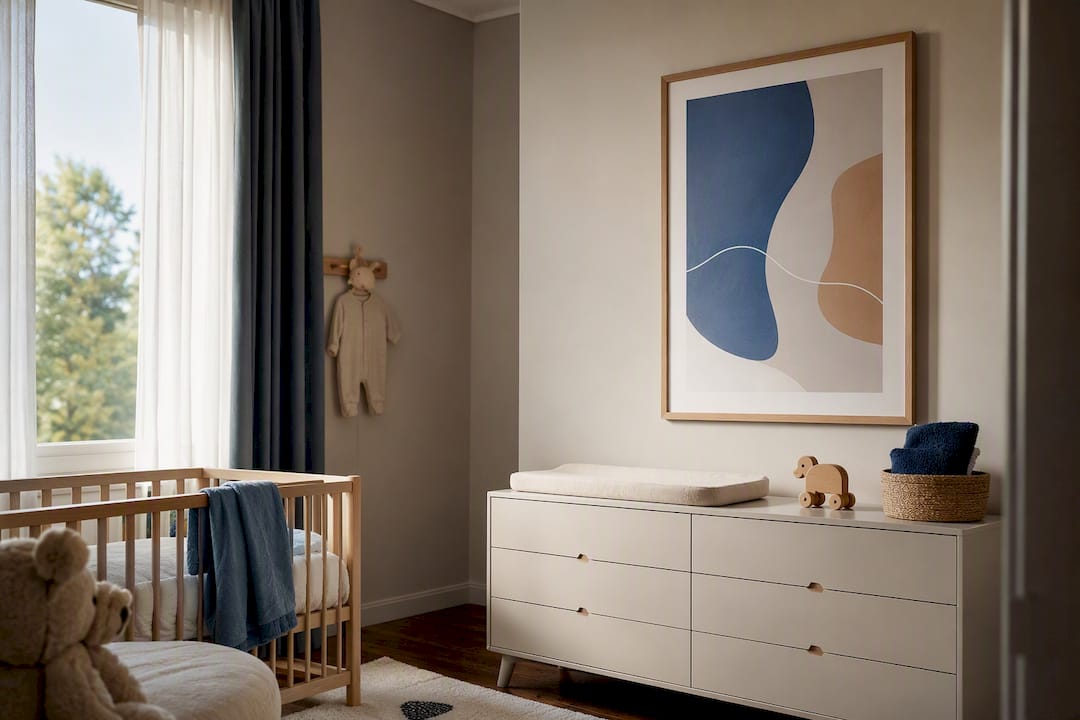
The best nursery wall art choice for most rooms is one A3-sized statement print, or a small three-piece gallery anchored by an A3, hung centered above the crib or changing table at a height that reads clearly from the doorway. Choose acrylic over glass, secure it with proper wall fixings, and keep the palette simple enough to outlast the nursery theme. Everything else below explains why this works and how to execute it.
TL;DR:
- A3-sized statement prints, especially acrylic ones secured with proper fixings, offer the best balance of visibility, safety, and longevity in nursery decor.
- High-contrast black and white prints suit newborns, while softer, recognizable images support visual development from four months onward.
- Nursery art should be easily visible from the door and crib, centered at about 57 to 60 inches high, with spacing that feels intentional and balanced.
- Safety precautions include avoiding glass, using wall anchors or cleats, and choosing low-emission inks and lightweight materials near sleep areas.
- Rotating artwork based on developmental stages prevents overinvestment and keeps the room engaging as the baby grows.
Table of Contents
- Nursery Wall Art Ideas by Style and Format
- How to Choose Nursery Art That Grows with Your Baby
- Gallery Wall Layouts, Sizing, and Hanging Heights
- Materials, Frames, and Safety Rules for Nursery Walls
- Budget-Friendly and DIY Nursery Wall Art Options
- Adding Personalized Touches Without Dating the Room
- When and How to Rotate Nursery Wall Art
- Lighting That Makes Nursery Wall Art Actually Work
- Interactive and Sensory Wall Art for Infant Development
- The Editor’s Take on Design-First Nursery Walls
- Curated Help and DIY Support for Your Nursery Walls
- Sources
Nursery Wall Art Ideas by Style and Format
Texture is the quiet hero of a nursery, and the right wall art acts as a textural amplifier, turning a flat wall into a layered, sensory environment for both baby and the parent standing there at 3 a.m. Here are ten approaches worth considering, organized by visual effect and where they work best.
-
High-contrast black and white prints. Bold graphic patterns like stripes, swirls, or geometric faces give newborns something to focus on in the first weeks of life. Place one within a few feet of the changing table, where a baby spends focused, face-up time. A slim black frame keeps the contrast crisp.
-
Bold graphic shapes. Think oversized circles, arches, or abstract forms in two or three colors. These read as genuinely stylish art rather than “kid decor,” which matters when you want the piece to survive past toddlerhood. Mat generously to let the shape breathe.
-
Watercolor animals. Soft, painterly creatures introduce color and warmth without tipping into cartoonish territory. Best suited to a reading nook wall, where softer visuals support a wind-down mood. A natural wood frame plays well against the loose brushwork.
-
Botanical prints. Line drawings or pressed-leaf style illustrations bring a biophilic design element into a room that often lacks any connection to the outdoors. These age exceptionally well, working just as hard in a big kid’s room years later.
-
Celestial or star chart prints. Moon phases and constellation maps add a sense of visual rest and quiet wonder above a crib, without the visual noise of busy cartoon prints. Choose muted navy or charcoal tones over neon versions.
-
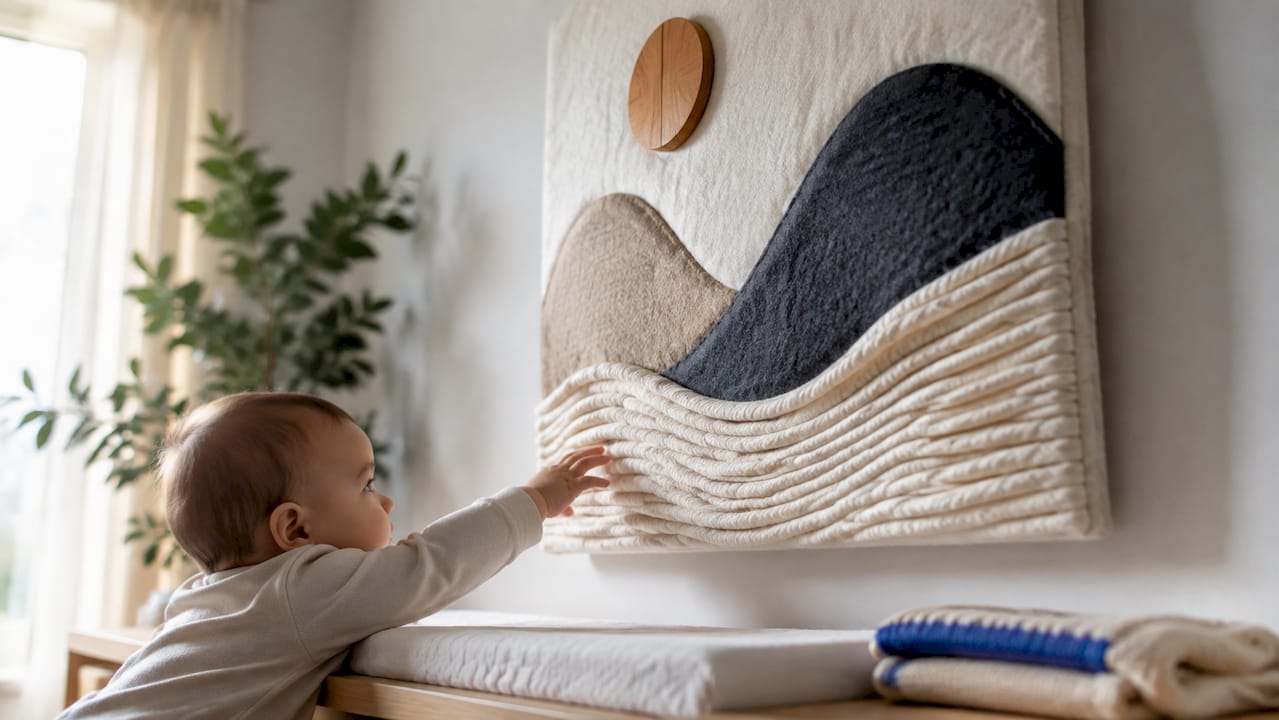
Fabric or textile hangings. Woven wall hangings, macrame, or quilted panels add genuine tactile richness and are naturally lightweight, a real advantage for anything near a sleep surface. Layer one behind a glider chair for warmth.
-
Wooden or 3D wall animals. Carved or layered wood shapes bring dimension and natural irregularities that flat prints can’t match. Keep these on a wall away from the crib, since projecting pieces need more clearance.
-
Removable decals. Vinyl decals of clouds, hot air balloons, or simple animals let you commit to a theme without commitment. They’re an easy pick for rented apartments or a nursery you know will get repainted.
-
Framed children’s book illustrations. Pages from a beloved book, reframed, root the room in a story instead of a trend. This works beautifully in a cluster grouping near a reading nook.
-
Simple typographic name prints. Clean, minimal lettering, no cartoon fonts, ages far better than most personalized decor. Pair with one botanical or abstract print so the wall doesn’t feel like a plaque.
How to Choose Nursery Art That Grows with Your Baby
Visual development changes fast in the first year, and the art on your walls should track it. Newborns aged 0 to 3 months respond most strongly to high-contrast black-and-white patterns, while babies from 4 to 12 months start engaging with recognizable images and softer color palettes. That’s the single biggest reason to avoid overly literal, trend-driven art at the newborn stage.
For longevity, lean toward themes that grow with the child instead of redecorating every developmental phase: abstract shapes, nature scenes, maps, and classic illustration all read as sophisticated at any age.
Run every piece through this checklist before you buy:
- Is it visible from the door and from the crib, not just up close?
- Does the scale suit the wall, not just the frame?
- Is the material safe for a room where a baby sleeps and breathes for hours a day?
- Will the frame style still feel right in three years?
- Can you wipe it clean if it ends up near a changing table?
Pro Tip: If you’re torn between two prints, pick the one that would look at home in your living room. If it works there, it’ll work in the nursery for years past infancy.
Gallery Wall Layouts, Sizing, and Hanging Heights
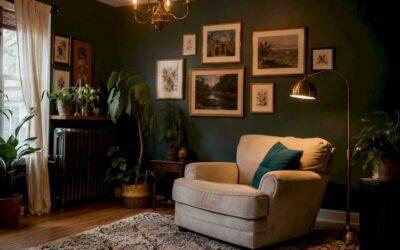
Sizing decisions are where most nurseries go wrong, either scattering tiny prints across a big wall or hanging one piece so small it disappears. A3 prints are the sweet spot for most nurseries, large enough to read clearly from across the room but proportionate to a standard nursery wall. Save A4 for close-range spots like above a changing table, and reserve A2 for a genuine statement wall. As a general rule, your art (or gallery grouping) should span roughly two-thirds to three-quarters of the furniture width beneath it.
For hanging height, a gallery wall or single grouping reads best centered around 57 to 60 inches at general eye level, adjusted down slightly above a crib or changing table where you’re often viewing it from a seated or standing-close position. Keep 2 to 4 inches between frames in a grouping so it reads as intentional, not cluttered.
Three layouts work reliably in nurseries:
- The grid: Equal-sized frames in even rows, best for a calm, orderly wall.
- The horizontal row: Three to five pieces in a single line, ideal above a crib rail or dresser.
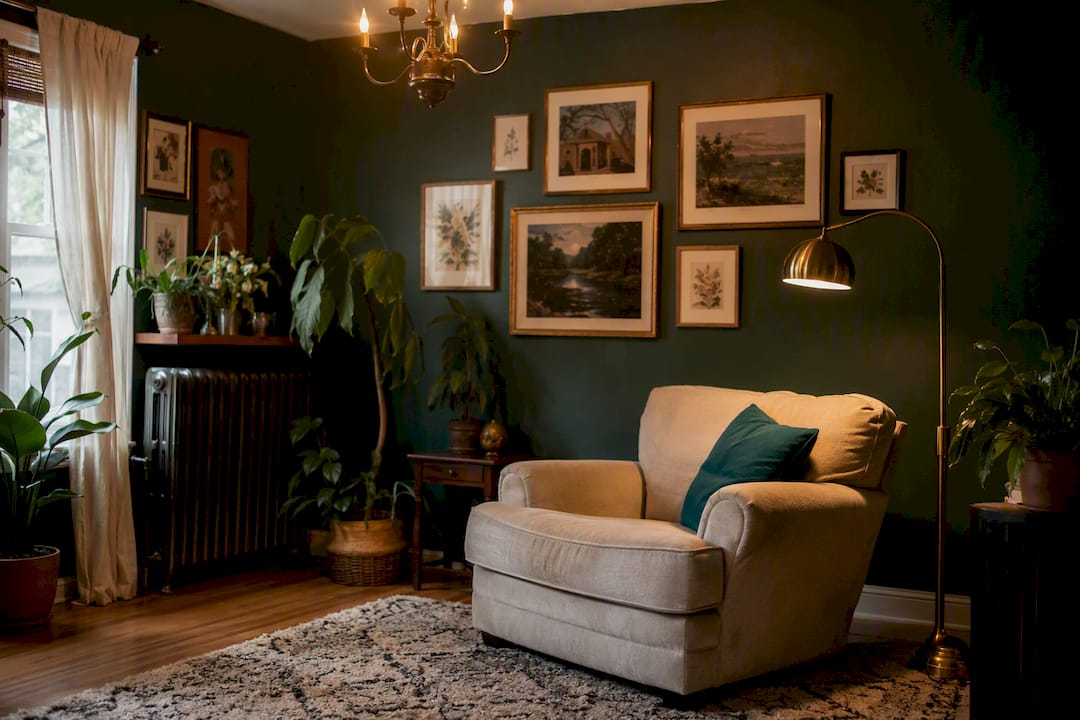
- The cluster: One larger anchor piece with smaller complementary prints arranged around it, which tends to feel the most collected and least “matched set.”
Before drilling anything, trace your frames onto paper and tape the templates to the wall to test spacing and height. Our gallery wall layout guide walks through more grouping patterns if you want additional visual reference before committing.
Materials, Frames, and Safety Rules for Nursery Walls
Sleep-safety guidance doesn’t stop at the crib mattress. It extends to what’s hanging above it. Avoid heavy glass over any sleep area; acrylic fronts or unframed canvas carry the same visual weight without the shatter risk.
For fixings, skip adhesive strips on anything above a crib. Use wall anchors or a French cleat for real frames, and secure the bottom edge with mounting putty or Velcro dots as a backup. Adhesive strips are fine only for very light textiles well away from the sleep zone.
Look for low-VOC or water-based inks on prints, and check for GREENGUARD or OEKO-TEX labeling on textiles when it’s listed. A quick safety scan before you hang anything:
- Acrylic or canvas, not glass, above the crib
- Anchors or cleats, not just nails, for anything heavier than a light print
- Putty or Velcro securing the bottom edge
- Low-emission inks and fabrics where labeling is available
Removable decals and fabric hangings remain the lowest-risk option directly over a sleep surface, since they’re lightweight and easy to reposition without leaving damage.
Budget-Friendly and DIY Nursery Wall Art Options
You don’t need a design budget to get a nursery gallery wall that looks curated. A printable art file downloaded and sent to a local print shop, or an online lab, costs a fraction of a framed original and still delivers a crisp A3. Poster prints stretched on canvas skip framing costs entirely, and thrifted frames with fresh mats and new prints inside them look nothing like their secondhand price tag.
Removable decal studios are worth a look if you’re renting or simply not ready to commit. For a DIY statement piece, choose acrylic over glass for the same safety reasons that apply to store-bought art. Our DIY home decor guide and no-nail hanging methods cover mounting solutions that work for rentals and permanent homes alike. For broader newborn-room prep beyond the walls, this room-preparation guide is a useful companion read.
Adding Personalized Touches Without Dating the Room
A name print or birth-stat piece feels like an obvious nursery staple, and it can be a genuinely warm addition, but the execution determines whether it ages gracefully or starts looking dated by the toddler years. Skip novelty fonts, cartoon mascots, and crowded layouts packed with every birth detail crammed onto one canvas. A simple serif or clean sans-serif name, set against a plain or lightly textured background, reads as intentional design rather than a keepsake craft project.
Birth stats (weight, length, date, time) work best as a secondary, smaller element rather than the centerpiece. Consider a small framed card tucked into a gallery cluster rather than one oversized statement print dominated by numbers. That way, if the personalized piece ever feels outgrown, you’re swapping one small frame, not redesigning the whole wall.
Hand and footprint art deserves a mention here too. These pieces carry real sentimental weight, but they photograph and display better as one modest-sized addition within a gallery rather than the wall’s anchor. Let a botanical print or abstract shape hold that visual weight instead, and let the personalized piece sit alongside it as a quieter, more intimate note.
If you want the personalized element to last well past infancy, keep the color palette matched to the rest of the room’s art rather than picking whatever pastel the print shop defaults to. A name print in the same tonal family as your anchor piece will feel like it belongs, not like an afterthought bolted onto the wall.
When and How to Rotate Nursery Wall Art
Nursery walls aren’t meant to be permanent installations, and treating them that way is one of the more expensive mistakes new parents make. The high-contrast prints that serve a newborn’s developing eyesight in month one stop doing much visual work by month five, once a baby can track color, shape, and simple recognizable images.
Build rotation into your plan from the start rather than treating a full redecoration as the only option. Swap the piece closest to the changing table first, since that’s the spot a baby studies most closely and for the longest stretches, followed by anything within direct crib sightline. Leave the larger anchor piece, an abstract, a nature scene, or a map, in place longer, since those are the pieces chosen specifically to outlast a single developmental stage.
A practical rhythm looks like this: revisit the high-contrast, close-range pieces around the three-month mark, refresh anything overly infant-themed by the first birthday, and reassess the whole wall once your child starts expressing actual opinions about their room, usually somewhere in the toddler years. Keep frames and fixings standardized (same frame width, same mounting hardware) so swapping a print inside an existing frame takes minutes, not a full afternoon with a drill.
Storing swapped-out prints properly, flat, out of direct sunlight, means you can bring a favorite piece back for a sibling’s nursery later, which makes the whole rotation cycle far less wasteful than it sounds.
Lighting That Makes Nursery Wall Art Actually Work
Even the best print falls flat under the wrong light. Nursery lighting typically serves two very different jobs: bright enough for daytime changing and play, dim enough for middle-of-the-night feeds, and your wall art needs to hold up under both.
A dimmable overhead fixture or a floor lamp with a low-lumen setting lets you keep art visible without flooding the room at 2 a.m. Warm white bulbs, generally in the 2700K to 3000K range, flatter most nursery palettes far better than cool white, which can wash out watercolor pieces and make black-and-white prints feel clinical rather than cozy.
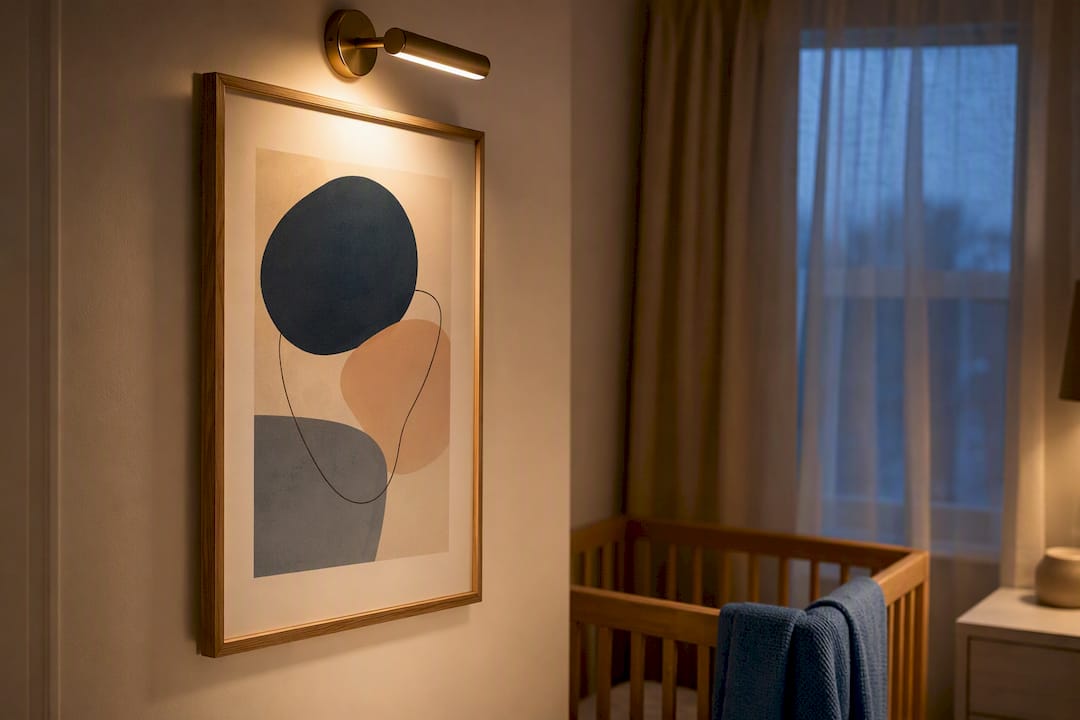
Avoid placing statement art directly opposite a window with harsh, unfiltered afternoon sun. Direct sunlight fades inks over time and can warp thin paper prints, even ones behind acrylic. A sheer curtain diffuses that light while still letting the room feel bright, and it protects your investment in the process.
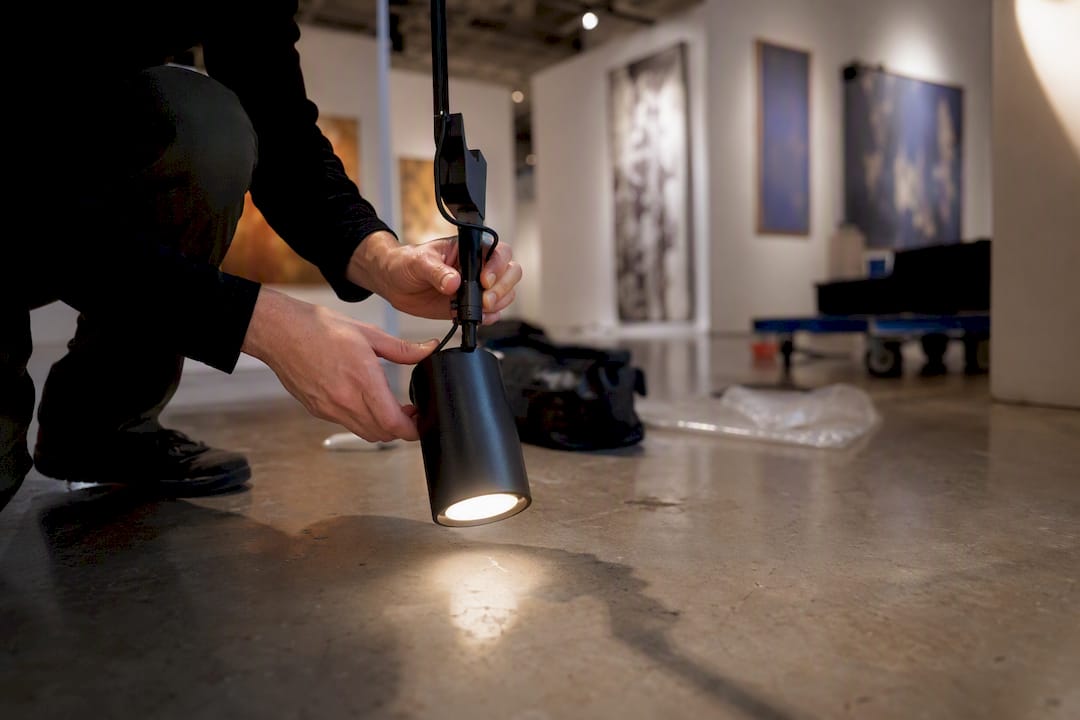
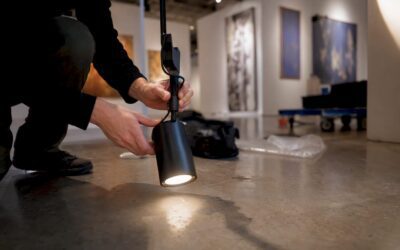
Small directional lighting, a picture light or a plug-in wall sconce with a warm bulb, adds genuine drama to a single anchor piece without overpowering the room’s primary lighting. It’s a small upgrade that makes a simple A3 print feel gallery-worthy rather than just “hung there.” If your nursery has limited natural light overall, lighter frame finishes and matting reflect what light is available, keeping the wall from feeling flat or heavy.
Interactive and Sensory Wall Art for Infant Development
Wall art doesn’t have to be purely visual to earn its spot in a nursery. Textural and interactive pieces give a baby something to reach toward as motor skills develop, well beyond the newborn stage where visual contrast does most of the work.
Soft-sculpture wall hangings with varied textures, felt, rope, wood beads, invite touch once a baby starts reaching from a changing table or a supervised spot on the floor. Fabric wall hangings with looped or knotted elements offer the same tactile richness as a textile art piece while doubling as an early sensory tool.
A low-hung, securely mounted soft mirror panel gives infants a genuinely engaging visual experience, since babies are drawn to faces, including their own reflection, more than almost any other image. Keep it well clear of the crib and mounted flush to the wall with no protruding edges.
Mobiles deserve a mention even though they hang from the ceiling rather than the wall, because they solve a related problem: something moving and visually interesting directly above the changing table or within crib sightline. Pair a wall-mounted piece with a mobile rather than treating them as competing choices, since a baby’s attention shifts between overhead and eye-level throughout the day.
Whatever sensory element you choose, secure it as rigorously as any framed print. Anything reachable needs to be fixed flat with no small detachable parts, and anything within an infant’s grasp range should skip buttons, beads, or trim that could work loose.
The Editor’s Take on Design-First Nursery Walls
Investing in a handful of genuinely good pieces beats filling every inch with nursery-specific decor that gets boxed up within a year. A well-chosen abstract print or a simple line-drawn map of a meaningful place will still feel right on a ten-year-old’s wall. Balance that collector’s instinct with the safety basics above: acrylic over glass, real fixings over adhesive strips, always.
— Nealda
Curated Help and DIY Support for Your Nursery Walls
If you’d rather skip the trial and error, Artinlifestyle’s Art Concierge service exists for exactly this moment, sourcing or commissioning pieces suited to a nursery’s proportions and palette instead of hoping a generic print collection happens to fit. It costs nothing to browse the option, and it saves the guesswork of choosing between a dozen A3 prints that all look fine in isolation but not together.
For readers who want the hands-on route instead, our DIY home decor ideas walk through framing and mounting projects that work just as well for a nursery wall as any other room in the house. Either path, curated sourcing or a weekend project, gets you to the same place: art that looks intentional now and still holds up once the crib is long gone. Start by browsing the Art Concierge page to see what a curated selection actually looks like for a room your size.
Sources
- How to Choose Nursery Wall Art: A Practical Guide for Parents | Alexandra Vorontsova
- Kids’ Rooms & Nursery Art: The Complete Guide to Themes, Colors, Safet | Rossetti Art
- How to Hang a Beautiful Nursery Gallery Wall (A Simple Guide) – 243 baby®
- How to Choose and Display Wall Art in the Nursery | The Baby Cot Shop
Recommended
- 17 Art Gallery Wall Ideas That Decorate Blank Spaces Perfectly
- 17 Art Gallery Wall Ideas to Decorate Blank Spaces Perfectly
- 7 Proven Ways to Hang Paintings Without Nails
- Living Room Art Ideas: Quick Styling and Shopping Guide