Style your fireplace mantel by choosing one anchor piece, applying five simple rules, then layering objects front to back and editing until only the essentials remain. That is the entire recipe. Everything else in mantel styling, from art scale to seasonal swaps, is a variation on this idea.
Before you buy a single candle or lean a canvas against the wall, run through these five moves:
- Pick one anchor (art, mirror, or a bold object) to command the space.
- Group in odd numbers, since threes and fives read as intentional.
- Vary height and texture so nothing sits at the same eye line.
- Layer front to back, tallest behind, smallest in front.
- Leave breathing room. Empty mantel space is part of the design.
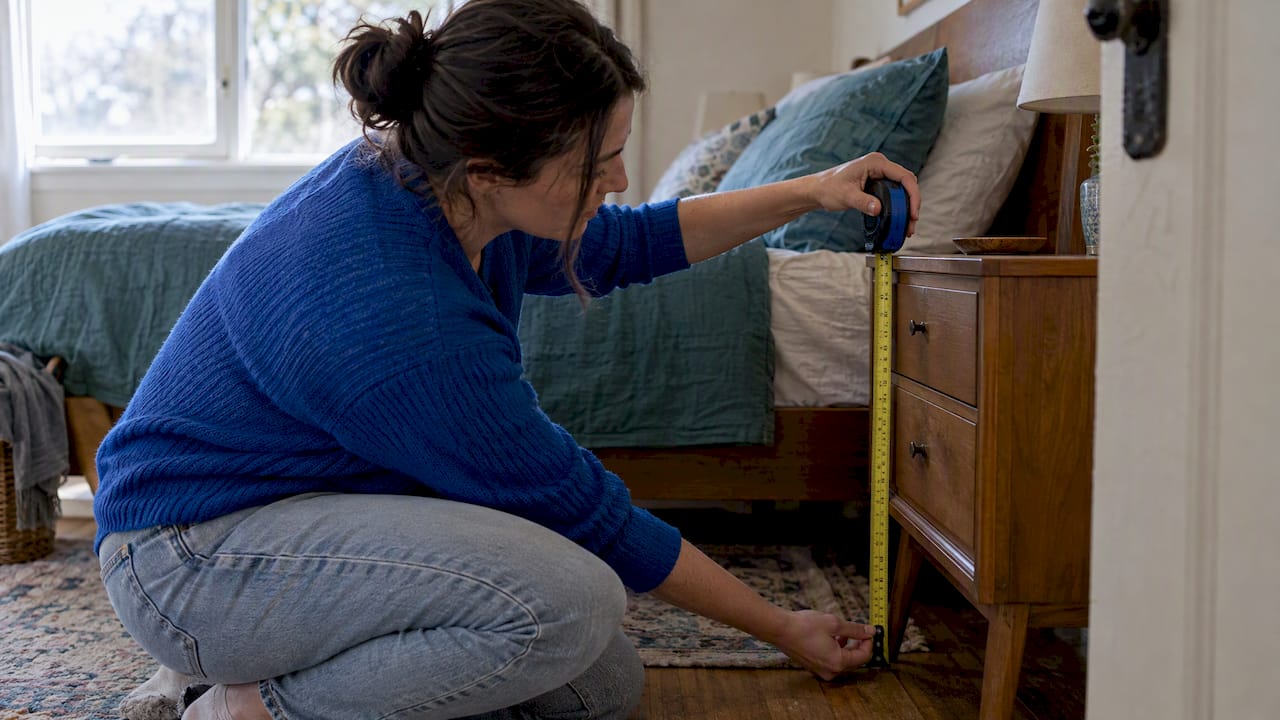
Two technical checks matter before you hang anything: confirm your art or mirror is sized correctly for the mantel width, and if you burn wood regularly, test the wall for heat before mounting something permanent.
Key Takeaways
Effective fireplace mantel styling depends on choosing one anchor piece, sizing art to two-thirds to three-quarters of the mantel width, and layering height, texture, and light with intentional negative space.
| Point | Details |
|---|---|
| Choose one anchor | Pick a single dominant piece, art, mirror, or object, before adding anything else. |
| Size art correctly | Keep art or mirrors at two-thirds to three-quarters of the mantel’s width for proportion. |
| Layer height and light | Combine tall, medium, and low objects with candles, sconces, or lamps for depth. |
| Check heat before hanging | Test the wall for warmth after a wood fire before mounting art permanently. |
| Swap seasonally, keep the anchor | Refresh small accents each season while leaving your main anchor piece in place. |
Table of Contents
- Fireplace Mantel Styling Rules Every Stylish Room Follows
- How Big Should Art Above a Fireplace Be?
- Layering a Mantel So It Looks Curated, Not Cluttered
- Bringing Warmth With Lighting and Natural Elements
- Seasonal Mantel Refresh Templates You Can Do in 20 Minutes
- Common Mantel Mistakes and How to Fix Them Fast
- What Designers Get Right About Mantel Styling
- Where to Find the Right Anchor Piece for Your Mantel
- Editorial Take: What Most Mantel Advice Gets Backward
- Sources
Fireplace Mantel Styling Rules Every Stylish Room Follows
Good fireplace mantel styling is a formula, not a mood. Start with the anchor piece, whether that is a substantial mirror, a single large painting, or a curated gallery grouping. This is the object your eye lands on first, so choose it before anything else goes on the shelf.
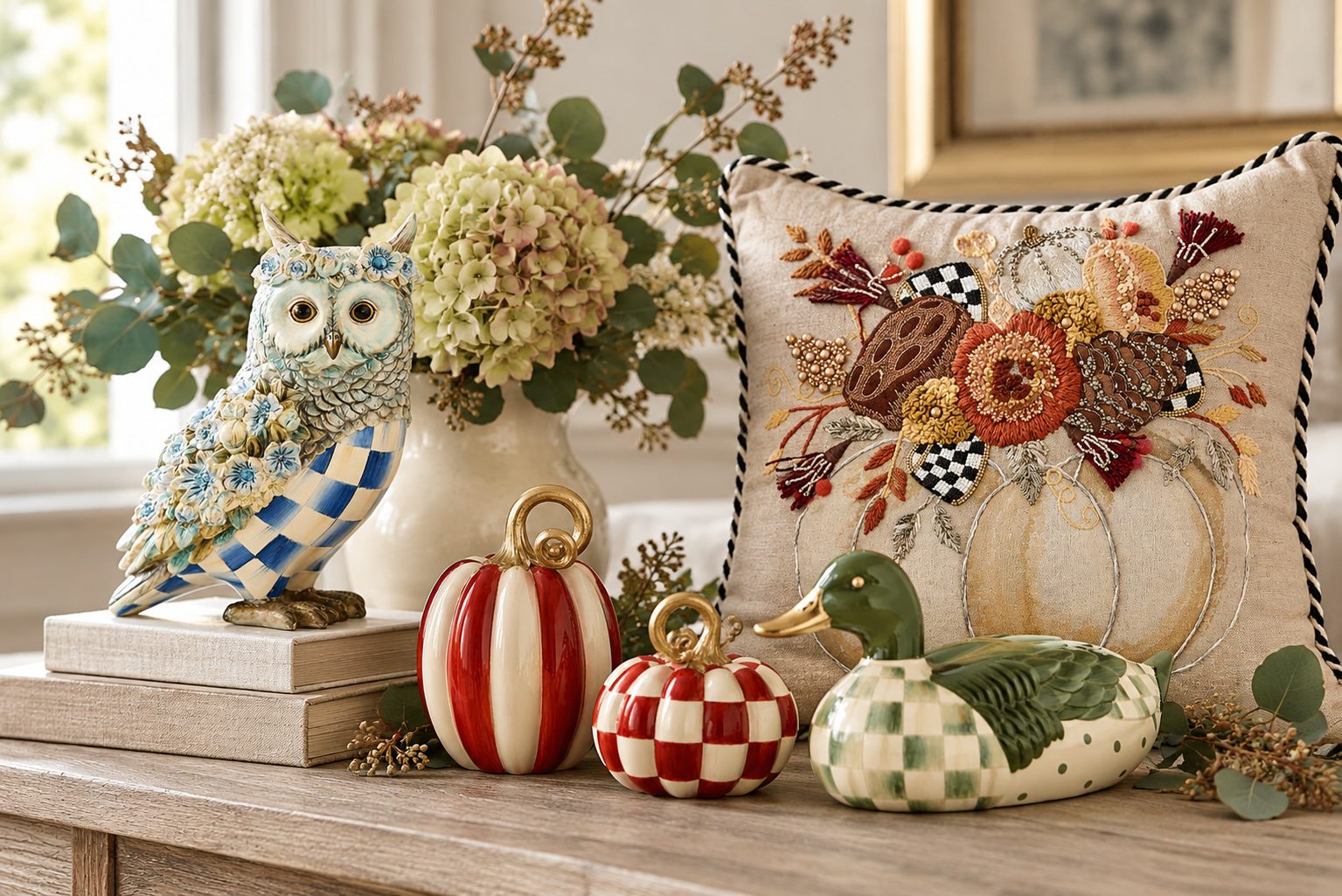
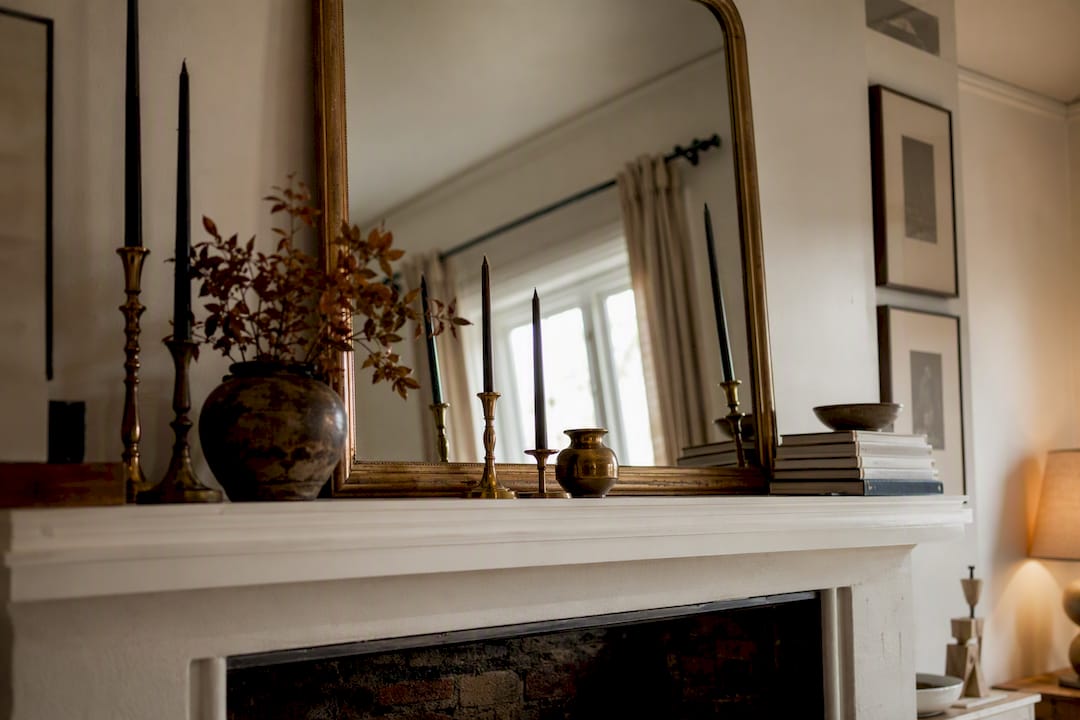
From there, odd numbers do the visual work. Three candlesticks read as a composition; two reads as a matched pair and stops the eye cold. Vary height next: a tall vase, a mid-height frame, a low stack of books creates a rhythm the brain reads as “curated” rather than “collected.” Layer front to back so shorter pieces don’t hide behind taller ones, and always leave open shelf space. A mantel packed edge to edge looks cluttered no matter how nice each individual piece is.
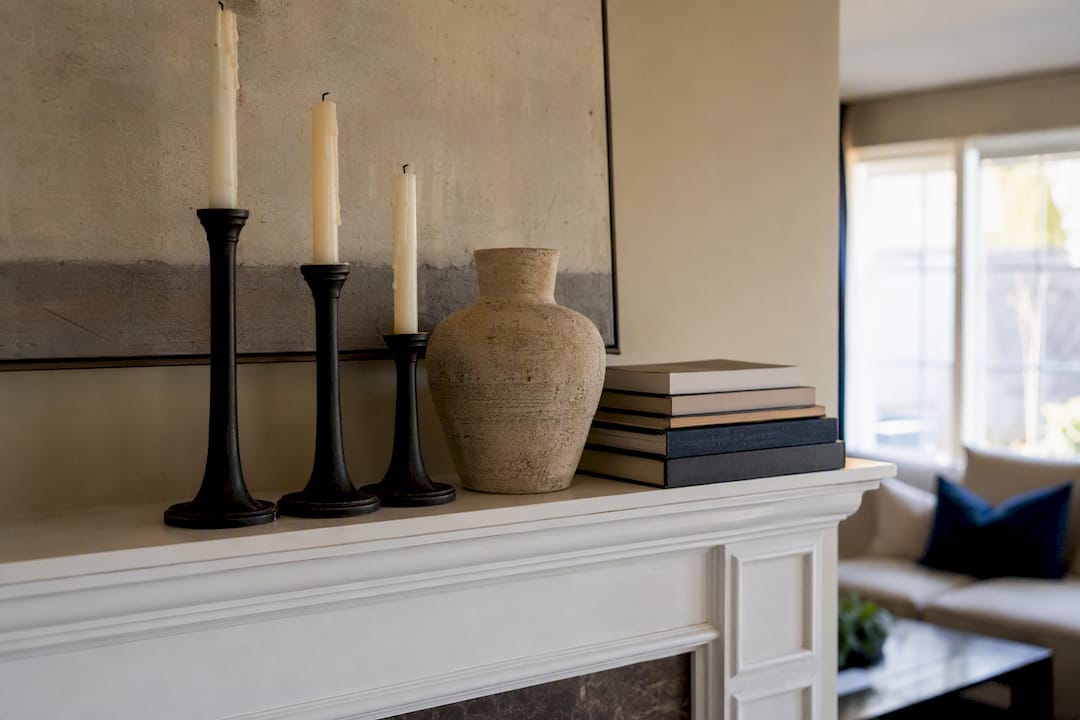
For a standard mantel, a reliable starter setup is one anchor art piece or mirror, two flanking objects of different heights, and one or two low accents like candles or a small stack of books.
Pro Tip: Lean your art against the wall instead of hanging it. Leaning pieces are fully accepted by designers, and it makes swapping seasonal decor as easy as sliding a new piece into place, no nail holes required.
How Big Should Art Above a Fireplace Be?
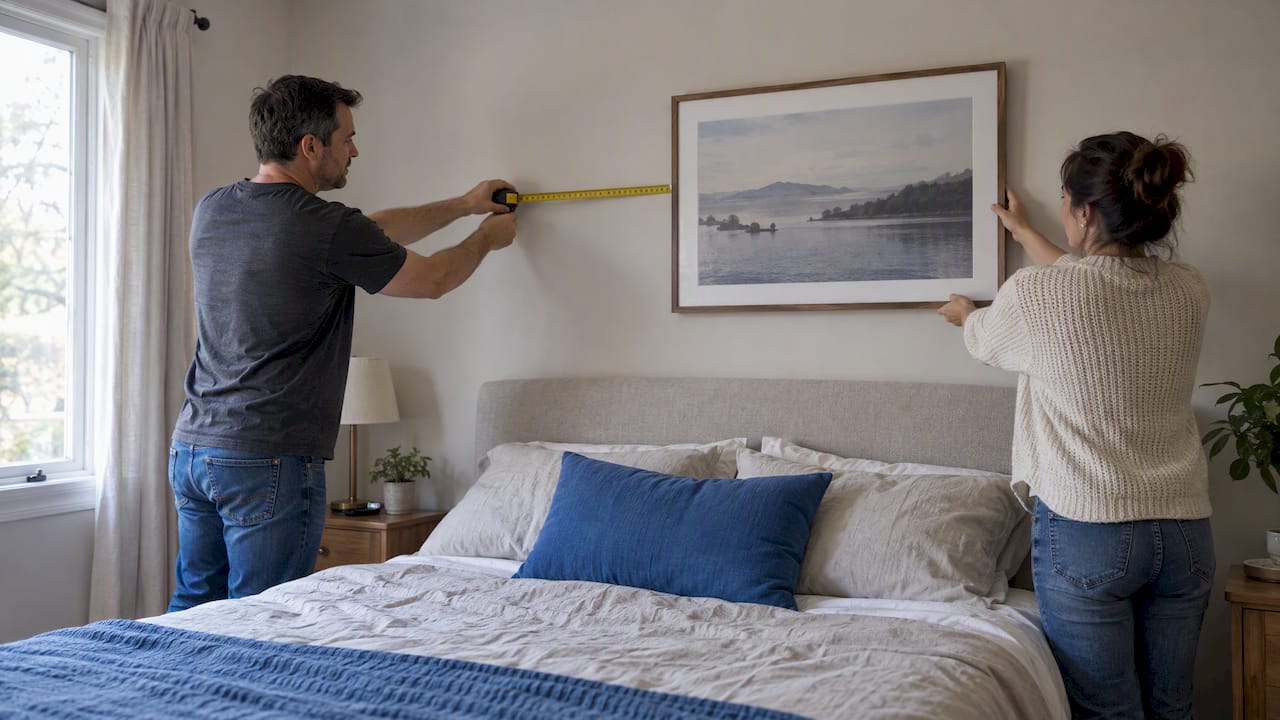
Scale is where most mantel arrangements fail before they even begin. Art or a mirror hung above a fireplace should span roughly two-thirds to three-quarters of the mantel’s width, never the full width and never a small frame floating in a sea of wall.
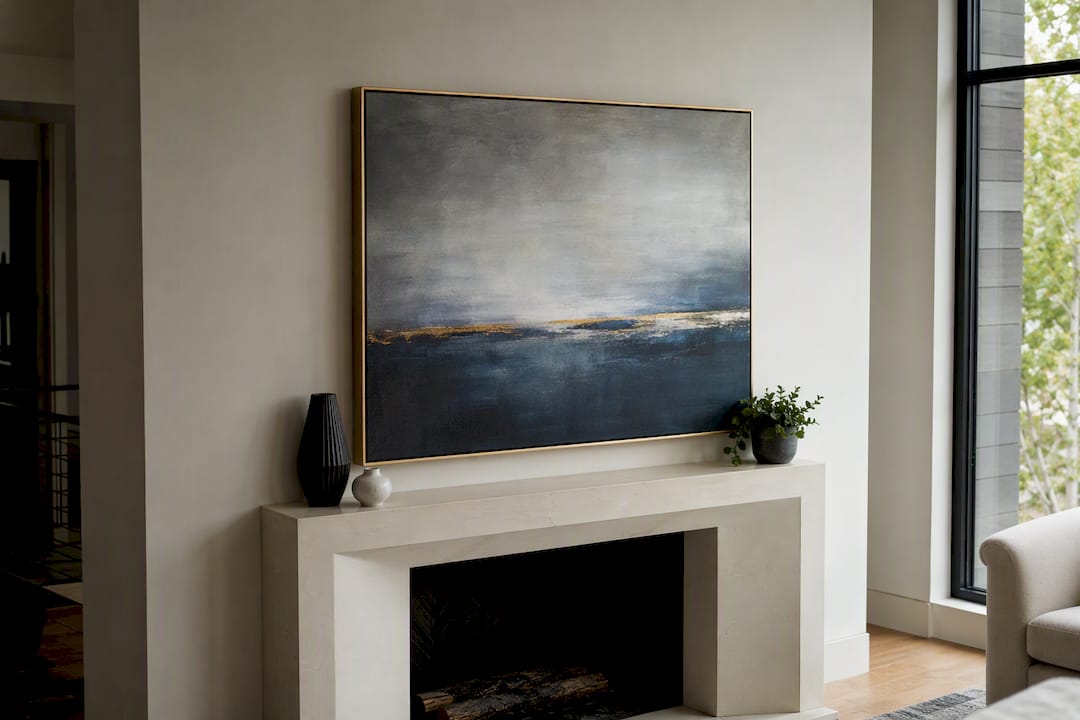
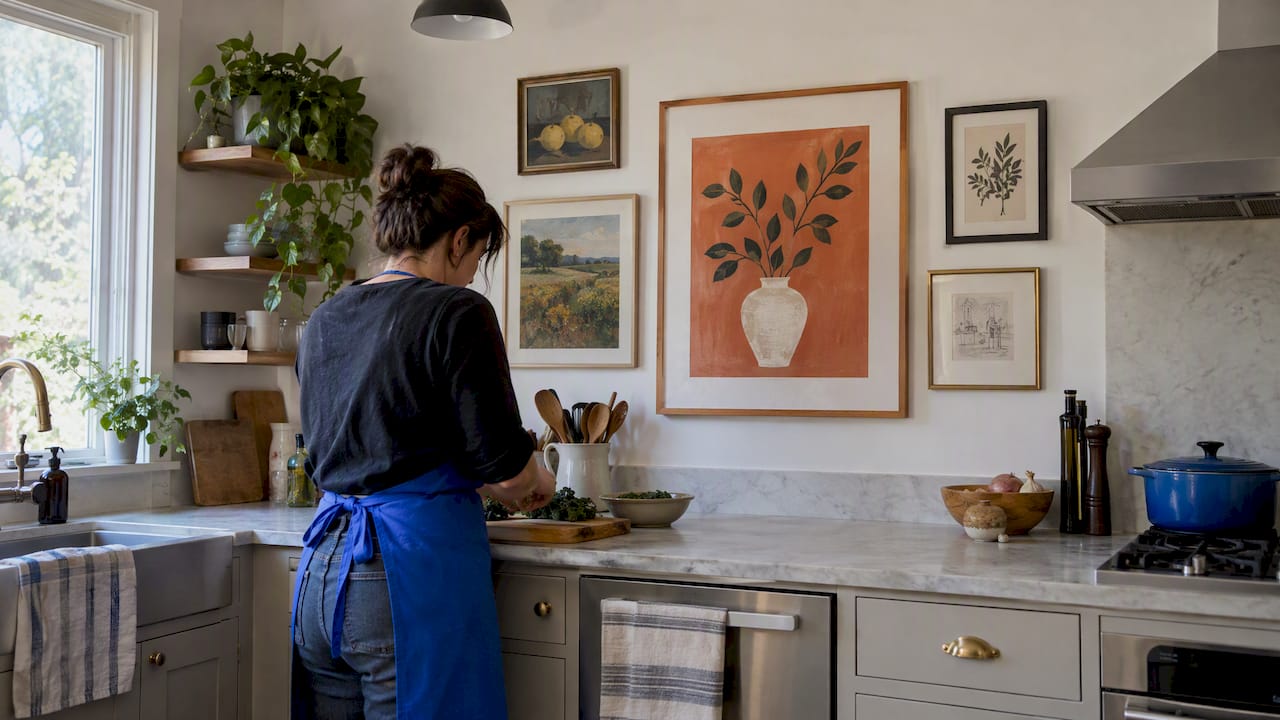
If you’re grouping several smaller pieces instead of hanging one large piece, treat the whole grouping as a single shape and hold it to that same width ratio.
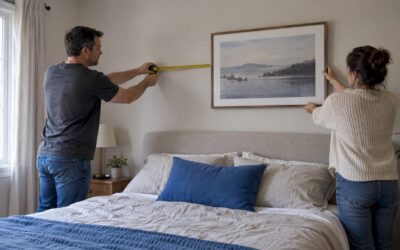
Vertical placement matters just as much as width. Hang the piece so its bottom edge sits 4 to 8 inches above the mantel shelf, not the standard 57 to 60 inch gallery height rule used elsewhere in a room. Taller mantels can push closer to 8 inches; a lower mantel looks more balanced closer to 4.
One test before you drill a single hole: if your fireplace burns wood regularly, run a full fire, then rest your palm on the wall and mantel above it. If it’s warm to the touch, heat and soot exposure can damage artwork over time, so lean a piece instead of mounting it, or choose a mirror, which tolerates heat far better than canvas or paper.
Layering a Mantel So It Looks Curated, Not Cluttered
A mantel composition works the same way a well-plated dinner does: height, spacing, and a little intentional imperfection. Use a simple three-tier height formula as your starting frame. Tall anchor pieces run roughly 18 to 28 inches, medium supporting objects sit around 10 to 16 inches, and low accents stay in the 4 to 8 inch range.
- Set your tall anchor first, either centered or slightly off center.
- Add medium pieces in odd-numbered groupings on either side.
- Fill remaining gaps with low accents like candles, small books, or a bowl.
- Layer front to back so nothing blocks a shorter object behind it.
- Step back ten feet and adjust until one side feels slightly different from the other.
That last step is the real secret. Designers typically build a symmetrical base first, then deliberately break it, shifting one object, swapping a candle height, or angling a frame, so the finished mantel feels collected rather than staged.
Spacing depends on your mantel’s depth. A shallow 6-inch shelf needs smaller-footprint objects placed closer together to avoid a precarious, tippy look; a deeper mantel of 10 inches or more gives you room for true front-to-back layering with visual gaps between rows.
Bringing Warmth With Lighting and Natural Elements
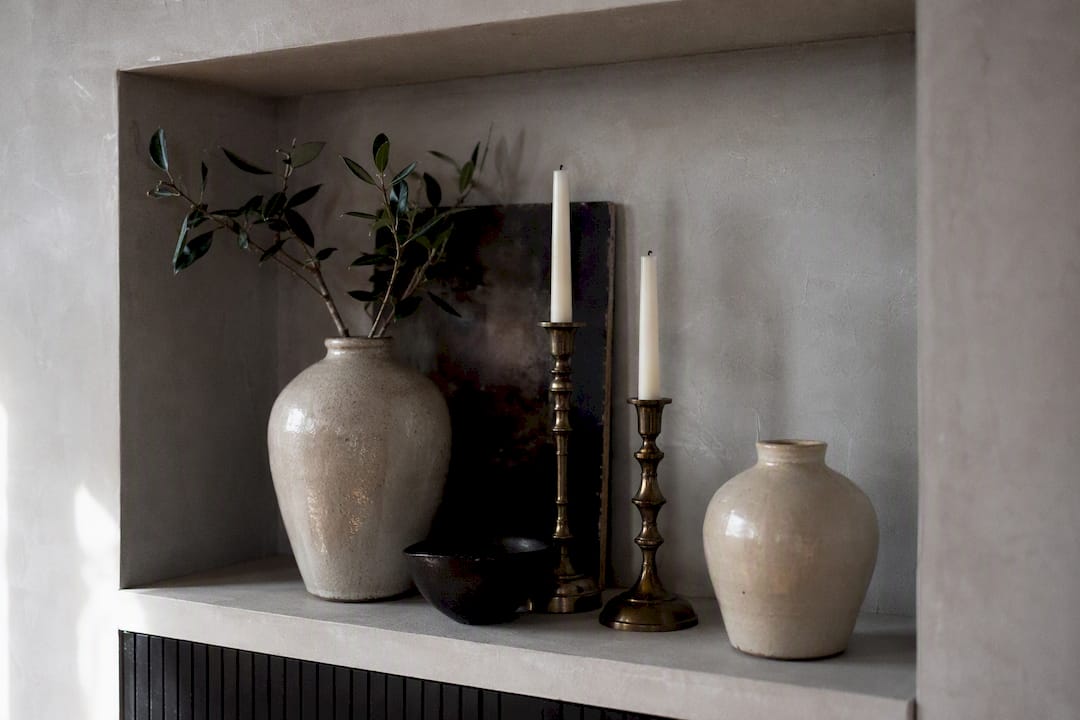
Light does more for a mantel than almost any object you can buy. Layering candles, sconces, and small lamps creates the kind of ambient warmth a single overhead fixture never will.
- Group a pair of taper or pillar candles at varying heights near one end.
- Add a small lamp or wall sconce if your mantel sits below eye level.
- Bring in one or two natural elements: a bundle of branches, a single-stem flower in a bud vase, or a small potted plant works well and pairs naturally with potted greenery elsewhere in the room.
- Place natural elements asymmetrically rather than centered for a more organic feel.
Pro Tip: Keep any open flame at least a foot from artwork, greenery, or draped fabric, and never leave candles burning unattended near a working fireplace.
Seasonal Mantel Refresh Templates You Can Do in 20 Minutes
Keep your anchor piece fixed year-round and swap only the small accents. That single habit turns a seasonal refresh into a 20 to 30 minute task instead of a full redecorating project.
- Spring: light greenery, a single-stem vase, pastel candles, and a woven basket accent.
- Summer: linen or cotton textures, driftwood or coral, and cooler white and blue tones.
- Fall: dried branches, warm amber or rust candles, and a small stack of leather-bound books.
- Winter: evergreen sprigs, metallic accents, and deeper jewel-toned candles.
Time-saving tip: store each season’s small accents in a labeled bin so the swap is grab-and-place rather than a shopping trip every three months.
Common Mantel Mistakes and How to Fix Them Fast
Most mantel problems trace back to a handful of repeat offenders. Overcrowding, undersized art, and uniform-height objects are the three most common, and each has a quick fix.
- Art too small for the mantel: size up to the two-thirds to three-quarters width rule, or switch to a grouped arrangement.
- Overcrowded shelf: remove a third of what’s there and see if you miss it.
- Everything the same height: swap in one taller and one shorter piece to break the line.
- Ignoring hearth depth: shallow mantels need smaller, stable objects, not tall top-heavy ones.
- Skipping the heat check: always test the wall temperature before hanging anything permanent above a working fireplace.
Run this five-minute check after styling: stand back ten feet, squint, and confirm you can identify one clear anchor, at least one height variation, and visible negative space.
What Designers Get Right About Mantel Styling
Professional stylists keep circling back to the same principles. Start symmetrical to build a stable base, then break it deliberately. Leaning art is a legitimate technique, not a shortcut. Layered light does more work than any single decor object. And the conversation between materials, raw wood against polished brass, matte ceramic against a glossy frame, keeps the eye interested longer than color alone.
For more on choosing and arranging art, Artinlifestyle’s guides on gallery wall arrangements and living room art selection go deeper into the anchor-piece decision this whole framework depends on.
If your mantel sits below a mounted television rather than open wall space, the styling math changes entirely, and it’s worth checking safe TV mounting guidance before you plan art or accents around it.
Where to Find the Right Anchor Piece for Your Mantel
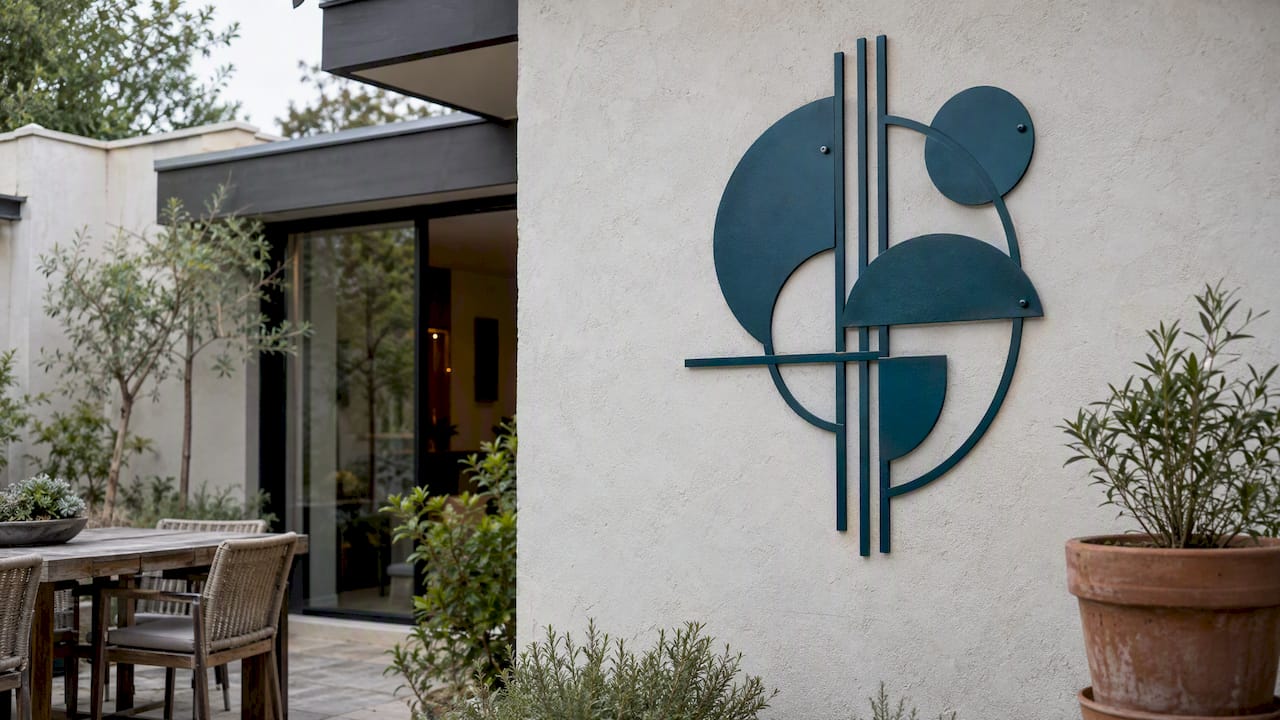
Every rule in this guide assumes you already have a strong anchor to build around, and that’s usually the hardest part to source. A striking original piece does more for a mantel than a dozen small accents ever will. Artinlifestyle’s collection includes work like Antony Squizzato’s modernist cubism for a bold graphic anchor, or Kat Yew’s abstract line art for a quieter, more contemplative focal point.
If you’re building the whole mantel scene from scratch, browse Artinlifestyle’s DIY home decor ideas for accent pieces that pair naturally with a strong central artwork.
Editorial Take: What Most Mantel Advice Gets Backward
Most mantel guides treat styling like a shopping list: buy these five objects, arrange them, done. That misses the actual skill, which is editing. The five rules in this piece work because they’re a filter for saying no, not a recipe for saying yes to more things. A mantel with three well-chosen objects and generous negative space beats a mantel with nine objects every time.
The conventional advice on symmetry is also incomplete. Most articles tell you to avoid symmetry entirely in favor of “eclectic” arrangements. That’s backward. Always start symmetrical. It gives your eye a stable base to read before you introduce the asymmetry that makes a space feel human. Skipping straight to asymmetry usually just reads as messy.
If you take one thing from this guide, prioritize the heat check and the two-thirds sizing rule before anything decorative. Get the structural decisions right first. The candles and greenery are the easy part.
— Nealda
Sources
- Wall Art Above a Fireplace: How to Choose the Right Size & Style – Atelier Printworks
- Art Above the Fireplace: Getting the Scale Right
- Hanging Wall Art Over a Fireplace Mantel