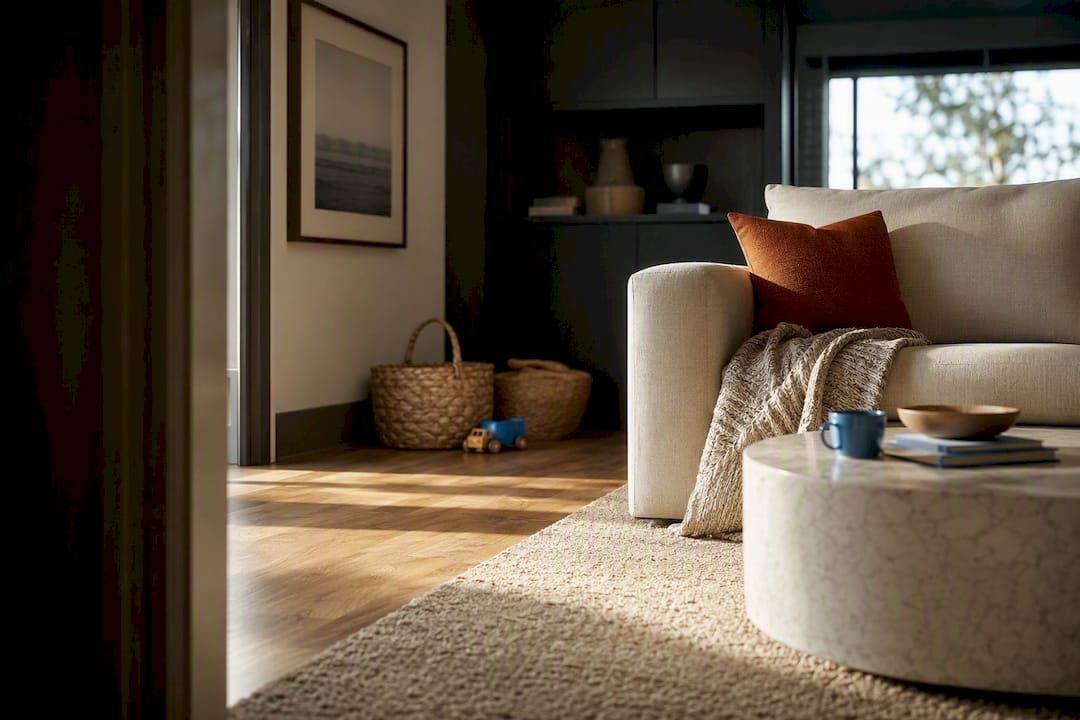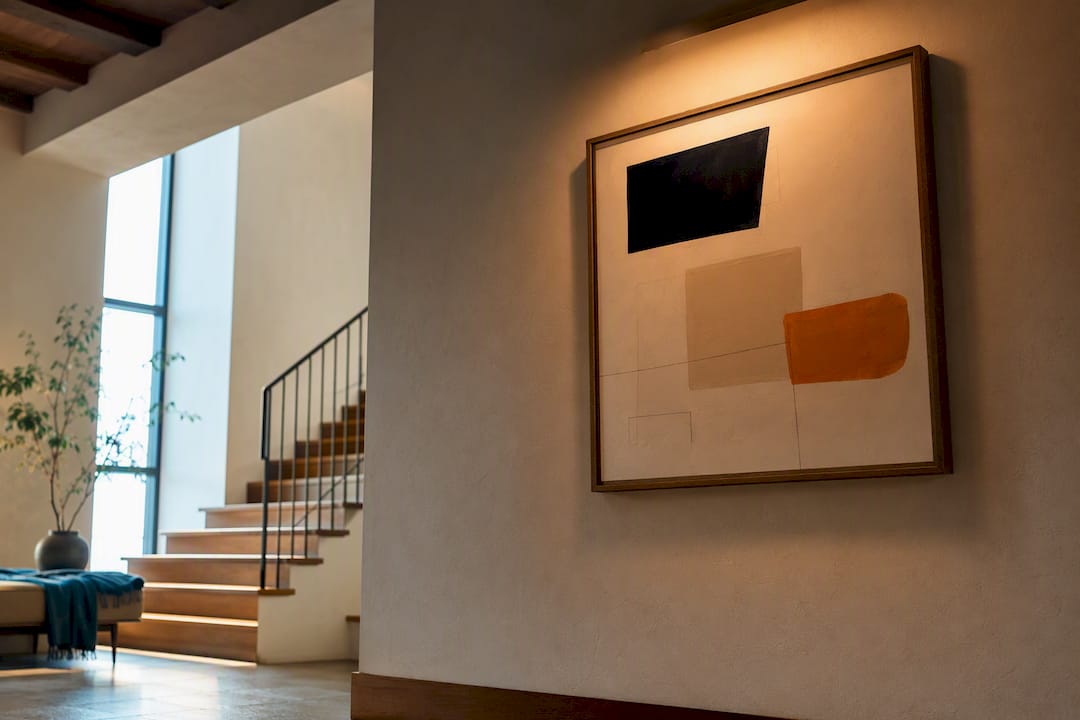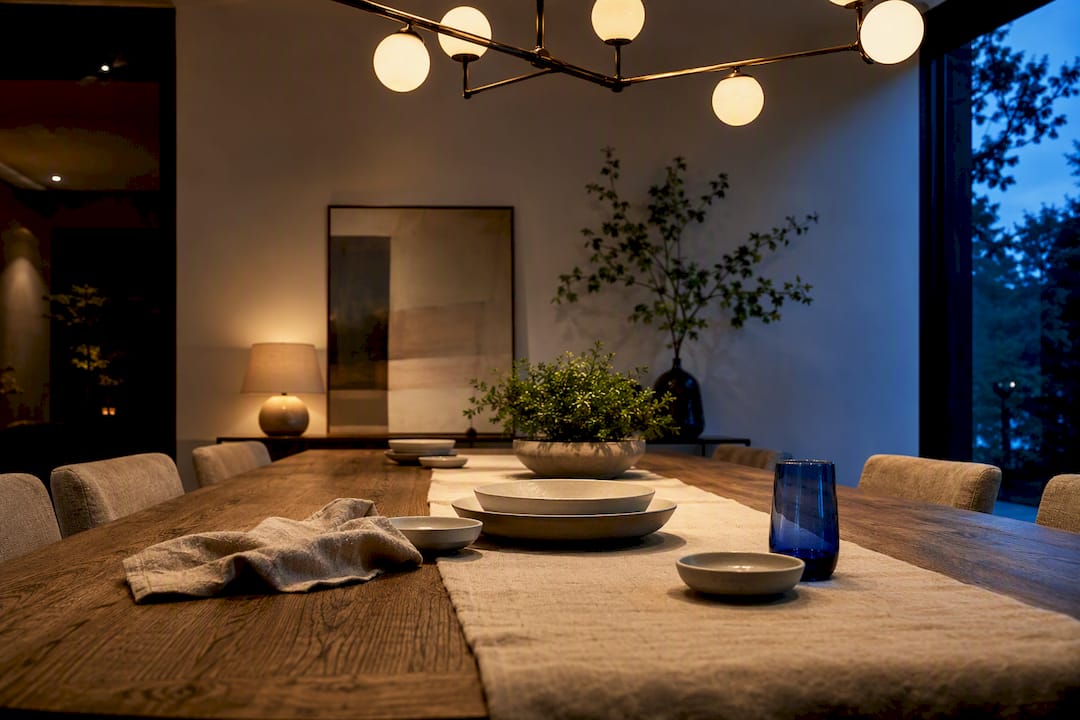
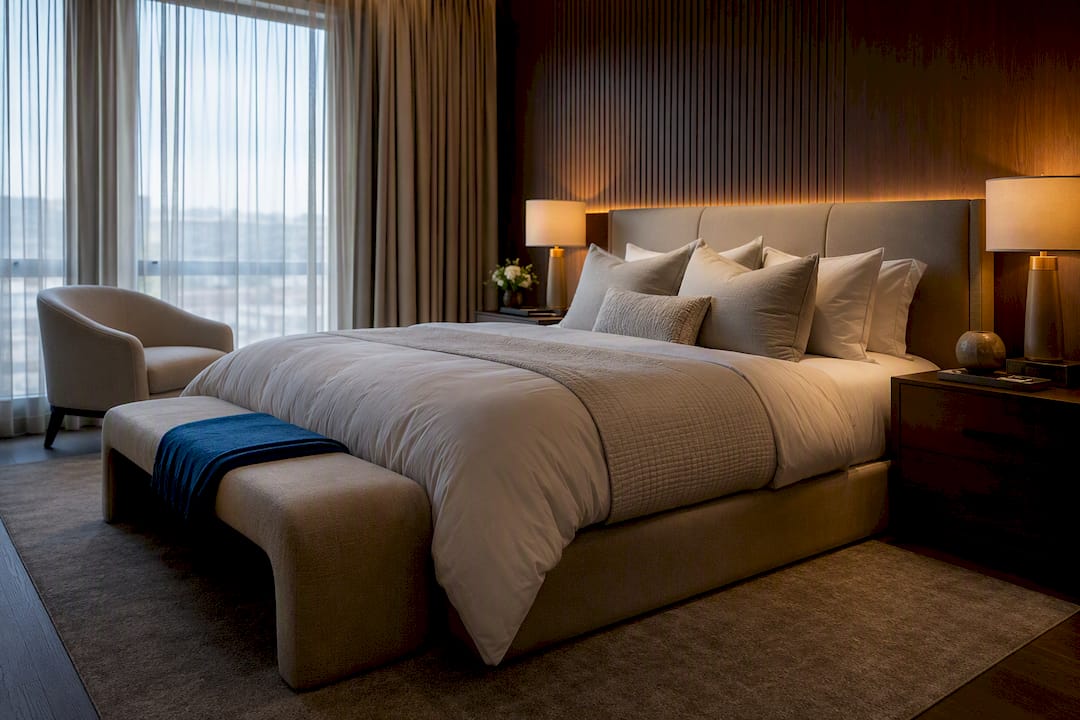
The fastest path to a luxury bedroom is four moves done well: hotel-style bedding layered in natural fibers, three-tier lighting on dimmers, one premium architectural or material anchor, and a ruthless edit of everything that doesn’t earn its place. Everything below breaks those four moves into styles, materials, lighting, architecture, and realistic budgets, so you can decide where your money and attention actually belong.
TL;DR:
- Prioritize bedding, lighting, and structural elements before adding art and decorative objects to ensure a cohesive and high-end look.
- Use oversized rugs, layered natural fiber bedding, and architectural features like paneling or built-ins to create a luxurious atmosphere within realistic budgets.
- Layer three types of dimmable lighting and position sconces at eye level to achieve hotel-like ambiance and highlight architectural details.
- Choose high-quality, natural materials such as Belgian linen, bouclé upholstery, solid wood, and wool rugs that develop character over time.
- Focus on restraint, negative space, and thoughtful sequencing to avoid clutter and ensure the room feels composed rather than assembled.
Table of Contents
- High-Impact Moves for Luxury Bedroom Ideas That Actually Work
- Which Luxury Bedroom Style Fits Your Space?
- Materials and Finishes That Actually Read as Luxury
- Layered Lighting and the Fifth Wall
- Architectural Details and Millwork Worth the Investment
- Layout, Storage, and Small-Room Strategies
- Budget Priorities and Realistic Cost Ranges
- Notes From Nealda and the Art in Lifestyle Approach
- Smart Home Touches for Ambiance and Convenience
- Choosing and Arranging Luxury Furniture
- Window Treatments That Add Elegance and Privacy
- Where the Conventional Advice Gets It Backwards
- Sourcing Art and Finishing Pieces the Easy Way
- Sources
High-Impact Moves for Luxury Bedroom Ideas That Actually Work
Skip the impulse to redecorate everything at once. A handful of interventions carry almost all the visual weight, and knowing the order matters as much as knowing the list.
- Rebuild your bed layer by layer. Long-staple cotton or Belgian linen sheets, a properly filled duvet insert, standard shams, and a row of Euro pillows behind them create the stacked, plush silhouette that reads instantly as hotel-grade, according to Homehavenhq’s guide to five-star bedroom transformations.
- Install three lighting layers on dimmers, warm white in the 2700K to 3000K range, so the room can shift from bright and functional to low and atmospheric.
- Edit before you decorate. Clear the nightstand down to a lamp, a small tray, and maybe a book. Negative space does more for a luxury feel than any single object placed on top of it.
- Pick one architectural anchor, a paneled headboard wall, a coffered ceiling, or a built-in reading nook, and let it carry the room’s character.
- Treat lighting fixtures and one piece of art as jewelry. A sculptural pendant or a well-placed sconce finishes a room the way the right necklace finishes an outfit.
- Get the rug rules right. Oversized rugs that extend well past the bed frame ground the whole composition; small rugs floating under a bed frame do the opposite.
Practical tactics like seating nooks, layered textiles, and maximized closet space also show up consistently among the highest-return, budget-scalable moves homeowners make, per The Spruce’s roundup of hotel-inspired bedroom ideas.
Pro Tip: Buy your duvet insert one size up from your duvet cover. That extra loft is what gives hotel beds their pillowy, oversized look instead of the flat, deflated one most home bedding has.
Which Luxury Bedroom Style Fits Your Space?
Luxury isn’t one look. Picking a lane before you shop keeps the room coherent instead of it being assembled from five different Pinterest boards.
- Quiet luxury: restrained palettes, natural materials, and almost no visible clutter. Three moves: swap hardware for solid brass or nickel, choose one linen texture and repeat it, leave every surface but one completely bare.
- Hotel-inspired: structured bedmaking, a bench at the foot of the bed, and layered task lighting. Three moves: add a luggage rack or bench, install a reading sconce on each side, use a tray to corral remotes and chargers out of sight.
- Moody and dramatic: deep charcoal or espresso walls with warm brass accents. Three moves: paint the ceiling to match the walls, add a single oversized art piece, keep bedding pale to create contrast.
- Japandi: low-profile furniture, matte wood, and muted neutrals. Three moves: choose a platform bed, add one ceramic or stone object, keep window treatments sheer and unlined.
- Nature-inspired: biophilic textures like rattan, linen, and stone. Three moves: bring in a large potted plant, use a jute or wool rug, favor organic shapes over sharp angles.
Quiet luxury and Japandi tend to suit smaller rooms best, since both rely on restraint rather than scale. Moody palettes need a room with strong natural light to avoid feeling cave-like.
Materials and Finishes That Actually Read as Luxury
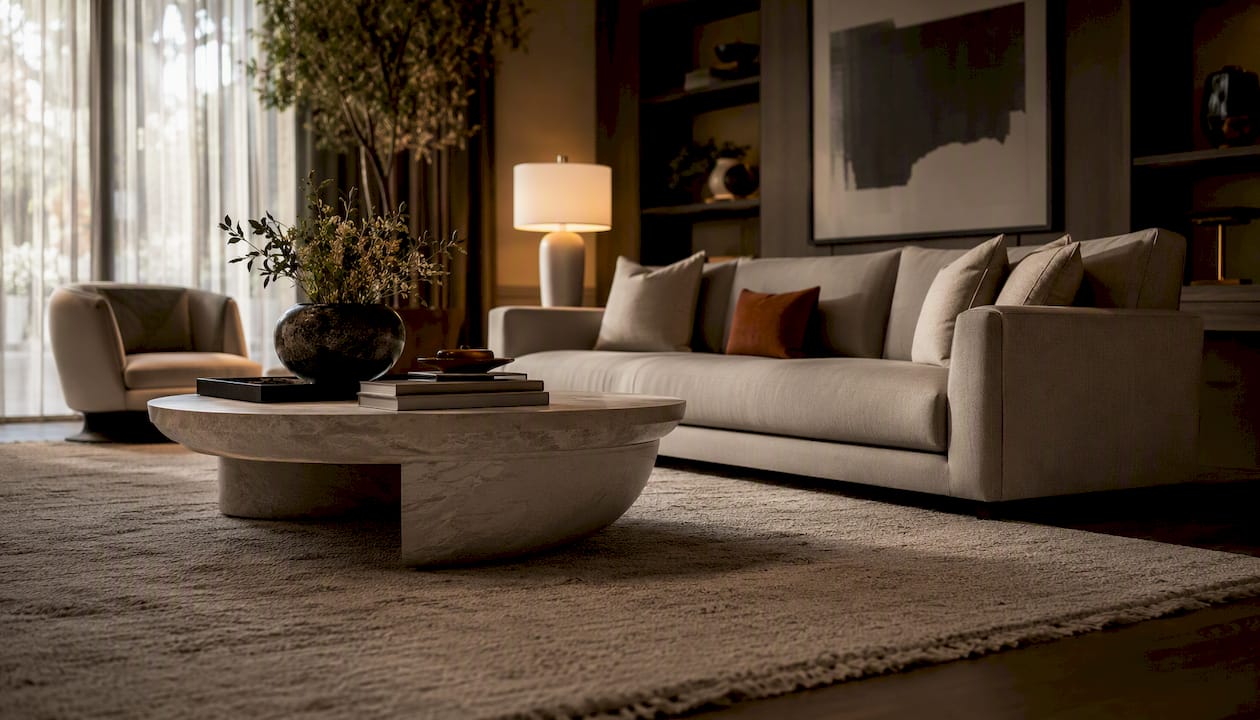
The material vocabulary of a luxury bedroom is narrow on purpose. Belgian linen, long-staple cotton, silk accent pillows, bouclé upholstery, and solid wood furniture all share one trait: they age with character instead of wearing out.
- Bedding: long-staple cotton or Belgian linen sheets, a duvet insert with real fill weight, not a flat quilted throw.
- Upholstery: bouclé or heavy wool on a bench or accent chair for texture that photographs and feels rich in person.
- Rugs: wool over synthetic blends, with enough weight that the rug lies flat without a pad in high-traffic zones.
- Wall finish: a Level 5 drywall finish, the smoothest standard grade, prevents flashing (the shadowy imperfections that show up under grazing light from sconces or pendants), per National Gypsum’s technical comparison of drywall finish levels.
High-quality bedding built from natural fibers with sound duvet construction remains the single fastest return on perceived luxury of anything in this list, according to the same Homehavenhq analysis. Artisanal touches, hand-forged hardware, solid stone accents, add the kind of permanence that mass-produced finishes can’t fake, a point echoed in Rocky Mountain Hardware’s guide to timeless bedroom design.
Layered Lighting and the Fifth Wall
Ceilings get ignored in most bedrooms, which is exactly why treating one well makes such a strong impression. Designers call it the fifth wall for a reason.
- Ambient light comes from a central fixture or recessed cans, dimmed low for evening use.
- Task light lives at reading height, wall sconces flanking the headboard work better than table lamps because they free up nightstand space.
- Accent light highlights art, a textured wall, or an architectural niche.
- Keep every bulb in the 2700K to 3000K range and put every layer on its own dimmer, a setup Homehavenhq identifies as essential to hotel-like ambiance.
- For the ceiling itself: wood planking adds warmth in rustic or Japandi rooms, a subtle coffer suits traditional or transitional spaces, and a bold wallpaper or deep paint color works when the walls stay quiet. See more statement ceiling ideas for direction.
Pro Tip: Mount sconces at 60 to 66 inches from the floor, roughly eye level for someone sitting up in bed. Too high and they wash out the wall; too low and they glare directly into your eyes at 11 p.m.
Architectural Details and Millwork Worth the Investment
A floor-to-ceiling upholstered or paneled headboard wall does more to anchor a room than almost any furniture purchase, because it changes the architecture instead of just decorating it. Applied molding, wainscoting, or a full millwork wall gives the eye a fixed point of quality the rest of the room can build around.
- Built-ins, whether a window seat, a wall of concealed drawers, or a closet system, sustain negative space by giving clutter somewhere to disappear.
- Full-wall wood paneling in walnut or oak typically runs between $12,000 and $25,000 depending on species and shop labor, per budget notes from Build-Construct on custom millwork.
- Millwork should be specified early in any renovation. Retrofitting it after electrical and finish work is locked in almost always costs more.
Custom millwork is consistently the largest single line item in a luxury bedroom budget, which is exactly why it belongs on the planning table before, not after, you pick paint colors.
Layout, Storage, and Small-Room Strategies
A luxury bedroom still has to function as a room people walk through, so circulation rules apply even when the goal is atmosphere over square footage.
- Leave ample clearance on each side of the bed and at the foot for comfortable walking space that doesn’t feel cramped.
- Size your rug to extend well past the sides of the bed frame so it grounds the whole furniture grouping rather than floating under just the mattress.
- Push storage into built-ins, a bench with a hidden hamper, or under-bed drawers, so surfaces stay clear without sacrificing capacity, as detailed in this Bedroom Advice resource.
- In small rooms, choose a tall headboard and ceiling-mounted drapery to pull the eye upward, and size the bed conservatively so the door still swings freely and closet access stays easy.
Budget Priorities and Realistic Cost Ranges
Spend in this order: bedding first, lighting second, window treatments third, rugs fourth, and custom millwork last, since it carries the highest cost and the longest payoff timeline.
- Bedding: a full hotel-style set, sheets, duvet insert, shams, and Euro pillows, typically lands in the low hundreds to low thousands depending on fiber and brand.
- Lighting: sconces and dimmer retrofits are usually a few hundred dollars per fixture installed, far cheaper than a full electrical rerun.
- Full-wall custom millwork: $12,000 to $25,000 for walnut or oak paneling, per the Build-Construct cost breakdown.
- Where to save: buy one exceptional rug or headboard and pair it with mid-range paint and hardware rather than splurging evenly across every category.
- Where to splurge: the bed itself, since it’s the object you touch every single day and the one guests notice first.
Notes From Nealda and the Art in Lifestyle Approach
An editor at the magazine focuses on restraint over accumulation, favoring material honesty over trend-chasing in luxury interiors coverage. This weekend, try three moves: swap in one new textile layer on the bed, install a dimmer on your existing overhead fixture, and clear your nightstand down to two objects. Small, sequenced changes compound faster than one expensive purchase made in isolation.
Smart Home Touches for Ambiance and Convenience
Technology belongs in a luxury bedroom only when it disappears into the experience instead of announcing itself. The goal is control, not gadgetry sitting in plain sight.
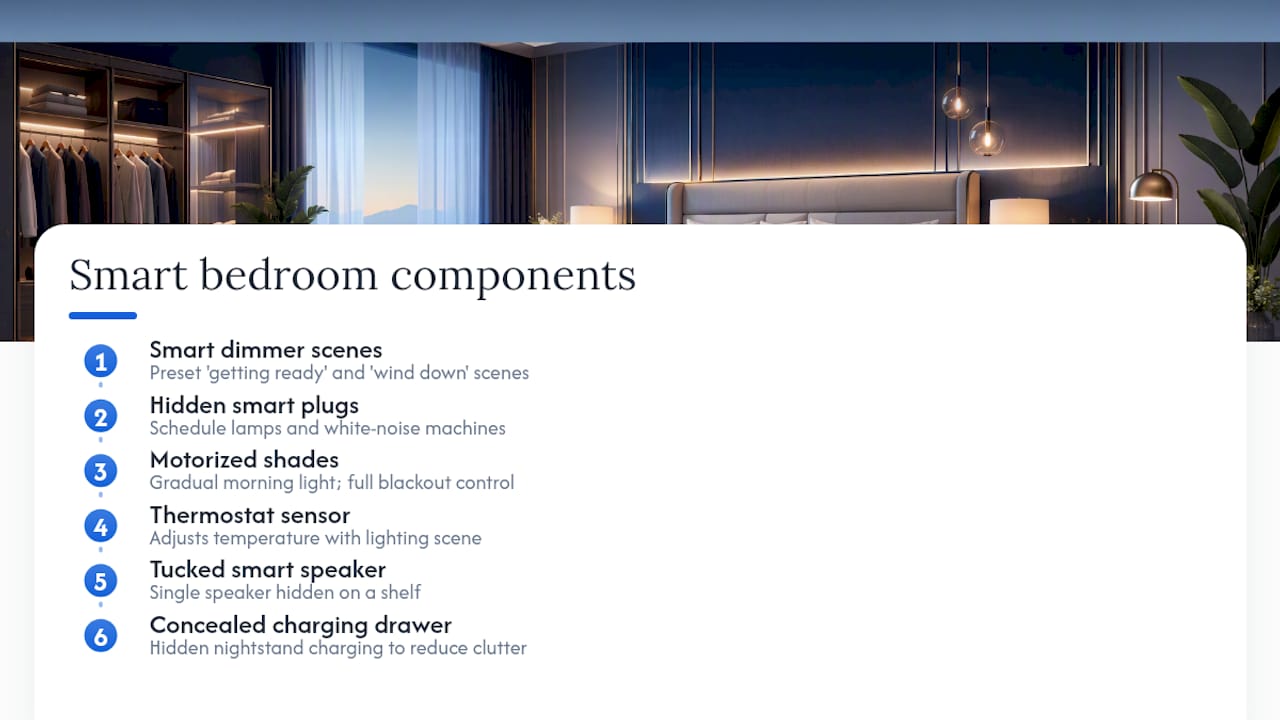
Smart dimmer switches paired with app or voice control let you preset lighting scenes, a bright “getting ready” mode and a dim “wind down” mode, without touching a single switch plate. Smart plugs hidden behind furniture can control a reading lamp or a white-noise machine on a schedule, so the room quietly does its job before you even notice it working.
Motorized shades are one of the highest-value smart additions for a bedroom specifically, since they let you open curtains gradually with morning light or block it completely for weekend sleep, all without a cord or wand cluttering the window. Pair them with a smart thermostat sensor for the room, and temperature adjusts automatically as the lighting scene changes.
Keep visible tech to a minimum. A single smart speaker tucked on a shelf, hardware finished to match your existing metals, and hidden charging drawers built into a nightstand preserve the sense that the room is calm and considered rather than wired. The best smart home integration in a luxury bedroom is the kind guests never clock, they just notice that the room feels effortless.
Choosing and Arranging Luxury Furniture
Furniture selection in a luxury bedroom comes down to fewer, better pieces rather than a full matching set. A well-proportioned bed frame, one substantial nightstand pair, and a single upholstered chair or bench will outperform a room crowded with matching furniture from one catalog line.
Scale matters more than most homeowners expect. A bed frame that’s too low relative to a tall headboard wall looks lost; nightstands that are too small for the bed’s proportions read as an afterthought rather than a considered pairing. Aim for nightstands with a surface height roughly level with or slightly below the top of your mattress, and choose a bench or chair with a strong, simple silhouette rather than something fussy.
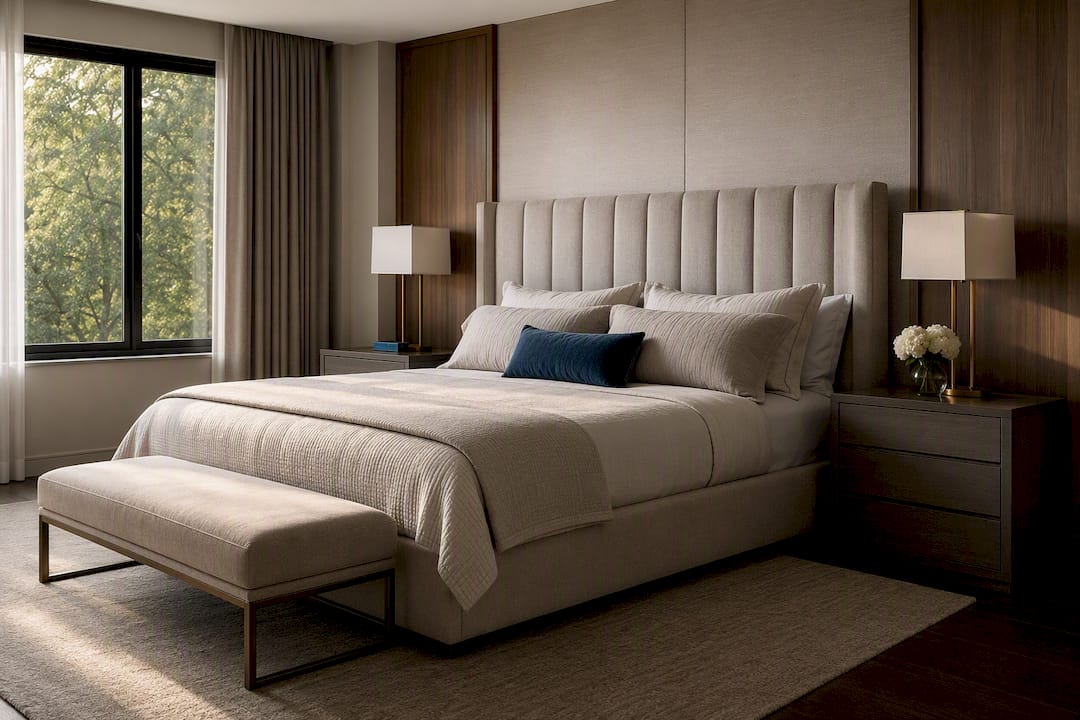
Arrangement follows the same clearance rules as the layout guidance above: the bed anchors the room, typically centered on the strongest wall, with nightstands flanking it symmetrically. A bench at the foot of the bed adds function without crowding the walkway, provided you keep that 24-inch clearance intact.
Mixed materials, a wood bed frame with metal nightstand hardware, or a fabric headboard against a stone-topped side table, add depth without requiring more pieces. Rocky Mountain Hardware’s guide to timeless bedroom interiors notes that this kind of material layering, stone, solid wood, and hand-finished metal together, is what gives a room permanence across changing trends rather than a look tied to one moment.
Window Treatments That Add Elegance and Privacy
Curtains carry more visual weight in a luxury bedroom than most homeowners budget for, and getting the proportions wrong is one of the most common mistakes in an otherwise well-designed room.
Hang curtain rods as close to the ceiling as your wall allows, several inches above the window frame itself, and let the panels fall to the floor or just barely graze it. This single adjustment does more to make a ceiling feel taller than almost any other design move available. Ceiling-mounted drapery tracks push this even further in rooms with limited wall space above the window, drawing the eye straight up.
For fabric, floor-length linen or a linen blend filters light softly while keeping the room’s material palette consistent with your bedding and upholstery. Add a blackout lining behind a sheer or linen panel for genuine sleep privacy without sacrificing the soft daytime look, a layered approach that mirrors the same ambient-and-task lighting logic used elsewhere in the room. For a deeper walkthrough of pairing fabrics, rod placement, and room proportions, see these bedroom curtain decor ideas.
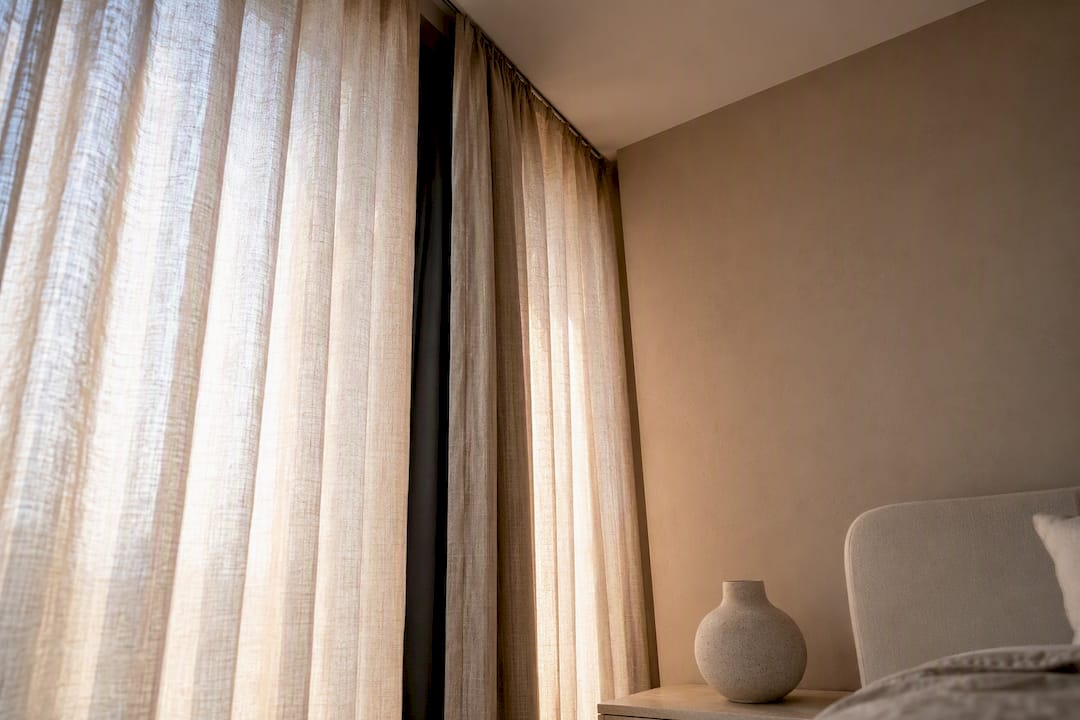
Avoid short, stiff panels that stop well above the floor. They’re one of the fastest ways to make an otherwise expensive-looking room read as unfinished.
Where the Conventional Advice Gets It Backwards
Most luxury bedroom guides lead with furniture and finishes and treat editing as an afterthought, a final tip tacked on at the end of a long shopping list. That order is backwards. Designers pushing 2026’s quiet-luxury sensibility are right that negative space does more perceptual work than another accent chair or a second piece of art on an already busy wall.
The other place conventional advice falls short is sequencing money. Plenty of inspiration content shows finished million-dollar rooms without acknowledging that custom millwork should be the last major decision, not the first, because retrofitting paneling around already-placed electrical and finish work drives costs up unnecessarily. Homeowners chasing a five-star look often buy furniture and art before they’ve settled on lighting temperature or wall finish, then wonder why the room feels assembled rather than composed.
If you take one thing from this: buy the bedding and install the dimmers before you touch anything structural. Everything else scales in ambition once those fundamentals are in place, and you’ll spend your renovation budget with far more confidence.
— Nealda
Sourcing Art and Finishing Pieces the Easy Way
Once the bones of a luxury bedroom are in place, bedding sorted, lighting layered, one architectural anchor chosen, the last stretch is usually the hardest to shop for: art, objects, and the finishing layer that makes a room feel curated instead of staged. The magazine provides curated features and product roundups to help readers find art and finishing pieces, pairing real artists and vetted pieces with restraint-first styling.
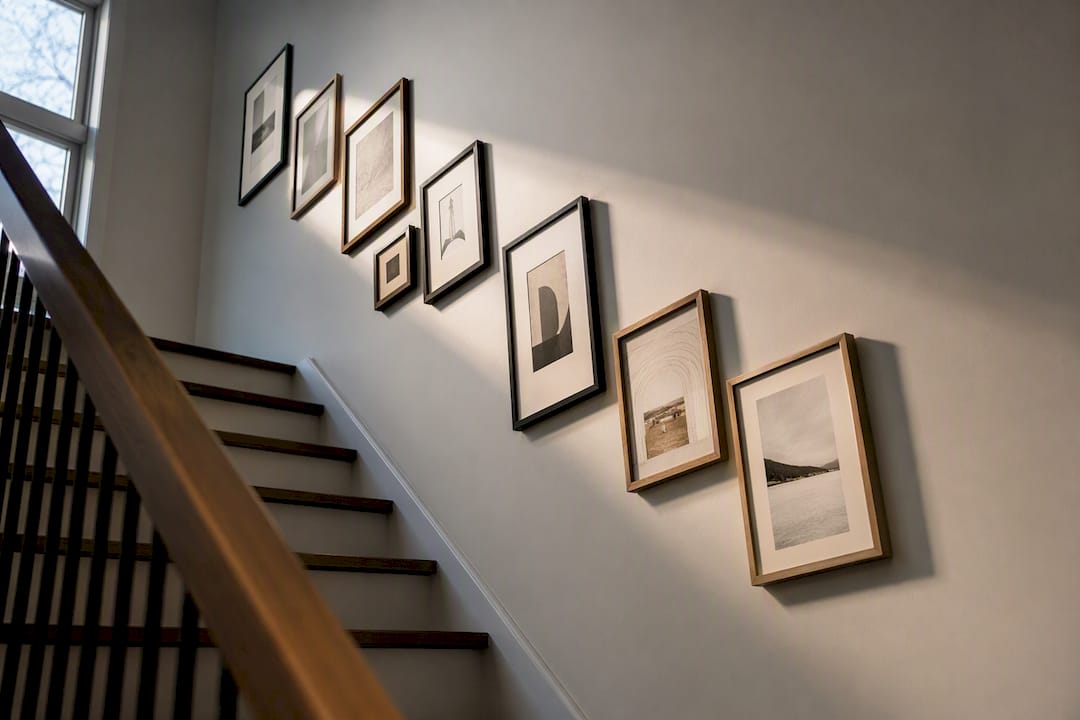
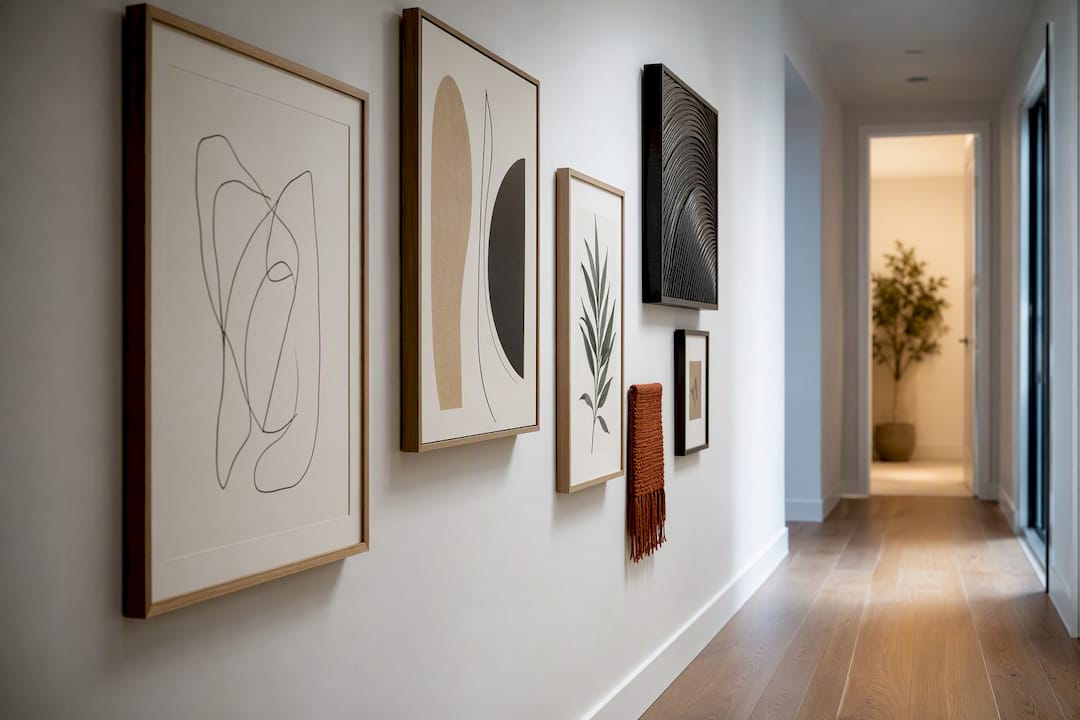
If your headboard wall is begging for a focal point, Cameron Limbrick’s abstract paintings bring exactly the kind of quiet, textured presence a quiet-luxury bedroom calls for. Prefer to build out a full gallery moment above a bench or dresser instead of a single statement piece? Our guide to gallery wall ideas walks through spacing, framing, and how to keep a multi-piece wall feeling composed rather than cluttered. Either route gets you from a well-lit, well-dressed room to a genuinely finished one.
Sources
- How to Create a Luxury Bedroom: Transform Your Space Into a Five-Star Retreat – Homehavenhq
- 29 Luxury Bedroom Ideas That Feel Like a 5-Star Hotel — The Spruce
- Luxury bedroom design: interior ideas and budget notes – Build-Construct