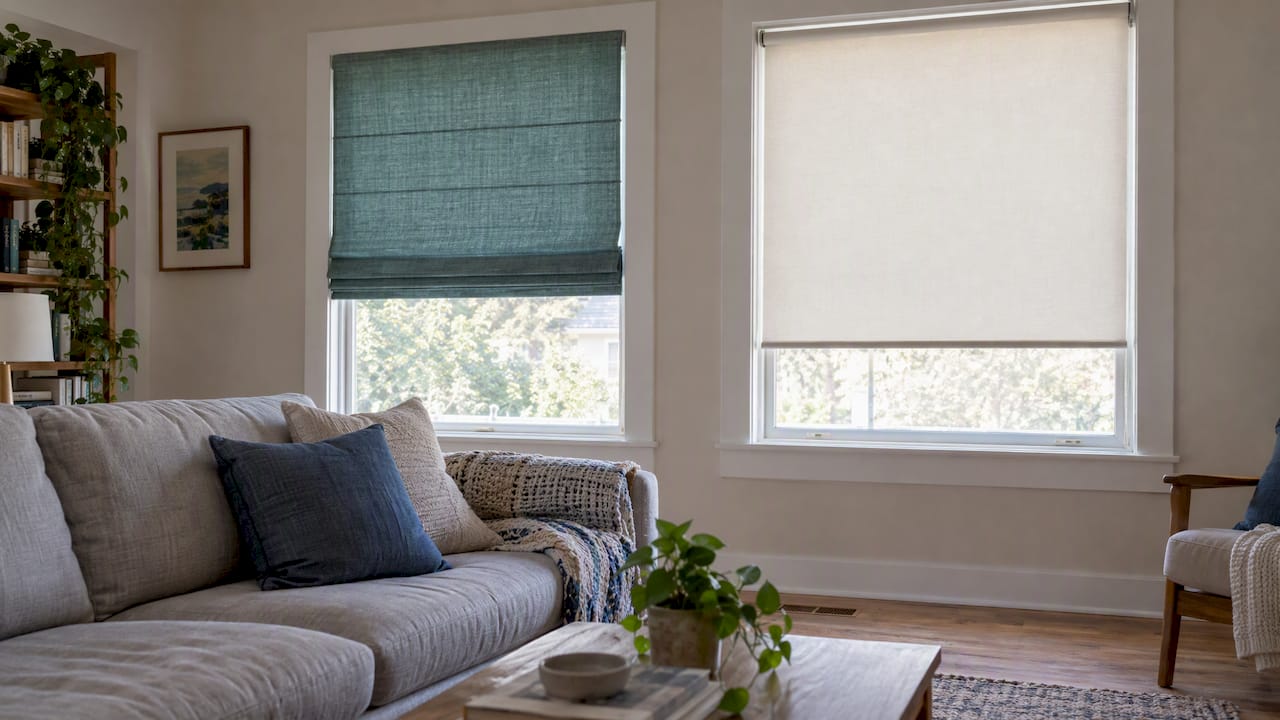
Roller shades win on clean lines, tighter blackout, and lower cost, which makes them the practical pick for bedrooms, media rooms, and modern interiors. Roman shades win on warmth and texture, the better choice for living and dining rooms where a curated, layered look matters most. For families with young children, cordless or motorized versions of either style are the only responsible starting point. We unpack both the comparison and the room-by-room picks below.
TL;DR:
- Roller shades generally cost less and offer superior blackout performance with hardware options like cassette housings and side channels.
- Roman shades provide better texture and warmth but are more expensive and may leak light unless upgraded with blackout liners and precise mounting.
- Both styles reduce solar heat gain and modestly lower heating costs, but cellular shades outperform them in insulation efficiency.
- Child safety mandates favor cordless or motorized shades, with retrofits available but not entirely eliminating cord hazards on older models.
- For rooms prioritizing function and light control, roller shades are ideal, while Roman shades suit living spaces emphasizing style and texture.
Table of Contents
- What Are Roller Shades? Materials, Variants, and Hardware Options
- What Are Roman Shades? Fold Styles, Liners, and Construction Choices
- Roman vs Roller Shades: Aesthetics, Blackout, Insulation, and Cost
- How to Choose Between Roman and Roller Shades for Your Rooms
- Room-by-Room Recommendations and Styling Pairings
- Safety, Recalls, and Why Cordless Should Be Your Default
- Our Take: Balancing Artistry and Function
- Shop Store Finds: Curated Cordless and Motorized Shades
- FAQ
- Sources
What Are Roller Shades? Materials, Variants, and Hardware Options
A roller shade is a single piece of fabric that winds around a tube at the top of the window, dropping down in one flat plane rather than folding into pleats. That simplicity is exactly what gives roller shades their quiet, modern presence: no stacking fabric, no visible hardware beyond a slim headrail or cassette.
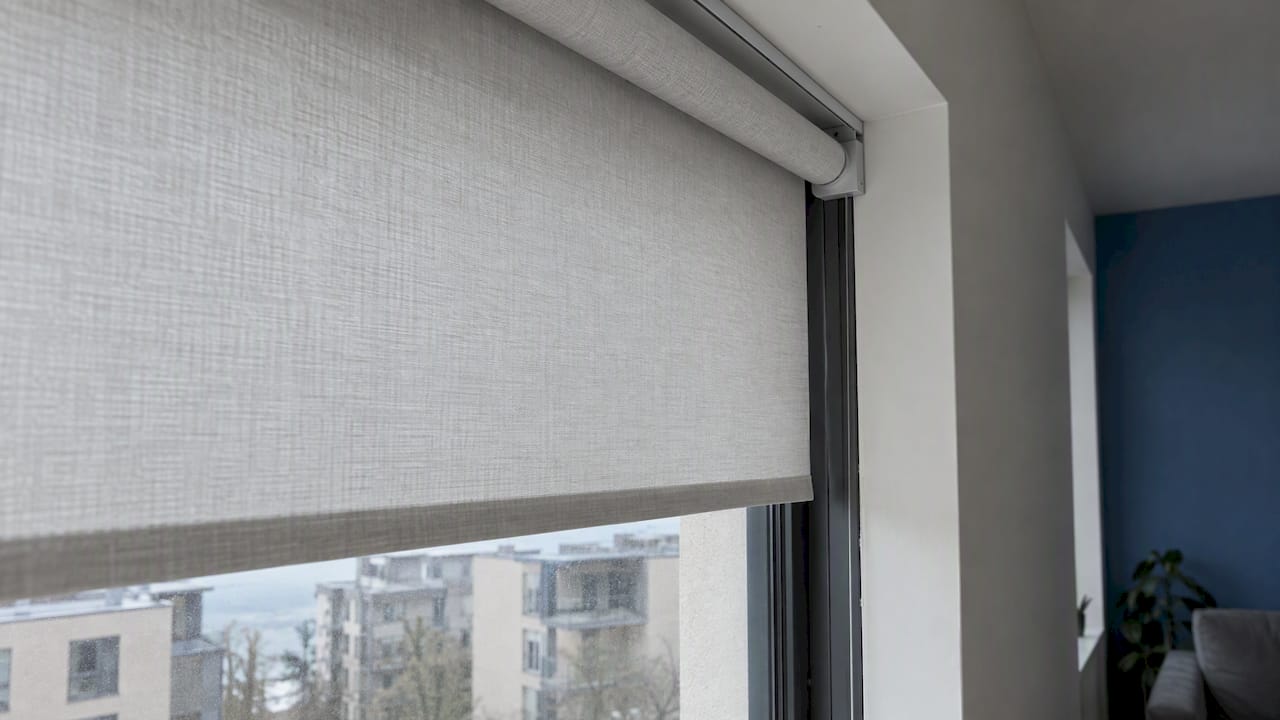
Fabric opacity ranges from sheer, which filters light and view while leaving silhouettes visible, to blackout, which blocks nearly all daylight. The hardware around that fabric matters as much as the fabric itself. An open roll, where the tube sits exposed above the fabric, is the most budget-friendly setup, while a cassette, a fabric-covered housing that conceals the tube, cleans up the look and helps seal light at the top. Side channels, tracks that guide the fabric edges along the window frame, close the small gaps where light otherwise sneaks in along the sides.
Control options affect both convenience and price:
- Corded lift systems are the most affordable but carry the strangulation risks addressed later in this guide.
- Cordless shades use spring or clutch mechanisms you lift by hand, a safer default for most households.
- Motorized shades raise and lower with a remote or app, often the premium tier.
Off-the-shelf roller shades in standard sizes tend to sit at the lower end of the window-covering spectrum, while custom widths, cassette housings, and motorization push the price well above a basic sheer panel.
What Are Roman Shades? Fold Styles, Liners, and Construction Choices
Roman shades fold into horizontal pleats as they rise, which is the detail that gives them their tailored, textile-forward character. A flat Roman shade lies smooth when lowered and folds into crisp horizontal creases when raised. A hobbled (or London) style keeps soft, rounded folds even when fully extended, adding a layered look that reads as more formal. A relaxed Roman shade has a gentle scoop at the bottom edge for a looser, more casual drape.
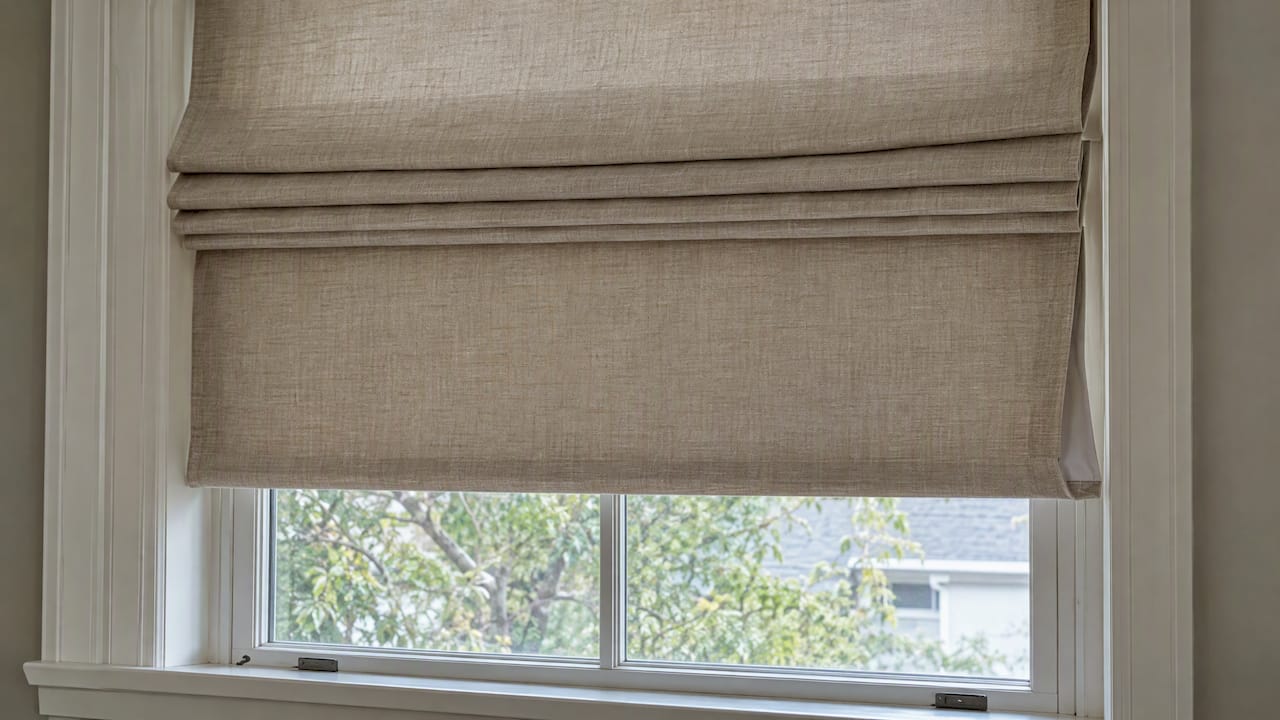
Liners and interlining change what a Roman shade can do beyond decoration. A standard liner adds light diffusion and some privacy, while a dedicated blackout liner darkens the room substantially more. Interlining, a soft layer sandwiched between face fabric and liner, adds body to the fold and a modest insulating effect by trapping a layer of air near the glass.
Control choices mirror roller shades: corded, cordless, and motorized lift systems are all available, though the folded construction means motorized Roman shades often rely on specialized lift tapes or discrete motors rather than the simple tube motors that work well on rollers. That added engineering is part of why installation can be more involved, particularly for wide windows or multi-panel setups.
A few practical notes worth knowing before you buy:
- Cleaning usually means spot treatment or professional cleaning, since the folds collect dust more visibly than a flat roller shade.
- Cost increases mainly come from interlining, blackout liners, and the labor-intensive construction of hobbled or relaxed folds.
- Fabric choice (linen, cotton blends, woven textures) does more visual work here than on a roller shade, since the folds catch light and shadow.
Roman vs Roller Shades: Aesthetics, Blackout, Insulation, and Cost
The honest answer to “which shade is better” depends entirely on which trade-off you are willing to make, because no single style wins across every category.
On looks, Roman shades lean traditional and tactile, pairing naturally with layered drapery, patterned fabrics, and rooms built around texture. Roller shades lean minimalist and architectural, disappearing into the window frame in a way that suits contemporary spaces or rooms where the view, not the covering, should hold attention. Fabric choice can shift either style toward the other’s territory: a textured linen roller shade softens a modern room, while a flat-fold Roman shade in solid linen reads cleaner and more contemporary.
Blackout performance is where hardware, not fabric alone, decides the outcome. Roller shades with a cassette housing and side channels typically seal light more completely than Roman shades, because the flat fabric plane and enclosed tube leave fewer gaps for light to escape. Roman shades can approach that level of darkness, but only with a dedicated blackout liner, side channels, and a tight outside mount, a combination that commonly leaks light through folds and edges unless those extras are added. In practice, hardware matters more than nominal fabric opacity: a cassette roller shade with side channels can approach near-room-darkening results that a standard Roman fold cannot match without the same investment.
Pro Tip: If total darkness is the goal, ask for a cassette headrail and side channels on a roller shade before assuming a blackout fabric alone will do the job.
Insulation is where both styles fall short of the top performer in their category. DOE research on window attachments shows that window coverings reduce solar heat gain and can meaningfully cut heating energy needs, but cellular (honeycomb) shades typically outperform both roller and Roman shades for insulation. The benefit is climate-dependent. Cellular shades have been added to at least one state’s energy-savings program as a certified measure, a sign of how much insulation performance separates them from flat or folded shades, according to DOE’s work with Minnesota’s efficiency program. If insulation is your top priority, a cellular shade belongs on your shortlist ahead of either roller or Roman styles, unless you add insulating liners or tight side-channel installations to boost performance.
Privacy and edge-light gaps affect both styles similarly and are largely solved by mounting choice: an outside mount with enough overlap on the frame closes side gaps better than an inside mount on either shade type.
A quick summary of the remaining trade-offs:
- Maintenance: roller shades wipe clean easily; Roman shades often need spot cleaning or professional care due to their folds.
- Longevity: roller mechanisms are simpler and tend to need fewer repairs over time than folded lift systems.
- Cost: off-the-shelf roller shades are generally the most affordable option; custom Roman shades with interlining and blackout liners sit at the higher end because of labor and material layers.
- Motorization: roller shades retrofit easily with battery-powered tube motors, while Roman shades often require specialized lift tapes or discrete motors, adding complexity and cost.
How to Choose Between Roman and Roller Shades for Your Rooms
Start by ranking your priorities, since the right shade follows directly from what matters most in each room.
- List your top three priorities for the room: style, blackout, insulation, budget, or child safety, and weigh them against each other honestly.
- Ask vendors about mounting depth before ordering, since cassette housings and side channels need extra clearance that a shallow window frame may not have.
- Confirm the blackout rating in writing rather than relying on fabric names like “room darkening,” which vary between manufacturers.
- Check warranty terms on both the fabric and the lift mechanism, since motorized components often carry separate coverage.
- Request cordless or motorized options specifically rather than assuming they are standard, since corded versions are often the default on budget listings.
- Measure twice, noting whether an inside mount (cleaner look, requires adequate frame depth) or an outside mount (better light and privacy seal) suits your window.
- Consider a hybrid approach or upgrade to a cellular shade when insulation is the deciding factor and neither roller nor Roman fabric meets your energy goals.
Pro Tip: Bring a photo and exact measurements of your window when you talk to a shade retailer. It speeds up the blackout and mounting-depth conversation considerably.
Room-by-Room Recommendations and Styling Pairings
Matching shade style to room function takes most of the guesswork out of the decision.
- Living and dining rooms: Roman shades in a textured linen or cotton blend add warmth and work beautifully layered under curtain panels that complement your color palette; roller shades suit minimalist windows where the view should lead.
- Bedrooms and media rooms: favor roller shades with a cassette headrail and side channels for the tightest blackout seal, paired with blackout drapery for both insulation and a finished look, an approach we expand on in our bedroom curtain styling guide.
- Nurseries: cordless or motorized only, no exceptions, in a washable fabric mounted well out of a crib’s reach.
- Bathrooms and kitchens: choose moisture-resistant, washable roller fabrics over absorbent Roman textiles, which hold humidity and odors more readily.
- Small rooms: a flat roller shade keeps sightlines open, a trick worth pairing with the space-saving ideas we cover for compact layouts.
Layering either shade style under drapery adds a soft visual frame and a modest insulating buffer, since the extra fabric traps air near the glass, a technique explained by Solar Control & Energy-Saving Window Film | Orange County & LA.
Safety, Recalls, and Why Cordless Should Be Your Default
The CPSC advises buying cordless window coverings outright, since corded coverings have caused child strangulation deaths and cordless designs eliminate that hazard entirely. Retrofit kits help but do not remove every risk, and the agency flags older blinds, those made before 2000, as carrying additional inner-cord dangers.
Recent enforcement makes the stakes concrete. In 2025, the CPSC recalled LINKCOO blackout roller shades over long operating cords that violated federal window-covering regulations, instructing owners to stop using them and follow the firm’s repair or replacement remedy.
Buy cordless. Search product listings specifically for the word “cordless” or “motorized,” and check for open recalls before you order.
If you already own corded shades, a short checklist helps:
- Stop using the cords immediately in any room where children or pets are present.
- Contact the manufacturer about a retrofit kit or replacement remedy.
- Keep furniture away from windows so cords stay out of reach in the meantime.
Motorized shades sidestep the hazard entirely, though factors like installation complexity and manual override during a power outage are worth asking about before you buy.
Our Take: Balancing Artistry and Function
We believe the best window covering is the one that solves a real problem without sacrificing how a room feels. That is why we tend to recommend Roman shades for living spaces built around warmth and texture, and roller shades for bedrooms, media rooms, and anywhere function leads. Neither style is universally “better.” The right one depends on what your room asks for.
— Nealda
Shop Store Finds: Curated Cordless and Motorized Shades
We curate Store Finds to make the cordless-and-motorized decision easier, pulling together fabrics and finishes that pair style with the safety features this guide recommends.

- Fabric picks span sheer to blackout, so you can match opacity to the room without guessing.
- Cordless and motorized options may be available.
- Complementary decor, from drapery to trim, can help you layer a finished look around your shade choice.
Before you check out anywhere, confirm cordless or motorized specifications, the return policy, and your exact window measurements. Visit Store Finds to browse our current picks.
FAQ
Are roller shades cheaper than Roman shades?
Off-the-shelf roller shades are generally the more affordable option, since Roman shades involve more labor-intensive folded construction and often add interlining or blackout liners. Custom sizing, cassette hardware, or motorization can raise either style’s price well above a basic version.
Which shade style blocks the most light?
Roller shades with a cassette housing and side channels typically produce the tightest blackout seal, since the flat fabric plane and enclosed tube leave fewer gaps for light. Roman shades can approach similar darkness with a dedicated blackout liner and side channels, but that combination adds cost and installation complexity.
Are cordless shades really necessary for homes with kids?
Yes. The CPSC recommends cordless window coverings specifically because corded coverings have caused child strangulation deaths, and cordless designs remove that hazard. Retrofit kits reduce risk on existing corded shades but do not eliminate it entirely, especially on older products.
Do roller or Roman shades help with energy bills?
Both styles can reduce solar heat gain and modestly lower heating needs, but DOE research on window attachments shows cellular shades generally outperform roller and Roman shades for insulation. If energy savings are your main goal, a certified cellular shade is worth comparing alongside either style.
Can I find curated shade options through Art in Lifestyle?
Yes, our Store Finds shop features curated picks that include cordless and motorized options alongside complementary decor pieces. Check each listing for exact specifications and return policy before purchasing.