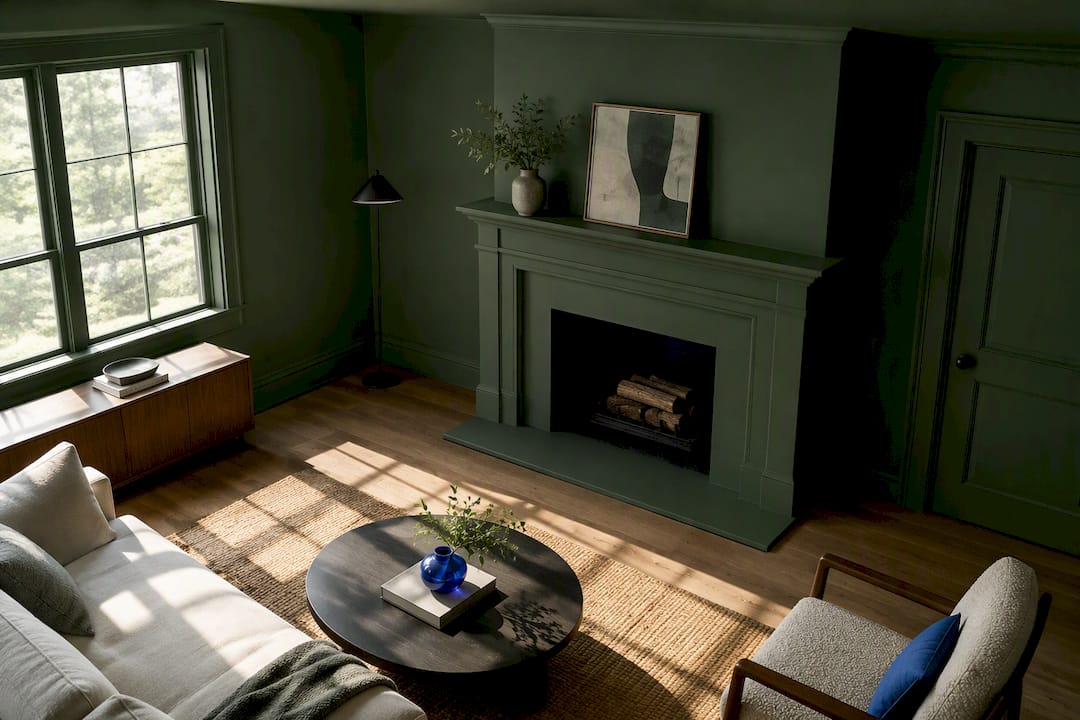
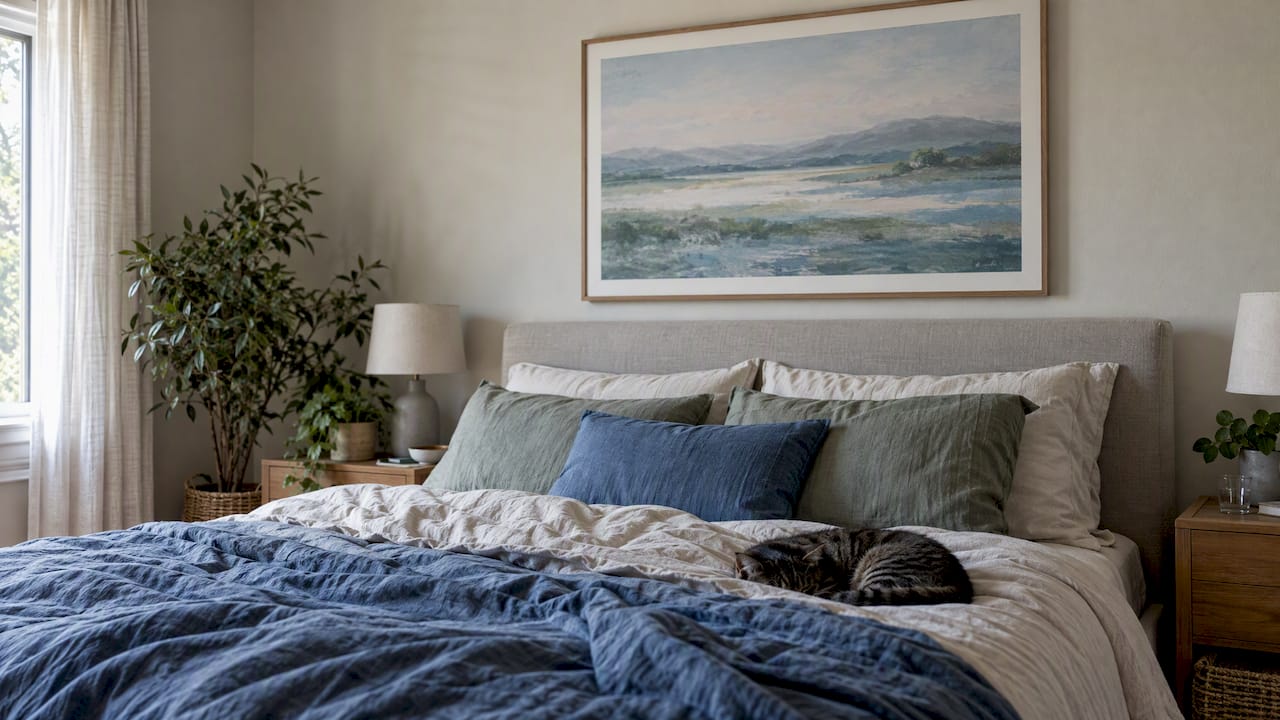
Pick art that creates the mood you want: calming palettes and correct scale matter more than trending motifs. The most reliable formats are a single large anchor piece, a gallery wall, a paired set, or a textile and sculptural accent that adds quiet texture. What follows shows how to size, hang, light, and source each one with confidence.
TL;DR:
- Use the 2/3 rule to choose artwork that spans roughly two-thirds of the width of the furniture beneath it to avoid overpowering or underwhelming the room.
- Hang art at 57 to 60 inches from the floor or 8 to 12 inches above furniture to maintain natural eye level and a balanced look.
- Prioritize calming art styles like landscapes, botanicals, and soft abstracts, and avoid bold or busy images near the bed to promote restful sleep.
- Secure heavy or oversized pieces into studs and consider lightweight hardware or professional installation for safety above the bed.
- Source budget-friendly art from thrift shops, local artists, or DIY projects, emphasizing good framing and calming colors for long-lasting decor.
Table of Contents
- 1. Bedroom art styles that set a restful tone
- 2. Planning gallery walls, triptychs, and scaled layouts
- 3. Sizing, hanging height, and placement rules that actually work
- 4. Color, mood, and lighting: choosing art that helps you rest
- 5. Hanging safety and hardware for bedroom placement
- 6. Where to buy, budget-friendly sourcing, and DIY options
- 7. Our take on choosing bedroom art that lasts
- Find curated picks for your bedroom wall
- Sources
- FAQ
1. Bedroom art styles that set a restful tone
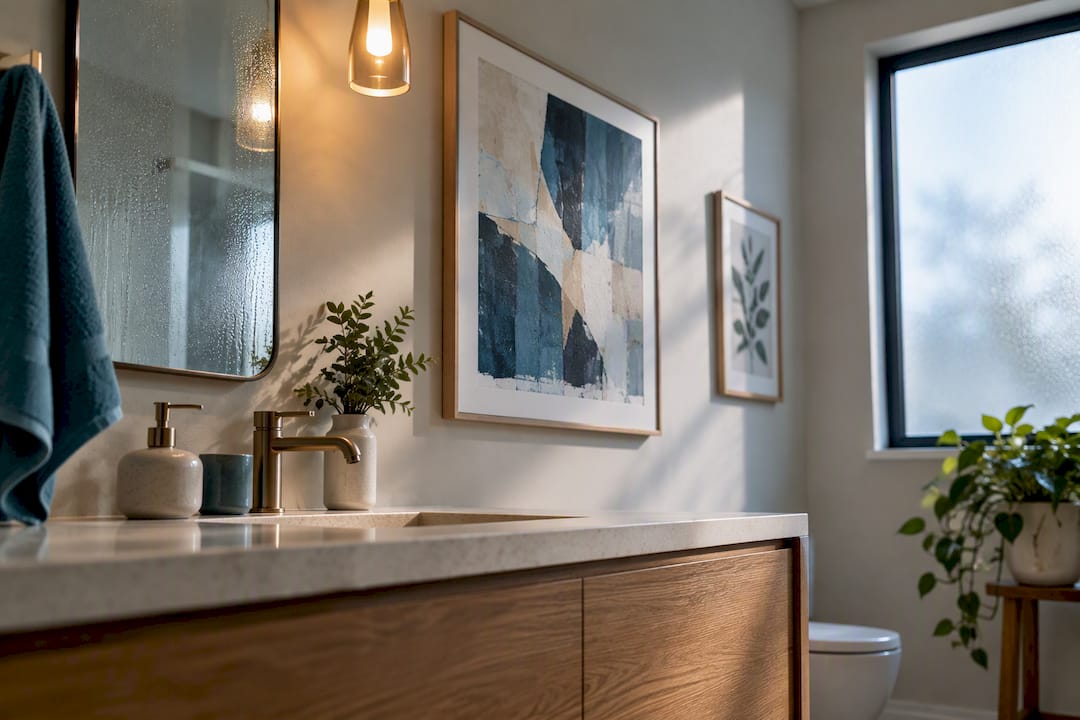
The right style depends on what you want the room to feel like once the lights are low. A landscape, a botanical study, or a soft abstract can all do the same emotional work: slowing the eye down instead of demanding attention.
- Calming landscapes and botanicals bring a sense of the outdoors inside and tend to read as restful rather than stimulating.
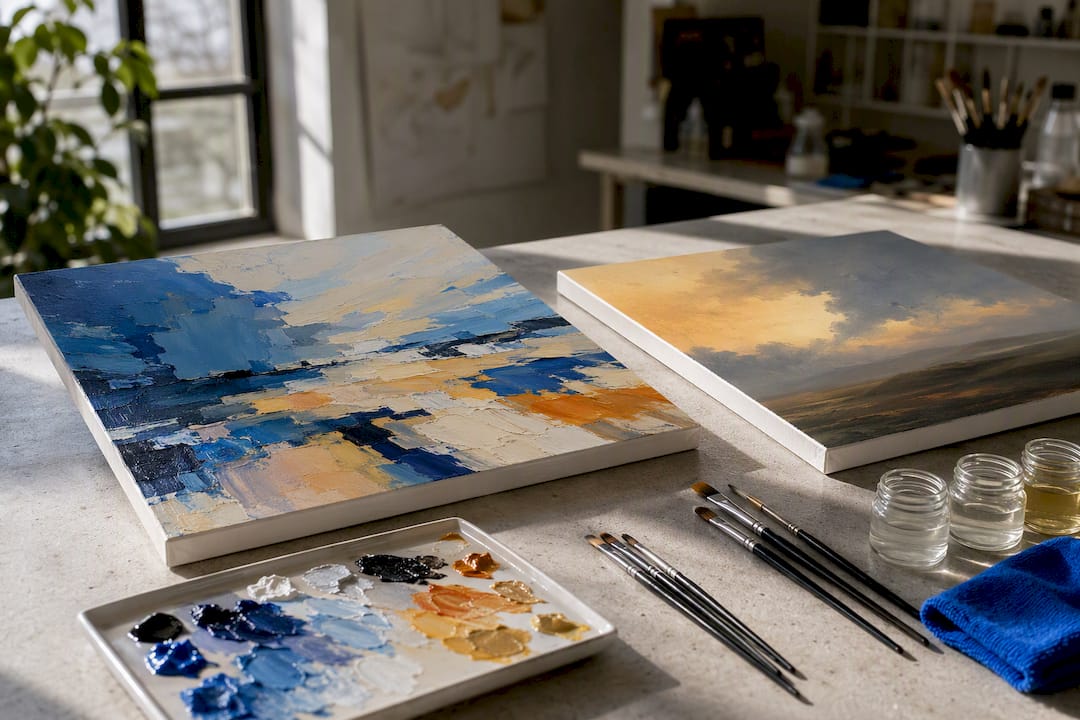
- Soft abstract color fields introduce hue and depth without literal imagery, acting as a quiet visual anchor near the bed.
- Line drawings and black-and-white photography suit minimal rooms, adding interest without competing with other decor.
- Textile and sculptural pieces, like woven hangings or carved wood panels, bring warmth and tactile richness that flat prints can’t.
- High-contrast or busy pop art is worth avoiding near the bed if sleep is the priority, since bold color blocks and sharp patterns can keep the eye working rather than resting.
Think of texture as the quiet partner to color here: a muted print paired with a woven throw or a rattan frame softens the whole wall before you’ve added a single extra object.
2. Planning gallery walls, triptychs, and scaled layouts
A gallery wall rewards a little planning before a single nail goes in. Start with one anchor piece, the one you love most, and build outward from there.
- Choose your anchor first, then select smaller works in varied sizes and media to surround it.
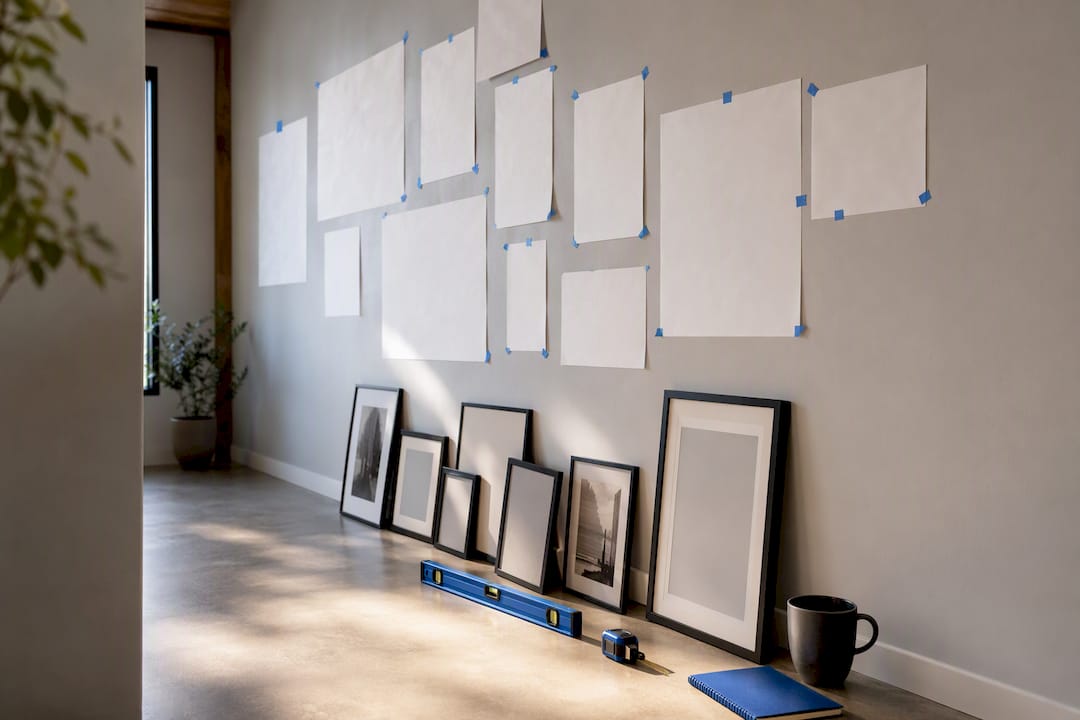
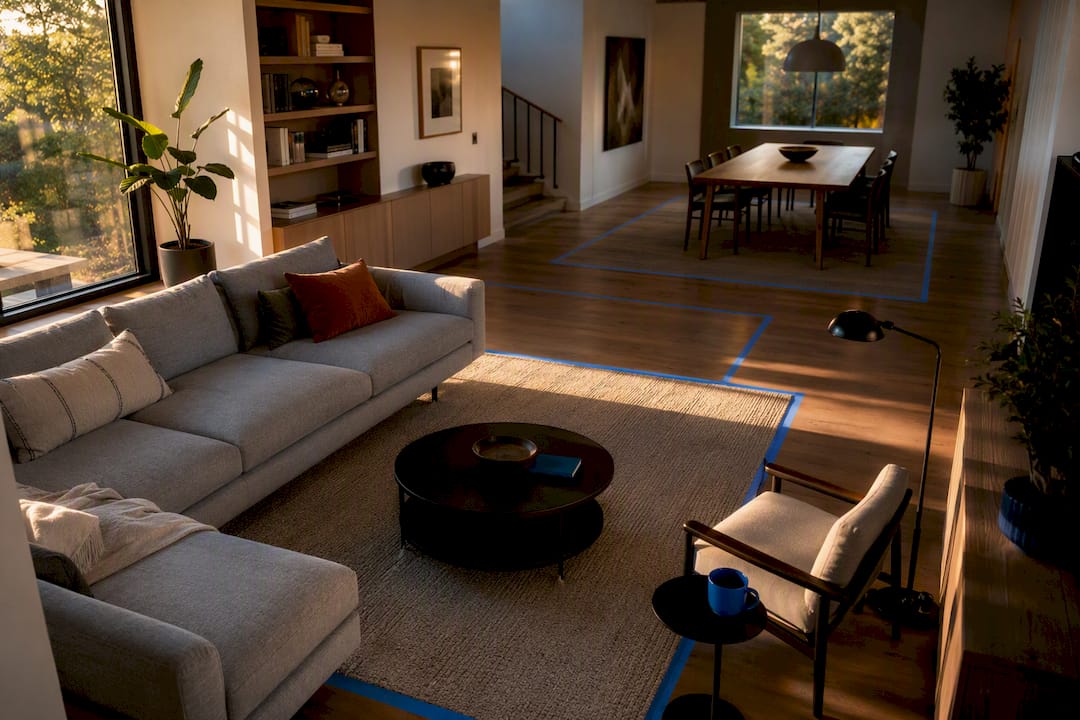
- Trace full-size paper templates of each piece and tape them to the wall to test the composition, a method favored by interior designers because it lets you adjust spacing before committing to holes.
- Pick a pattern: a grid suits symmetrical, modern rooms; a salon-style cluster suits eclectic collections; a linear row works well above a headboard or a long console.
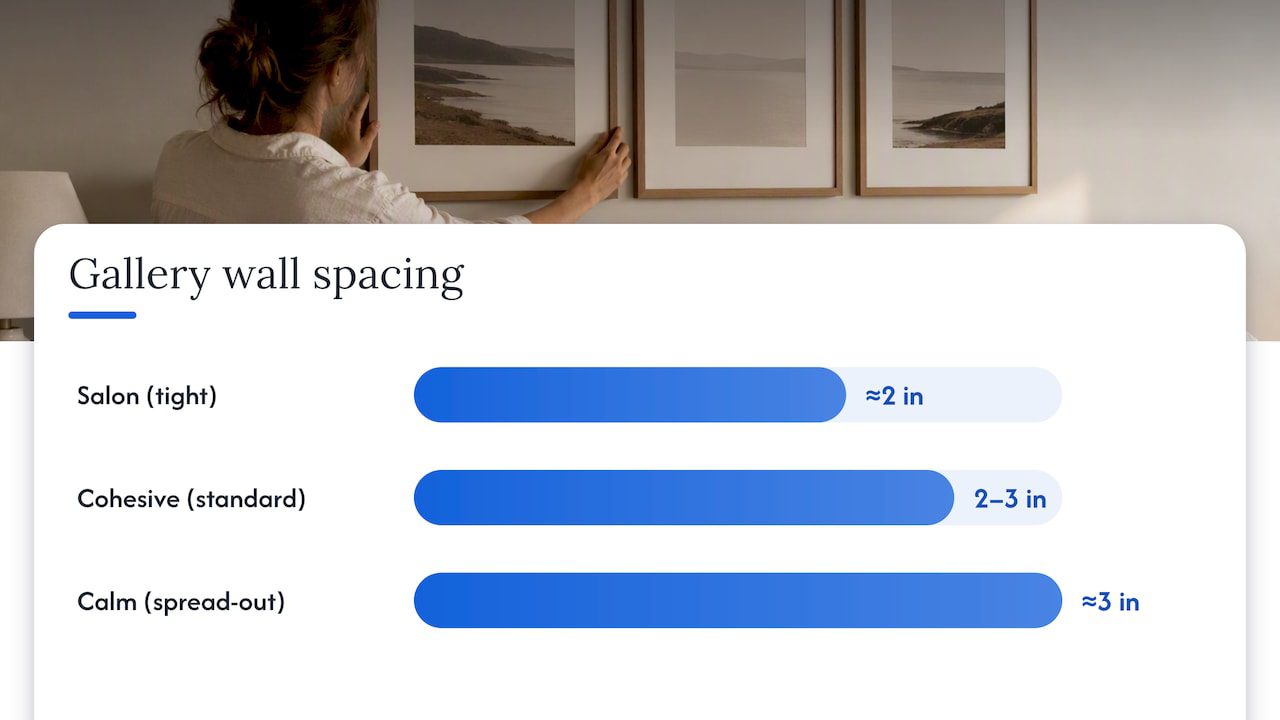
- Space pieces two to three inches apart for a cohesive look, tightening slightly for a salon feel or widening for a calmer, more spread-out arrangement.
- Map the layout on the floor and photograph it from standing height, a trick Architectural Digest attributes to designers who prefer to preview the arrangement before it goes vertical.
Renters can skip the hardware entirely. Picture ledges, painter’s tape displays, and removable hanging strips create the same layered gallery effect without a single hole in the wall.
Pro Tip: Lay your paper templates out on the floor exactly as planned, live with them for a day, then commit to the wall.
3. Sizing, hanging height, and placement rules that actually work
Most bedroom art mistakes come down to scale, not taste. A piece that’s too small over a bed looks lost; one that’s too large in a tight room can overwhelm it rather than ground it.
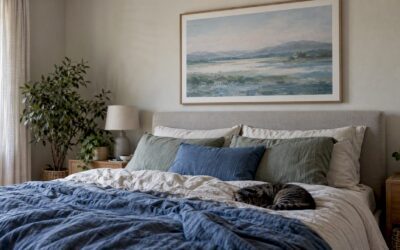
- Use the 2/3 rule: your art (or arrangement) should span roughly two-thirds the width of the furniture beneath it, whether that’s a headboard, dresser, or console, following guidance from the Sleep Foundation.
- Hang art 57 to 60 inches from the floor to the center, or 8 to 12 inches above furniture, the same source notes, which keeps the piece at natural eye level rather than floating too high.
- A single oversized piece can make a small room feel more intentional and less cluttered than several scattered smaller ones, but only when it respects the 2/3 proportion; otherwise it crowds the space, a trap design pros warn against.
- Above nightstands, keep pairs matched in height and modest in scale so they don’t compete with lamps or reading material.
- On tall, narrow walls, a vertical triptych or a single elongated piece reads better than a wide horizontal one.
4. Color, mood, and lighting: choosing art that helps you rest
Color does real emotional work on a bedroom wall. Soft blues, greens, and warm neutrals are generally associated with calmer moods and tend to help people feel at ease in a bedroom, according to the Sleep Foundation, though personal preference still has the final say.
Lighting changes how any piece reads. Cool, bright light near bedtime can suppress melatonin and keep the mind alert, so preview new art under a warm bedside lamp rather than daylight alone, especially if the frame is glass or metallic and prone to glare. A well-chosen print can introduce the restful color a room is missing without repainting a single wall.
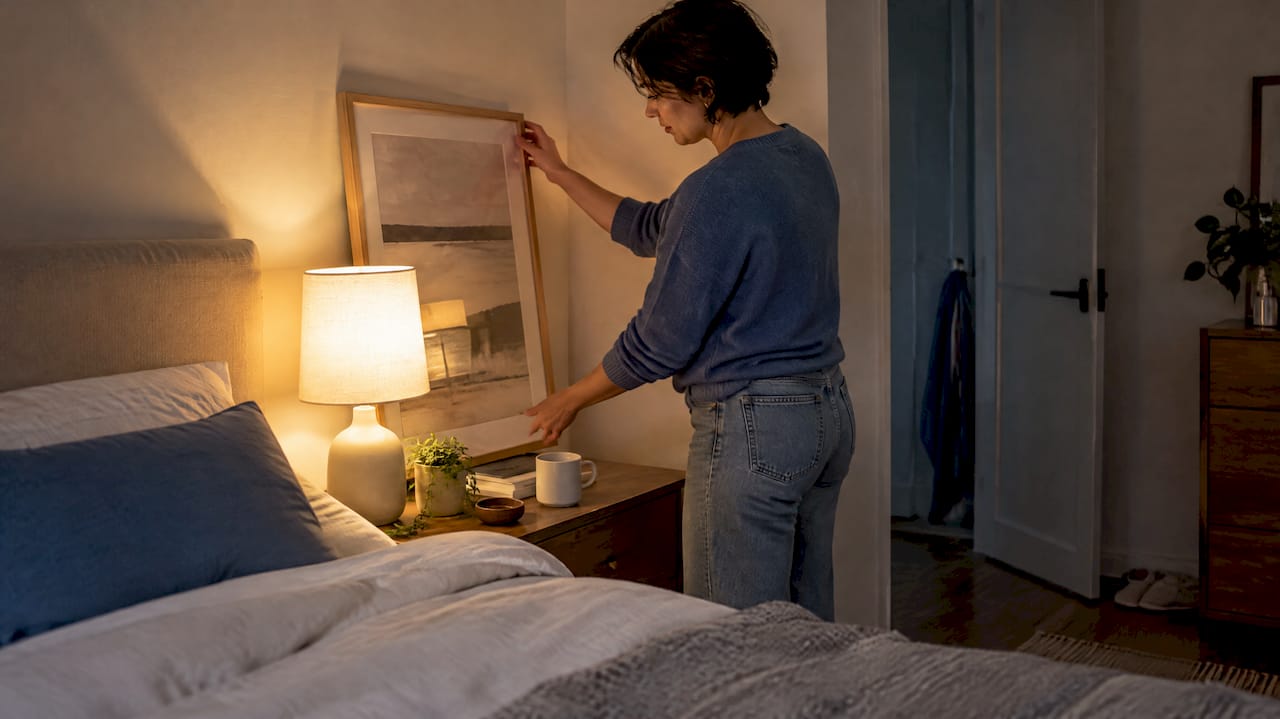
5. Hanging safety and hardware for bedroom placement
Art above a bed deserves a little extra caution, since it hangs directly over someone sleeping.
- Mount into studs whenever possible rather than relying on drywall alone.
- Match hardware to weight: rated picture hooks for lighter prints, proper anchors for anything heavier, as recommended by the Sleep Foundation.
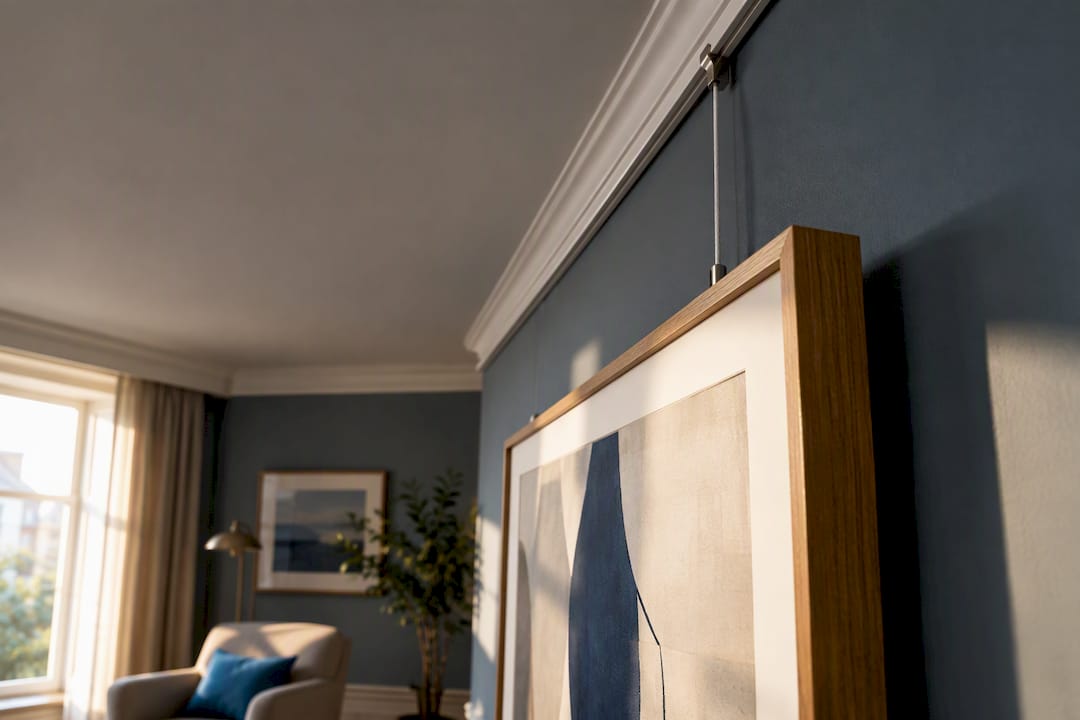
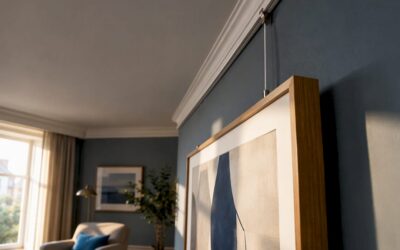
- Choose lighter pieces or secure rail systems above the bed itself if you have any concern about something shifting loose overhead.
- Call a professional installer for oversized or heavy framed work, particularly in rental walls or plaster.
Pro Tip: If you’re ever unsure whether a piece is secure enough for above the bed, hang it somewhere else in the room instead.
6. Where to buy, budget-friendly sourcing, and DIY options
A beautiful bedroom wall doesn’t require a large budget, just smart trade-offs between where you spend and where you save.
- Buy prints or artist reproductions and put the real money into framing, since good matting and glazing extend the life of the piece, a point preservation specialists at NEDCC make about works on paper and photographs.
- Check thrift shops and local artists for one-of-a-kind finds that no big-box print can match.
- Try DIY projects, like framing fabric scraps or pressed botanicals, to turn low-cost materials into something personal.
- Look for matte, low-reflective finishes in calming colors so the piece reads softly under both daylight and evening lamps.
- Consider pieces that mix cultural influences, like Asian art and sculpture, for texture and story that a standard print set rarely offers.
7. Our take on choosing bedroom art that lasts
Trends move fast, but a bedroom wall should serve the person sleeping under it, not a passing aesthetic. We favor pieces with real meaning over whatever is loudest online, paired with scale and placement that actually respect the room. For more direction, see our guides on calming bedroom colors, gallery wall ideas, and the hanging height that works.
— Nealda
Find curated picks for your bedroom wall
If the planning feels like enough work for one weekend, our Store Finds collection gathers curated prints, framing suggestions, and space-saving decor chosen with the same sizing and color principles covered here.

Browse the shop for pieces that fit a calm, well-proportioned bedroom wall without the guesswork of sourcing everything piece by piece.
Sources
- How to design the ideal bedroom for sleep
- Guide to Gallery Wall Layouts: How to Make a Gallery Wall
- The One Wall Art Mistake That Makes Your Home Feel Tiny, Designers Say
FAQ
What kind of art looks good in a bedroom?
Calming landscapes, botanicals, soft abstract color fields, and simple line drawings tend to work best because they settle the eye rather than demanding attention. Textile and sculptural pieces add warmth without the visual noise of busy patterns.
What are the bedroom trends for 2026?
Bedroom decor continues to favor calm, personal spaces over bold statement walls, with an emphasis on texture, soft color, and meaningful pieces over trending motifs. Our home trends guide covers the broader shifts shaping rooms.
What are the golden rules for bedroom design?
Definitions vary, but most design guidance centers on comfort, proportion, and calm: the right scale of furniture and art, soft and layered lighting, a restful color palette, and a layout that supports actual sleep rather than just photographs well. The Sleep Foundation’s sizing and placement guidance covers the art-specific pieces of this.
What are some good painting ideas for bedrooms?
Soft landscapes, abstract color studies in blues and greens, and botanical paintings all support a restful mood while still adding personality to the wall. A single large anchor painting sized to two-thirds the width of your headboard, per the 2/3 rule, is often more effective than several small, scattered pieces.