Buy art online safely by following one sequence: define your room, size, and budget, choose the right seller type, verify the listing and its documentation, confirm the total delivered cost, and pay through a protected method. Do that in order and you eliminate most of the risk. Your one move right now: save the listing, screenshot the price, and message the seller asking for a certificate of authenticity and provenance before you click “buy.”
TL;DR:
- Buyers should verify provenance, authenticity certificates, and condition reports for high-value original art to ensure proper documentation before purchasing.
- Incorporating framing, shipping, and customs costs is essential when calculating the actual delivered price, as these often significantly exceed the listed price.
- Paying through a credit card or marketplace checkout provides additional protection, while wire transfers, gift cards, or cryptocurrency offer no recourse.
- First-time buyers should set a total budget, start with smaller or less expensive pieces, and use physical wall mockups to ensure proper scale and color fit.
- Choosing curated marketplaces or using art concierge services reduces risks by providing vetted selections and expert guidance tailored to your space.
Table of Contents
- How to Buy Art Online: Where to Start Looking
- What Should You Check Before You Buy a Piece?
- How Do You Verify a Piece Is Authentic?
- What’s the Real Delivered Price of a Piece?
- Which Payment Methods Actually Protect You?
- What Should You Do the Day the Art Arrives?
- Tips for First-Time Art Buyers
- Why Curated Buying Beats the Open Marketplace
- Skip the Guesswork With Curated Picks
- Sources
- FAQ
How to Buy Art Online: Where to Start Looking
Every online seller of art falls into one of four categories, and each one carries different guarantees. Knowing which type you’re browsing changes what questions you should ask before you buy original art online or settle for a print.
- Curated gallery marketplaces vet artists, verify authenticity, and usually offer buyer protection or return windows. Prices run higher because the curation is doing work for you.
- Artist-direct sites and social storefronts connect you straight to the maker, often at lower prices, but you’re responsible for your own vetting. There’s no house standing behind the sale.
- Print-on-demand platforms produce work to order from digital files. Great for decor buyers on a budget, but originals aren’t in play, and edition claims need extra scrutiny.
- Big retail and home decor brands sell art alongside furniture and rugs. Selection is wide and shipping is predictable, but the work is almost always reproduction, not original.
A collector chasing an original painting wants the first category. Someone decorating a bedroom for under $200 is better served by the third or fourth. Knowing your goal before you start browsing the best online art marketplaces saves you from comparing apples to picture frames.
What Should You Check Before You Buy a Piece?
Run through this before you commit to any listing, regardless of price.
- Confirm exact dimensions, whether a frame is included, the medium, and edition number if it’s a print.
- Ask for provenance, a certificate of authenticity, and the artist’s or gallery’s contact information.
- Get written answers on packing method, dispatch date, tracking, and transit insurance.
- Request the return window and who covers return shipping if something’s wrong.
- Save the listing screenshots, the seller’s messages, and the final invoice before you pay.
The FTC’s guidance on buying from online marketplaces frames this as a sequence: define your project, check the seller, confirm total cost and protections, then pay. Skipping a step is how buyers end up disputing a $2,000 painting with no paper trail to point to.
Pro Tip: Turn your questions into one short message and ask the seller to reply in writing, not over the phone. That reply becomes evidence if the piece arrives different from what was promised.
How Do You Verify a Piece Is Authentic?
A certificate of authenticity is not proof by itself. The Smithsonian American Art Museum is explicit on this: for original work, you want documentation covering artist name, title, date, medium, dimensions, edition number if relevant, and provenance, and a COA is only one piece of that file, not a substitute for it.
- Check the artist’s exhibition history and confirm their biography reads consistently across the gallery site, their own site, and any independent press.
- Compare the listing photos against other images of the artist’s work; inconsistent style or quality is a warning sign.
- Request close-up photos of the signature, the surface texture, and the edges, not just a clean hero shot.
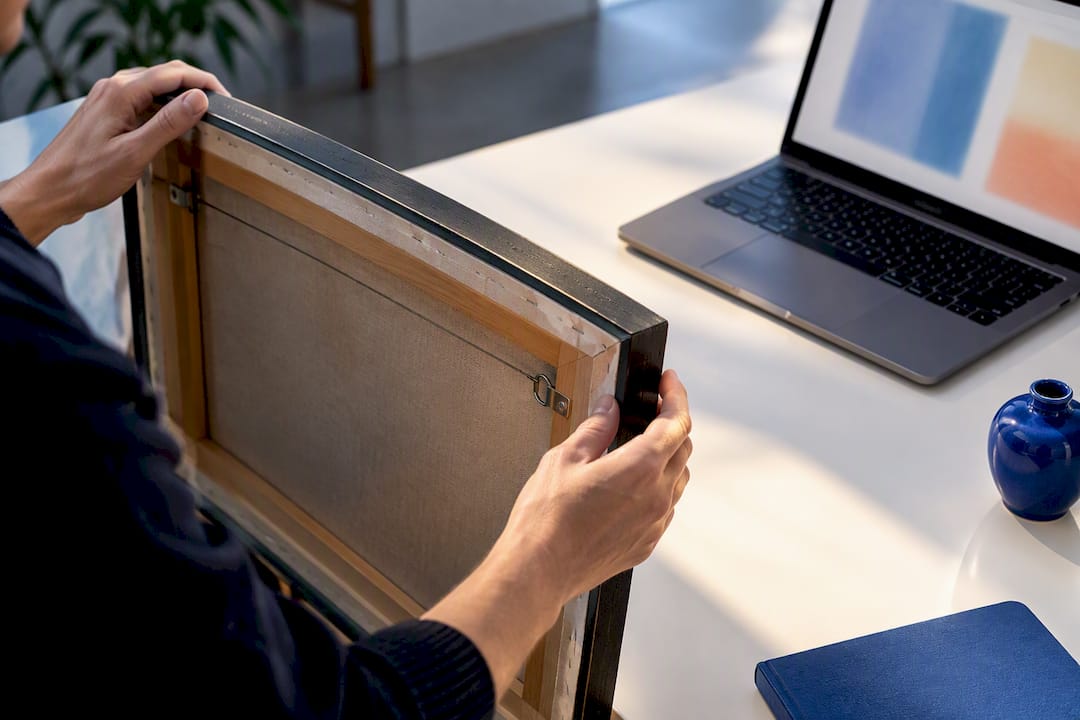
- For anything above a few hundred dollars, ask for a written condition report before you pay, not after.
A step-by-step certificate of authenticity workflow is worth reviewing if you’re buying your first original, since it shows what a complete paper trail actually looks like.
What’s the Real Delivered Price of a Piece?
The sticker price on a listing is rarely the number you’ll actually pay. Add framing, shipping, insurance, sales tax, and, for international sellers, customs duties, before you compare two pieces on price alone.
- Framing and glazing can add a significant percentage to an unframed print’s cost, and some listed dimensions don’t include the frame.
- Shipping and transit insurance for an original painting often costs more than shipping a print, because it needs custom crating.
- Ask who pays return shipping and how many days you have to report damage, in writing, before you buy.
Comparing delivered price rather than sticker price is exactly what the FTC recommends for any online purchase, and art is one of the categories where the gap between the two numbers is biggest.
Which Payment Methods Actually Protect You?
Pay through the marketplace’s checkout or with a credit card. Both give you a paper trail and, in the case of a credit card, dispute rights if the piece never arrives or shows up damaged. The FTC’s shopping guidance is blunt about this: wire transfers, gift cards, and cryptocurrency offer you no recourse once the money leaves your account.
- Red flags: a seller pushing you to pay off-platform, an unverifiable business name or address, or a price that seems too good against comparable pieces.
- The FTC has also warned about fake check scams tied to social media sellers, often involving a request to send money back after an “overpayment.”
- If something goes wrong, dispute the charge with your card issuer first, then file a report with the FTC.
What Should You Do the Day the Art Arrives?
Document everything before you even open the box.
- Photograph the package sealed, showing any exterior damage.
- Open carefully, then photograph the piece next to a ruler or a familiar object for scale.
- Take close-up shots of the edges, the signature, and the frame corners.
- Compare what arrived against the listing photos and your invoice, and flag anything that doesn’t match.
- Report damage inside the seller’s stated deadline, and keep every scrap of packaging until the claim is closed.
Conservation guidance from the Smithsonian notes that shipping and handling cause most of the damage seen in transported artwork, which is exactly why the unboxing photos matter as much as the purchase receipt.
Tips for First-Time Art Buyers
Set a total budget that already includes framing and shipping, not just the piece itself. Start smaller: a modest print or a small original teaches you more about buying, framing, and living with art than one expensive gamble does. Many sellers now offer room mockups or ask for a photo of your wall so you can preview scale and color before committing, which matters more than most buyers expect once a piece is actually hanging.
- Treat your first purchase as practice, not a final verdict on your taste.
- Prioritize sellers who answer questions quickly. Slow, vague replies before the sale rarely improve after it.
- Resale value is genuinely hard to predict; buy what you want to look at every day.
Pro Tip: Before buying, hold a printed square of paper cut to the artwork’s size against your wall. It’s a five-minute trick that resolves more scale mistakes than any online room visualizer.
Why Curated Buying Beats the Open Marketplace
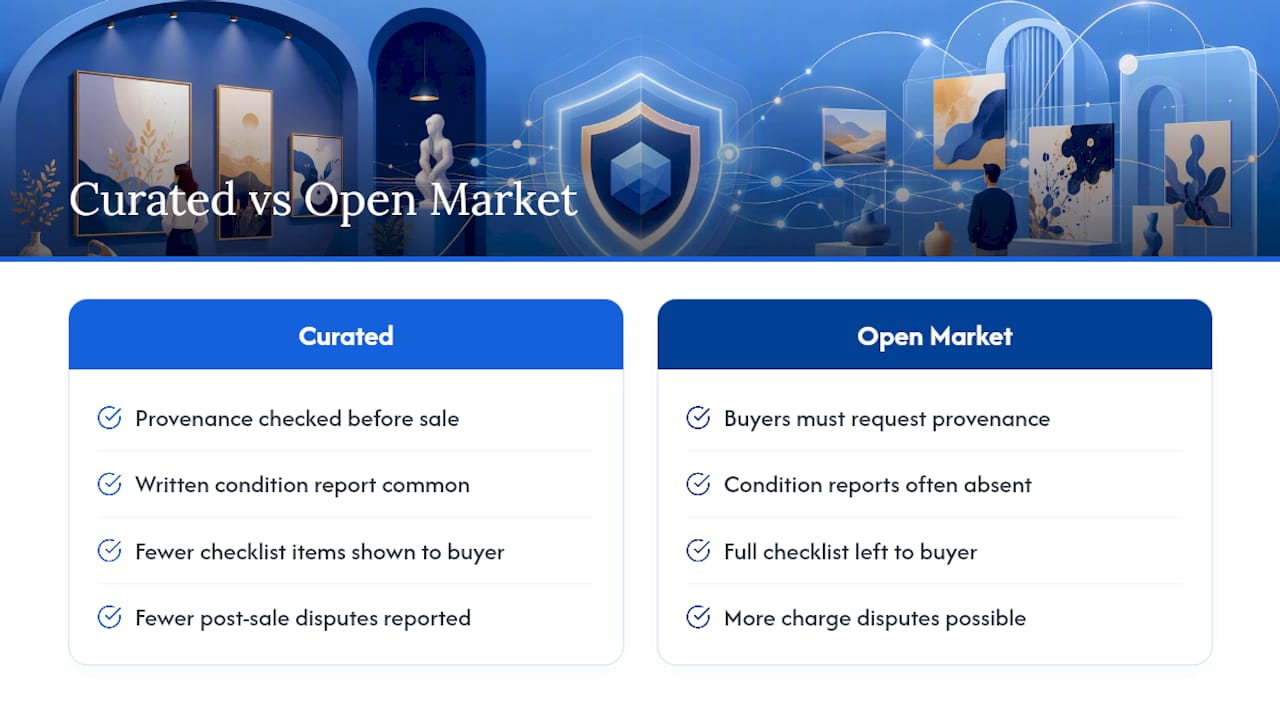
Most buying mistakes we hear about trace back to skipping documentation, not to bad taste. A collector who asks for provenance and a written condition report before paying rarely ends up disputing a charge later. That’s the real value of curation: a gallery or magazine that has already vetted an artist removes several of the checklist items above before you ever see the listing.
Scale and color still trip up even careful buyers, which is why we push readers toward room-specific styling guides before they commit to a large piece. Art that reads beautifully on a screen can shrink or clash entirely once it’s on your actual wall.
— Nealda
Skip the Guesswork With Curated Picks
Every step above protects you from a bad transaction, but it doesn’t tell you which piece is actually right for your wall. That’s the gap this guide aims to close. Some curated selections pull together picks so you’re choosing from work that’s already been vetted, instead of scrolling hundreds of unfiltered listings hoping one fits your space and your budget.
If you’d rather hand off the decision entirely, the Art Concierge service helps with selection, commissioning a custom piece, and coordinating delivery and installation, so someone with an eye for scale and color is doing the matching for you. Either path skips the trial-and-error most first-time buyers go through. Browse Store Finds now and shortlist two or three pieces before you spend another hour scrolling marketplaces alone.
Sources
- Buying From an Online Marketplace | Consumer Advice
- How Much Is Your Object Worth? | Smithsonian American Art Museum
FAQ
How Do I Start Buying Art Online?
Start by setting a budget that includes framing and shipping, then pick a seller type that matches your goal, a curated marketplace for an original, a print site for decor on a budget. Verify the listing’s documentation and total delivered cost before you pay, using a protected payment method.
How Do Most People Buy Art Today?
Most buyers now shop through a mix of curated online galleries, artist-direct storefronts, and print-on-demand sites rather than walking into a physical gallery first. The shift favors sellers who post detailed photos, clear pricing, and transparent return policies, since those signals substitute for seeing a piece in person.
Are Art Replicas Illegal?
Selling a piece labeled as a licensed reproduction, giclée print, or limited edition is legal as long as the listing is honest about what it is. It becomes illegal when a seller knowingly misrepresents a reproduction as an original or forges an artist’s signature, which is exactly why requesting provenance and a certificate of authenticity matters before you pay.
Do People Actually Buy Original Artwork Online?
Yes, and the volume has grown enough that curated marketplaces, artist-direct platforms, and concierge services like Artinlifestyle’s now compete directly with physical galleries for that business. Buyers who follow a documentation and payment checklist report far fewer disputes than those who buy on impulse from an unverified seller.