The safest, most stylish way to decorate bathroom walls is to choose a mood first, then match it to a humidity-appropriate format: metal, sealed canvas, or acrylic-glazed prints, paired with real ventilation. Get that order right, and a powder room or steamy shower-bath can hold artwork that looks intentional for years rather than curling at the edges within a season.
TL;DR:
- Metal prints, sealed canvases, and acrylic-glazed framed prints are the most reliable formats to resist bathroom humidity and prevent warping or damage.
- Using a high-quality exhaust fan during and after showers significantly reduces indoor humidity levels, protecting paper and textile artwork from mold and deterioration.
- Hang artwork at sizes of 60 to 75 percent of the vanity’s width and keep sculptures or prints at least an arm’s length from water zones to minimize exposure to moisture.
- Framing with acrylic glazing, sealed backs, aluminum frames, and slight spacing between the print and glazing extends the longevity of bathroom art.
- Rotating or swapping wall art on picture ledges or using gallery walls with easy-to-change pieces allows flexible decorating without risking permanent wall damage.
Table of Contents
- 1. Style-Led Idea Clusters for Every Kind of Bathroom
- 2. What Materials Actually Survive Bathroom Humidity
- 3. Framing, Glazing, and Mounting Choices That Extend Longevity
- 4. Placement and Sizing Rules for Bathroom Walls
- 5. Gallery Walls, Ledges, and Flexible Display Options
- 6. Easy DIY Bathroom Art Projects Worth Trying
- 7. Lighting and Mirrors That Highlight Art Without Damaging It
- 8. Why Replaceable Art Beats Precious Originals in Wet Rooms
- Curated Picks From Art in Lifestyle’s Store Finds
- Sources
- FAQ
1. Style-Led Idea Clusters for Every Kind of Bathroom
Mood should lead the decision, because a bathroom’s palette and light do more to shape the room’s feel than any single decor trick. A spa-inspired bath calls for muted, tonal prints, think sand, sage, and stone, often in a single large-format piece that reinforces the sense of calm rather than competing for attention. Coastal baths lean into horizon lines and watery blues, and they tend to look best with one serene photograph or abstract wave study rather than a cluttered assortment. Botanical themes bring warmth and a touch of biophilic design, especially when a large leaf study or a wallpaper-as-art panel covers most of one wall.
Bold, abstract color fields suit smaller bathrooms that can handle drama without feeling busy, since one graphic statement piece often reads as more sophisticated than several competing prints.
Powder rooms invite more personality, since they are used briefly and by guests rather than daily by the household.
- Spa and minimalist: one oversized tonal print or a triptych in muted neutrals.
- Coastal: a single seascape or abstract water study in blues and sandy tones.
- Botanical: large-leaf photography or a wallpaper mural treated as the art itself.
- Bold and abstract: one graphic color-block piece as the room’s focal point.
- Playful powder room: a small curated cluster of quirky prints, vintage finds, or illustrated portraits.
The general rule: the smaller and more frequently used the bathroom, the more a single statement piece earns its place over a scattered gallery.
2. What Materials Actually Survive Bathroom Humidity
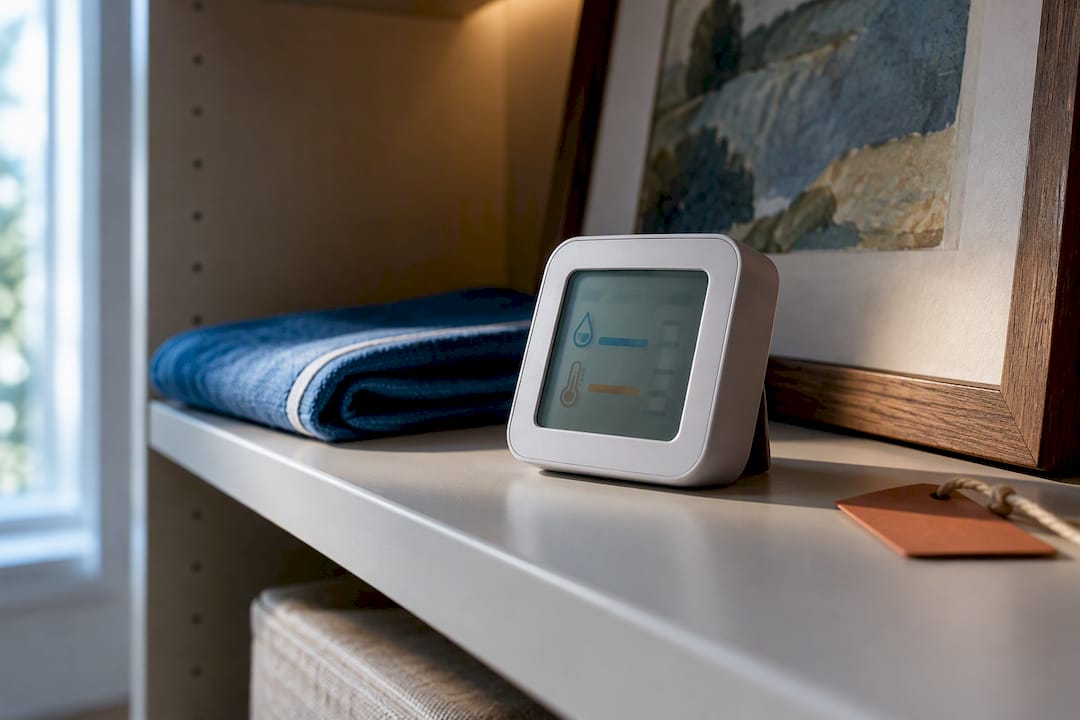
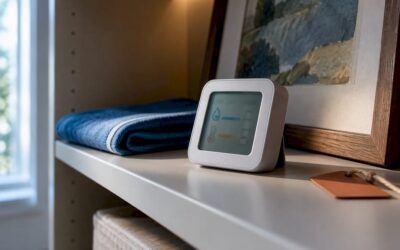
Bathrooms swing in relative humidity every time someone showers, and that repeated cycling is the real threat to artwork, not just occasional dampness. The EPA’s guidance on mold and moisture explains that humidity spikes during and right after a shower raise mold risk indoors, which is exactly why ventilation matters as much as the art itself. Paper and textiles are the most vulnerable materials, since they expand and contract with each humidity swing, and conservators generally prefer works on paper kept near 40 to 60 percent relative humidity, a range many bathrooms simply cannot hold on their own.
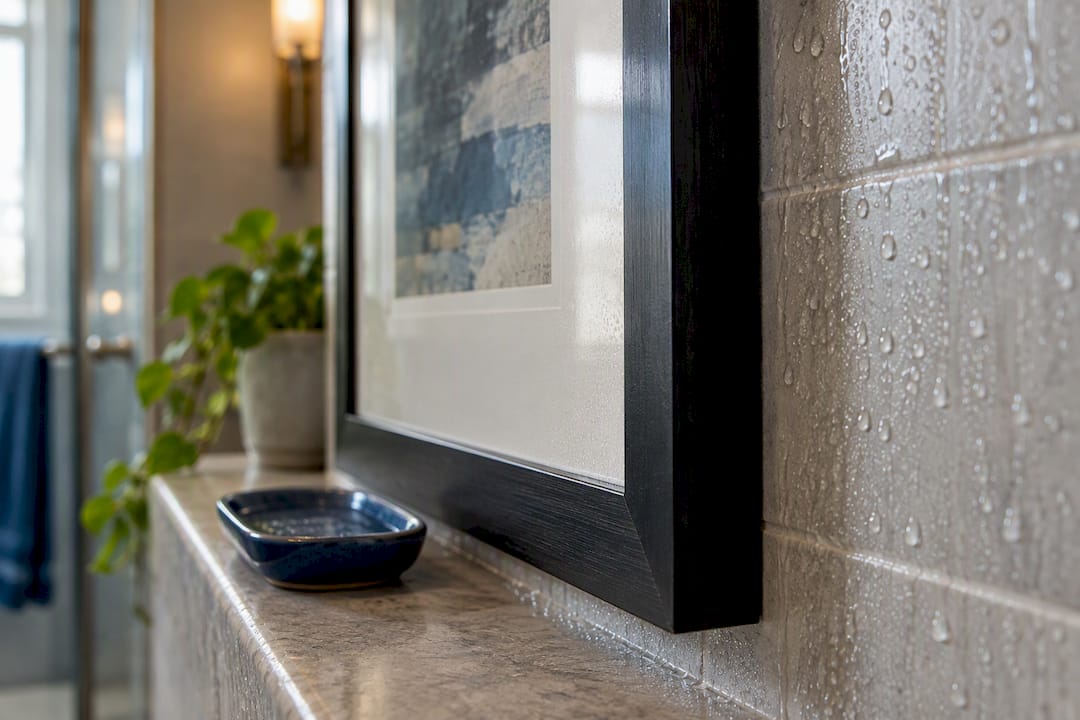
One low-effort habit does more for your art than any framing upgrade: running the exhaust fan during and for 20 to 30 minutes after a shower pulls relative humidity down faster than passive protection alone, according to EPA moisture guidance.
Formats that tolerate bathroom conditions well:
- Metal prints resist warping and moisture absorption entirely.
- Sealed canvas with a protective coating holds up in moderately humid rooms.
- Acrylic-glazed framed prints keep paper protected as long as the room ventilates properly.
- Glazed ceramics bring dimensional art into wet zones without any moisture concern.
Framed paper prints are conditionally fine: they work well in bathrooms that dry out within an hour or two after use, but they are a poor bet in a windowless bath with a weak fan.
3. Framing, Glazing, and Mounting Choices That Extend Longevity
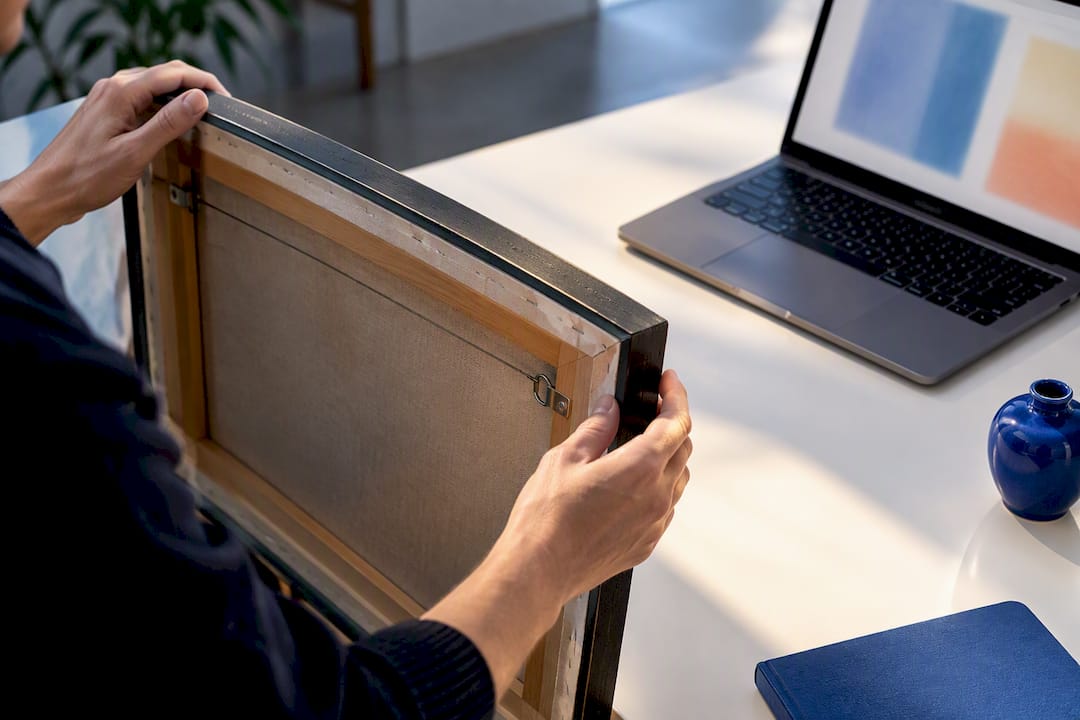
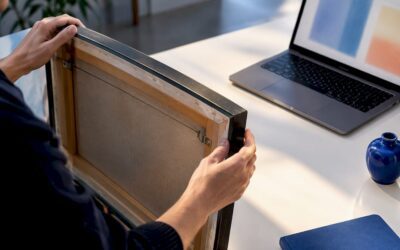
The frame should be treated as the long-term investment, while the print inside it stays replaceable and cheap. Guidance from PrintableWalls on bathroom-safe framing recommends acrylic glazing over glass, sealed frame backs, and hinge-mounting the print’s top edge so the bottom stays free to move slightly as humidity shifts, which reduces cockling compared with rigid, fully glued mounting.
- Choose acrylic glazing over glass to add a moisture barrier without the weight or shatter risk.
- Seal the frame back to keep humid air from settling behind the print.
- Hang the frame slightly off the wall using cork bumpers, which lets air circulate and prevents condensation from pooling against the wall.
- Use stainless steel hardware so hanging hooks and screws do not corrode over time.
- Pick aluminum frames for the most humidity-resistant option, since aluminum framing with acrylic glazing and archival matting resists the warping that treated wood frames eventually show.
Pro Tip: Leave a thin spacer between the print and the glazing rather than pressing them flush, since direct contact invites condensation right onto the artwork.
Budget framing works fine for prints you plan to swap seasonally. Save the premium aluminum-and-archival-mat combination for a piece you intend to keep for years.
4. Placement and Sizing Rules for Bathroom Walls
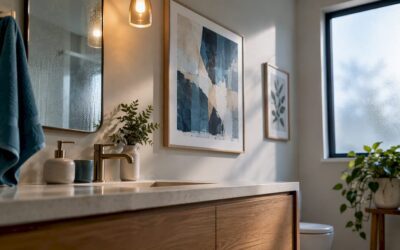
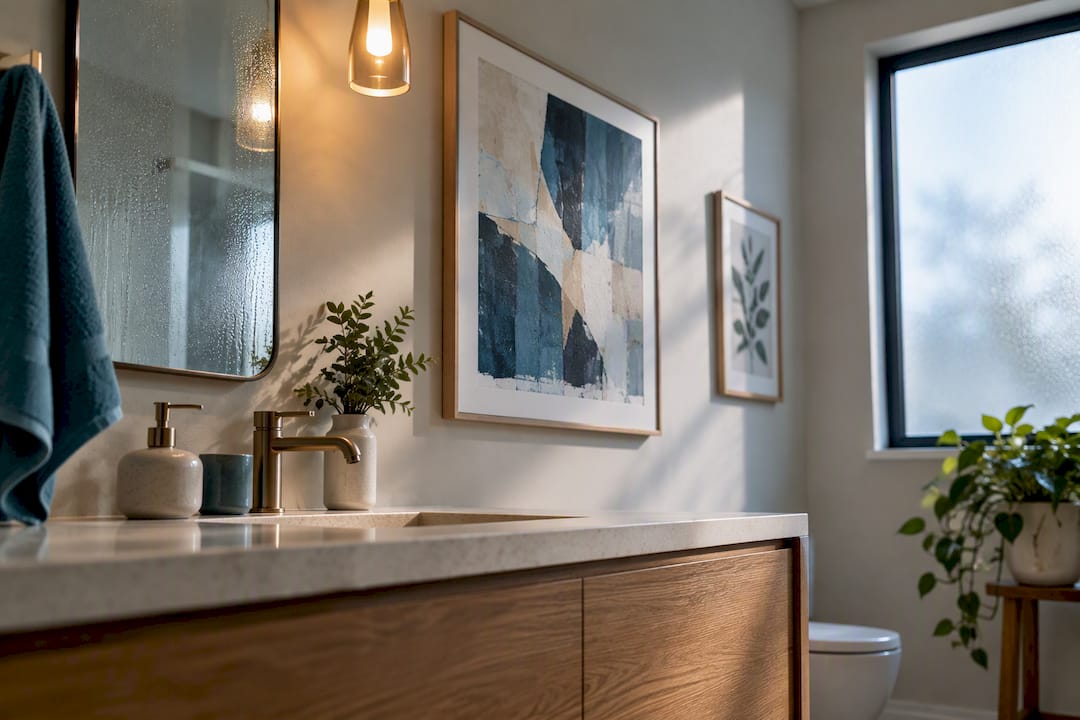
Scale is what separates a curated bathroom from one that feels like an afterthought. The FineArtCanvas sizing guide recommends art spanning roughly 60 to 75 percent of the vanity’s width and hanging 6 to 12 inches above the fixture line, a ratio worth applying above a vanity, a console sink, or a floating shelf. That same proportional thinking carries over from other rooms, including the 60 to 70 percent sizing rule used for hallway art, which works as a useful mental shortcut anywhere wall space is tight.
- Above the vanity: size to 60 to 75 percent of the vanity’s width, centered on the sink rather than the wall.
- Above the toilet: go smaller, one modest print or a slim vertical piece that clears the tank lid comfortably.
- Near the tub or shower: keep art at least an arm’s length from any splash zone, and favor metal or sealed formats there specifically.
- Powder rooms: a single well-scaled piece often outperforms several small ones on a narrow wall.
Vertical or square formats tend to suit narrow bathroom walls better than wide horizontal pieces, which can crowd a space that is already visually busy with fixtures and mirrors.
5. Gallery Walls, Ledges, and Flexible Display Options
Picture ledges beat fixed hanging in a bathroom for one simple reason: they let you rotate art seasonally without patching new nail holes every few months. Design guidance from Martha Stewart’s bathroom wall decor roundup points to ledges, layered lighting, and wallpaper-as-art as reliable ways to personalize a bathroom without permanent commitment.
- Picture ledges support easy swaps but need slightly deeper mounting hardware to hold pieces securely against everyday bumps.
- Fixed gallery walls create a more polished, deliberate look but commit you to one arrangement for the long haul.
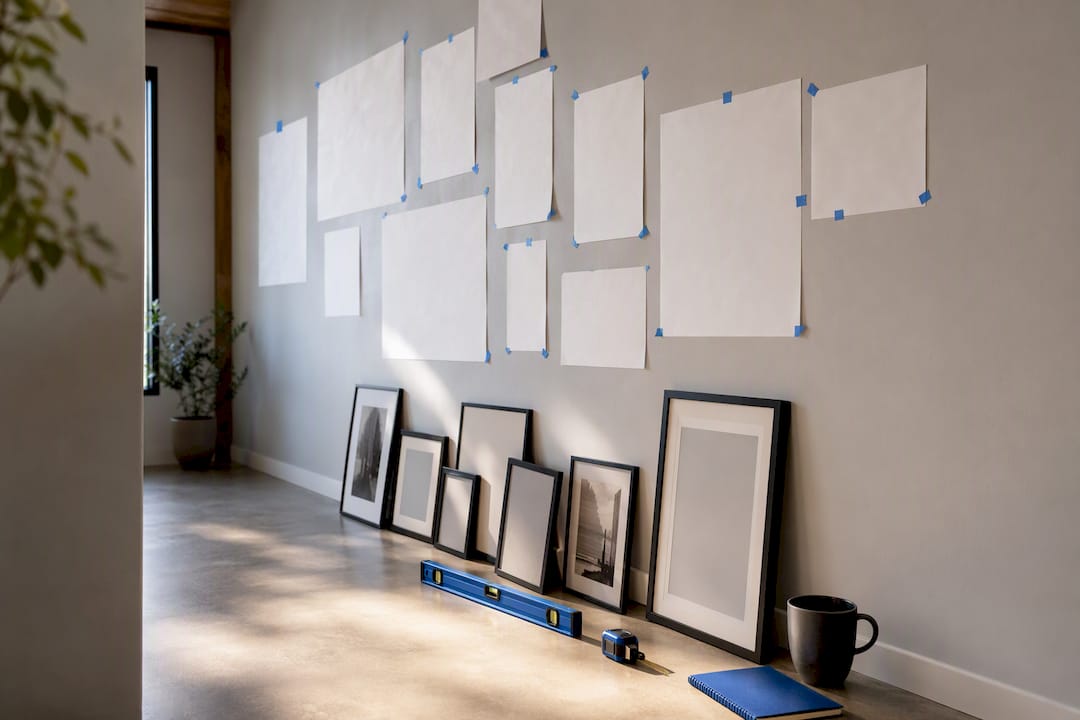
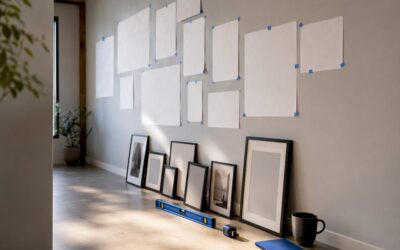
- Small bathrooms often do better with a tight, evenly spaced grid of three to five small pieces than a sprawling, irregular cluster.
- Floating shelves and niches double as display space for ceramics, small plants, or a rotating stack of framed prints leaning against the wall.
For more on spacing and stacking small works, the gallery wall arrangement guide covers layout principles that translate directly to a bathroom’s tighter footprint.
6. Easy DIY Bathroom Art Projects Worth Trying
DIY art works especially well in bathrooms precisely because it is meant to be temporary and cheap to replace.
- Download-and-print art in a size that matches your vanity, reprinted whenever it fades or the mood changes.
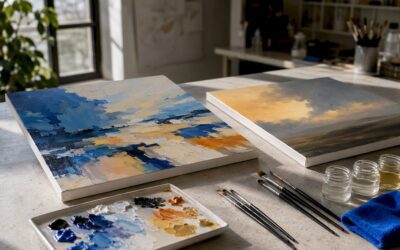
- Painted canvases sealed with a matte varnish, which holds up reasonably well in a room with decent airflow.
- Framed tiles or plates mounted in shadow boxes, a durable option since ceramic shrugs off moisture entirely.
- Small stretched canvases grouped in twos or threes, easy to swap out individually if one shows wear before the others.
Printables and painted canvases suit powder rooms and low-humidity baths best. Tiles and ceramics are the safer pick for anywhere near a shower or tub.
7. Lighting and Mirrors That Highlight Art Without Damaging It
Lighting should flatter the art without exposing it to heat or glare, and mirrors can multiply the effect of a good piece by reflecting it back across the room.
- Wall-washer sconces placed to the side of art avoid the hot spotlighting that can fade prints over time.
- Warm white bulbs around 2700 to 3000 Kelvin flatter most bathroom palettes better than cool, clinical tones.
- Angle fixtures away from glazed frames to prevent glare from bouncing straight back at anyone standing in front of the mirror.
- A well-placed mirror across from a statement piece doubles its visual presence and makes a small bathroom feel larger.
Renters can lean on plug-in sconces or battery LED strips rather than hardwired fixtures, and the art lighting guide covers fixture choices in more depth for anyone building out a full gallery moment.
8. Why Replaceable Art Beats Precious Originals in Wet Rooms
Bathrooms are not the place for an original watercolor or a family heirloom print, however tempting it is to fill a blank wall with something meaningful. The editorial stance worth repeating: favor pieces you would not mourn if humidity eventually got the better of them, and let the frame carry the sentimental weight instead. That mindset is exactly why curated, moisture-conscious picks are often recommended over one-of-a-kind originals for wet rooms.
— Nealda
Curated Picks From Art in Lifestyle’s Store Finds
A bathroom refresh should not mean hunting across a dozen retailers for a piece that will not warp by next summer. Art in Lifestyle’s Store Finds collects prints and decor pieces chosen with exactly this kind of room in mind, so the guesswork of matching mood to material is already done.
- Look for sealed glazing or metal printing called out explicitly in the product description before buying.
- Favor sellers with easy returns, since even humidity-safe art benefits from seeing it in your actual lighting first.
Browse the Store Finds shop for pieces sized and finished with bathroom walls already in mind.
Sources
- 21 Bathroom wall décor ideas — Martha Stewart
- Bathroom Wall Art Guide: Size, Style & Placement Tips | FineArtCanvas
- Bathroom Prints: What Survives the Humidity (and What Buckles) — PrintableWalls
FAQ
What kind of art looks good in a bathroom?
Tonal, spa-inspired prints, coastal scenes, and botanical photography tend to work well because they echo the calm the room is meant to provide. A single well-scaled statement piece usually reads as more polished than several small, mismatched ones, especially in a powder room, according to Martha Stewart’s styling roundup.
What are 2026 bathroom trends?
Wallpaper treated as art, layered lighting, and picture ledges for easy seasonal swaps are common approaches designers are using to personalize bathrooms, per BHG’s bathroom decor guide. Statement mirrors that double as decor are also a recurring theme in current bathroom styling.
What to put on an empty wall in a bathroom?
A single piece sized to about 60 to 75 percent of the vanity’s width, hung 6 to 12 inches above the fixture, fills an empty wall without overwhelming the space, based on FineArtCanvas’s sizing guide. A floating shelf with a small rotating stack of prints works well for a narrower or awkwardly shaped wall.
What are some ideas for DIY bathroom art ideas?
Download-and-print art, sealed painted canvases, and framed tiles or ceramic plates are all inexpensive projects that hold up reasonably well in a bathroom’s humidity. Printables and painted canvases suit drier powder rooms best, while ceramic pieces handle the steamier zones near a shower or tub.
How do I protect framed art from bathroom humidity?
Acrylic glazing, a sealed frame back, and running the exhaust fan for 20 to 30 minutes after a shower are the most effective steps, according to guidance on bathroom-safe framing. Hanging the frame slightly off the wall on cork bumpers also helps air circulate behind it.