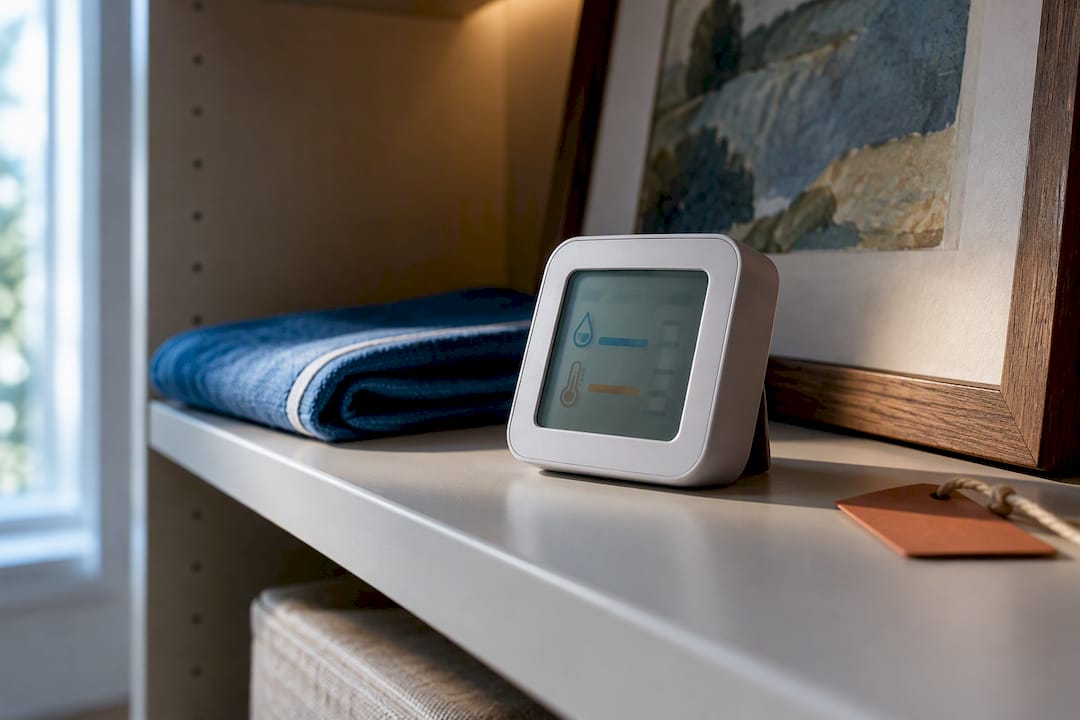
Store art the way museums do: keep the climate stable, keep pieces off attics and out of basements, separate canvases from paper, and wrap everything vulnerable in acid-free enclosures. The Smithsonian Museum Conservation Institute and Experts agree on this much: a $15 hygrometer and a stack of glassine sheets do more to protect a painting than any amount of worry.
TL;DR:
- Using a hygrometer in the storage area helps monitor temperature and humidity, which should stay around 45% RH and 70°F for optimal preservation.
- Store canvases vertically separated by cardboard or foam to prevent surface contact, and keep framed pieces upright or hung to avoid damage.
- Keep paper flat in acid-free boxes or portfolios with tissue layers, avoiding plastic sleeves for charcoal or pastel works to prevent static damage.
- Isolate solvents and flammables in sealed, ventilated cabinets away from heat sources, and store brushes upright and dry to maintain their quality.
- Basic materials like acid-free tissue, archival boxes, polypropylene sleeves, and a hygrometer provide effective, low-cost protection for home art storage.
Table of Contents
- Art Storage at Home: Everyday Containers, Carts, and Shelving for Supplies
- Organizing Art Supplies by Material and Workflow
- Storing Finished Canvases, Framed Pieces, and Works on Paper
- What Temperature and Humidity Actually Protect Your Art?
- What Archival Materials Should You Actually Buy?
- Small-Space Art Storage Ideas That Still Protect Your Work
- Short-Term vs. Long-Term Storage: What to Do First
- An Editor’s Note on Practical Art Care
- Curated Storage Picks Worth Adding to Your Cart
- Sources
- FAQ
Art Storage at Home: Everyday Containers, Carts, and Shelving for Supplies
The right container matters less than matching it to what you’re actually storing. Loose pastels need something different than a stack of watercolor paper, and treating every supply the same way is how brushes get bent and pigments get lost.
For small, loose items, visibility and stackability win. For bulkier gear, mobility and weight capacity matter more.
- Clear stackable drawers work best for pan pastels, tubes of paint, and small tools since you can see contents without opening every drawer.
- Mason jars or repurposed glass containers keep brushes upright and pencils sorted, and they resist dust better than open cups.
- Rolling carts suit anyone who works in more than one spot in the house. Wheel the whole setup to a sunny window, then tuck it into a closet when guests arrive.
- Fixed shelving makes sense for heavier items like canvas boards or reference books that don’t need to move.
- Flat file cabinets, even small three-drawer versions, are the single best investment for anyone producing works on paper regularly.
Label everything, even if the labels feel excessive at first. A drawer marked “warm neutrals” or “12×16 canvas panels” saves real time compared to digging through three containers before starting a painting session.
Organizing Art Supplies by Material and Workflow
Different materials fail in different ways, and grouping by chemistry rather than by project type prevents most avoidable damage. Paint thinner stored next to a space heater is a fire risk. Watercolor paper stored in a plastic sleeve can trap moisture against the surface.
- Isolate solvents and flammables. Mineral spirits, turpentine, and aerosol fixatives belong in a sealed metal cabinet away from heat sources, ideally with some airflow since fumes build up in closed closets.
- Store brushes upright and dry. Never cap a brush wet. A simple jar or a brush roll keeps bristles from bending, and letting them air dry bristle up prevents water from seeping into the ferrule and loosening the glue.
- Keep paper flat when possible, choosing the right paper for hyperrealistic portraits and understanding paper GSM to ensure longevity and quality. Rolling is acceptable for short-term transport, but flat storage in a portfolio or box prevents the cockling that shows up months later. Skip plastic sleeves for anything drawn in charcoal, pastel, or graphite, since static can lift loose media right off the page.
- Separate archival from non-archival stock. Student-grade sketch pads and professional cotton rag paper age at different rates; keeping them in the same box means the acidic pad can migrate damage to its neighbor over time.
Storing Finished Canvases, Framed Pieces, and Works on Paper
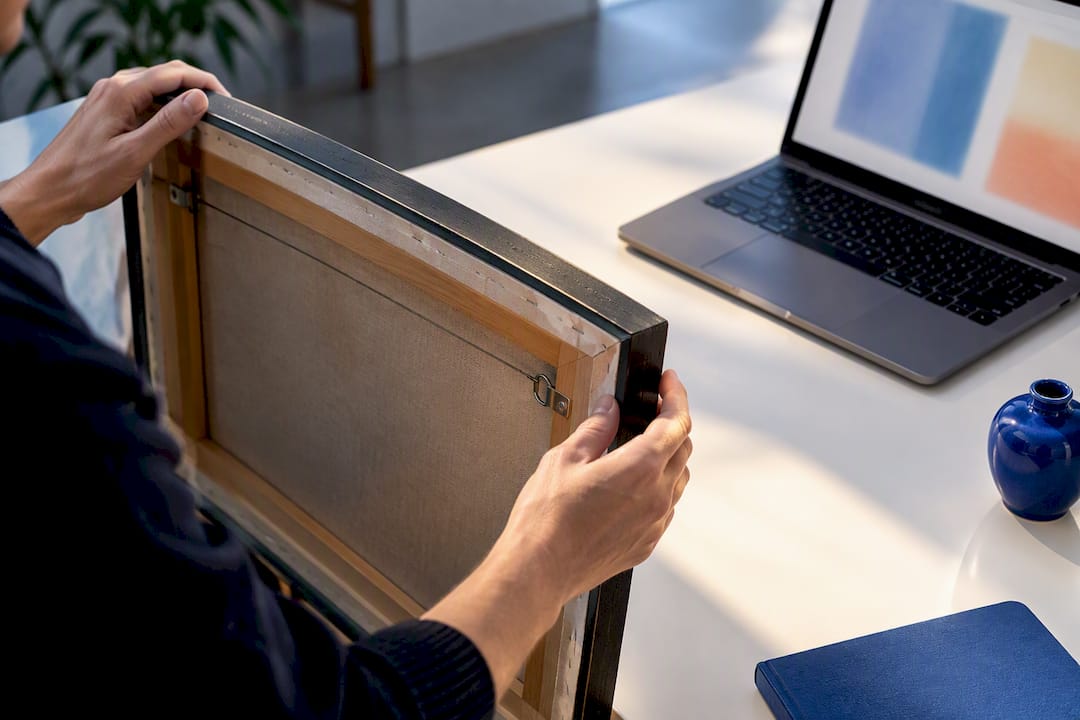
Finished work needs different handling than supplies, because a mistake here is often permanent. The Austin Gallery’s guide to storing canvases recommends storing paintings vertically rather than flat, and that single change prevents most home storage damage.
- Canvases should stand on edge, separated by cardboard or foam sheets, with a small gap between each piece so surfaces never touch.
- Framed work does best hung on interior walls or stored upright in slots built for that purpose. Never lay a frame flat on the floor, and never stack frames directly on top of each other.
- Works on paper belong flat, inside an archival box or portfolio case, layered with acid-free tissue between sheets.
- Photographs and light-sensitive prints need unbuffered sleeves specifically, since the alkaline buffer in standard archival tissue can react poorly with certain photo emulsions.
If you’re weighing whether a piece is worth professional framing before storage, our guide to art framing styles walks through glazing options that also protect against dust and UV exposure long term.
What Temperature and Humidity Actually Protect Your Art?
Stability beats precision. Museums track this closely, and their guidance translates directly into a home routine: aim for roughly 65–70°F and 40–55% relative humidity, and worry less about hitting an exact number than about avoiding swings.
By the numbers: Smithsonian-derived conservation guidelines set a practical storage target around 45% RH (plus or minus 8%) and about 70°F (plus or minus 4°F), with consistency over time weighted more heavily than a perfect setpoint.
Attics bake in summer and freeze in winter. Basements swing damp and invite mold. Exterior walls run colder than interior ones, especially behind furniture where airflow stalls. None of these locations are worth the convenience, even for supplies you think you’ll rotate through quickly.
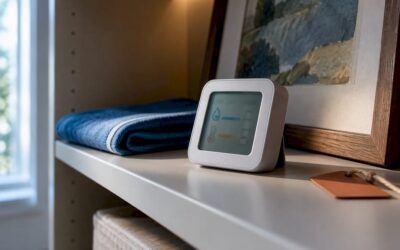
A $15 to $25 hygrometer placed in your actual storage spot, not just the room at large, reveals more than any general climate guideline can. Move art away from south facing windows or add UV-filtering film if repositioning isn’t possible; our art lighting guide covers placement choices that protect color as well as they flatter a piece on display.
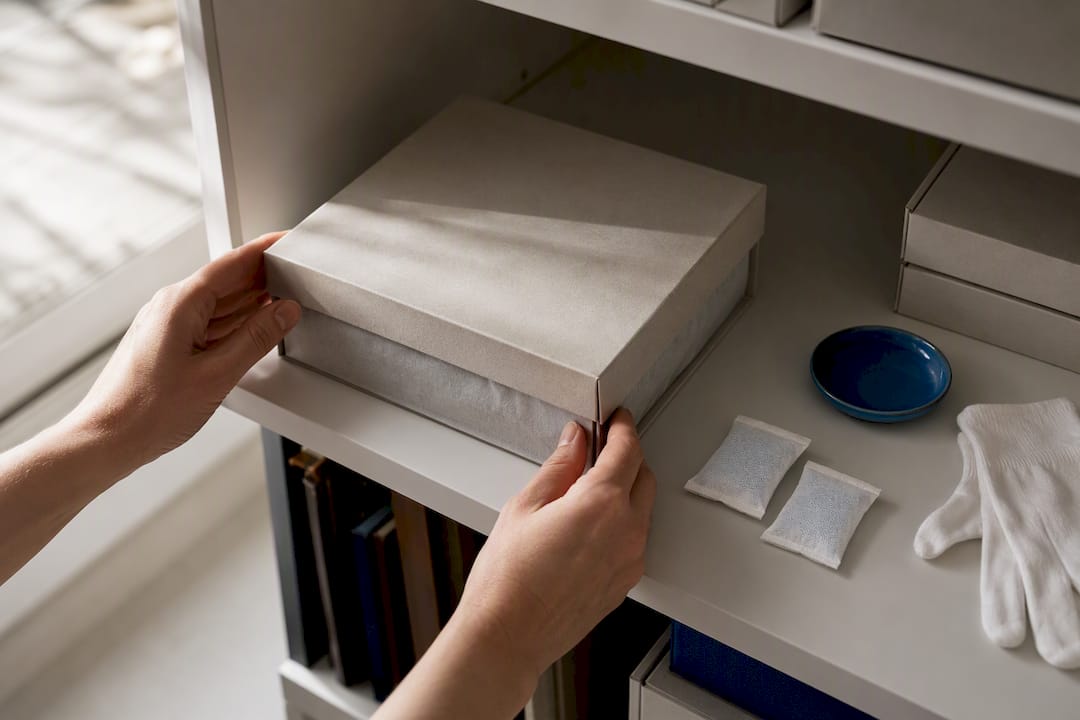
Pro Tip: Build a microclimate instead of fighting the whole room. A sealed archival box with a few silica gel packets holds a stable environment for weeks, even when the room around it swings with the seasons.
What Archival Materials Should You Actually Buy?
Skip the expensive climate-controlled furniture and start with the cheap materials that do most of the protective work. Glassine, a smooth semi-transparent paper, keeps surfaces from sticking together without trapping moisture, which makes it ideal between drawings or prints. Buffered tissue neutralizes acid migration in most paper works, though the Canadian Conservation Institute notes that photographs and some sensitive media need unbuffered materials instead.
- Acid-free tissue for interleaving between stacked pieces.
- Archival boxes rated for either flat storage of paper or upright storage of small canvases.
- Polypropylene sleeves for individual prints that need handling protection.
- A hygrometer and silica gel packets, the two cheapest, highest-return purchases you can make.
None of this runs expensive. A roll of tissue and a hygrometer together often cost less than a single frame, yet they prevent the kind of slow damage that no frame can fix later.
Small-Space Art Storage Ideas That Still Protect Your Work
Living in a small apartment doesn’t mean choosing between storage and safety.
- Under the bed works well for flat paper storage, provided pieces sit inside a shallow archival box with tissue between sheets rather than loose against the floor.
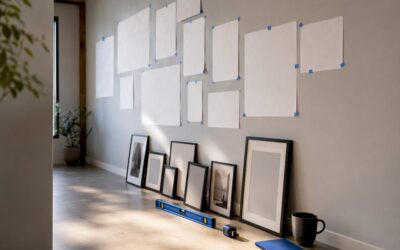
- Wall rails with removable hooks let you hang lightweight canvases without nail holes, and you can rearrange a whole gallery wall in minutes.
- A rolling cart doubles as a mobile studio during work sessions and disappears into a closet the rest of the time.
Short-Term vs. Long-Term Storage: What to Do First
Match your effort to how long a piece will actually sit in storage.
- Short-term (weeks to months): Move work to an interior room, lift it off the floor, add silica gel to any box, and use glassine between stacked pieces.
- Long-term (months to years): Invest in archival boxes or flat files, stabilize the room’s climate as much as possible, and consider professional framing for anything you plan to display eventually.
- Emergency quick-fix: When you need to protect something fast, move it to an interior room, get it off the floor, and seal it in a box with a desiccant packet until you can do better.
An Editor’s Note on Practical Art Care
Museum conservation guidelines exist because institutions have decades of failure to learn from, and most of that failure comes down to the same handful of mistakes: humidity swings, direct sun, and cheap acidic materials touching good work. What surprises people is how little it costs to avoid all three. The gap between a museum storage room and a well-organized closet is smaller than most hobbyists assume.
The approach here has always been about pairing that kind of practical rigor with a home that still feels warm and personal, not clinical. If you want hands-on help choosing storage that fits your actual space, our Art Concierge service exists for exactly that conversation.
— Nealda
Curated Storage Picks Worth Adding to Your Cart
This resource offers readers a shortcut past hours of research: curated, design-minded product picks instead of a wall of generic Amazon search results. Rather than guessing which hygrometer or archival box is worth the money, you get a smaller, vetted list built around what actually protects work at home.

Our Store Finds collection includes the small organizers, archival tissue, and low-cost hygrometers this guide keeps coming back to, the same items that do most of the protective work for the least money. If you’re also thinking about how finished pieces get displayed once they leave storage, our gallery wall ideas round out the room they’ll eventually hang in. Browse Store Finds now and build your starter kit before the next humid week catches your storage closet off guard.
Sources
- Smithsonian Museum Conservation Institute
- Mecklenburg et al. / Smithsonian environmental guidelines (repository)
- Austin Gallery — How to Store Art and Canvases: Temperature, Humidity, and Stacking
- Canadian Conservation Institute — Caring for paper objects
FAQ
What Is the Best Way to Store Art at Home?
Keep artwork in a climate-stable interior room, away from attics, basements, and direct sunlight, with canvases stored vertically and paper stored flat inside archival boxes. Pairing this with a simple hygrometer to monitor temperature and humidity catches problems before they damage anything.
What Is the 70/30 Rule in Painting?
The 70/30 rule refers to a compositional guideline in painting, generally suggesting that a majority of a piece stays dominant in tone or color while a smaller part contrasts, rather than a storage or conservation principle. It’s a design tool for balance, not a preservation rule.
Is It Better to Store Art Flat or in a Folder?
For works on paper, flat storage inside an archival folder or box is safer than rolling since rolling can crease or stress the surface over time. Rolling is acceptable only for short-term transport, never for long-term storage.
What Is the 2/3 Rule for Art?
Like the 70/30 rule, the 2/3 rule is generally a composition guideline, often used to describe placing a focal point off center. It applies to creating art, not to how you store or preserve it afterward.