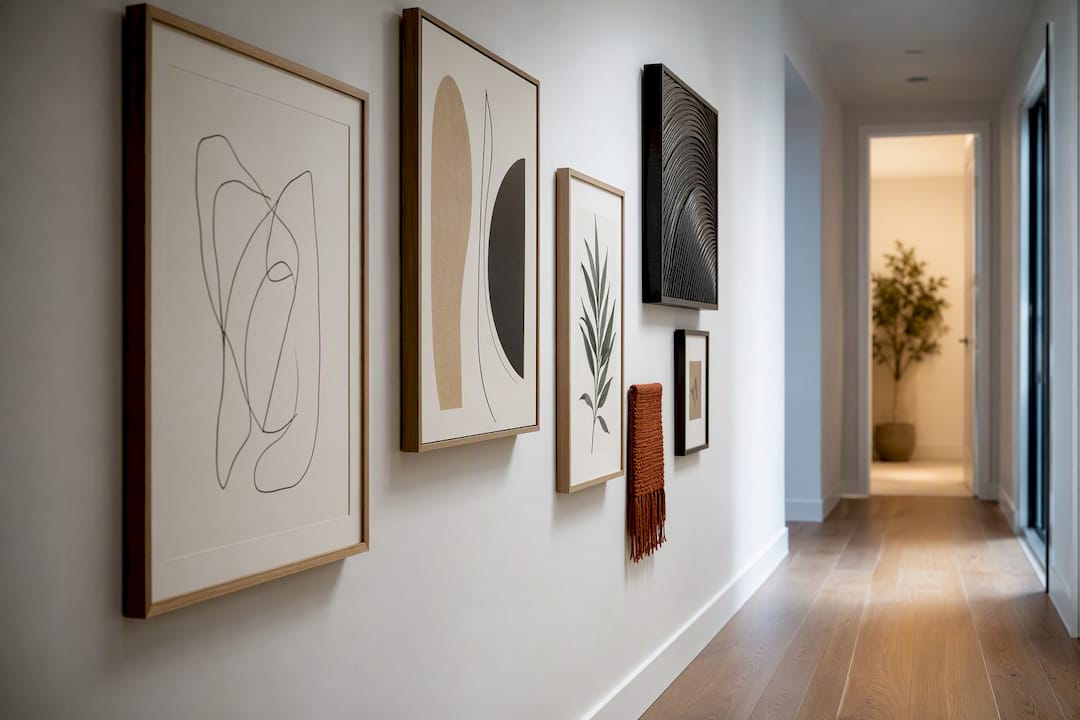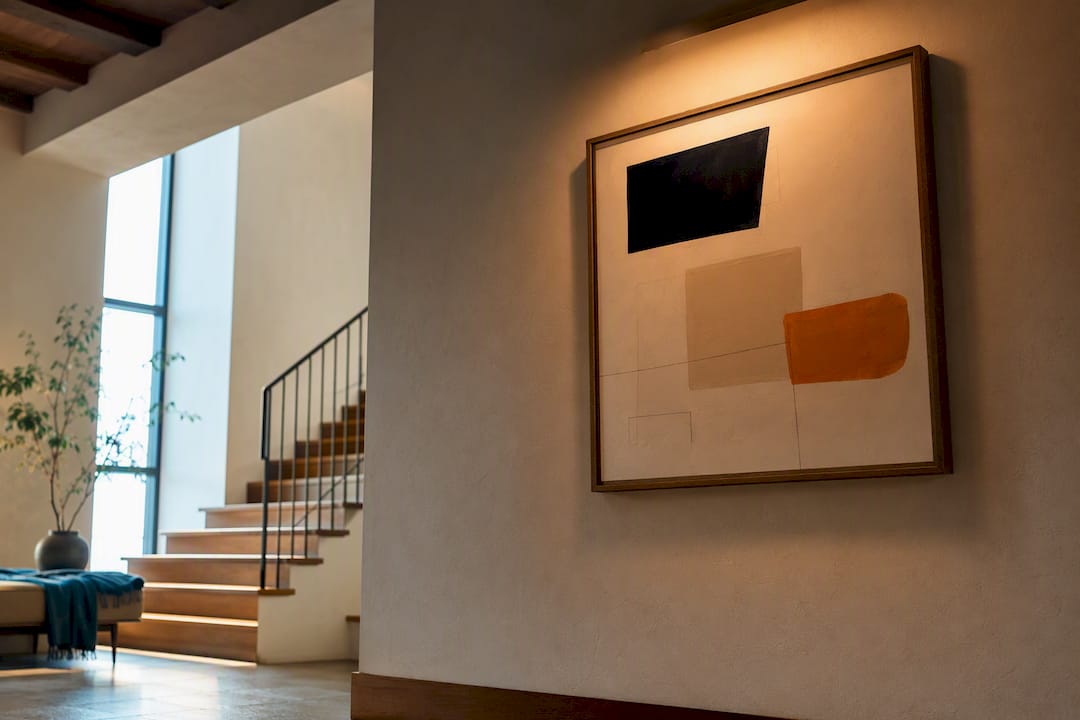
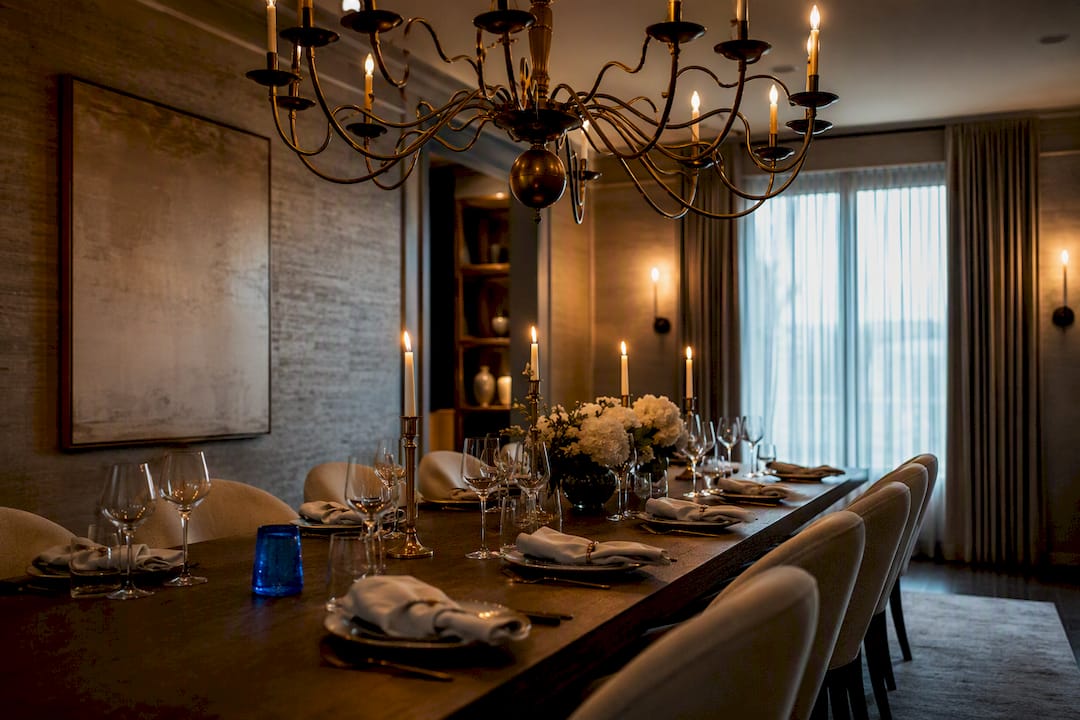
A formal dining room earns its square footage when you anchor it with the right table, center a statement light fixture above it, commit to one bold wall treatment, and fill the chairs with something people can sit in for two hours. Add a proper sideboard for storage and a layered lighting plan for mood, and the room stops being a museum, enhanced further by the right interior door styles and trends that frame the space beautifully. It becomes the place your household actually wants to eat.
TL;DR:
- A statement chandelier or pendant should hang 30 to 36 inches above the table, with layered lighting including sconces and picture lights for mood control.
- Deep, saturated wall colors or textured wallpaper enhance candlelit ambiance, especially for rooms used mainly in the evening, creating a jewel-box effect.
- Chairs should be upholstered for comfort, with a seat height of 18 to 19 inches and a seat depth of 17 to 20 inches, to ensure prolonged comfort during meals.
- Room proportion dictates table shape; rectangular for long narrow rooms and round or square for square spaces, with at least 24 inches clearance from the table edge for circulation.
- Including a proper sideboard at 34 to 38 inches high and using layered tabletop decor with quick-to-assemble centerpieces improves functionality and aesthetic flexibility.
Table of Contents
- Formal Dining Room Ideas That Make the Biggest Difference
- Table Sizing, Clearance, and Layout Rules That Actually Work
- Choosing and Placing Your Statement Light Fixture
- Wall Treatments and Color That Set the Mood
- Furniture Proportions That Keep Guests Comfortable
- Storage and Serving That Keep the Room Functional
- Table Styling, Centerpieces, and Finishing Touches
- What Makes a Formal Dining Room Actually Work
- Why the Formal Dining Room Deserves Its Comeback
- Bring the Look Home With Curated Store Finds
- Sources
- FAQ
Formal Dining Room Ideas That Make the Biggest Difference
Not every upgrade carries equal weight. These ten moves, in order of impact, turn a stiff, underused room into one that gets chosen for a Tuesday dinner, not just Thanksgiving.
- Statement lighting first. Center a chandelier or pendant over the table, not the room’s midpoint, and put it on a dimmer. This single fixture sets the formality level before anyone even sits down.
- Bold wallpaper on at least one wall. A patterned or metallic paper catches candlelight in a way flat paint never will.
- Comfort-first seating. Upholstered or well-padded chairs matter more than matching finishes. Guests remember comfort, not veneer.
- A proper sideboard. Buffet-height storage keeps serving pieces close without cluttering the table.
- Layered lighting beyond the chandelier. Add sconces or picture lights so you’re not relying on one overhead source.
- An anchoring rug. It defines the zone and softens footsteps and chair scrapes.
- Ceiling attention. A painted ceiling, beadboard, or simple crown detail draws the eye up and finishes the box.
- A deliberate color story. Deep, saturated tones read as intentional; timid neutrals read as unfinished.
- Art hung to the room’s scale. One large piece or a tight grid beats a scattering of small frames.
- A repeatable centerpiece formula. Something you can set in under five minutes, every single time.
Budget tip: if you can only invest in two of these, choose the lighting and the chairs. Everything else is reversible or inexpensive to swap later.
Table Sizing, Clearance, and Layout Rules That Actually Work
Room proportion decides table shape before style does. Long, narrow rooms want rectangular tables; square rooms flatter round or square ones, which soften corners and improve conversation across the group.
Circulation is where most layouts fail. Following standard clearance guidelines keeps the room usable, not just photogenic:
- Leave at least 24 inches from the table edge to the back of a fully pulled-out chair.
- Keep 36 to 48 inches between the table edge and the nearest wall or furniture piece for walking room.
- Reserve closer to 60-inch along any wall used for serving, so someone can pass behind a seated guest with a platter.
- Size the table to the group: roughly 24 inches of edge per person, meaning a table for eight needs about 8 feet of length or a 60 inch round for six.
- Extend the rug 24 to 30 inches past the table’s edge on every side, so chairs stay on the rug even when pulled back.
Choosing and Placing Your Statement Light Fixture
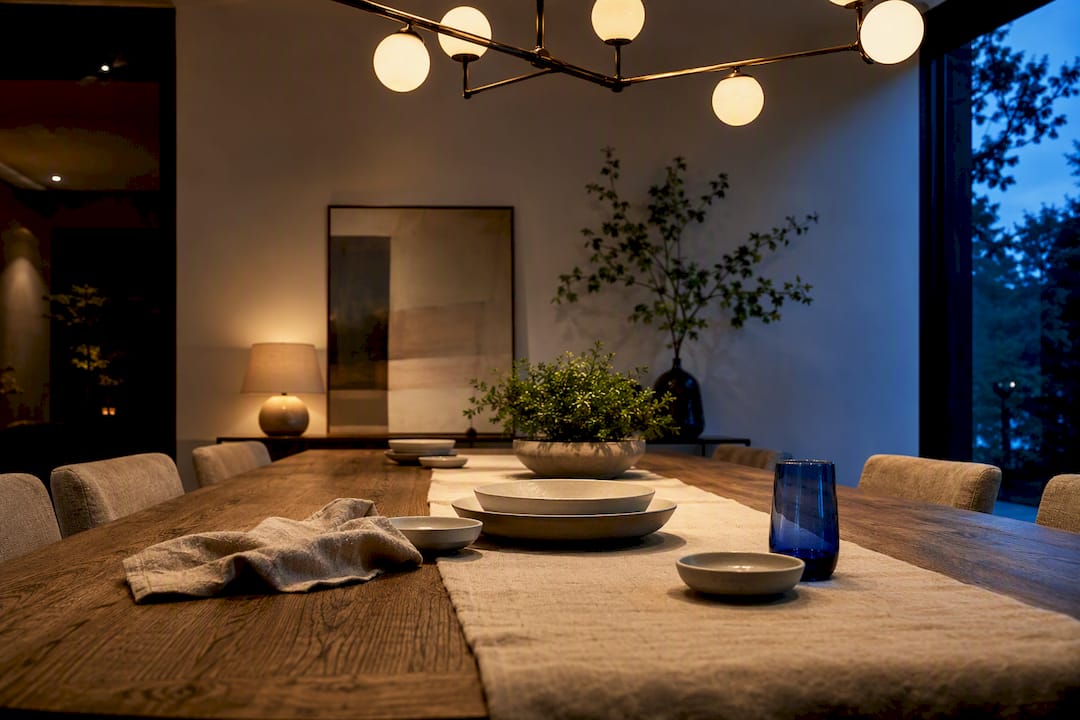
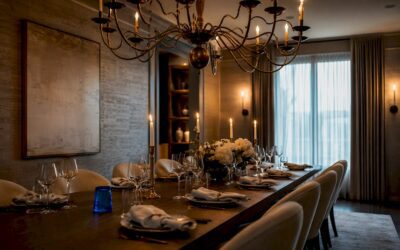
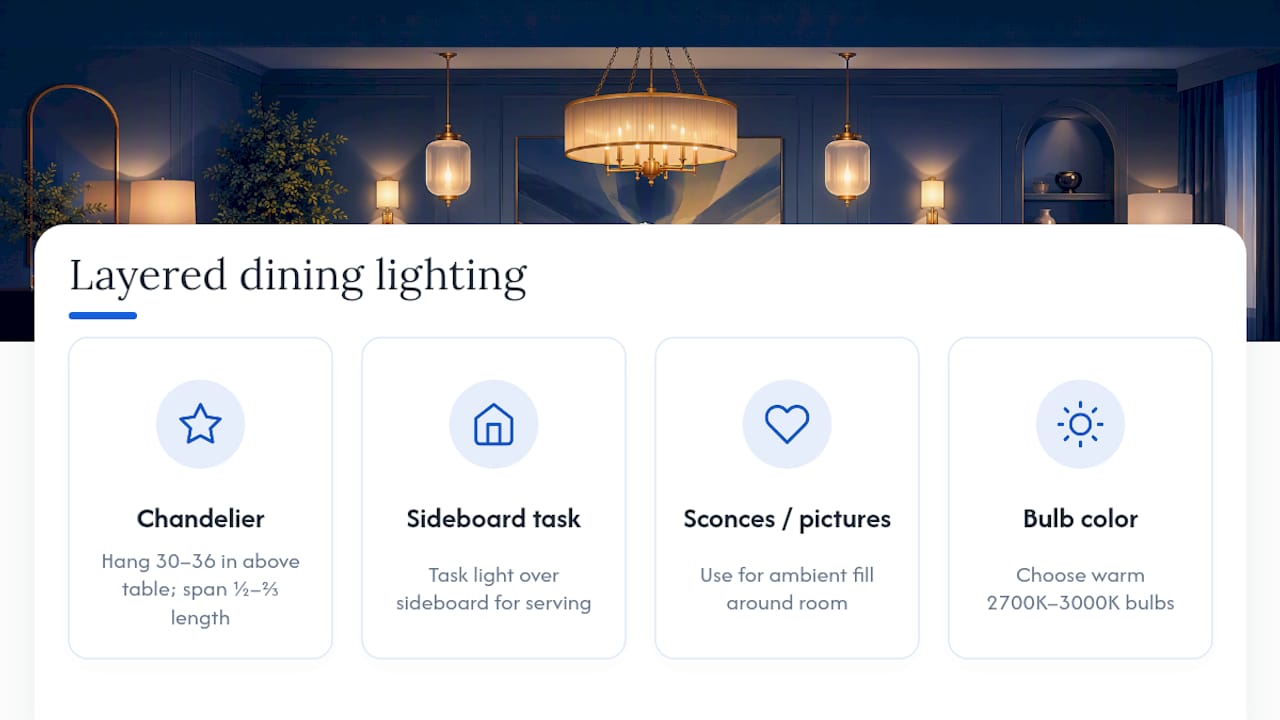
Lighting is where formal dining rooms most often go wrong, and it’s the fastest fix on this whole list. A chandelier or pendant should hang 30 to 36 inches above the tabletop, and its width should span roughly half to two thirds of the table’s length so it doesn’t look stranded above an empty expanse of wood.
One fixture isn’t enough for a room meant to shift moods across an evening. Layer three sources: the overhead chandelier for drama, a task light over the sideboard for serving, and sconces or picture lights for ambient fill. Choose bulbs in the 2700K to 3000K range. Anything cooler makes food and skin tones look flat under candlelight’s warm competition.
Pro Tip: Put every fixture, including sconces, on a dimmer circuit. The same room that hosts a bright Sunday lunch should be able to drop to a soft glow for a dinner party in under ten seconds, and candles belong on the table for every seated meal, not just special occasions.
Layered lighting and dimmers matter more than most homeowners expect. The ability to move from bright task light to soft ambiance is often what separates a room that feels formal from one that feels merely furnished, according to lighting guidance for entertaining spaces.
Wall Treatments and Color That Set the Mood
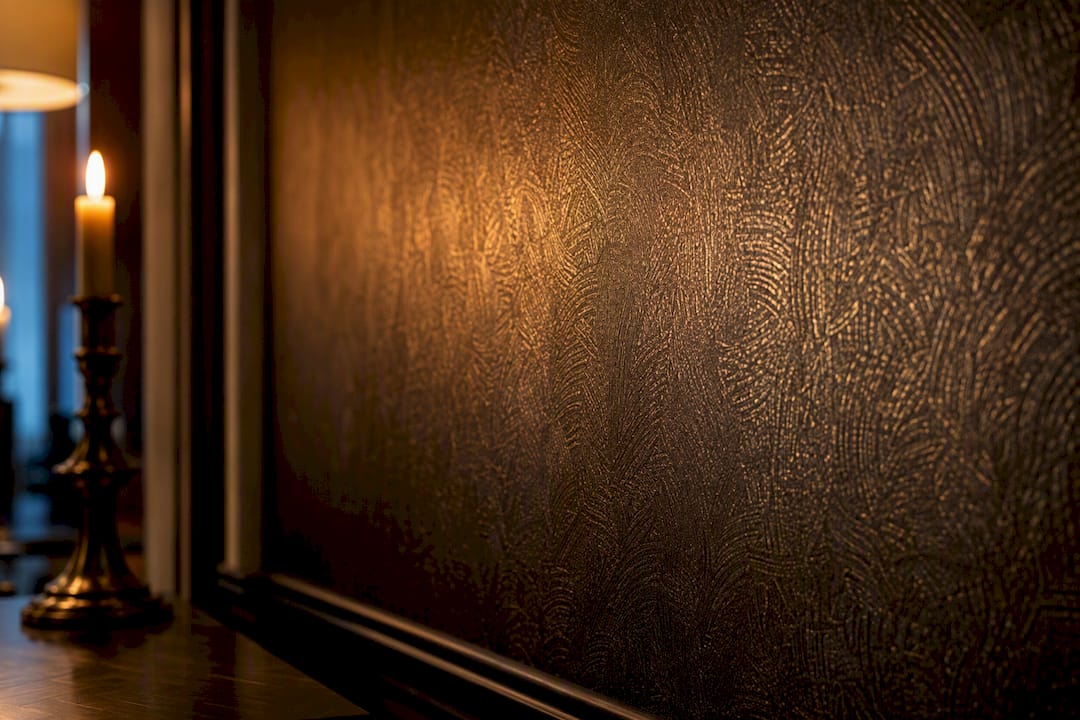
Deep, saturated walls and patterned wallpaper create what designers call a jewel-box effect. The room tightens visually in the best way, especially once evening light and candles take over. That effect is well documented in formal dining spaces, where paint alone often reads flatter under warm artificial light than a paper with texture or metallic thread.
- Choose wallpaper when the room is used mostly for evening entertaining and you want drama under candlelight.
- Choose deep, matte paint (navy, hunter green, terracotta, or a rich sage) when you want formality without pattern commitment.
- Add wainscoting or picture-rail molding at roughly one third wall height for a classic, grounded look.
- Keep crown molding proportional to ceiling height. Taller rooms can handle a deeper profile without feeling heavy.
- Reserve soft gray or warm white only for rooms that get strong natural daylight. Without it, pale walls can look underdressed at dinner.
For more direction on pairing wall color with adjacent living spaces, these designer-favored palettes offer a useful reference point for tying rooms together.
Furniture Proportions That Keep Guests Comfortable
A beautiful chair that nobody wants to sit in for more than twenty minutes has failed its one job. Seat height should match the table height, typically 18 to 19 inches for a standard 29 to 30 inch table, with seat depth in the 17 to 20 inch range for comfort during a multi-course meal.
- Mix upholstered host armchairs at the table’s ends with simpler side chairs for a layered, collected look instead of a matched dining set.
- Consider a bench or banquette along one long side if the room is narrow. It saves clearance space and seats more people per foot.
- Choose an extendable table with removable leaves so the room flexes between a weeknight dinner for four and a holiday table for twelve.
- Always run the sit test before buying: sit for a full five minutes and check seat height, depth, and back support, not just the finish.
Storage and Serving That Keep the Room Functional
A sideboard or buffet at 34 to 38 inches high gives you counter space for plating and a place to hide the linens, chargers, and extra flatware you don’t want cluttering a closet elsewhere.
- Use built-ins where the room allows it. Freestanding sideboards give more flexibility if you plan to rearrange later.
- Store table leaves flat, ideally near the table itself, so extending it for guests takes minutes, not a search through the garage.
- Add a small lamp or picture light above the serving surface so plating doesn’t happen in shadow.
- Consider a discreet under-table outlet for chargers if the room doubles as a workspace during the day, an increasingly common request from homeowners balancing formality with daily use.
Table Styling, Centerpieces, and Finishing Touches
Three centerpiece formulas cover nearly every occasion, and each takes under ten minutes to assemble.
- Low and organic: A shallow bowl of seasonal fruit, greenery, or faux flowers that never blocks sightlines across the table.
- Runner plus votives: A textured table runner with a scattered row of low candles for instant ambiance without height concerns.
- Single sculptural object: One striking vase, bowl, or piece of art glass, styled alone for maximum visual weight with minimal effort.
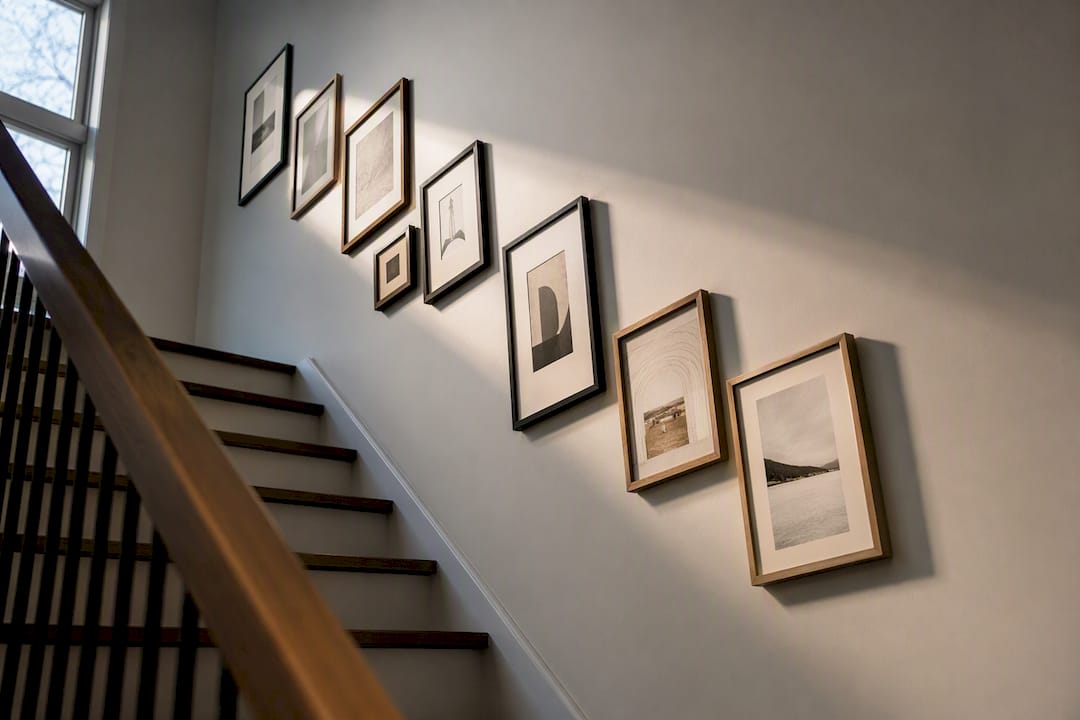
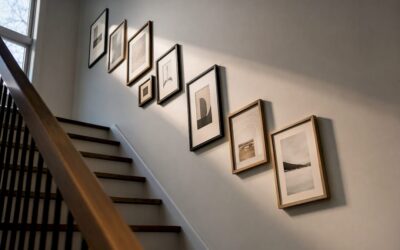
Hang art above the sideboard at eye level, roughly 8 to 10 inches above the furniture’s top edge, and keep it centered on the wall rather than the furniture piece beneath it if the two don’t align. For layout inspiration, these centerpiece templates work as a repeatable weekly system rather than a special-occasion-only routine. Swap a heavier linen runner for a lighter cotton one, or move from a full silver service to simpler ceramics, to shift the same room’s formality up or down without redecorating.
What Makes a Formal Dining Room Actually Work
Wallpaper performs a job paint simply can’t in a dining room: it catches warm bulb light and candle flicker across metallic threads or textured patterns in a way flat color absorbs instead. That’s why a jewel-box wall treatment reads as intentional rather than dated.
The lighting rule stays non-negotiable regardless of style: a dimmable fixture 30 to 36 inches above the table, plus candles at every seated meal. Skip either and the room loses its ability to shift moods.
Why the Formal Dining Room Deserves Its Comeback
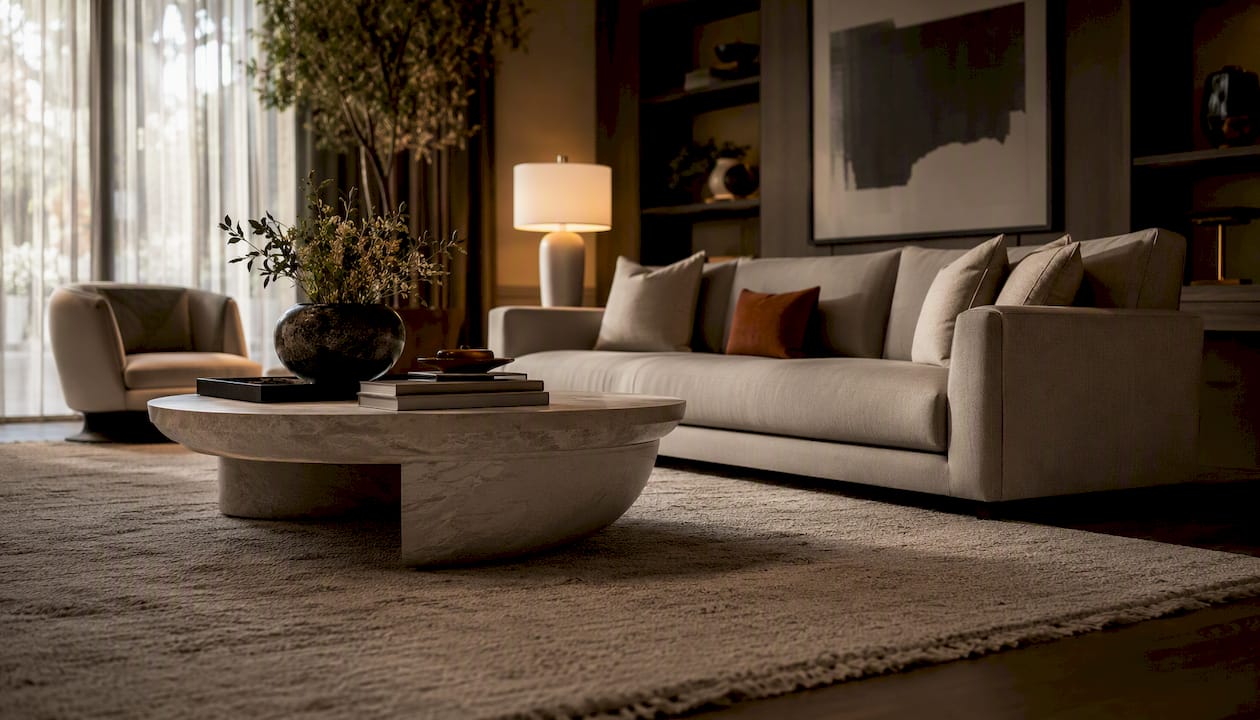
A dining room earns its keep the moment it’s used, not just admired. The measurements and finishes in this guide matter less for their own sake than for what they make possible: a table where people linger because the chair doesn’t hurt after an hour, and the light is warm enough to want to stay.
That’s the real return on a room like this. It’s ritual, dressed in good lighting.
— Nealda
Bring the Look Home With Curated Store Finds
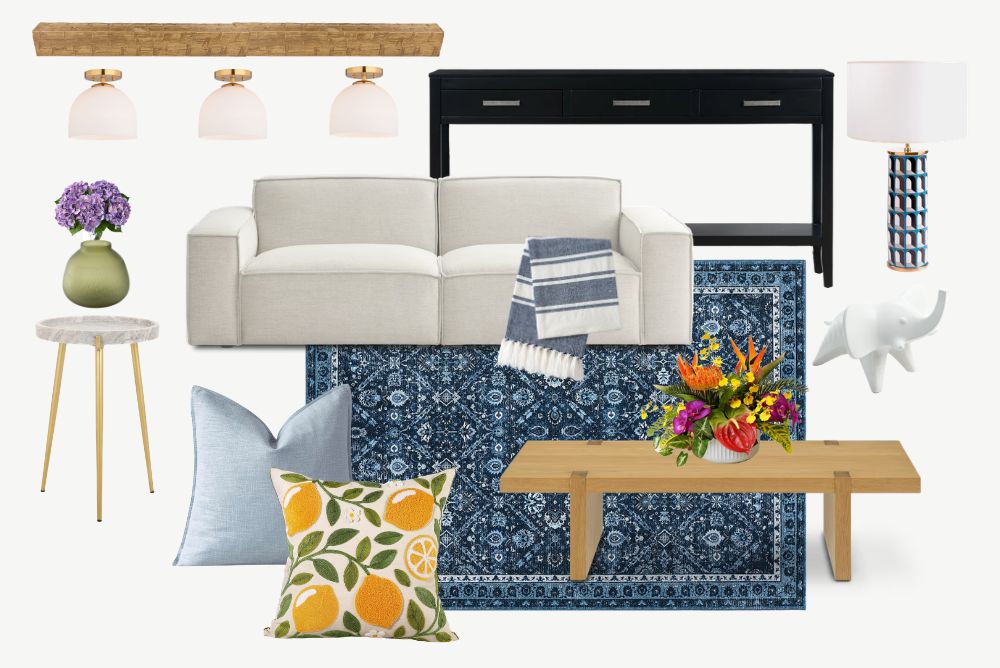
A curated selection of pieces can make these ideas real, without the guesswork of hunting across a dozen retailers for the right chandelier scale or rug size. Browsing Store Finds gets you closer to the lighting, rugs, and tableware discussed here, chosen by editors who think about proportion and light temperature the same way this article does.
Selections often focus on categories important for a formal dining room: statement lighting, floor anchors sized appropriately, and centerpiece-ready decor that is easy to style. Some picks are affiliate links, which support the magazine at no extra cost to you. If your walls need finishing touches beyond the dining room, the gallery wall ideas guide pairs well with the art placement rules above. Start with the lighting category. It’s the one upgrade on this list with the fastest visible payoff.
Sources
FAQ
Are formal dining rooms still in style?
Yes. The current design shift treats the formal dining room as an intentionally designed space built for real use, not a stiff, roped-off room saved for holidays. The revival focuses on comfort and lighting as much as formality.
What is the best color for a formal dining room?
Deep, saturated tones like navy, hunter green, terracotta, and sage tend to work best because they respond beautifully to candlelight and warm bulbs. Lighter neutrals can work too, but only in rooms with strong natural daylight to keep them from reading as unfinished.
What is the 3-5-7 rule of decorating?
This is a styling shortcut for grouping objects, typically arranging items in odd-numbered clusters of three, five, or seven for visual balance on a sideboard, shelf, or centerpiece display. It’s not a strict measurement rule, more a general principle for avoiding stiff, symmetrical clutter.
What are the dining room trends for 2026?
Expect continued momentum toward bold wallpaper, layered dimmable lighting, and comfort-driven chair choices over matched formal sets. Rooms are being designed to flex between everyday use and entertaining rather than sitting closed off, a shift you can explore further in current home design trends.
How high should a chandelier hang above a dining table?
Center it 30 to 36 inches above the tabletop, a range confirmed by lighting design guidance for dining spaces. Pair it with a dimmer so the same fixture works for bright task lighting and soft evening ambiance.
Recommended
- Luxury Dining Room Ideas That Impress Every Guest
- 30–36 Inches Above Dining Table: String Test for Chandelier Sightlines
- Dining Table Centerpieces That Work Every Day