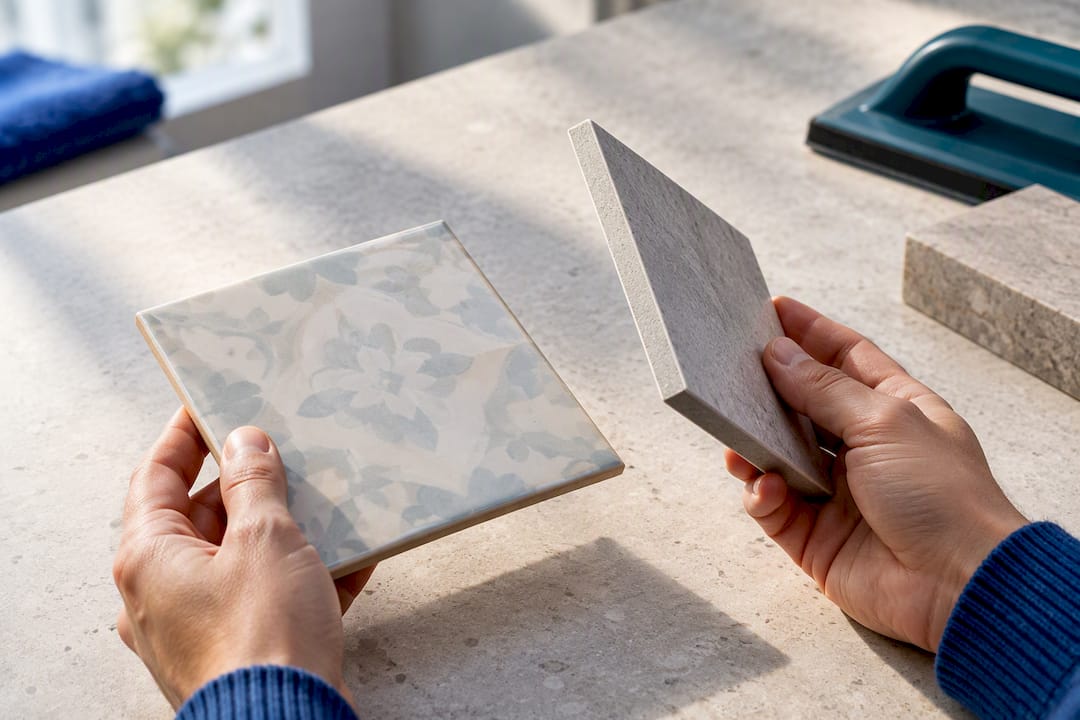
If you need low water absorption and heavy-duty performance for floors, showers, or outdoor surfaces, porcelain is the stronger choice. For budget-friendly indoor walls and decorative backsplashes, ceramic usually does the job beautifully. The right answer depends on moisture exposure, foot traffic, your budget, and whether you plan to install the tile yourself or bring in a professional.
TL;DR:
- Porcelain’s water absorption of 0.5% or less makes it suitable for wet areas and high-traffic outdoor surfaces, while ceramic is better for decorative indoor walls.
- Dense and hard, porcelain is more expensive and requires specialized tools for installation, especially for large-format tiles, compared to the softer, easier-to-cut ceramic.
- Proper substrate preparation and waterproofing are crucial for both materials; skipping these steps causes most tile failures regardless of tile type.
- Daily maintenance involves mild cleaning, but grout sealing every one to two years helps preserve appearance, especially for unglazed porcelain which is more absorbent.
- Distinguishing porcelain from ceramic can be done by checking for consistent color through the tile body or asking for water absorption and PEI ratings from the supplier.
Table of Contents
- What sets ceramic and porcelain tile apart
- Porosity, durability, and cost differences that matter
- Which rooms call for porcelain and which call for ceramic
- Tools, substrate prep, and when to call a professional
- Keeping your tile looking good for years
- How to tell what kind of tile you’re looking at
- A simple checklist before you buy
- Making the material choice feel intentional
- Finishing the room once the tile is in
- Sources
- FAQ
What sets ceramic and porcelain tile apart
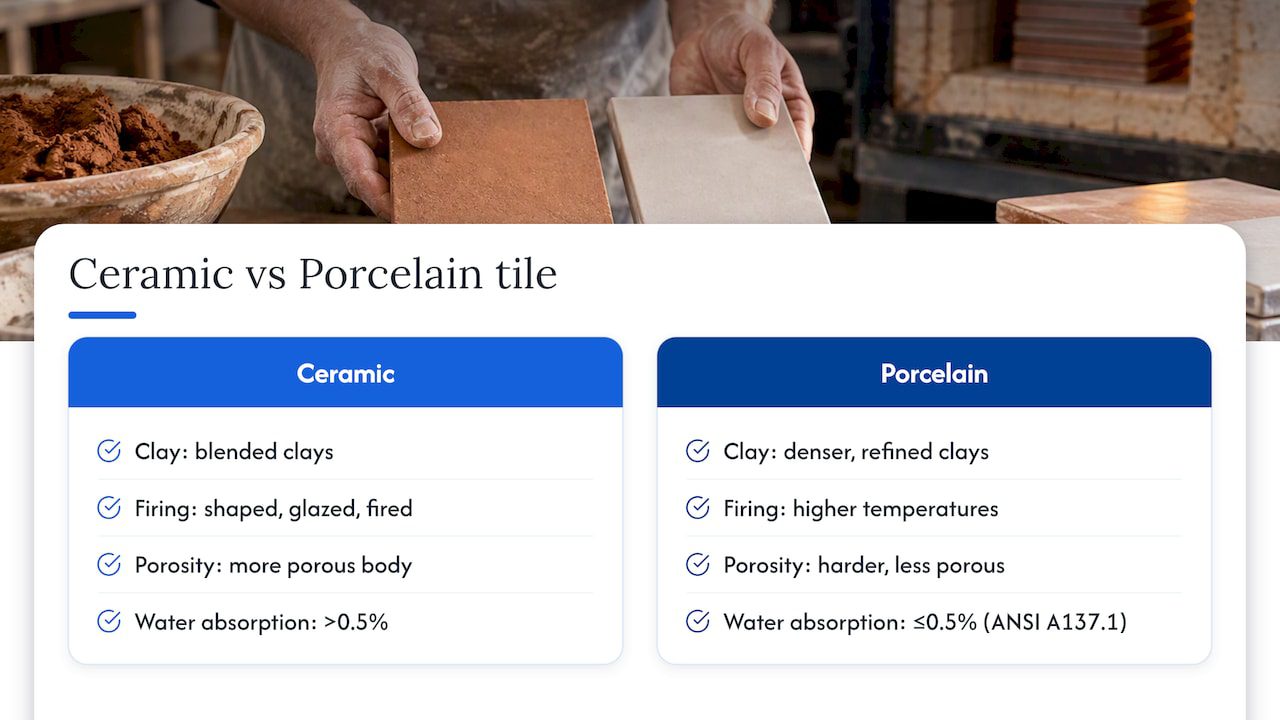
Ceramic tile starts as a blend of clays, is shaped, glazed, and fired in a kiln. That glaze is where the color and pattern live, which is part of why ceramic offers such variety for decorative work. The clay body underneath tends to be more porous, giving ceramic a lighter, warmer feel underfoot, along with a lower price tag.
Porcelain begins with denser, more refined clays and is fired at higher temperatures, which produces a harder, less porous tile. In practice, the ANSI A137.1 standard defines porcelain, in line with ASTM C373, as a ceramic tile with water absorption of 0.5% or less. Anything above that threshold falls into the broader ceramic category, even though porcelain is technically still a type of ceramic tile.
For buyers, these standards matter beyond the technical definition. Packaging and spec sheets often reference ANSI specifications for properties like abrasion resistance and aesthetic variation, which are worth checking before you commit to a pallet of tile.
Porosity, durability, and cost differences that matter
The clearest technical divide between the two materials is water absorption. Porcelain’s rating of 0.5% or less makes it what the industry calls “impervious,” a quality that ANSI A137.1 ties directly to ASTM C373 testing.
Porcelain tile is classified as impervious when its water absorption sits at 0.5% or below, per ANSI A137.1, which is why it holds up so well in wet or exposed conditions where standing moisture is a constant risk.
Beyond absorption, a few other comparators shape the decision:
- PEI ratings measure surface abrasion resistance and indicate whether a tile suits light foot traffic or heavy daily use.
- Through-body porcelain hides chips better than glazed ceramic, since the color runs consistently instead of stopping at a thin glazed surface.
- Porcelain tends to be denser and harder than standard ceramic, which suits high-traffic floors, while ceramic is easier to cut and often less expensive per square foot.
- Material cost is only part of the picture. Installation and labor frequently account for the larger share of total project cost, regardless of which tile you choose.
Which rooms call for porcelain and which call for ceramic
Room function should drive the decision more than personal preference alone.
- Kitchen and entryway floors: porcelain’s density and low absorption hold up against dropped pans, wet boots, and daily foot traffic.
- Bathrooms and showers: porcelain rated impervious is the safer pick for floors and walls exposed to standing water.
- Backsplashes and feature walls: ceramic’s wider glaze options and easier cuts make it ideal for decorative, low-moisture surfaces. Our kitchen backsplash trend guide has plenty of ideas if you’re leaning this direction.
- Outdoor patios: scenario-based comparisons favor porcelain for wet areas, provided it carries the impervious rating and proper drainage is built into the installation.
Many homeowners mix both: porcelain where moisture and traffic demand it, ceramic where budget and design variety matter more. That balance often produces the most livable result without straining the renovation budget.
Tools, substrate prep, and when to call a professional
Ceramic is generally the more forgiving material for a first tiling project. A basic snap cutter handles most cuts cleanly, and the tile itself is softer and easier to work with. Porcelain, being denser, typically requires a wet saw fitted with a diamond blade to avoid cracked edges.
Substrate matters just as much as the tile. A few steps apply to both materials, though porcelain raises the stakes:
- Install cement backer board or an approved substrate before setting tile in wet areas.
- Waterproof shower floors and walls with a proper membrane; tile alone does not stop moisture from reaching the structure behind it.
- Confirm the subfloor is level, especially for large-format porcelain, since flat tiles amplify any unevenness underneath.
- Use modified thinset mortar for porcelain, since its density requires a stronger bond than standard ceramic needs.
Pro Tip: If a contractor quotes a flat rate without mentioning substrate prep or waterproofing, ask specifically what’s included. Skipped prep work is one of the most common causes of tile failure.
Large-format porcelain tiles, generally anything over 18 by 18 inches, also increase both waste and labor time, which is often reason enough to bring in a professional rather than attempt a DIY install.
Keeping your tile looking good for years
Daily cleaning is simple for both materials: warm water and a mild, pH-neutral cleaner. Avoid harsh abrasives or acidic cleaners, which can dull glazed finishes and wear down grout lines over time.
Grout needs periodic sealing to resist staining, typically every year or two depending on foot traffic and exposure. Unglazed porcelain, by contrast, sometimes needs its own sealant since the surface itself is more absorbent than a glazed tile.
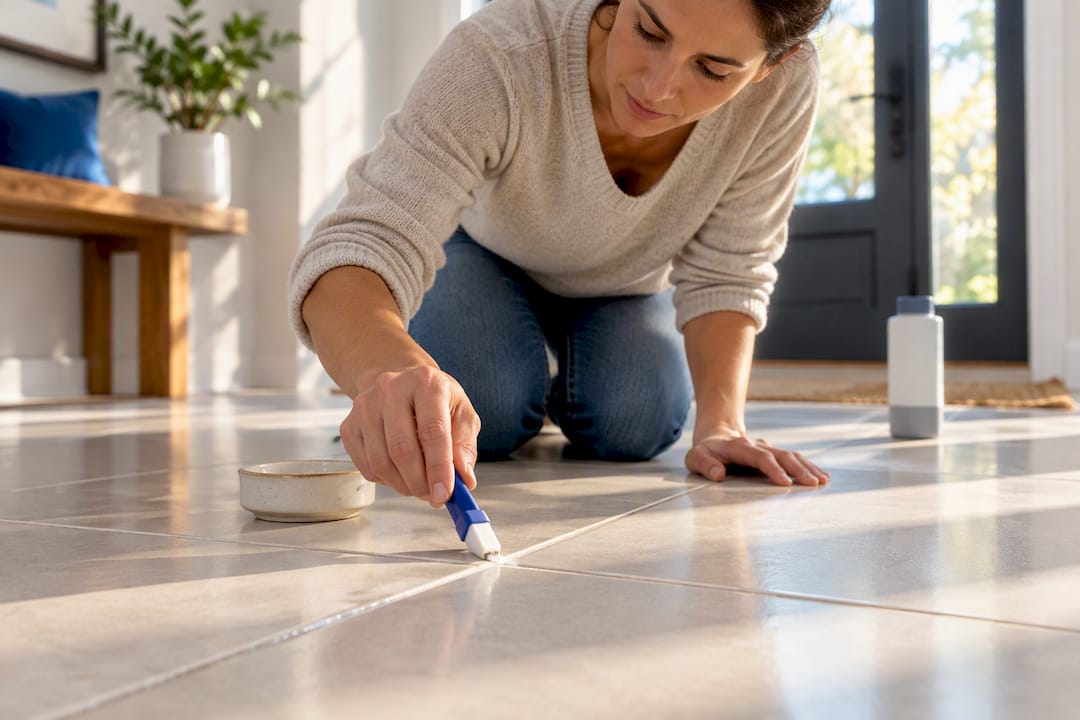
Most tile failures trace back to grout deterioration or installation problems rather than the tile itself. A well-installed floor, ceramic or porcelain, can last decades; the material rarely fails before the substrate or grout does.
How to tell what kind of tile you’re looking at
A few quick checks can settle the question before you buy or start demolition.
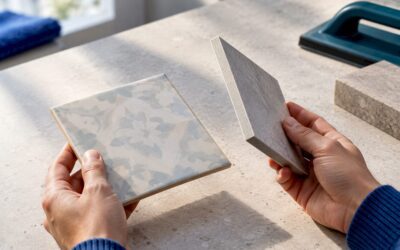
- Check the tile’s edge or a broken piece: consistent color through the body usually signals porcelain, while a thin colored layer over a lighter base points to ceramic.
- Try a small water droplet on the unglazed back or edge; slower absorption suggests porcelain, though this is a rough clue rather than a certainty.
- Ask the supplier directly for the PEI rating and water absorption percentage, or look for ANSI or ASTM markings on the box.
A simple checklist before you buy
Work through these steps in order and the decision tends to make itself.
- Identify the room, moisture exposure, and traffic level, then match that to the PEI rating and absorption threshold you actually need.
- Set a full project budget that accounts for labor, not just the price per square foot of tile.
- Decide how much design variation you want; ANSI’s V0 to V4 aesthetic classes describe how consistent or varied the pattern will look tile to tile.
- Confirm your installer has experience with the substrate your project requires, and request a spec sheet from the supplier before ordering.
If your bathroom sees regular moisture, a proper sealing tape at the shower edges is worth discussing with your installer alongside the tile choice itself.
Making the material choice feel intentional
Tile sets the tone before a single piece of furniture arrives. A matte porcelain floor reads calm and grounded, while a glossy ceramic backsplash catches light and adds a bit of sparkle to a kitchen. Pair either with textiles or artwork in complementary tones, and even a budget ceramic floor can feel curated rather than compromised. Small, deliberate pairings do more for a room than expensive materials alone.
— Nealda
Finishing the room once the tile is in
Choosing tile is one decision among many, and Art in Lifestyle focuses on what comes next: the decor that makes a renovated room feel finished. We don’t sell tile, but our Store Finds shop curates decor pieces that complement a freshly tiled kitchen or bath, from accent pieces to textiles that soften a hard new floor.

Browse Store Finds for the styling layer that turns a tile project into a finished room.
Sources
- ANSI A137.1:2022 – Standard Specifications For Ceramic Tile – The ANSI Blog
- Specifications for Ceramic Tile (ANSI preview)
- Porcelain vs. Ceramic Tile: What’s the Difference? | HGTV
- Porcelain vs. Ceramic Tile: A Five-Scenario Showdown | Houzz
FAQ
What are the downsides of porcelain tile?
Porcelain costs more per square foot than ceramic and is harder to cut, usually requiring a wet saw with a diamond blade. It’s also denser and heavier, which can make it more tiring to handle during a DIY install.
What type of tile is best for bathrooms?
Porcelain rated as impervious, with water absorption at or below 0.5% per ANSI A137.1, is generally the safer pick for bathroom floors and shower walls. Ceramic can still work on bathroom walls away from direct water exposure, where its design variety is an advantage.
How do I know if my tiles are ceramic or porcelain?
Check the tile’s edge or a broken piece: color running through the entire body usually points to porcelain, while a thin colored layer over a paler base suggests ceramic. For certainty, ask the supplier for the PEI rating and water absorption percentage.
Which lasts longer, porcelain or ceramic?
Porcelain’s density and low absorption generally give it an edge in high-traffic or wet conditions, but most tile failures come from grout deterioration or installation problems rather than the tile itself. A well-installed ceramic floor in a low-traffic room can outlast a poorly installed porcelain one.
Recommended
- Seaside Serenity Styling for a Coastal Condo Living Room
- 60–70% Rule: Hallway Art Ideas That Fit Real Homes
- Best Marble Coffee Tables: 2026 Style and Buyer Guide