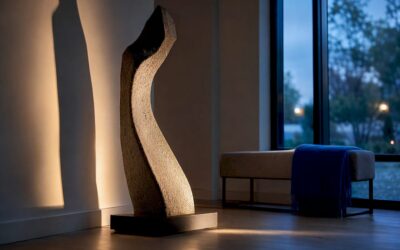
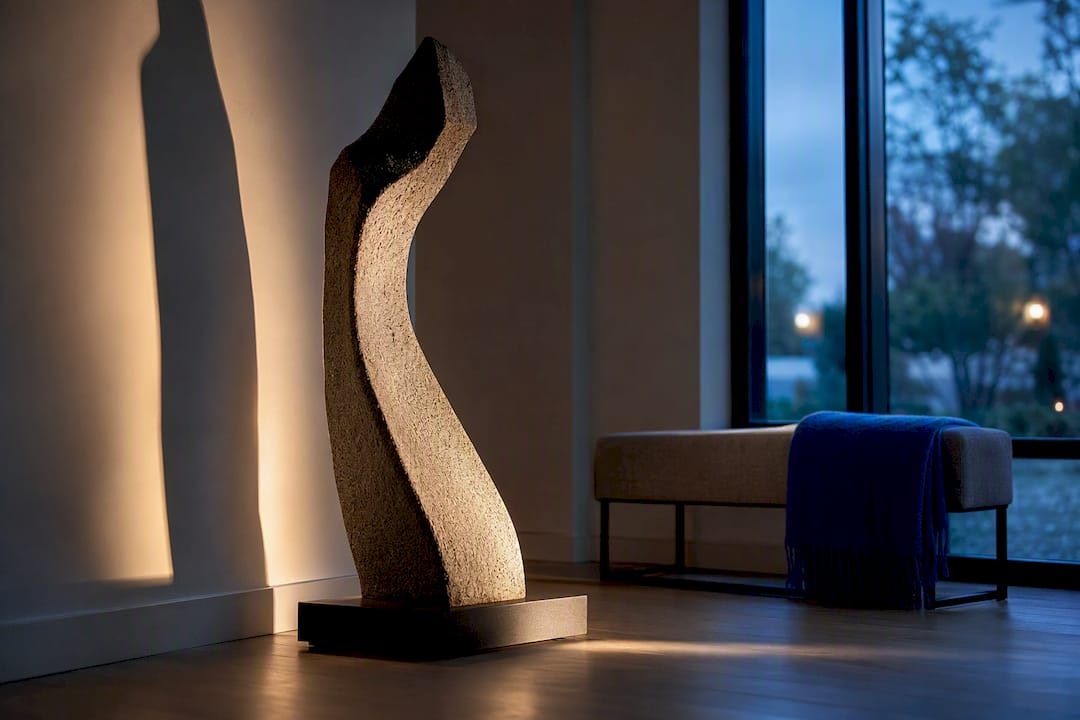
Use sculpture as a three-dimensional anchor, not an afterthought: place it where sightlines converge, whether that’s a console opposite your front door or a floor pedestal beside a fireplace, then light it from an angle so form and texture actually register. Start with one piece, one strong location, and one directional light source. Everything else builds from there.
TL;DR:
- Choose a prominent, well-lit location where sightlines converge and lighting angles enhance the sculpture’s form and texture.
- Ensure sculptures occupy about two-thirds of the space they’re placed in, and select materials that suit high-traffic or sunlit areas for durability.
- Maintain proper height and clearance, placing sculptures at eye level or slightly below for gravitas, and test sightlines from multiple angles before finalizing placement.
- Use directional side or top lighting at 30 to 45 degrees to create shadows that reveal the sculpture’s three-dimensional qualities.
- Incorporate space-efficient display options like wall reliefs, small pedestals, or hidden niches for small or outdoor sculptures, especially in compact or rental spaces.
Table of Contents
- Sculpture Decorating Ideas Worth Stealing
- How To Choose The Right Sculpture: Scale, Material, And Style
- Placement And Staging: Pedestals, Sightlines, And Height Rules
- Lighting Sculptures: Bulbs, Angles, And Techniques To Show Form
- Small-Space Solutions For Renters And Compact Homes
- Materials And Care: Quick Rules For Common Sculpture Types
- Editor Picks And A Quick First-Sculpture Checklist
- Seasonal And Event-Based Sculpture Decor Ideas
- DIY Sculpture Decorating Tips And Customization Ideas
- Incorporating Sculptures Into Outdoor Spaces Or Gardens
- Color Coordination Between Sculptures And Room Decor
- Choosing Sculpture Styles To Complement Interior Design Themes
- Styling Rules: Grouping, Negative Space, And Balance
- What I’ve Learned From Living With Sculpture
- Let Art Concierge Handle The Sourcing And Staging
- Sources
Sculpture Decorating Ideas Worth Stealing
Sculpture rewards a little theater. A single well-placed piece does more visual work than a wall of framed prints, largely because it interrupts flat surfaces with real shadow and dimension. Architectural Digest’s gallery of sculpture placements shows this again and again: the same bronze or ceramic form reads completely differently depending on whether it sits at the center of a console or tucked into a stair landing.
- Tabletop statement pieces. A single sculptural object on a coffee table or console, sized to a proportionate part of the surface, becomes the thing your eye lands on first when entering the room.
- Floor sculptures in a corner or by the fireplace. Corners often go dead in living rooms. A floor piece, especially one with height, gives that dead zone a job.
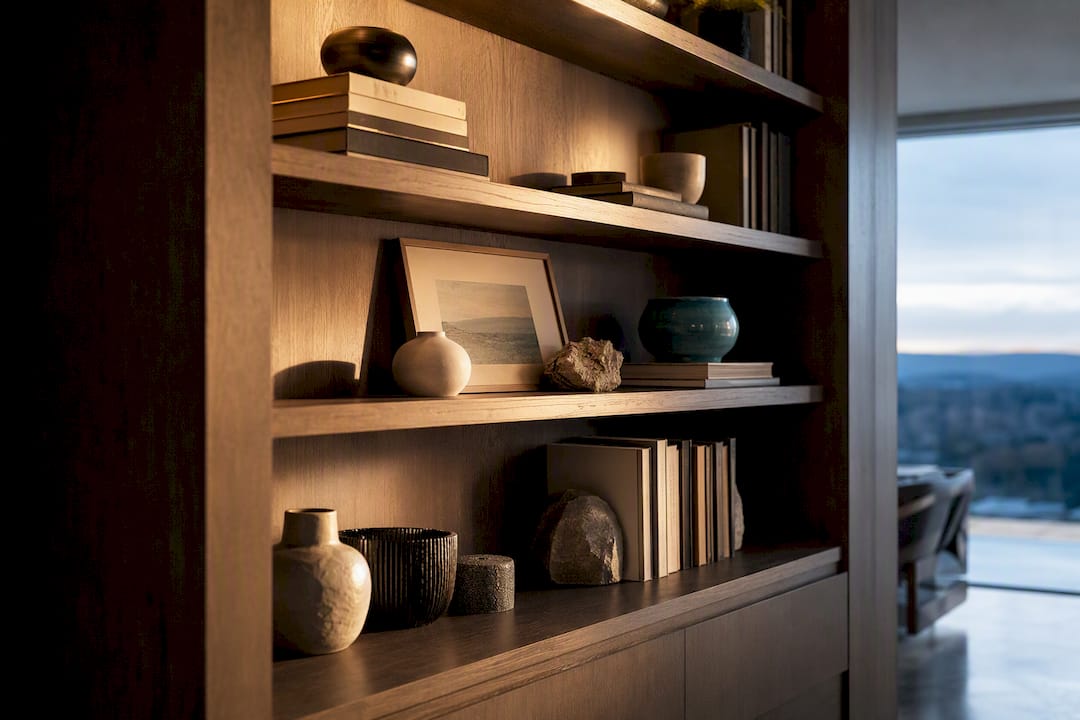
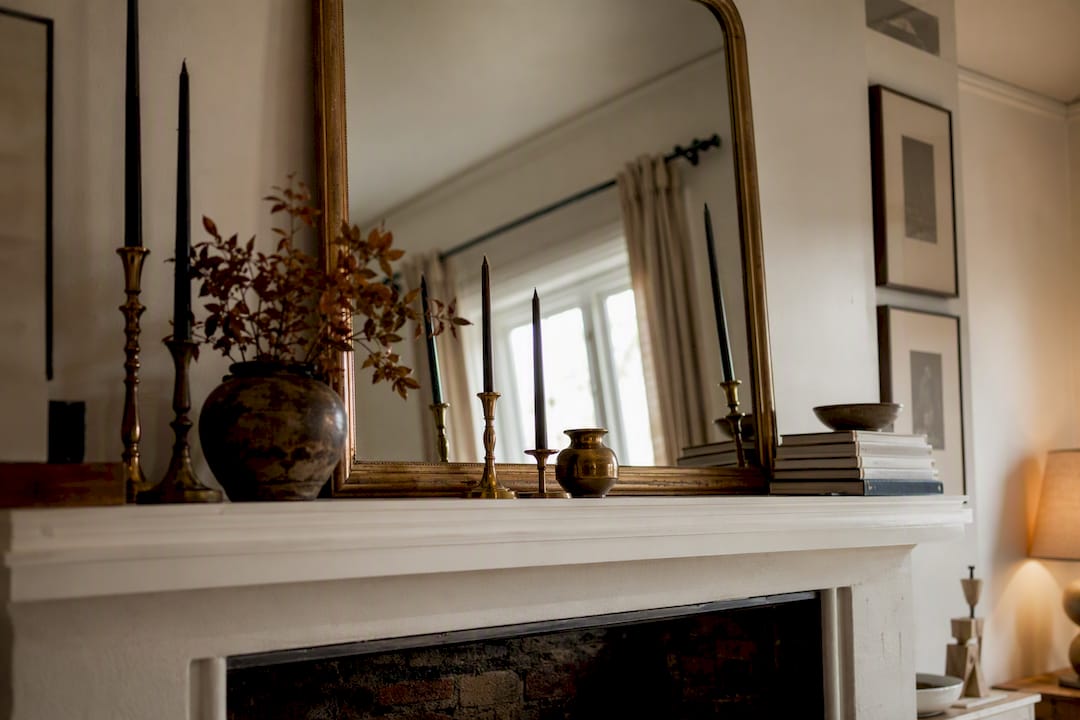
- Mantel and shelf vignettes in odd numbers. Group three or five objects of varying height rather than two matched ones. Rossetti Art notes that odd-numbered groupings with staggered heights create movement the eye wants to follow.
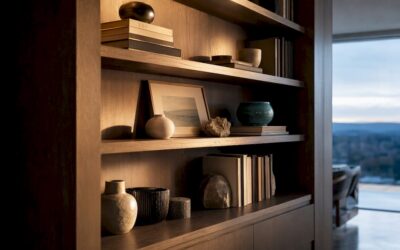
- Bookshelf clusters at eye level. Break up spines with one or two small forms positioned at the shelf your eye naturally hits when standing.
- Wall-mounted reliefs. Shallow, three-dimensional wall art gives you sculptural depth without needing floor space, which works especially well in hallways.
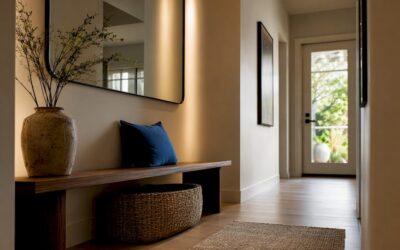
- Unexpected rooms. A small bronze on a bathroom vanity or a stone form on an entryway table catches guests off guard in the best way.
- Found-object sculpture. Crystals, ceramic vessels, and driftwood can function as legitimate sculptural decor, an idea Livingetc’s design contributors have embraced as sculpture has become less about pedigree and more about presence.
Pro Tip: Before you commit to a spot, stand at the doorway of the room and check what your eye hits first. If it’s not the sculpture, move it or move the furniture around it.
How To Choose The Right Sculpture: Scale, Material, And Style
Most sculpture mistakes come down to buying on impulse rather than measuring first. A piece that stopped you in a gallery can shrink or overwhelm entirely once it’s home, so a few ground rules save you from an expensive misfit.
- Apply the two-thirds rule. A sculpture works best when it occupies about two-thirds the width of the surface or niche it sits in, whether that’s a console table or a stair landing, according to Rossetti Art’s sizing guidance.
- Match material to the setting. Bronze and stone tolerate high-traffic areas and sun exposure better than resin or plaster, which are lighter but more fragile.
- Choose style by mood, not trend. Abstract forms suit minimal or modern rooms where you want visual rest; figurative pieces add warmth to traditional interiors; organic shapes bridge the two.
- Ask sellers the practical questions. Confirm mounting hardware, recommended base or wall type, and whether the finish needs periodic sealing before you buy.
Placement And Staging: Pedestals, Sightlines, And Height Rules
Height decides whether a sculpture feels intentional or accidental. The widely cited eye-level guideline, borrowed from gallery hanging standards, puts the visual center of a piece roughly at average adult eye height, though you’ll want to lower that for pieces meant to be viewed while seated. Curators sometimes drop a piece 12 to 18 inches below standard eye level specifically to lend it gravitas, a shift research on curatorial display technique shows changes how a viewer relates to the work psychologically.
- Choose pedestal materials that echo something else in the room. Wood pedestals soften stone sculptures; matte black metal sharpens bronze or ceramic pieces.
- Keep pedestal bases proportionate. A tall, narrow pedestal under a heavy piece looks unstable even when it isn’t.
- Check clearance. Sculpture in a walkway needs at least 24 to 30 inches of unobstructed passing space.
- Walk the room from every angle before you finalize placement. Livingetc’s design contributors recommend testing sightlines from the entry, from seating, and while standing, since a piece can look perfect head on and disappear from an armchair across the room.
Pro Tip: Create a “zone of reverence” by leaving at least a foot of clear space around a floor sculpture. EcoCraftyLiving calls this the visual cue that separates displayed art from furniture nobody notices.
Lighting Sculptures: Bulbs, Angles, And Techniques To Show Form
Flat, head-on light is the single most common reason a sculpture reads as flat instead of dimensional. Curatorial guidance consistently favors directional side, top, or back lighting over front illumination, because shadow is what makes a form’s curves and edges legible.
- Angle accent lights between 30 and 45 degrees from the piece rather than straight on.
- Choose warm white bulbs in the 2700K to 3000K range for a welcoming glow, and look for a high CRI rating when the sculpture’s true color matters, such as with painted or patinated bronze.
- Use under lighting or small LED puck lights beneath translucent materials like alabaster or frosted glass to make the piece glow from within.
- Layer ambient room light with a dedicated accent source rather than relying on one ceiling fixture to do both jobs.
- Keep sensitive materials like wood, resin, or pigmented stone out of direct, constant sunlight, which fades color and can warp organic materials over time.
Lighting angle alone can be the difference between a sculpture that disappears into a corner and one that becomes the room’s quiet centerpiece.
Small-Space Solutions For Renters And Compact Homes
You don’t need floor space to live with sculpture. Architectural Digest’s small-space gallery shows narrow ledges, under-bench niches, and console tables doing the work a pedestal would in a bigger room.
- Floating shelves and narrow pedestals hold small to medium pieces without eating floor square footage.
- Low-profile wall reliefs add dimension without blocking a walkway or a window view.
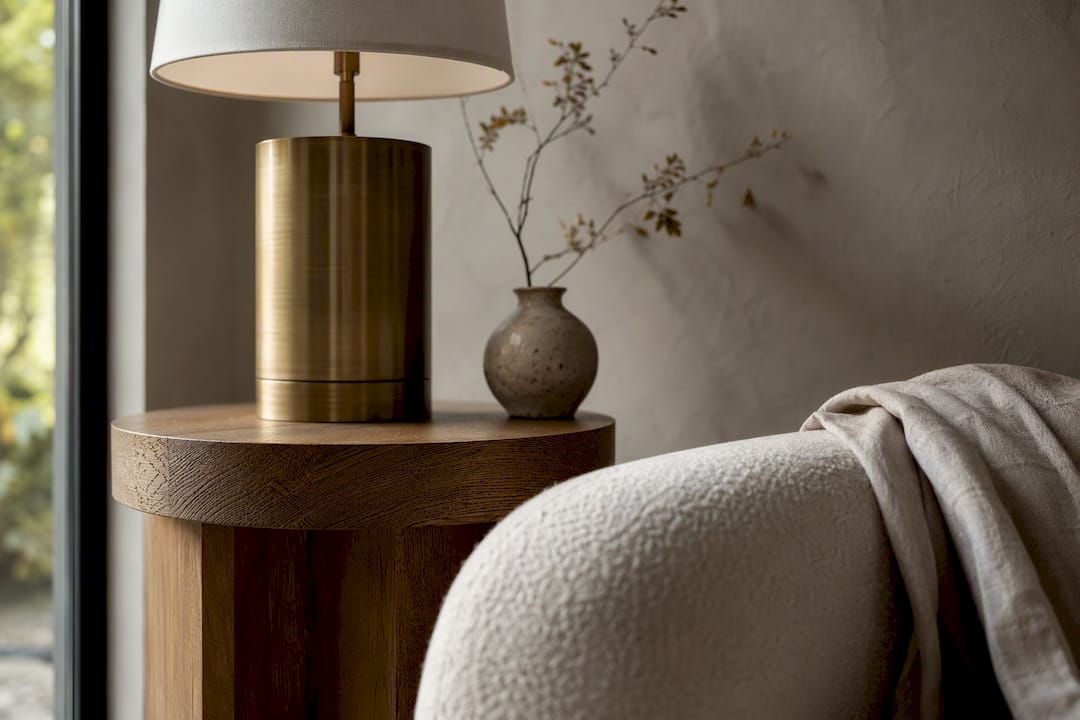
- Multiuse sculptural objects, like a sculptural lamp base or a ceramic vessel that also holds branches, let one item do double duty.
- Before buying, cut a paper template the size of the piece’s footprint and tape it to the surface for a few days to see if it actually fits your daily movement through the room.
If you’re working with a studio apartment or a small living room, space-saving decor that doubles as art covers more of these compact-footprint solutions in depth.
Materials And Care: Quick Rules For Common Sculpture Types
Different materials demand different upkeep, and mismatching a piece to your household’s realities is how heirloom-quality sculpture gets damaged.
- Stone and bronze tolerate most indoor conditions but should be dusted, not scrubbed, to protect any patina.
- Wood needs stable humidity; avoid placing it near vents or radiators that dry it out and cause cracking.
- Glass and resin are the most fragile options, so keep them away from high-traffic corners where pets or kids brush past.
- Metal with exposed finish may need occasional wax sealing to prevent tarnish.
- Ask about professional mounting for anything top-heavy or displayed above shoulder height, and request a protective finish on porous materials before they leave the studio.
Editor Picks And A Quick First-Sculpture Checklist
Before you buy, run any candidate piece through three questions: Is it sized to roughly two-thirds of its intended surface? Does it hold its presence from your main sightline, not just head on? And do you have a real plan for lighting it, not just a nearby lamp?
If you’re building out a fuller art wall alongside your sculpture, our gallery wall guide pairs well with a mantel vignette, and our mantel styling piece walks through seasonal swaps for the same shelf. Artinlifestyle’s editorial team curates these picks from working designers and gallery-standard display practice, not just what photographs well.
Seasonal And Event-Based Sculpture Decor Ideas
Sculpture doesn’t have to stay static year round. Swapping a base runner, changing the lighting temperature, or rotating what surrounds a piece can make the same object feel new for a holiday or a season without touching the sculpture itself.
For fall, surround a stone or wood piece with dried branches or seed pods rather than typical gourds, which can visually compete with the sculpture’s form. In winter, a warmer bulb temperature and a single evergreen sprig at the base reads as festive without cluttering the display. Spring favors lightening the surrounding palette: swap a heavy runner for a plain linen cloth so the piece feels less weighted down.
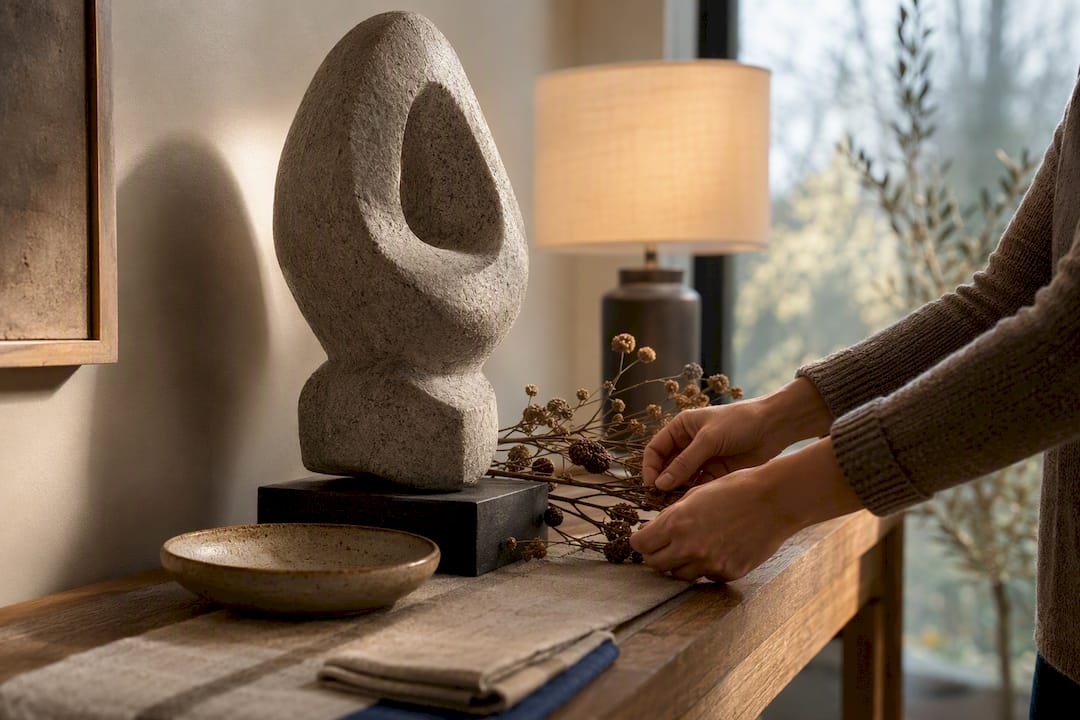
Hosting a dinner party or holiday gathering is a good excuse to temporarily relocate a floor sculpture closer to the entry, since guests notice a piece more when it greets them at the door than when it’s tucked in a living room corner they never pass through. For milestone events like a housewarming or an anniversary, a single new sculptural piece placed prominently can function almost like an announcement, giving guests something specific to comment on rather than a generic bouquet.
The key with seasonal styling is restraint. Change the surroundings, not the sculpture’s core placement, and never add so many seasonal props that the piece itself gets visually buried. A sculpture that has to compete with autumn gourds or holiday garland for attention has lost its job as a focal point.
DIY Sculpture Decorating Tips And Customization Ideas
You don’t need a foundry to add sculptural interest to a room. Painting a plain plaster form in a monochrome finish that matches your wall color turns a budget piece into something that reads as intentional and gallery-like, an effect that costs a can of paint and an afternoon.
Driftwood, river stones, and dried botanicals arranged on a simple wood base can function as a sculptural still life, especially when the elements share a color family. If you want something more permanent, a coat of matte spray sealant on found natural objects keeps them from shedding bark or sand indoors.
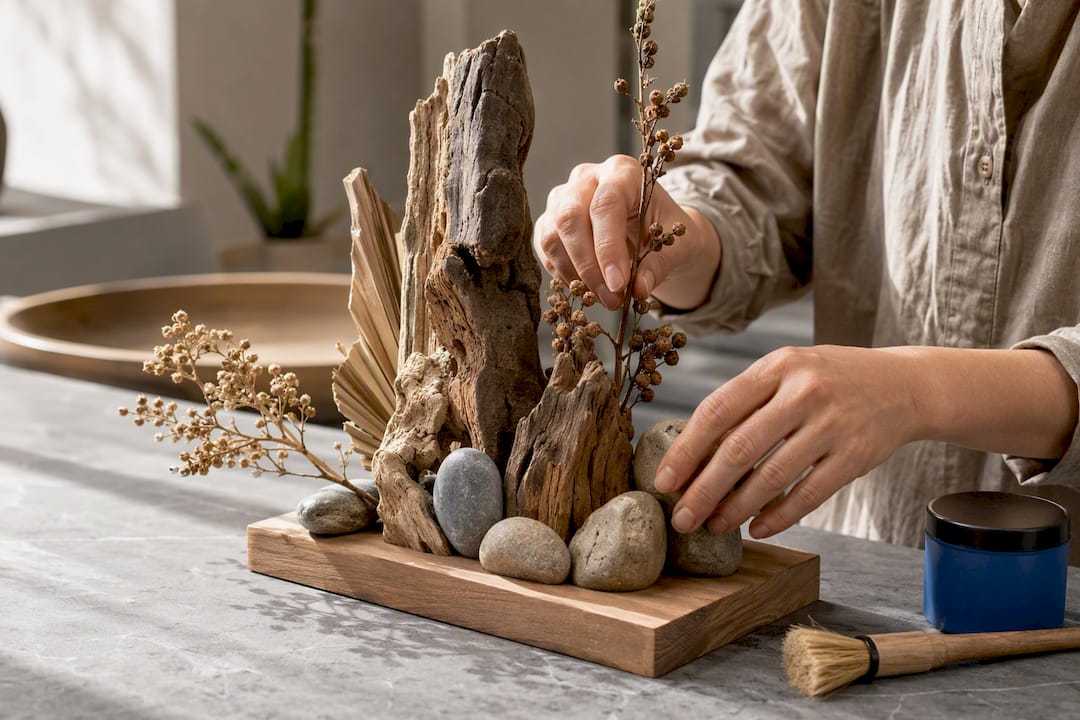
For anyone comfortable with basic tools, mounting a small relief or found object onto a floating shelf with museum putty or a discreet bracket lets you create wall-based sculptural moments without drilling a dozen holes into rented walls. DIY home decor projects cover more approaches for readers who want to build rather than buy.
Customizing an existing piece works too. A plain ceramic form gains new life with a coat of high-gloss lacquer in a color pulled from your room’s accent palette, and a base swap, from a stock wood block to a slab of marble or a woven rattan stand, can shift a sculpture’s whole personality without touching the piece itself.
Incorporating Sculptures Into Outdoor Spaces Or Gardens
Garden sculpture works on a different set of rules than indoor display, mostly because weather and greenery do a lot of the framing for you. A single stone or metal form placed at the end of a garden path or nestled among tall grasses acts as a destination point, pulling the eye, and eventually the visitor, toward it.
Material matters more outdoors than anywhere else in the home. Cast concrete, weather-treated bronze, and certain resins built for exterior use hold up against rain and temperature swings; untreated wood and porous stone will degrade faster outside than they would indoors. If a piece isn’t explicitly rated for outdoor exposure, keep it under a covered porch or in a sheltered courtyard instead of fully exposed to the elements.
Scale shifts outdoors too. A sculpture that felt substantial on a living room console can look small against open sky and mature landscaping, so garden pieces generally need to run larger than their indoor counterparts to hold visual weight. Placing a piece near a water feature or reflecting pool doubles its presence, since the reflection effectively gives you two sculptures for the price of one.
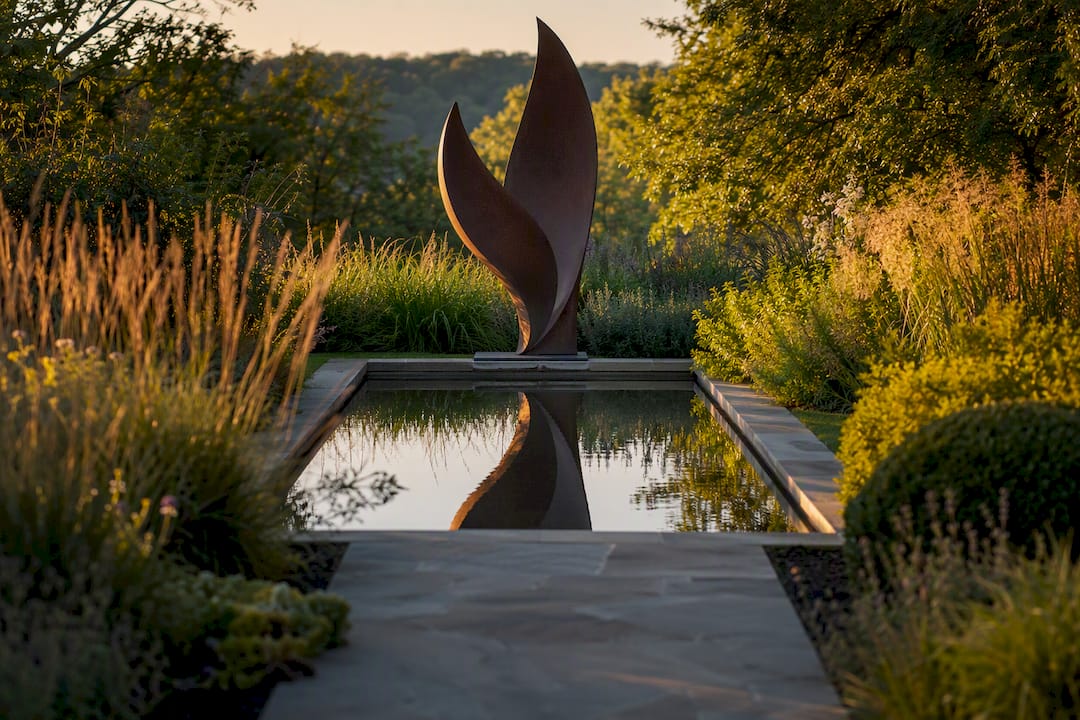
Lighting an outdoor sculpture at night uses the same directional principle as indoor accent lighting: angled ground-level spotlights aimed upward at 30 to 45 degrees create dramatic shadow play across textured surfaces, far more compelling than a single overhead floodlight washing the piece flat.
Color Coordination Between Sculptures And Room Decor
Sculpture rarely needs to match your color scheme exactly, but it does need a relationship to it. A neutral stone or bronze piece works as a near-universal anchor because it reads as texture rather than color, letting it sit comfortably in a room built around blues, greens, or warm earth tones without a clash.
Painted or pigmented sculpture is a different story. A cobalt ceramic form in a room otherwise built on beige and cream becomes an instant focal point, which is either exactly what you want or a mistake, depending on whether anything else in the room echoes that blue. The safest coordination trick is picking one color already present in a cushion, a piece of art, or a rug, and finding a sculpture that repeats it in a different material.
Metallic finishes deserve their own consideration. Warm metals like brass and bronze pair naturally with wood tones and warm neutrals, while cooler metals like chrome or brushed nickel suit rooms already leaning toward gray, black, or cool white palettes. Mixing warm and cool metallics in the same vignette usually reads as unintentional rather than eclectic, so pick a lane and stay in it for a given grouping.
When in doubt, let the sculpture’s material do the coordinating instead of its color. A textured, uncolored piece in stone, wood, or unfinished metal will always integrate more easily than a brightly painted one, simply because texture has more visual flexibility than hue.
Choosing Sculpture Styles To Complement Interior Design Themes
The style of a sculpture should talk to the room it’s in, not fight it. Minimalist and modern interiors, built on clean lines and negative space, generally pair best with abstract sculpture, since figurative or highly detailed pieces can feel busy against an otherwise spare backdrop.
Traditional and transitional rooms tend to welcome figurative sculpture more comfortably: a classical bust or a representational bronze feels at home among upholstered furniture and layered textiles in a way it might not in a stark, contemporary loft. Organic, biomorphic forms, think smooth curves inspired by natural shapes, work as a bridge between those two extremes, softening a modern room without looking out of place in a more traditional one.
Mid-century modern interiors have their own sculptural vocabulary: geometric, often wood or bronze forms with a handmade quality suit that era’s aesthetic better than glossy contemporary resin pieces. If your home leans toward that period, our guide to mid-century modern architecture covers the broader design language sculpture in that style should echo.
Coastal, farmhouse, and organic modern interiors tend to favor natural materials, driftwood, unglazed ceramic, woven forms, over polished metal or lacquer, since the whole point of those styles is an unfussy, tactile feel. Matching sculpture style to interior theme isn’t about strict rules so much as making sure the piece feels like it belongs to the same conversation as everything else in the room.
Styling Rules: Grouping, Negative Space, And Balance
Restraint is the trait every experienced sculpture collector shares. Livingetc’s design contributors agree that fewer, well-placed pieces outperform a crowded display every time, because clutter competes for attention that a single strong piece could hold on its own.
Grouping works best in odd numbers, three pieces rather than two or four, arranged at staggered heights so the eye travels naturally across the display instead of landing flat. Negative space matters just as much as the objects themselves: the empty air around a sculpture is what gives it room to read as art rather than clutter, so resist the urge to fill every inch of a shelf or console.
Balance doesn’t mean symmetry. A tall, narrow piece on one side of a mantel can be balanced by a low, wide grouping on the other rather than a matching tall piece, which often looks more like a furniture set than a curated display. The goal is visual weight distributed evenly, not mirror-image repetition.
What I’ve Learned From Living With Sculpture
My rule: buy one piece you’d defend in an argument, not five you merely like. Place it where you’ll actually walk past it daily, then adjust the lighting before you touch the furniture. Try that swap this weekend before buying anything new.
— Nealda
Let Art Concierge Handle The Sourcing And Staging
A specialized art sourcing and staging service exists for readers who love the ideas in this guide but don’t want to spend a weekend measuring pedestals and testing paper templates on the living room floor.

Where a design consultant typically means an ongoing retainer and a showroom tour, this concierge service works differently: it connects you directly with curated sculpture sourcing and staging guidance built around your actual room, your actual sightlines, and your actual light. That means you skip the guesswork on scale, material, and placement covered above, and get a piece that’s already been vetted for your space before it ever arrives. Whether you’re filling one bare console or planning a full room refresh, the Art Concierge team can walk you through sourcing, sizing, and staging in a single consult. Book a session to get a second opinion on that empty corner you’ve been staring at for months.
Sources
- Decorating With Sculpture — Tips From the Experts | Livingetc
- Ideas for Decorating With Sculptures | Architectural Digest
- Home sculpture decor ideas | Rossetti Art
- How to Display Sculptures at Home: Expert Styling Tips – EcoCraftyLiving