Pick a neutral base, add a low centerpiece with candles at varied heights, and choose one seasonal accent. That single move works on almost any table, any budget. The full method is five layers deep: base, runner or greenery, candles at staggered heights, seasonal details, and place settings. Below are 25 copyable looks, that formula explained step by step, and the mistakes that quietly wreck an otherwise good table.
TL;DR:
- Reusing neutral base plates and chargers across different themes reduces seasonal expenses and increases styling flexibility.
- Adjust centerpiece size and placement based on table shape and guest count to maintain sightlines and guest interaction.
- Outdoor tables require wind-resistant materials and lighter elements, while indoor tables allow for taller centerpieces and more delicate decorations.
- Layering candles, greenery, and seasonal accents with height variation creates a designed, dimensional tablescape rather than a cluttered one.
- Swapping a tall floral arrangement for multiple low vases and candles can improve eye contact and guest flow without adding cost or time.
Table of Contents
- 25 Quick Tablescape Ideas You Can Copy Tonight
- The Five-Layer Formula for Any Table
- Seasonal and Occasion Themes, Built From a Checklist
- Materials and Textures That Look Expensive Without Being Expensive
- Common Tablescape Mistakes and How to Fix Them
- What Art in Lifestyle Contributors Get Right About Table Styling
- Choosing Tableware and Cookware for Your Table’s Style
- Lighting Beyond Candles: Fairy Lights, Lanterns, and More
- Matching Your Table to the Room and the Occasion
- Centerpiece Sizing by Table and Guest Count
- Outdoor Versus Indoor Tablescapes
- A Ten-Minute Swap That Changed One Table Completely
- Where to Find More Curated Table and Decor Ideas
- Sources
25 Quick Tablescape Ideas You Can Copy Tonight
Scan the list, pick what fits your table and your evening, and build from there. Each one is built to be assembled in under 30 minutes.
- Neutral linen minimalist – White linen, one oversized vase with a single stem. Best for weeknight dinners.
- Citrus summer – Bowl of lemons and limes down the center, yellow linen napkins. Best for brunch.
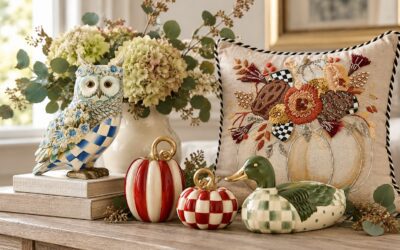
- Rustic fall harvest – Wood slab runner, mini pumpkins, taper candles. Best for Sunday family meals.
- All-white winter – White dishes, eucalyptus, pillar candles. Best for holiday dinners.
- Terracotta and olive – Earthy plates, greenery sprigs, brass flatware. Best for casual entertaining.
- Monochrome black and white – Black chargers, white plates, single dark floral. Best for modern dinner parties.
- Herb garden table – Potted herbs as the centerpiece, doubling as favors. Best for garden parties.
- Candlelight-only – No overhead florals, just a cluster of candles at three heights. Best for date nights.
- Fruit-forward centerpiece – Grapes, figs, or pomegranates spilled across a runner. Best for wine nights.
- Blue and white china – Classic pattern, single hydrangea stem. Best for garden brunches.
- Autumn spice – Cinnamon sticks tied with twine, amber glassware. Best for Thanksgiving.
- Beach neutral – Driftwood runner, shells, sand-toned napkins. Best for coastal dinners.
- Bold floral statement – One dramatic arrangement, everything else plain. Best for anniversaries.
- Mismatched vintage – Thrifted plates in coordinating colors. Best for casual gatherings.
- Greenery-only garland – A single trailing garland down the table, no flowers. Best for budget elegance.
- Holiday red and gold – Metallic chargers, red taper candles, pine sprigs. Best for Christmas.
- Spring pastel – Blush linens, ranunculus, mismatched vintage glassware. Best for Easter.
- Industrial modern – Concrete-look chargers, black flatware, single succulent. Best for loft dinners.
- Picnic-style low table – Low bowls, no tall pieces, woven mats. Best for outdoor lunches.
- Mason jar candles – Grouped jars with tea lights down the center. Best for thrifty backyard dinners.
- Newspaper and twine – Kraft paper runner, twine-wrapped napkins. Best for casual brunches.
- Book stack centerpiece – Old hardcovers topped with a small vase. Best for literary or cozy dinners.
- Single orchid statement – One potted orchid, nothing else. Best for minimalist dinners.
- Mixed metal accents – Gold and silver candlesticks paired deliberately. Best for New Year’s Eve.
- Everyday bud vases – Three small vases with single stems, spaced evenly. Best for weeknight family meals.
The Five-Layer Formula for Any Table
Every tablescape on that list uses the same underlying structure. Learn it once and you can rebuild any look for any occasion.
- Base – Tablecloth, placemats, or a bare wood surface. This sets the palette for everything else.
- Runner or greenery – A fabric runner or a trailing garland anchors the eye down the length of the table.
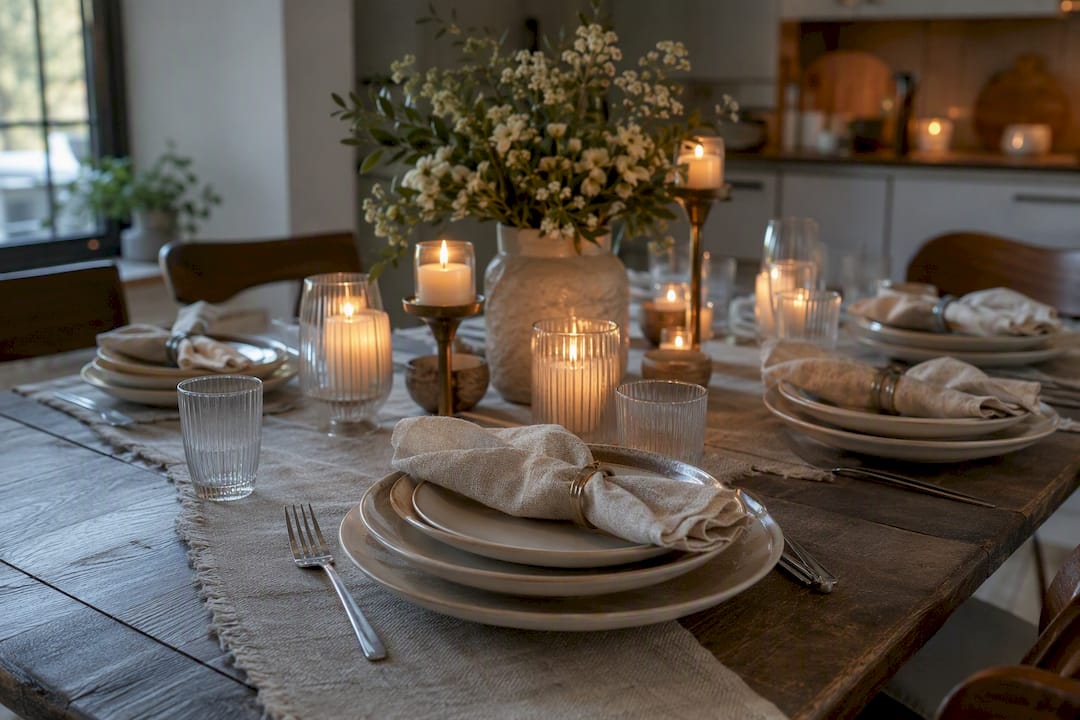
- Candles at varied heights – Mix tapers, pillars, and votives. Height variation is what makes a table read as designed rather than assembled, and layering height, texture, and color is what separates a flat table from a dimensional one.
- Seasonal details – Pumpkins, ornaments, citrus, or fresh herbs, chosen to match the occasion.
- Place settings – Plates, napkins, and flatware last, once the centerpiece is settled.
Adjust for shape: round tables want one central cluster; long rectangular tables need repeating clusters every two to three feet so no guest stares at empty space. For eight or more guests, split the centerpiece into two or three smaller groupings rather than one massive piece in the middle.
Before calling, it done, stand at the head of the table and check sightlines. Space place settings roughly 24 inches apart. Group decorative objects in threes: design experts recommend three objects to create a clear focal point without crowding the surface.
Pro Tip: Set every piece on the table before committing, then remove one item. Designers call this “editing,” and it’s usually the difference between curated and cluttered, echoing the negative space principle elegant tables rely on.
Seasonal and Occasion Themes, Built From a Checklist
Building a themed table gets easier when you think in categories rather than trying to recreate a photo exactly.
- Spring: white linen base, ranunculus or tulip centerpiece, pastel napkins, brass flatware, blush and sage palette.
- Summer: linen runner, citrus bowl centerpiece, striped napkins, woven placemats, yellow and white palette.
- Fall: wood slab base, mini pumpkin and candle centerpiece, plaid napkins, amber glassware, rust and cream palette.
- Winter holidays: white or gold base, evergreen and ornament centerpiece, velvet napkins, metallic accents, red and gold palette.
- Everyday: neutral placemats, low bud-vase centerpiece, cotton napkins, wood accents, white and green palette.
Keep a few pieces working across all five: neutral chargers, a reusable garland, and plain glassware. Swap only the accent layer, which is where investing in a neutral base plate pays off across an entire year of tables. DIY the greenery and candles; buy the chargers and linens once, in colors that repeat.
Materials and Textures That Look Expensive Without Being Expensive
Texture does more visual work than most people expect. Pair linen with matte ceramic and a little wood or metal, and the table photographs like it cost more than it did. Two to three textures is the sweet spot; more than that starts to look busy rather than layered.
- Swap a florist arrangement for a bowl of lemons, apples, or artichokes.
- Group mismatched candle holders on a single tray so they read as intentional, not haphazard.
- Use vases you already own in different heights instead of buying a matching set.
- Add a textured runner or table linen for warmth without new dishware.
Spend your money on neutral base plates and chargers since those get reused every season. Economize on napkins, candles, and seasonal accents, the pieces you’ll swap out anyway.
Pro Tip: Raid your kitchen before you shop. Cutting boards, mason jars, and cloth napkins already in your cabinet often outperform anything new.
Common Tablescape Mistakes and How to Fix Them
Most bad tablescapes share the same handful of problems, and each one has a fast fix.
- Overcrowding: Edit down to three focal objects or one low, linear grouping instead of scattering pieces everywhere.
- Centerpieces too tall: Anything blocking eye contact across the table belongs on a sideboard, not the table itself.
- Clashing patterns: Pick one pattern and pair it with solids; alternate a single patterned piece with neutral layers rather than mixing several prints.
- Crowded place settings: Leave roughly 24 inches per guest and do a final walkthrough before anyone sits down.
What Art in Lifestyle Contributors Get Right About Table Styling
The five-layer approach isn’t a gimmick. It mirrors what practiced stylists actually do: build the base, settle the centerpiece, then edit ruthlessly before adding place settings.
That’s the core of how contributors like Nealda approach a table: fewer last-minute purchases, more intentional arranging with what’s already on hand.
— Nealda
Choosing Tableware and Cookware for Your Table’s Style
Your dishware sets the tone before a single candle goes down. A minimalist table calls for plain white or matte stoneware with no visible pattern. A rustic table wants stoneware with texture, visible glaze variation, or a slightly imperfect edge. Holiday tables can handle metallic-rimmed china or patterned salad plates layered over a solid dinner plate.
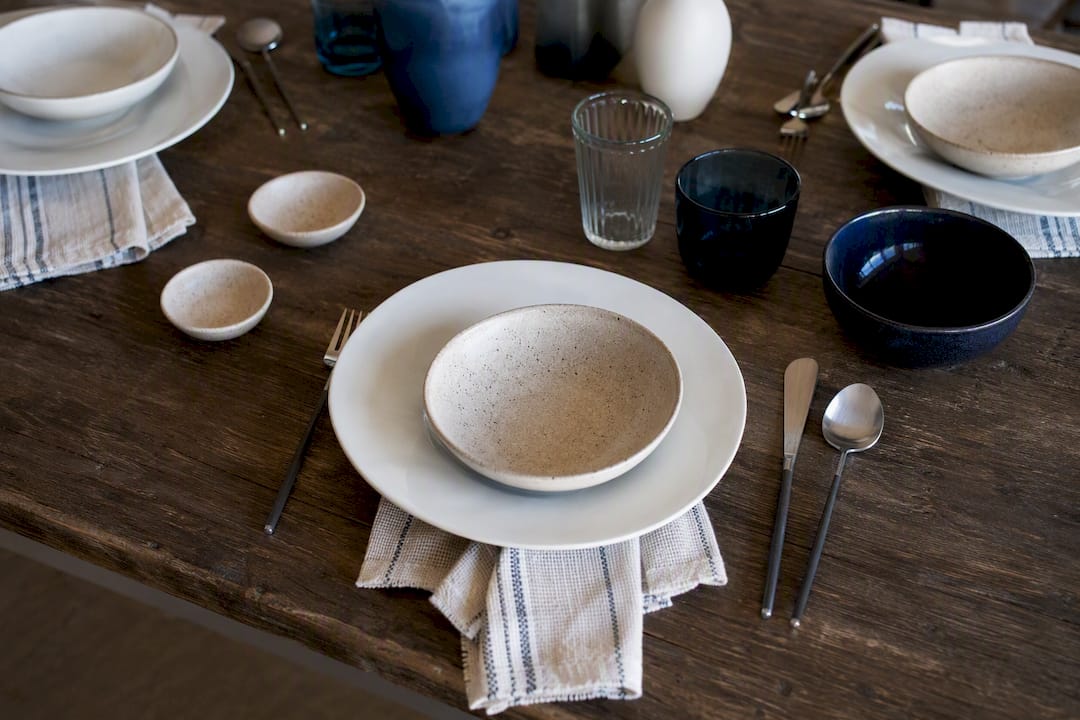
Serving pieces matter as much as place settings. Cast iron and dark ceramic bakeware read as rustic and work well set directly on a wood table. Glass and white porcelain serving bowls fit modern or minimalist tables since they disappear visually and let the food be the color. If you’re serving family-style, choose one or two statement serving pieces and keep the rest plain. A single dramatic tureen or wooden board does more than five small matching dishes.
Flatware is the easiest lever to pull for a style shift. Gold or brass flatware instantly warms up an all-white table. Matte black flatware pushes a table toward modern or industrial. Simple stainless steel is the safest choice if you’re building a base you’ll reuse across every theme on your list. Buy one good set of neutral flatware before chasing trend colors, since that’s the piece that appears in every single tablescape you build going forward.
Lighting Beyond Candles: Fairy Lights, Lanterns, and More
Candles carry most tablescapes, but they aren’t the only option, and outdoor or long tables often need backup lighting anyway. Fairy lights tucked into a greenery runner add a soft glow without the fire risk of open flame near tablecloths, which matters for tables with kids or pets nearby. String them loosely along a garland rather than wrapping tightly. The gaps create the same height variation candles give you.
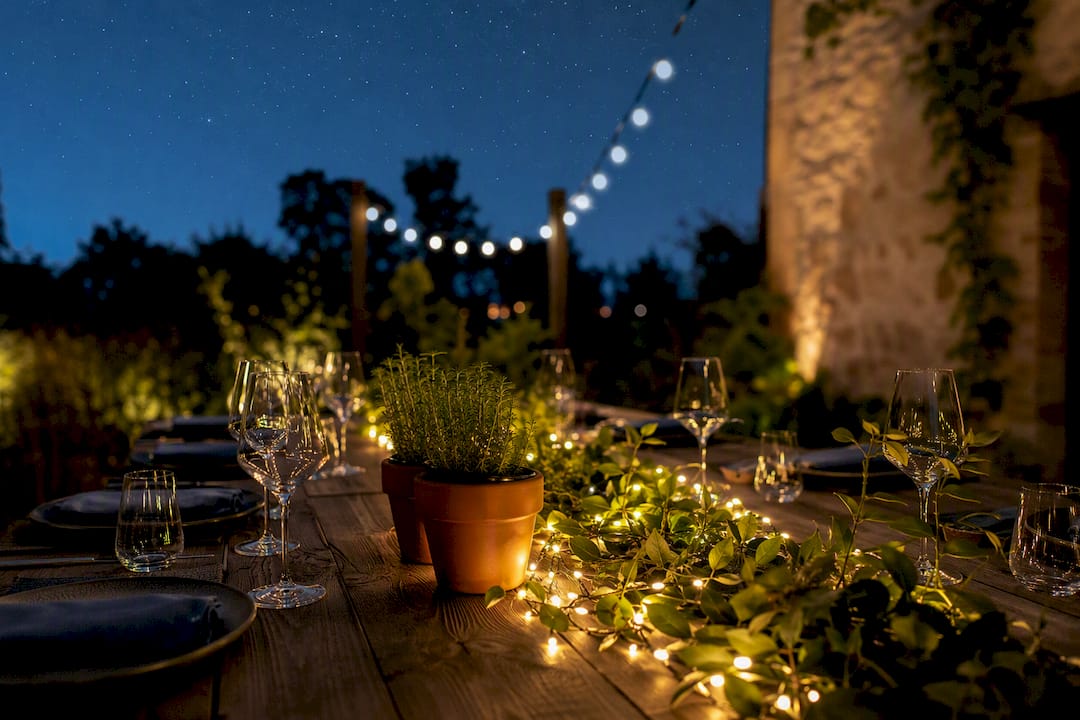
Small glass lanterns with flameless candles inside solve the wind problem for outdoor dinners and still give you the flicker effect. Place them at the same staggered heights you’d use for real candles: one taller lantern anchoring the center, two or three shorter ones flanking it.
For long tables, a single strand of warm white string lights hung just above the table, tent-style or looped between chair backs, adds ambient light without competing with the centerpiece. Paper lanterns hung slightly above eye level work for outdoor parties where you want light without clutter on the table surface itself.
Whatever you choose, keep the light warm, not cool white. Cool light flattens the texture work you did in the other four layers of the formula.
Matching Your Table to the Room and the Occasion
A tablescape that ignores its surroundings never quite works, even when every individual piece is beautiful. Pull one color from your dining room walls, art, or rug into your table’s accent layer. If your dining room leans toward gallery walls or bold art, keep the table palette simpler so the two don’t compete for attention, an approach worth considering alongside gallery wall styling if your walls are already busy.
For a themed event like a birthday or holiday gathering, let the table pick up one or two colors from your broader decor rather than introducing an entirely new palette. A green and gold Christmas table works better in a room that already has warm wood tones than one with cool gray walls and chrome fixtures.
Lighting in the room should match lighting on the table. Dim overhead lights and let candles or lanterns do the work for evening dinners; keep things brighter for daytime brunches where natural light already does most of the job.
Centerpiece Sizing by Table and Guest Count
Centerpiece choice depends more on table geometry than personal taste. A round table for four to six works best with one central cluster, no more than 12 to 14 inches wide, so it doesn’t block conversation across the table.
Long rectangular tables need repeated clusters rather than one large arrangement. Space small groupings every two to three feet down the runner instead of building a single massive centerpiece in the middle, which inevitably blocks sightlines for whoever sits across from it.
For groups of eight or more, split your centerpiece budget across three or four smaller vignettes instead of one show-stopping arrangement. This also solves the practical problem of passing dishes, since guests can slide platters between clusters rather than around one large obstacle. If you’re planning a larger seated event, thinking through guest flow and table layout ahead of time prevents the awkward reach-around that ruins an otherwise gorgeous table.
Small tables, especially bistro or two-top setups, do best with a single low object like a bud vase or a small bowl of fruit. Anything taller than eight inches on a table for two feels like a barrier rather than a decoration.
Outdoor Versus Indoor Tablescapes
Outdoor tables face wind, uneven surfaces, and changing light, so the formula needs small adjustments. Swap open-flame tapers for lanterns or flameless candles, and weigh down runners with a few heavier decorative objects at each end so they don’t lift in a breeze. Natural materials like wood, linen, and greenery hold up better outside than delicate glass or paper.
Indoor tables give you more control, which means you can use taller centerpieces, real candles, and finer glassware without worrying about weather. Indoor lighting also lets you dim the room to make candlelight do more visual work, something outdoor dinners can’t replicate until well after sunset.
For transitional spaces like covered patios, treat them as outdoor for materials but indoor for lighting control. Bring an extension cord for string lights, and choose a runner in a fabric that won’t show water spots if evening dew sets in.
A Ten-Minute Swap That Changed One Table Completely
Last fall, swapping a tall floral arrangement for three low bud vases and a scatter of votive candles turned a blocked, formal table into one where every guest could actually see each other. The floral came out, three vases with single stems went in, and candles filled the gaps. Ten minutes, zero new purchases, and the entire mood of the dinner shifted.
Where to Find More Curated Table and Decor Ideas
If you’d rather skip the trial and error, Art in Lifestyle’s DIY ideas for home decor collection walks through affordable, hands-on projects that build directly on the five-layer formula, from garland-making to centerpiece assembly using pieces you likely already own. It’s built for readers who want the payoff of a designer table without the designer price tag.
For readers who’d rather hand off the decision-making entirely, from centerpiece sourcing to full room coordination, Art Concierge offers curated, done-for-you design help that extends beyond the table to the room around it. That’s the better route if you’ve got a big event coming and no time to audition twenty candle heights yourself. Either way, the next step is simple: browse the DIY collection for your next dinner, or reach out to Art Concierge if you want the whole room handled for you.
Sources
- Dining table decor ideas
- How to create an effortlessly elegant tablescape
- How to style a beautiful tablescape step by step
- How to layer height, texture, and color in a tablescape
- Dining table decor ideas