The best outdoor sculpture does one of three things: it anchors a view, it leads the eye along a path, or it gives a quiet corner a reason to exist. Choose the role first, then the form, then a material that suits your climate. Do it in that order and the piece will look designed rather than merely placed.
Below you will find the ideas that work in modern gardens, how to match material to weather, where to put a piece, and what has to happen underground and at the base before anything heavy arrives.
TL;DR
- Decide the sculpture’s job first: focal point, path marker or hidden surprise. Form and size follow from that.
- Abstract metal, kinetic and water-integrated pieces lead current thinking for modern gardens, and corten steel and marine-grade stainless are the favored weather-adaptive metals.
- Coastal and poolside homes should look hard at stainless steel and marine-grade fiberglass, not only stone or traditional metals.
- Treat any substantial piece as a permanent structural addition: foundation, drainage and distance from sprinklers matter as much as the form.
Table of Contents
- Start with the role, not the object
- Modern garden sculpture ideas worth considering
- Choosing a material that survives your climate
- Where to put it: placement that makes a garden feel designed
- The part nobody photographs: foundations, drainage and weight
- What budget looks like
- Our perspective
- Find pieces and inspiration with us
- Common mistakes to avoid
- FAQ
- Sources
Start with the role, not the object
Most disappointing garden sculptures were bought first and given a location second. Reverse that. Walk the space at the hour you use it most and ask what is missing.
Often the answer is a focal point: one bold piece at the end of a lawn, a terrace edge or a long sightline. Sometimes it is rhythm: three or four smaller pieces along a path that reveal themselves one at a time. And sometimes it is surprise: something tucked behind a hedge that you find only when you turn the corner.
Design professionals describe the strongest outdoor art as a dialogue between the sculpture and its surroundings: sculpture that guides the eye, creates reveals along paths, or sets a rigid abstract form against loose, lush planting. The goal is intention. If a visitor asks “was that always there?” you have probably chosen well.
We have written about this same instinct indoors, in our guide to lighting sculpture at 30 to 45 degrees. The principle carries outside: a piece is only as good as the light and the sightline it gets.
Modern garden sculpture ideas worth considering
Abstract metal forms
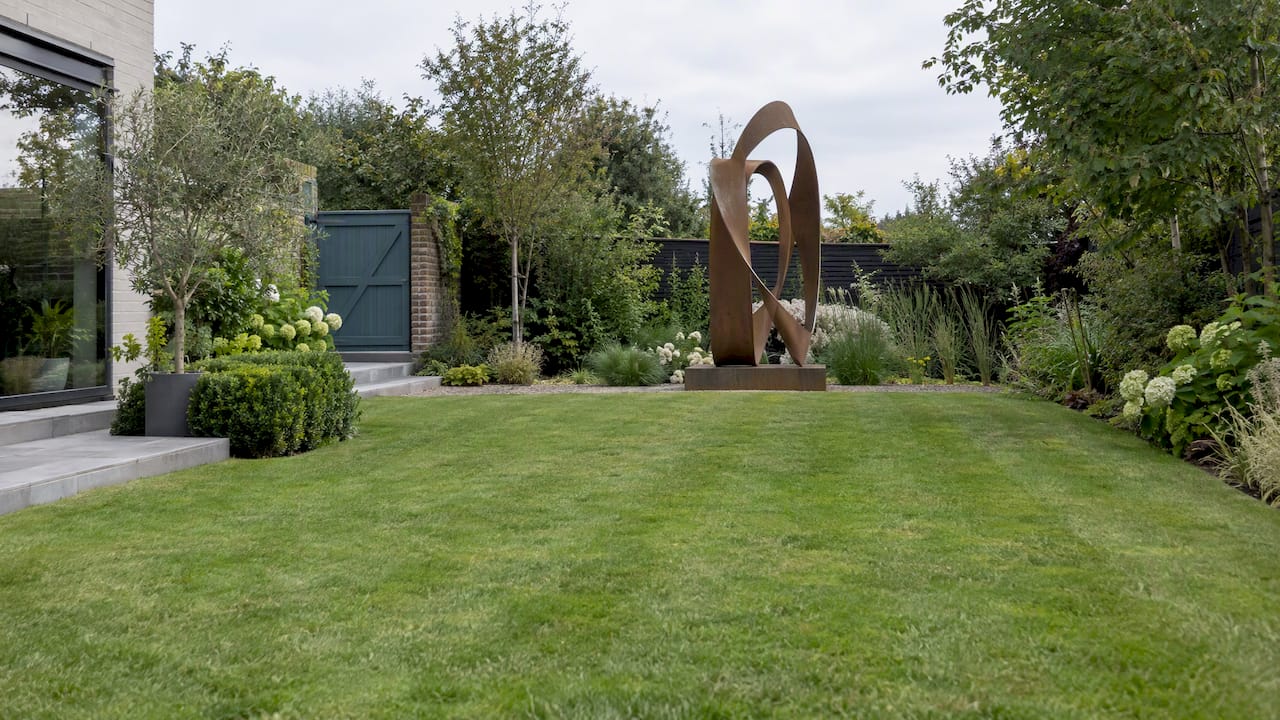
Geometric cubes and spheres, twisted ribbons and stacked planes give a garden a sleek, architectural edge. They suit contemporary houses with clean lines, and they photograph beautifully against green. Abstract metal is the most commonly recommended direction for a sleek, contemporary look right now.
Keep the scale generous. A small abstract piece on a wide lawn reads as an afterthought. One larger form with open space around it reads as a decision.
Kinetic pieces
Wind-driven sculpture adds movement and a sense of life, especially in gardens that are otherwise still and structural. Place it where there is a reliable breeze but not a gale, and give it clearance so that moving parts never touch plants or fences. Kinetic work is lovely against a plain wall or a stand of ornamental grasses that move in the same air.
Water-integrated sculpture
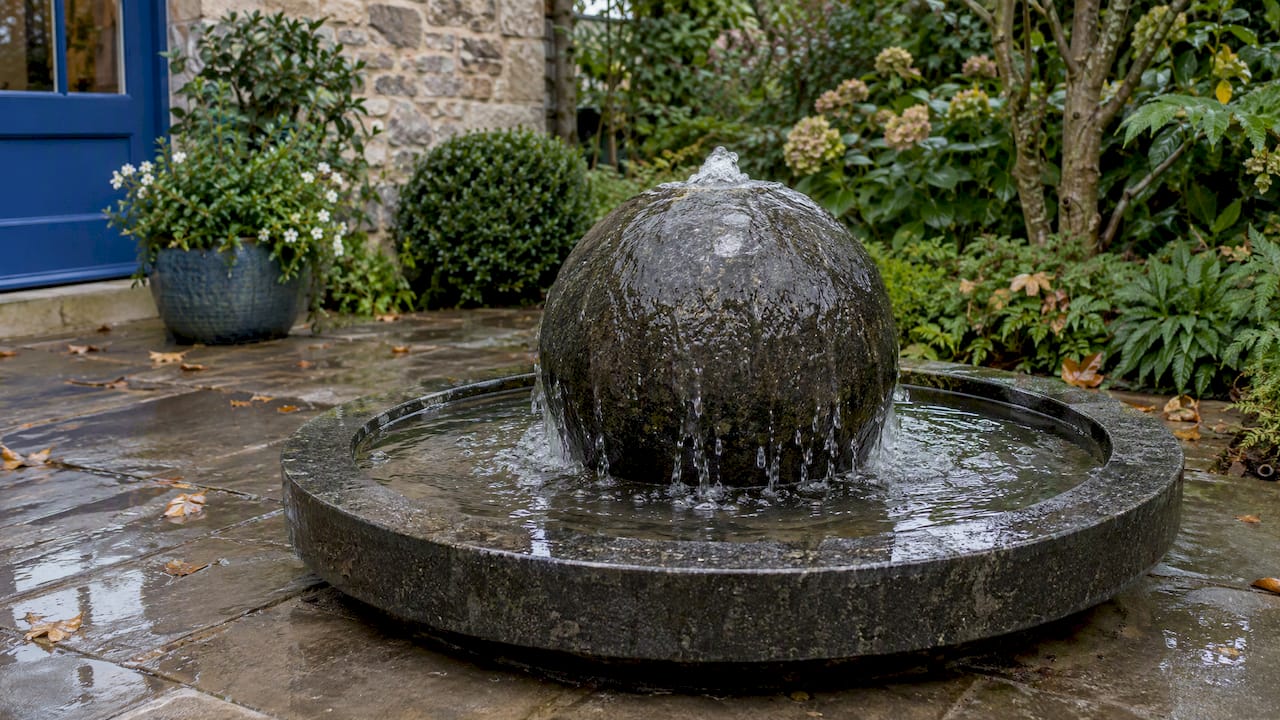
Cascading streams, bubbling spheres and gentle fountains add sound, which is the sense gardens most often neglect. The way light plays on moving water is half the appeal. Water features do bring plumbing, power and winter shut-down into the plan, so settle those details before you fall for a form.
Figurative and organic pieces
Animal forms, stylized figures and botanical shapes soften a modern landscape and suit more traditional or cottage-leaning gardens. The modern version is simplified: a hare reduced to a few curves, a bird in a single gesture. Avoid the garden-center clutter look by choosing one piece and giving it room.
Sculptural spheres and vessels
Large latticework spheres, oversized bowls and monolithic urns work as sculpture without announcing themselves. They are good near entrances and on terraces where you want presence but also calm.
Sculpture that doubles as function
A sculptural bench, a screen that filters sunlight, or a planter with a strong silhouette can serve both purposes. If you want ideas for art that survives weather on walls and fences, our outdoor wall art ideas cover durable options and how to keep them secure.
Choosing a material that survives your climate
Material decides how a piece ages. It can also decide whether it lasts a decade or several lifetimes. The right answer changes with your local weather.
| Material | Looks like | Best for | Watch for |
|---|---|---|---|
| Corten (weathering) steel | Warm, rust-toned patina that settles into a protective layer | Contemporary gardens, dry to moderate climates | Rust runoff can stain light paving or stone beneath |
| Mirror-polished marine-grade stainless steel | Reflective, picks up sky and planting | Coastal and poolside spaces, modern settings | Fingerprints and water spots; needs occasional cleaning |
| Bronze | Deep, classic tones; can be patinated | Traditional and formal gardens | Can stain stone paving; high cost |
| Stone and marble | Timeless, tactile | Shaded, sheltered gardens | Marble can etch from acid rain |
| Marine-grade fiberglass | Lightweight, finishes can mimic stone or metal | Coastal, poolside, anywhere weight is a concern | Needs a UV-stable gelcoat and proper anchoring |
Corten and stainless are the materials most often favored for durable, weather-adaptive work: corten develops its own protective rust patina, while marine-grade stainless reflects the landscape around it.
The myth that natural stone is always safest
Many buyers assume stone is the permanent choice. Craftspeople say that is not always so: near the coast or a pool, salt and chlorine can quickly degrade traditional metals, and mirror-polished stainless or marine-grade fiberglass can be technically superior. The finish is the real protector. A UV-stable gelcoat or a professional-grade protective wax is what holds up over time.
Fiberglass is also worth a second look for luxury settings. According to the same source, it does not etch from acid rain the way marble does, and it does not stain paving the way bronze can. It can often be repaired on site by a local fabricator. The caveat is that it must be marine-grade and properly anchored: a 100 lb piece can tip in high winds without base-integrated studs and resin-set sockets.
Where to put it: placement that makes a garden feel designed
The hero piece
One dominant sculpture at the end of a sightline gives the garden a destination. Pull the planting back around it so the silhouette stays clear. Evergreen hedging, a clipped wall or a plain gravel field makes an excellent backdrop, because it quiets everything but the form.
The path sequence
Smaller pieces placed at intervals create a narrative as you walk. Vary the height and keep a consistent material or color so the sequence reads as one idea. Offset each piece so you never see them all at once.
The hidden reveal
Place a piece beyond a bend, behind a screen of grasses, or at the end of a short side path. This is the most inexpensive way to make a small yard feel larger, since it adds depth and a reason to explore.
Patios, balconies and small yards
You do not need acreage. On a patio, choose a vertical form that uses height rather than floor space, or a mid-size piece on a low plinth. Our ideas for pedestal display translate well to a terrace corner, as long as the base is weighted and rated for outdoor use. For wider landscaping inspiration, see our art-inspired garden ideas and weekend plan.
Think about the view from inside
A sculpture seen through a window frames your winter. Stand at the kitchen sink, the sofa and the dining table, and note which outdoor line of sight you actually look at every day. Putting a piece there means you enjoy it in all seasons, not only when you are in the garden.
Light after dark
A single low-voltage uplight turns a metal or pale stone sculpture into a night-time feature. Grazing light from the side shows texture; a soft wash from below shows silhouette. Position fixtures so the glare is out of your sightline.
The part nobody photographs: foundations, drainage and weight
The most common homeowner mistake is forgetting that a sculpture is a permanent addition, not a decoration. Conservation and installation specialists quoted by Chubb point to site grading, weight distribution and the sculpture’s proximity to irrigation as the details that decide long-term condition.
A few practical principles:
- Give heavy pieces a proper base. A concrete pad prevents water pooling and settling, and anchor bolts or similar systems keep stable what might otherwise tip.
- Raise the piece off wet ground. Outdoor sculpture should sit elevated, not in direct contact with pooling water or irrigation runoff, which speeds corrosion.
- Plan for drainage inside the piece. Hollow sculptures need weep holes so water cannot collect inside and cause freeze-thaw damage.
- Mind the sprinklers. Re-aim or move heads so they do not spray the piece repeatedly. Mineral-heavy water leaves marks and can corrode metals.
- Call in rigging for the very heavy. For pieces over a few hundred pounds, professional rigging or crane crews are part of the job, not an optional extra.
- Check the artist’s conditions. For higher-end work, consult specialists who understand the artist’s specific installation permissions and conservation needs.
If you live where winters freeze, ask the maker how the piece is meant to be treated through the cold months. Some can stay out; others should be wrapped or moved. A reputable maker will tell you plainly.
For valuable work, it is worth speaking to your insurance provider before installation, since outdoor art may need to be scheduled separately from your standard homeowners coverage. Ask your insurer what documentation they want, such as photographs, appraisals and installation details.
What budget looks like
Sculpture prices run from garden-scale pieces that cost less than a good armchair to major works that cost more than a car. At the top end, a large contemporary bronze garden sphere from a leading maker can start at around $30,279, and unique bespoke commissions can begin at approximately $50,000, according to the maker’s published US pricing. Bespoke work also takes time: production commonly spans 20 to 40 weeks, and design fees often come before production begins.
Most homeowners will land well below that. Useful ways to spend sensibly:
- Spend on one piece, not five. A single strong sculpture beats a collection of small ones.
- Budget for the base. Foundation, delivery, lighting and installation can add meaningfully to the sticker price.
- Consider local artists. Studio visits, regional sculpture trails and art fairs are good sources of original pieces, often at a friendlier scale and price.
- Think about repair. A material that a local fabricator can repair on site may save money over the years.
If you are considering a custom piece, our guide to commissioning art for homeowners walks through briefing, timelines and what to ask before you commit.
Our perspective
We come at outdoor sculpture the way we come at every room: as a question of warmth and restraint. A garden is the one place where art is lit by the sky, weathered by the seasons and seen in motion, and that is exactly why the pieces we love tend to be calm. A single patinated form against green. A reflective sphere that holds the whole garden in miniature. Nothing shouting.
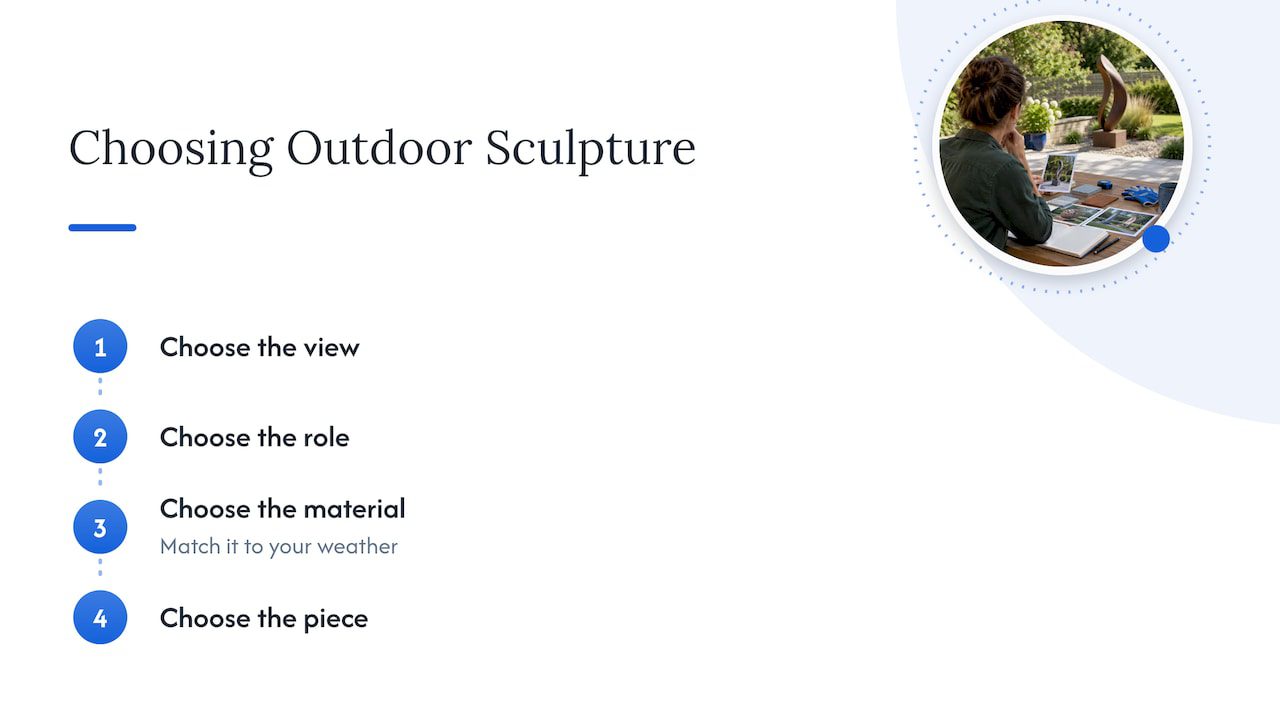
What we see readers get wrong is rarely taste. It is sequence. They choose the object, then hunt for a spot, then discover the ground cannot take it. We would reverse that: choose the view, choose the role, choose the material for your weather, and only then fall in love with a particular piece. When the practical decisions are made well, the artistic ones feel easy.
And allow the piece to change. Corten deepens, bronze mellows, planting grows up around the base. The best outdoor sculpture is not finished the day it is installed. It keeps becoming part of the place.
— Nealda
Find pieces and inspiration with us
If you are gathering ideas for the garden, terrace or porch, browse our Store Finds for curated home and decor picks, and keep an eye on our magazine for artist features and styling stories. Our gallery wall ideas are a good next step for bringing the same curated sensibility indoors, so the view from the sofa and the view from the garden feel like one home.
Common mistakes to avoid
- Buying too small. Outdoors, scale reads smaller than you expect. When in doubt, go larger, or cut a cardboard template and check it from the house.
- Competing with busy planting. A detailed sculpture against detailed foliage disappears. Give it a calm backdrop.
- Ignoring color shifts. Corten and bronze change over time, and the runoff can mark pale paving. Plan for it.
- Skipping the base. Wobbly, tilted or sinking pieces look neglected quickly.
- Forgetting maintenance. Plan on seasonal checks, gentle cleaning and re-waxing or refinishing where the maker recommends it.
- Overfilling. Three considered pieces will do more than ten. Leave the garden space to breathe.
FAQ
What is the best material for outdoor sculpture?
There is no single best material; it depends on your climate. Corten steel and marine-grade stainless steel are popular, durable choices for modern gardens. Near the coast or a pool, stainless steel or marine-grade fiberglass can outlast traditional metals that salt or chlorine attack.
How do I choose where to place a garden sculpture?
Start with the role: focal point, path marker or hidden surprise. Then check the sightlines from both the garden and the windows you use most. Give the piece a calm backdrop and make sure the ground can support its weight.
Do outdoor sculptures need a special foundation?
Heavy pieces generally do. A concrete pad, anchor systems and good drainage help prevent tipping, pooling water and corrosion. For pieces over a few hundred pounds, professional rigging is usually part of the installation.
Can I use fiberglass sculpture in a luxury garden?
Yes, if it is marine-grade with a UV-stable gelcoat and a proper internal armature. It is lightweight, does not etch like marble and can often be repaired locally. It does need secure anchoring, since light pieces can tip in strong wind.
How much does a large outdoor sculpture cost?
It varies enormously. Garden-scale pieces from independent artists can be modest, while major contemporary works from leading makers start in the tens of thousands of dollars, and bespoke commissions can begin around $50,000. Budget separately for the base, delivery and installation.
Sources
- 6 steps to protect your outdoor sculpture | Chubb
- Outdoor Art & Sculptures: Statement Pieces for Your Backyard
- Fiberglass Garden Sculpture: What Survives Outdoors
- Large Contemporary Outdoor Sculptures, US pricing