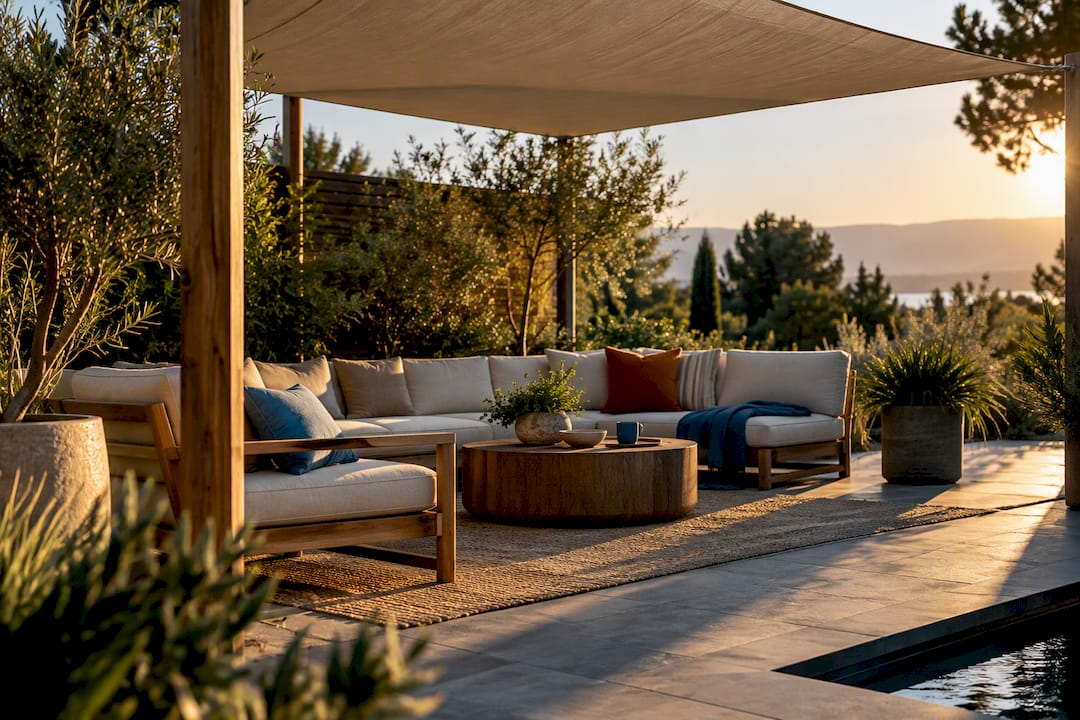
An outdoor living room is any al fresco space, patio, deck, balcony, or terrace, built around a dedicated seating area rather than scattered furniture. The single most useful first step is defining a conversation zone: pick a spot, add weather-resistant seating around a clear focal point, and let everything else layer on from there.
TL;DR:
- Using modular or built-in furniture, along with strategic zones, makes small balconies and decks feel larger and more functional.
- Layered lighting with ambient, task, and accent fixtures encourages outdoor use after sunset, especially when combined with weatherproof décor.
- Budget-friendly essentials like outdoor rugs, performance cushions, and privacy planters create a cozy, lived-in outdoor room without heavy investment.
- Choosing durable materials such as aluminum, teak, or wrought iron for furniture helps reduce maintenance and withstand outdoor conditions for years.
- Proper accessibility features, like level flooring, clear pathways, and safe railing clearances, are key to creating a safe, usable outdoor living space.
Table of Contents
- Outdoor Living Room Ideas Worth Copying
- The Rules That Make a Patio Read Like a Room
- Zoning Your Outdoor Seating Area Design
- Choosing Furniture and Materials That Survive Outdoors
- Lighting and Ambience for Evening Use
- Shade and Weatherproofing Options
- What an Outdoor Living Room Actually Costs
- Small-Space Outdoor Lounge Ideas
- A Note From Art in Lifestyle
- Preparing Your Outdoor Living Room for Every Season
- Connecting Your Outdoor Room to the Indoors
- Accessibility and Safety in Outdoor Living Spaces
- What Actually Makes a Patio Worth Using
- Shop the Look: Curated Store Finds
- Where This Advice Comes From
- Sources
- FAQ
Outdoor Living Room Ideas Worth Copying
The best patio living room concepts share one trait: they solve a real problem (shade, storage, small square footage) while still looking intentional. Here are twelve worth adapting to your own backyard.
- Covered patio lounge. A roofline extension turns a slab of concrete into a true room. Keep cushion fabric solution dyed so color doesn’t fade under the eave’s dappled sun.
- Pergola lounge. Open beams filter light without blocking airflow. Add a retractable canvas panel for the hottest hours.
- Balcony nook. Two bistro chairs and a slim folding table make a 6 by 8 foot balcony feel like a proper sitting room.
- Built-in banquette seating. Fixed benches along a wall free up floor space and double as storage when topped with a hinged lid.
- Modular sectional. Rearrange it for a crowd or pull it tight for a quiet evening. Look for quick dry foam so cushions don’t hold rain.
- Daybed corner. A weatherproof daybed under a shaded corner becomes the spot everyone fights over.
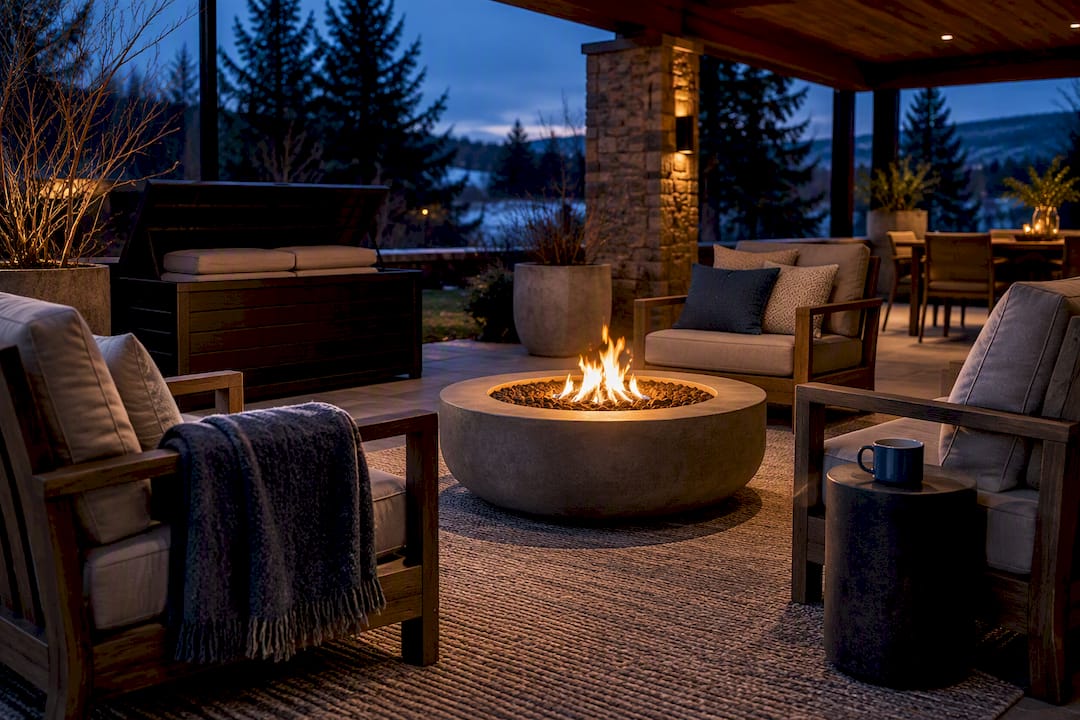
- Fire pit circle. Four to six chairs angled inward around a fire feature create instant conversation flow, no coffee table required.
- Outdoor rug as anchor. A polypropylene or PET rug instantly reads as “room” instead of “patio,” and it shrugs off spills.
- Mirror or art outdoors. A weather-rated mirror or metal wall piece adds depth to a narrow space; check our living room art ideas guide for outdoor-safe picks.
- Dining and lounge combo. Split one long patio into a dining end and a lounge end using a planter or low bench as the divider.
- Curtained shelter. Outdoor drapery on a pergola softens hard lines and adds privacy at dusk. Choose fabric rated for UV and mildew resistance.
- Retractable awning. Higher upfront cost than a fixed roof, but you get sun in winter and shade in summer with one motorized pull.
Budget-conscious readers should start with the rug, curtains, and a modular sectional. The fire pit circle and covered patio lounge require more investment but pay off in year-round use.
The Rules That Make a Patio Read Like a Room
A pile of nice furniture doesn’t automatically feel like a living room. A few repeatable design principles separate a real outdoor lounge from a furniture showroom left outside.
- Conversation distance: keep seating 7 to 10 feet apart so people can talk without leaning or shouting.
- The Objects Test: a coffee table with a tray, a stack of books, or a lantern signals the space is lived in, not staged.
- Sightline continuity: matching flooring tones, slim-framed doors, and consistent furniture scale help the eye move naturally from indoor to outdoor spaces without a visual seam.
- Proportional scale: outdoor furniture should feel as substantial as what’s inside; spindly pieces look temporary even when they’re expensive.
Pro Tip: Walk your indoor living room, then walk straight out the door to your patio. If the transition feels like a downgrade, in scale, color, or comfort, that’s the gap to close first.
Zoning Your Outdoor Seating Area Design
Space, not style, usually decides whether an outdoor room works. Plan for roughly 25 to 30 square feet per person in a comfortable gathering area, so a four-person conversation zone needs about 100 to 120 square feet.
- Define the primary zone first. This is your conversation seating, anchored by a rug or a change in paving material.
- Mark boundaries without walls. Planters, a low bench, or a step-down in elevation tell people where one zone ends and another begins.
- Keep the transition path clear. Leave at least 3 feet of unobstructed walkway between your interior door and the seating group.
- Add a secondary zone once the first one works. A small dining table or a daybed corner extends the space without competing for attention.
Choosing Furniture and Materials That Survive Outdoors
Frame material determines how much upkeep you’re signing up for. Aluminum resists rust and stays light enough to rearrange easily. Teak ages into a silvery gray patina and needs almost no sealing if you like that look. Wrought iron feels substantial and holds up in wind, but it’s heavy and needs occasional rust touch ups.
- Look for performance fabrics with UV resistance, mildew resistance, and a cleanable surface, most respond to a hose and mild soap.
- Choose outdoor rugs in polypropylene or PET fiber; both resist fading and can be rinsed clean.
- Store cushions in a deck box or under a bench during heavy rain stretches to extend fabric life.
- Rotate rugs and cushions seasonally so one side doesn’t bear all the sun exposure.
Lighting and Ambience for Evening Use
Layered lighting is consistently cited as the single biggest factor separating an outdoor room that gets used after dark from one that goes dark at sunset, and design guides like Homes & Gardens point to a mix of ambient, task, accent, and safety lighting rather than one overhead fixture.
- Ambient: string lights or lanterns for overall glow.
- Task: a reading lamp or sconce near seating.
- Accent: uplighting on a tree or wall texture.
- Safety: low-level path lights along steps and walkways.
Low-voltage wired systems last longest; solar and rechargeable fixtures install faster but need occasional battery swaps. A portable Bluetooth speaker or a small fountain adds sound without a wiring project.
Shade and Weatherproofing Options
A pergola offers structure and partial shade; a pavilion gives full coverage but costs more and reads as permanent. Sail shades and umbrellas are the cheapest, most flexible options, while a retractable awning splits the difference between fixed shelter and daily flexibility.
- Pergola: good airflow, partial shade, moderate cost.
- Sail shade or umbrella: lowest cost, easy to reposition or store.
- Retractable awning: higher upfront cost, adjustable coverage.
- Curtains or mesh screens: cut insects and add privacy without blocking light entirely.
What an Outdoor Living Room Actually Costs
Flooring drives a big share of the budget. Pavers, natural flagstone, and composite decking each carry different installed price ranges depending on material and region, and built-in features like a masonry fire pit or a pergola with footings cost meaningfully more than freestanding alternatives.
- Flooring: pavers and composite decking tend to run less than natural flagstone per square foot.
- Fire features: freestanding fire pits are far cheaper than a built-in gas fireplace.
- Structures: a basic pergola kit costs less than a fully framed pavilion.
- High-impact, lower-cost wins: a rug, layered lighting, and quality seating cushions.
Costs vary widely by region and labor rates, so treat these as planning ranges, not quotes. A comprehensive outdoor living build can recoup a high share of its cost at resale, which makes the investment easier to justify even for sellers a few years out.
Small-Space Outdoor Lounge Ideas
Balconies and narrow decks can still function as a full backyard lounge inspiration project. Designers rely on built-ins and multi-use pieces to stretch every square foot.
- Fold-away bistro tables and built-in banquettes free floor space when not in use.
- Vertical planters add privacy screening without eating into square footage; see our potted plant ideas for container options that work in tight corners.
- A single cohesive color palette and a weatherproof mirror make a small footprint feel larger.
- Storage ottomans double as seating and a place to stash cushions overnight.
A Note From Art in Lifestyle
Nealda covers art and interior styling for Art in Lifestyle, focusing on how texture and materiality shape how a room actually feels to live in. Before buying, run the Objects Test: check for surfaces, layered lighting, storage, something soft underfoot, and a bit of ambient sound. Browse Store Finds for durable pieces that pass all five.
Preparing Your Outdoor Living Room for Every Season
Weather dictates how much your outdoor lounge gets used, so build seasonal habits into your maintenance routine from the start. In spring, inspect frames for winter damage, wash cushions before uncovering them for the season, and check that any wired lighting survived freeze and thaw cycles intact.
Summer heat is where shade earns its keep. Deploy retractable awnings or sail shades during peak sun hours, and keep a rotation of light, breathable fabric covers on hand for seating that sits in direct sun most of the day. Watering nearby planters more frequently keeps privacy screening looking full rather than scorched.
Fall means prepping for storage. Cushions and pillows should come inside or into a deck box before the first sustained rain, and any solar lighting benefits from a battery check before the days get shorter and the sun exposure drops. This is also the right time to reseal teak furniture if it’s due.
Winter varies by climate. In freeze-prone regions, drain and cover any water features, store fabric-based furniture entirely, and use furniture covers rated for snow load on anything left outside. In milder climates, a covered patio lounge with a fire pit circle can stay in near-constant use through winter, making the fire feature one of the better cold-weather investments on this list.
Rotating this seasonal check twice a year protects the materials you spent money on and keeps the space ready the moment good weather returns.
Connecting Your Outdoor Room to the Indoors
The strongest outdoor living rooms don’t feel separate from the house, they feel like an extension of it; learn how to redefine your open space and create a private office without losing the open feel for seamless indoor-outdoor transitions. That starts with the threshold itself: a low or flush sill and a slim-framed or bi-fold door reduce the visual and physical barrier between inside and outside.
Flooring continuity matters almost as much as the door. You don’t need identical materials, but tones should feel compatible rather than matching exactly, a warm-toned composite deck can sit comfortably next to a similarly warm interior floor without being the same product.
Furniture placement reinforces the connection further. Position an interior sofa or chair so it faces the outdoor door, and choose an outdoor rug in a color family that echoes something already in your living room, a cushion, a throw, an accent wall. This is where a quick read of our seaside condo styling piece helps, since coastal interiors often solve this exact indoor-outdoor color bridge well.
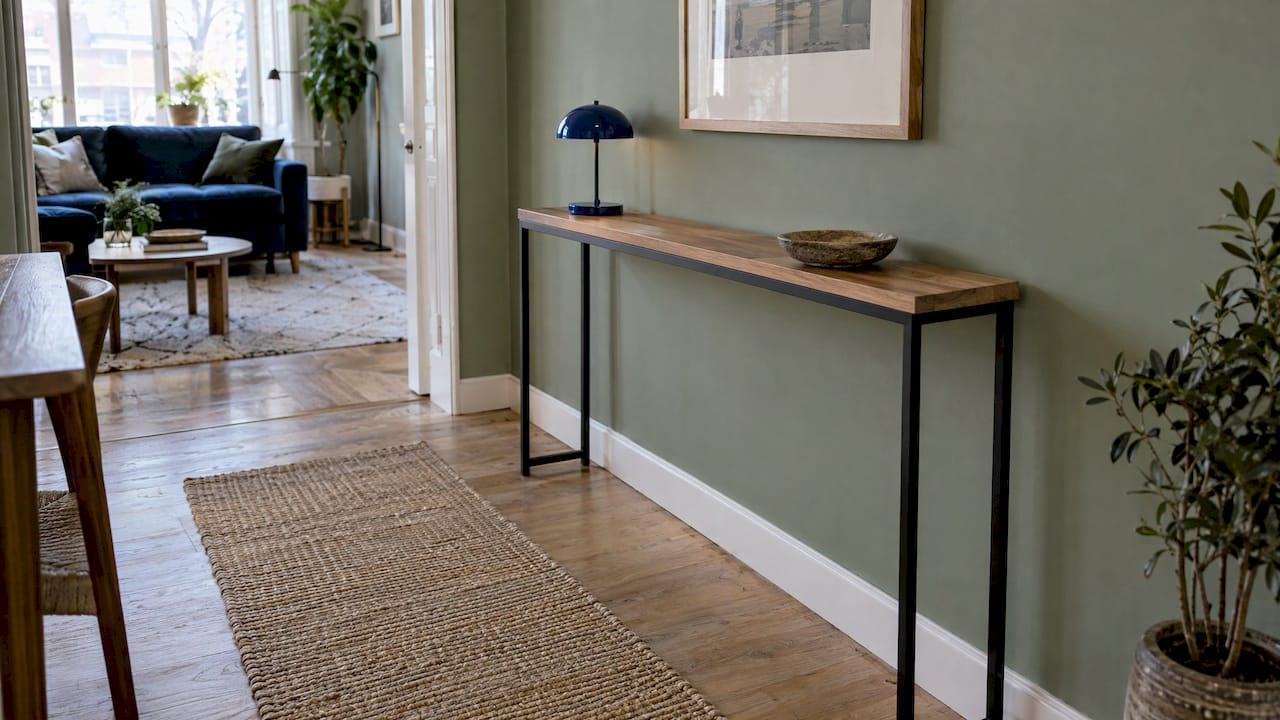
Sliding or French doors left open during good weather turn two separate rooms into one continuous space for entertaining. If full-width glass isn’t in the budget, even matching curtain hardware or repeating one material, say, the same wood tone on an interior console and an outdoor side table, does a surprising amount of work to tie the two areas together visually.
Accessibility and Safety in Outdoor Living Spaces
A beautiful outdoor lounge that’s hard to navigate isn’t finished yet. Start with the walking surface: pavers and composite decking install flatter and more evenly than loose gravel or uneven flagstone, which matters for anyone using a cane, walker, or wheelchair, and for anyone carrying a tray of drinks after dark.
Step-free transitions matter as much as flooring choice. Where a step is unavoidable, add a contrasting nosing strip so the edge is visible at dusk, and make sure path lighting covers every change in elevation, not just the main seating area.
Railings deserve attention on any raised deck or balcony, especially where kids or older guests will be present. Keep gaps in railings and furniture arrangements below common code minimums for a family with small children, and leave a minimum 36 inch clearance in main walkways so a wheelchair or a walker can pass without squeezing past furniture.
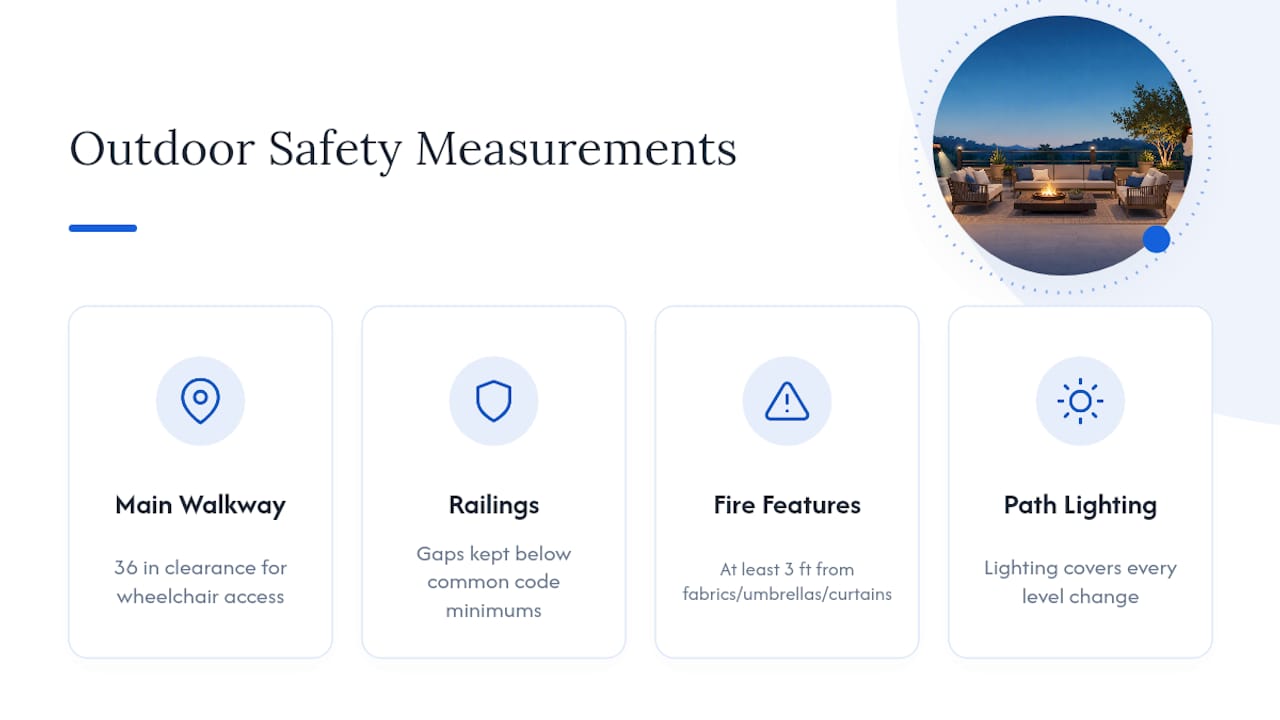
Fire features and outdoor heaters need real breathing room, at least 3 feet from any seating fabric, umbrella, or curtain panel that could catch a spark. Check that any electrical outlets near seating or water features are rated for outdoor, wet-location use, and route extension cords away from walking paths entirely rather than taping them down across a path people will cross at night.
What Actually Makes a Patio Worth Using
Trends fade fast outdoors. What lasts is furniture you don’t dread cleaning and one seating zone that works before you add a second.
— Nealda
Shop the Look: Curated Store Finds
Once you know which zone you’re building first, the right pieces make the difference between a patio that looks staged and one that actually gets used. Store Finds is Art in Lifestyle’s curated selection of durable, design-forward pieces chosen for exactly the criteria covered above: weather resistance, honest materials, and a look that holds up past one season.

Four categories are worth shopping first: outdoor rugs in fade-resistant polypropylene or PET, performance cushions with mildew-resistant covers, lanterns and string lights for that essential layered glow, and durable planters sized for privacy screening or a simple container garden. Each one solves a specific problem raised earlier in this guide rather than just filling space. Start with the rug and lighting picks in Store Finds if you’re building your first conversation zone this season, then layer in cushions and planters as the budget allows.
Where This Advice Comes From
- Archadeck on outdoor living room terminology and naming variations.
- Bobby Berk on layout, focal points, and usability.
- Yardcast on cost ranges and resale value.
Sources
- What do you call an outdoor living room? — Archadeck
- Backyard layout and indoor-outdoor continuity — Sunset
- How to Create an Outdoor Living Room That Actually Gets Used — Bobby Berk
FAQ
What do you call an outdoor living room?
There’s no single industry-standard term. It’s a descriptive phrase covering any al fresco gathering space, deck, patio, balcony, terrace, or porch, built around dedicated seating rather than a strict category name.
How do you design an indoor-outdoor living space?
Match flooring tones, choose a low-threshold or slim-framed door, and arrange furniture on both sides to guide sightlines between the two rooms. Continuity, not exact matching, is the goal: materials should feel compatible rather than identical.
How much does it cost to add an outdoor living space?
Costs vary widely based on flooring choice, whether features are built in or freestanding, and your region’s labor rates, so treat any figure as a planning range rather than a quote. Many homeowners start with lower-cost, high-impact pieces, a rug, cushions, and lighting, before investing in permanent structures like a pergola or built-in fire feature.
What furniture works best for a small outdoor living room?
Built-in banquettes, fold-away tables, and storage ottomans let a small balcony or narrow deck function as a full seating area without wasted floor space. Vertical planters and a cohesive color palette help the space read larger than its actual square footage.
Do I need permanent shade to make an outdoor room usable?
No. Umbrellas and sail shades offer flexible, low-cost coverage, while a pergola or retractable awning suits readers ready for a more permanent investment. The right choice depends on your climate, budget, and how often you want to reposition the shade during the day.