Thinking about buying an abstract painting but unsure where to begin? You’re not alone. Many first-time buyers fear ending up with a piece that doesn’t fit their space, style, or budget, or even worse, they regret the purchase completely.
This guide lays everything out. Whether you’re decorating your home, investing in something special, or just curious about what makes abstract art so impactful, here’s what you need to know.
Why People Regret Buying Abstract Art

Abstract art can feel like a mystery. Unlike a landscape or portrait, it doesn’t hand you a clear subject to recognise. It communicates through colour, form, and emotion. That openness is what makes abstract art so powerful, but it’s also what makes it tricky to buy.
Many homeowners fall into the same traps. Some are drawn to whatever is trending on social media or in big-box stores, only to find the piece feels out of place once it’s hanging in their living room. Others buy mass-produced paintings thinking they’ve found a bargain.
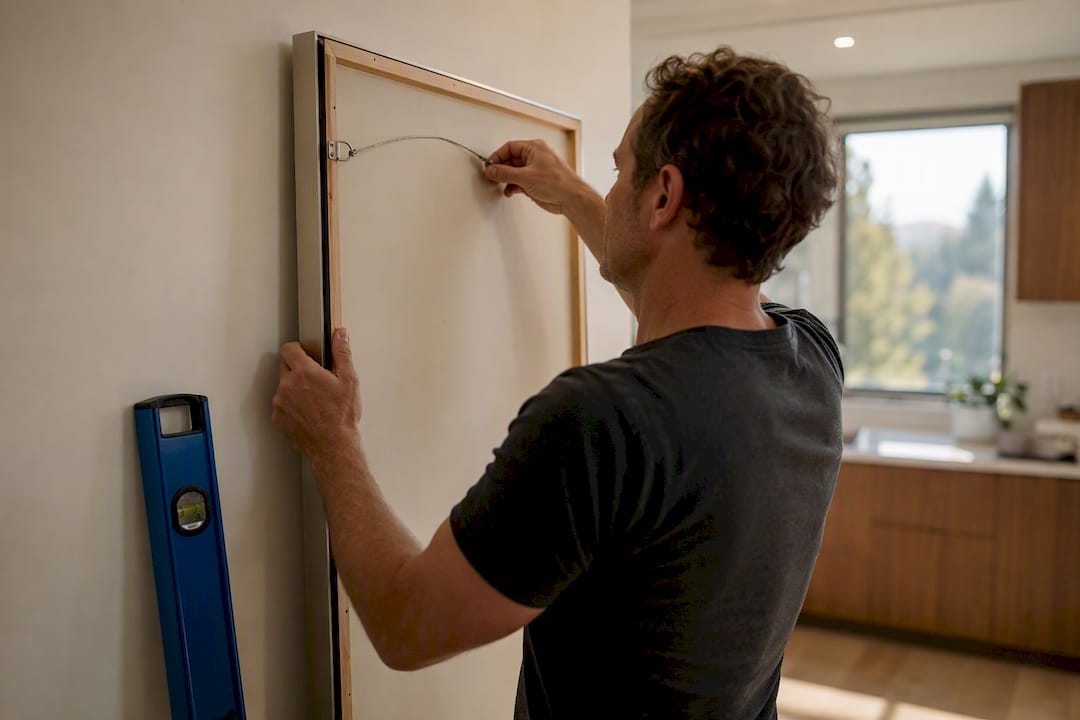
Related: 7 Proven Ways to Hang Paintings Without Nails (That Won’t Damage Your Walls)
They later realise the work lacks originality, texture, and the unique character that makes art special. And some simply rush the process by choosing art that doesn’t reflect their taste, their home’s mood, or the feeling they want to create in a space.
The result? Buyers’ remorse.
A piece that should bring daily joy ends up feeling like clutter, or worse, like a forced design choice.
The truth is, abstract art isn’t about finding what’s “good” in some universal sense. It’s about finding what resonates with you. When you slow down, pay attention to your reactions, understand your emotions and consider how a piece fits into your home and lifestyle, you’re far less likely to regret your choice.
What Is Abstract Art?
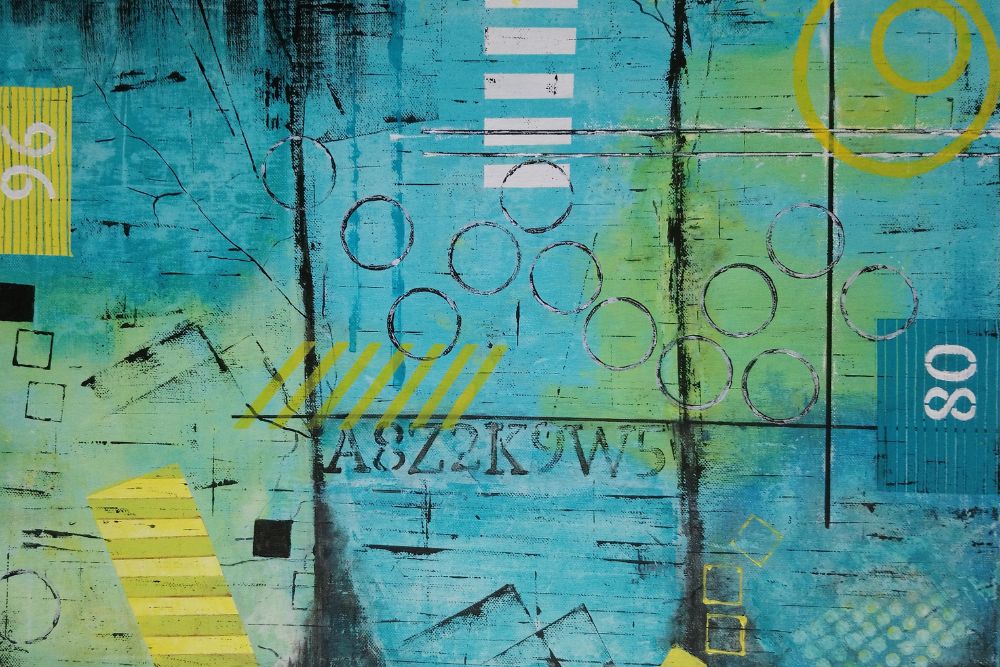
Abstract art doesn’t aim to look like something familiar. It’s not a portrait of a person, a scenic landscape, or a bowl of fruit on a table. Instead, it strips away recognisable forms and focuses on the pure elements of art in the form of shapes, colours, lines, and textures. These are arranged not to mimic reality but to capture a feeling, an energy, or an atmosphere.
That doesn’t mean abstract art is meaningless. Far from it. Each piece is an artist’s way of translating emotions, visions, and experiences into a visual language that may not be instantly clear to the eye. At first glance, you might not “see” what it represents.
But you feel it.
The brushstrokes, the movement of colour and the contrast of shapes all create an invisible rhythm. Together, they create a kind of balance and harmony that makes the artwork resonate.
Abstract art is born from expression rather than imitation. Connecting with it is more about emotion than logic. You’re not being asked to identify what’s in the painting. You’re being invited to step into the artist’s world of feeling and to reflect on what it awakens in you.
That’s why two people can look at the same painting and walk away with entirely different interpretations.
And both are valid.
Ultimately, abstract art is less about what you see and more about what you experience. It speaks to your senses, your memories, and your mood. That is where its power and its beauty lies.
Why Is Abstract Art Popular?
Abstract art has a broad appeal because it frees you from the need to “explain” what you see. There are no recognisable faces, objects, or scenes to interpret. So you don’t have to wonder if the image is appropriate for your home, or whether it “fits” a certain narrative.
That freedom takes away a layer of hesitation. With abstract art, the focus shifts from judgment to feeling. This makes the buying process more intuitive and enjoyable.
Another reason abstract art is so popular is its versatility. Without literal subjects, it works in almost any setting, from modern apartments to traditional suburban homes. A single piece can add energy to a living room, bring calm to a bedroom, or act as a bold statement in an entryway. Because it’s not tied to one specific image or cultural reference, abstract art often feels timeless and adaptable.
But make no mistake!
just because abstract art looks effortless doesn’t mean it’s easy to create. Great abstract artists don’t simply “splash paint around” (well, sometimes they do!). In a way, spontaneity is often part of the process. Every stroke, layer, and choice of colour plays a role in building balance, contrast, and rhythm.
Abstract techniques include controlled geometry, sweeping brushwork, swinging a bucket of paint or subtle colour blending. Each technique gives the artwork its unique character.
Different Types Of Abstract Art
When it comes to abstract styles, there is no one-size-fits-all solution. Here are some common categories you might encounter.
Geometric Abstraction
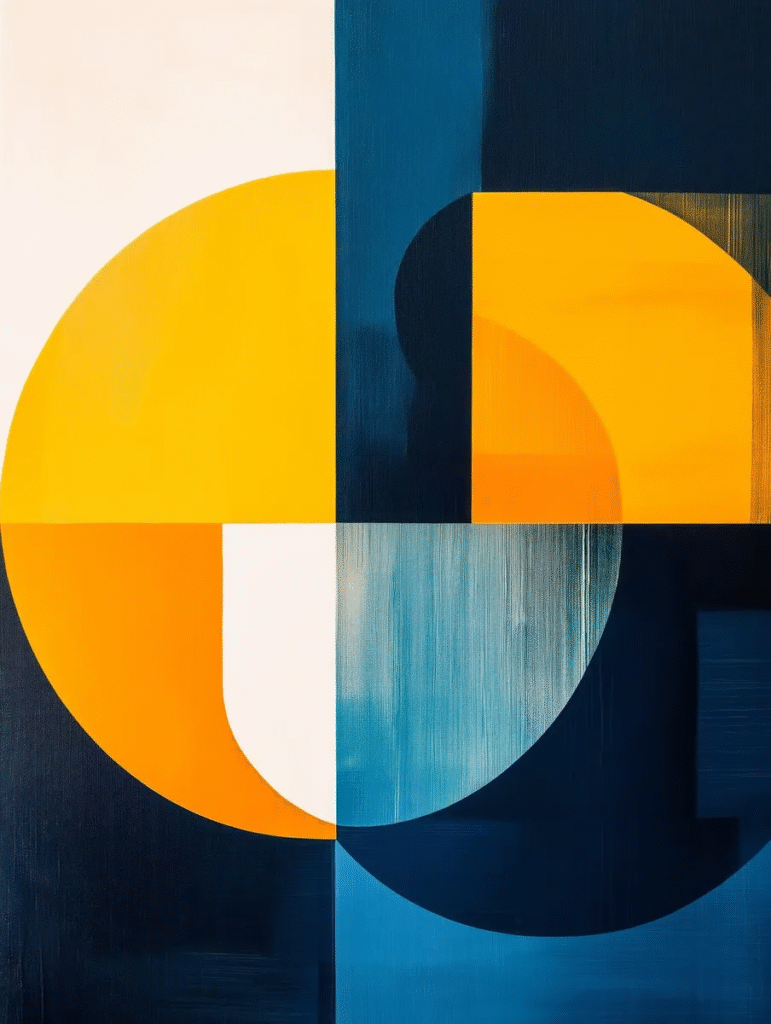
Geometric abstract art works beautifully in contemporary interiors because it speaks the same design language of clean lines, structure, and balance. These artworks are built from basic shapes like circles, squares, triangles, and angular lines, arranged in compositions that feel deliberate and ordered.
They embody simplicity on the surface, yet carry a striking visual presence that instantly commands attention.
A strong example is Bauhaus Geometric Abstract by Andrea Pallang, which showcases the expressive potential of this genre. The piece blends golden yellows with deep navy blues, using half circles, blocks, and intersecting lines to create a rhythm between stillness and motion.
The contrast of light and shadow feels almost architectural, as though the shapes are holding a quiet dialogue. It offers both energy and calm, making it a versatile choice for living rooms, offices, or entryways where impact and balance are equally desired.
Related: Antony Squizzato: This Modernist Picasso Takes on Cubism and Abstraction
Abstract Expressionism
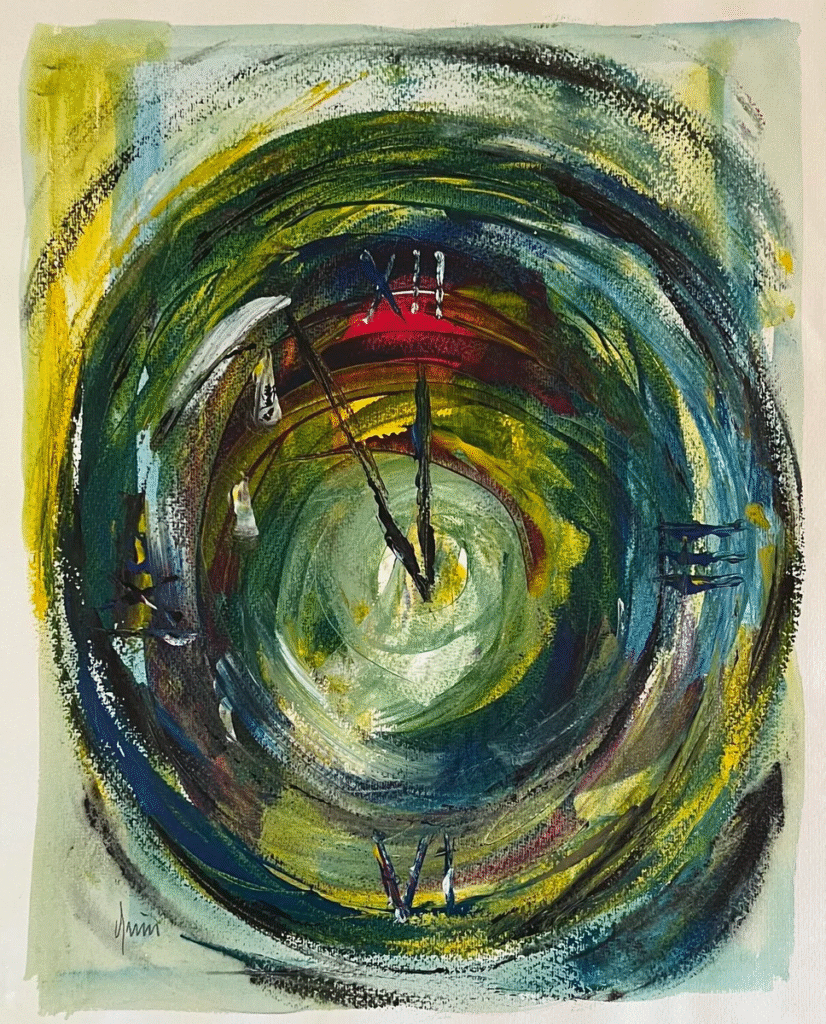
This genre emerged in the mid-20th century with artists like Jackson Pollock and Willem de Kooning, who broke away from traditional composition and allowed emotion itself to guide the process. Abstract Expressionism is one of the most dramatic and emotionally charged branches of abstract art.
It’s defined by sweeping brushstrokes, bold splashes of colour, and a sense of movement that feels almost uncontrollable. At first glance, these works can appear chaotic or even careless, as if the artist has abandoned order entirely. Yet, within that chaos lies their power.
The rawness, spontaneity, and unpredictability of the style create a sense of being caught inside an eruption of feeling. It is a visual storm that sweeps the viewer along with it.
A striking example of this energy is Die Zeit by Nicola Quici. In this piece, swirling greens, blues, and yellows spiral into a vortex-like clock face, where the hands hover just before midnight. Roman numerals dissolve into motion, blurring the line between structure and chaos.
The imagery feels urgent yet dreamlike, as though time itself is both ticking forward and unraveling before our eyes. It evokes a haunting sense of transience and an invitation to reflect on endings, beginnings, and the fleeting moments in between.
Minimalist Abstraction
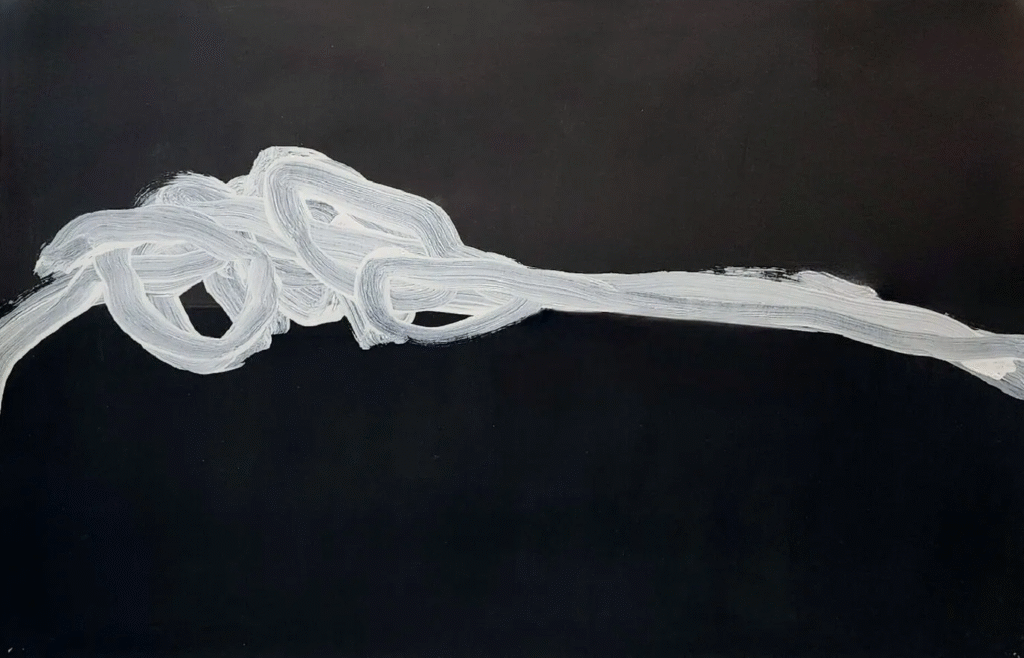
Minimalist art is often misunderstood as being limited to stark palettes of black, white, and grey. While these shades do reflect the minimalist ethos of restraint and simplicity, the style itself is not bound by them. At its heart, Minimalist Abstraction isn’t about colour or form restrictions.
It’s about clarity, intention, and the ability to say more with less. A single bright orange circle in the middle of a canvas can be just as “minimalist” as a monochrome painting, because it embodies the principle of focus and reduction. Minimalism pares down visual noise, leaving only what is essential.
A striking example is Sharon Lauden’s Untitled. Against a stark black canvas, a lone white brushstroke twists and tangles, resembling a knot suspended in space.
On first glance, it’s a simple gesture. But its emotional weight is undeniable. It suggests tension, fragility, and the struggle to hold things together. The surrounding emptiness amplifies this sense of vulnerability, while the bold contrast between black and white makes the gesture feel both intimate and monumental.
It’s a reminder that minimalism is not about absence, but about distilled expression. It is honesty that cuts straight to the core.
Colour Field Painting
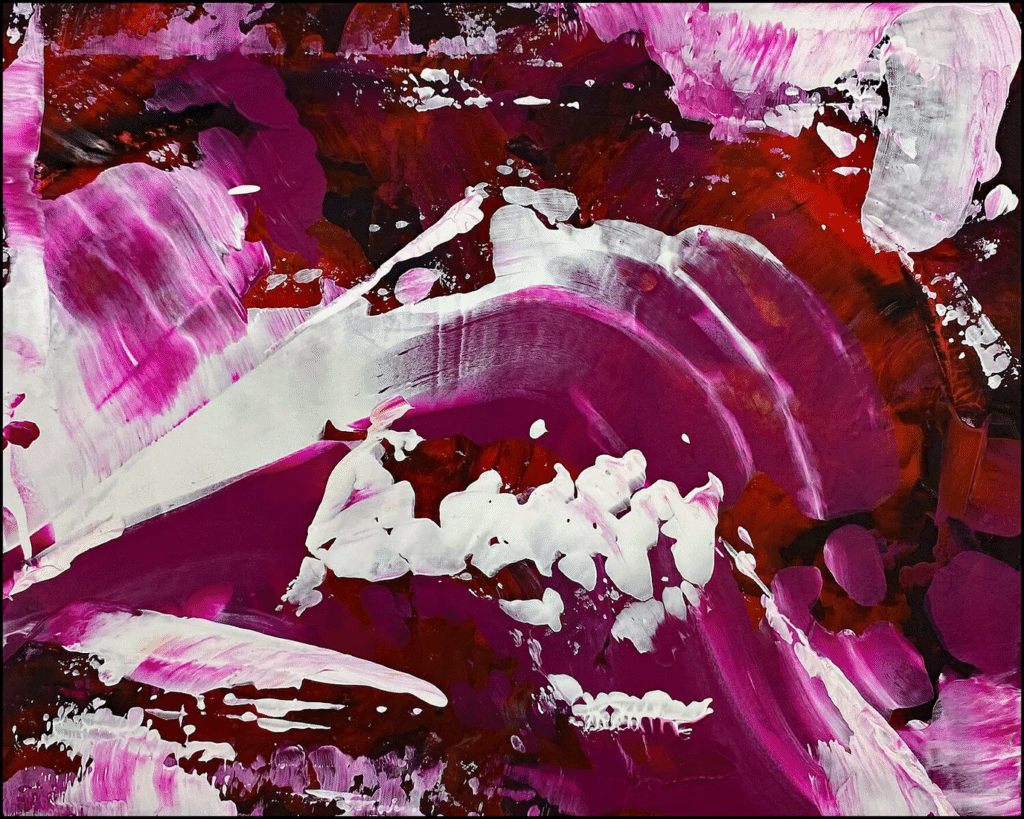
Where Minimalist Abstraction strips art down to its bare essentials, Colour Field painting does the opposite. It surrounds the viewer in vast expanses of colour, creating a deeply emotional and atmospheric experience.
Instead of focusing on recognisable imagery or intricate forms, this style uses large blocks, gradients, or washes of colour to evoke mood. Depending on the palette, it can feel serene and meditative, or bold and almost overwhelming.
Artists such as Mark Rothko pioneered this movement, using soft-edged rectangles of colour layered over one another to create depth and quiet intensity.
Colour field paintings are vibrant, highly charged, and full of energy, depending on the artist’s approach. Rudi Eckerle’s Color Field Painting 01 demonstrates this beautifully. Bright magenta, scarlet, and white strokes sweep across the canvas, walking the line between spontaneity and control.
The bold gestures create a rhythm that pulses with life, pulling the viewer into its raw emotional current. Rather than offering a literal subject, the piece immerses you in sensations that are vibrant, unfiltered, and immediate.
Organic Biomorphic Abstraction
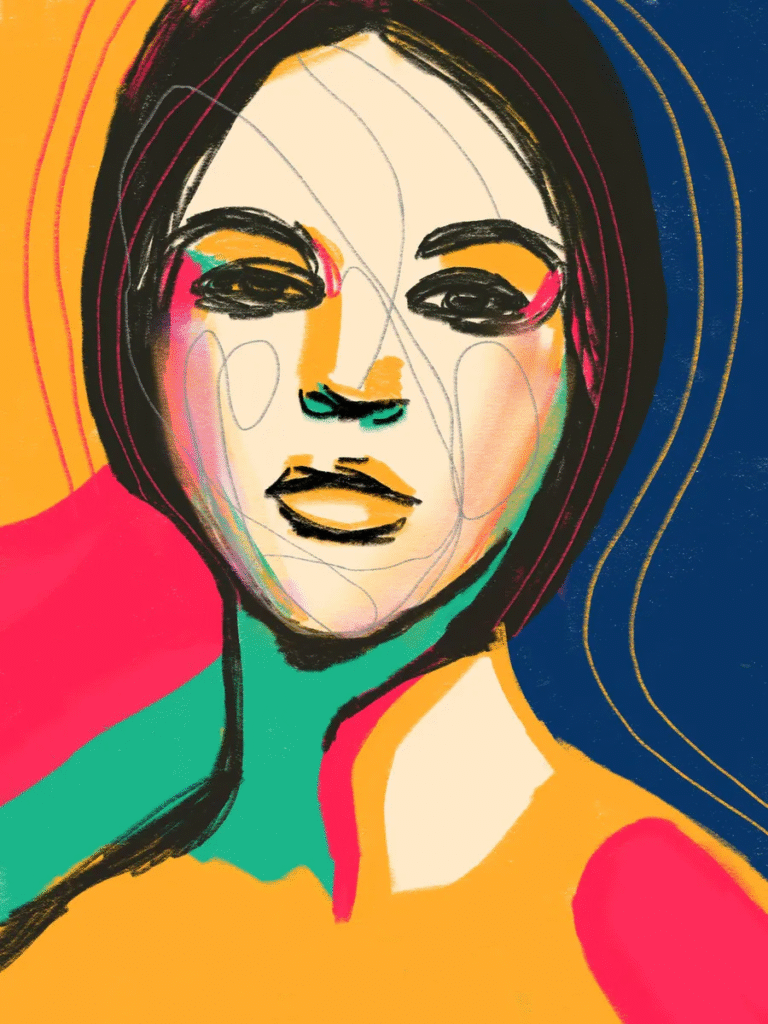
Biomorphic abstraction, sometimes called organic abstraction, draws inspiration from the flowing, curvilinear shapes found in nature and the human body. Instead of rigid lines or geometric precision, this style embraces movement, irregularity, and softness.
The artwork echoes the rhythms of plants, cells, waves, landscapes or even anatomy. The forms may be immediately recognisable, or they may be stretched, simplified, or reshaped to fit the artist’s vision. What remains consistent is the sense of vitality, as though the artwork itself is breathing, growing, or evolving.
Juca Maximo’s Retails II is a striking example. At first glance, it presents a portrait, yet the portrait is anything but traditional. Bright hues of orange, teal, and magenta twist and layer across the canvas, transforming the face into a raw emotional landscape.
The gaze is steady and introspective, grounding the viewer, while the surrounding strokes whirl with intensity. This may suggest memory, movement, or the turbulence of thought. It’s a portrait of emotion as much as identity that is loud, layered, and unapologetically vivid.
How To Discover What You Actually Like

Start by immersing yourself in art, both in person and online. Visit local galleries, attend art fairs, or explore online platforms like Singulart. Pay attention to what makes you pause, linger, or feel something ... even if you can’t explain why.
Is it the colours that draw you in?
The atmosphere or energy of the piece?
The texture, scale, or movement of the forms?
A simple way to track your preferences is to save images of artworks you’re drawn to. Snap a photo when you’re at a gallery, or bookmark pieces online. Over time, you’ll start to notice patterns. Maybe you’re consistently attracted to bold, energetic splashes of colour. Or, perhaps, soft, minimal forms in muted blues bring you a sense of calm.
Trust your instincts!
Art is meant to be felt more than analysed. If something resonates, even if you can’t put it into words, that’s enough. Think of it like developing a playlist of favourite songs. The more you collect, the clearer your “soundtrack” of visual taste will become.
Mistakes People Make When Buying Abstract Art
Here are some common slip-ups to avoid when purchasing abstract art:
- Purchasing something merely because it's in style: If you don't like it now, you probably won't later.
- Ignoring scale: A giant piece can overpower your room, while a little canvas on a vast wall may look lost and lonely.
- Picking colour over emotion: While it's great to match your sofa, the art should be the focal point.
- Believing that more expensive equals better: Quality and connection aren't always reflected by the price.
Fine Art vs Mass Produced Paintings
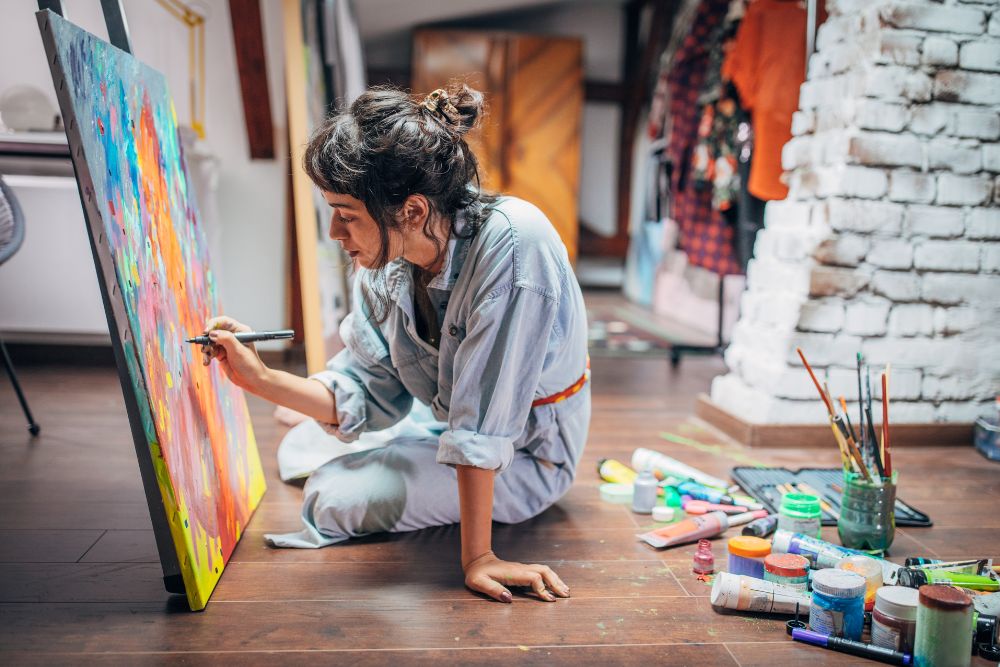
One of the first decisions to make when buying abstract art is whether to invest in fine art or choose mass-produced pieces. There is no “right” or “wrong” here. It largely comes down to budget, values, and expectations. Either way, you are supporting creativity and making your home more personal and expressive.
Fine Art
Fine art is like haute couture. Each piece is unique, created directly by the artist’s hand, often carrying their emotions, thought process, and signature style. Because of its originality, fine art typically comes at a higher price point, but with that comes authenticity, provenance, and lasting value. Owning such a piece means you have something that no one else in the world does, a true one-of-a-kind.
Mass-Produced Art
Mass-produced art, on the other hand, is much more affordable and accessible. It comes in two main forms:
- Handmade reproductions: These are painted by artists (often in studios that specialise in reproductions) who replicate the same design multiple times. While skillfully executed, these works lack the originality and personal expression of the original artist’s vision.
- Prints: These are digitally or mechanically produced copies of an artwork. Prints can be high-quality and even signed in limited editions, but they don’t carry the tactile texture, depth, or material presence of an original painting. Still, they can be a great way to enjoy an artwork you love at a fraction of the cost.
Ultimately, the choice depends on what you value most. If you’re drawn to the uniqueness, story, and emotional connection behind a piece, fine art may be worth the investment. If your priority is decorating a space beautifully on a modest budget, high-quality prints or reproductions can be an excellent solution.
The most important part is to understand what you are getting for your money. Just make sure to choose art that makes you feel something special every time you see it.
Related: What is a Giclée Art Print? Read This Before Buying One
Should You Buy Abstract Paintings Online?
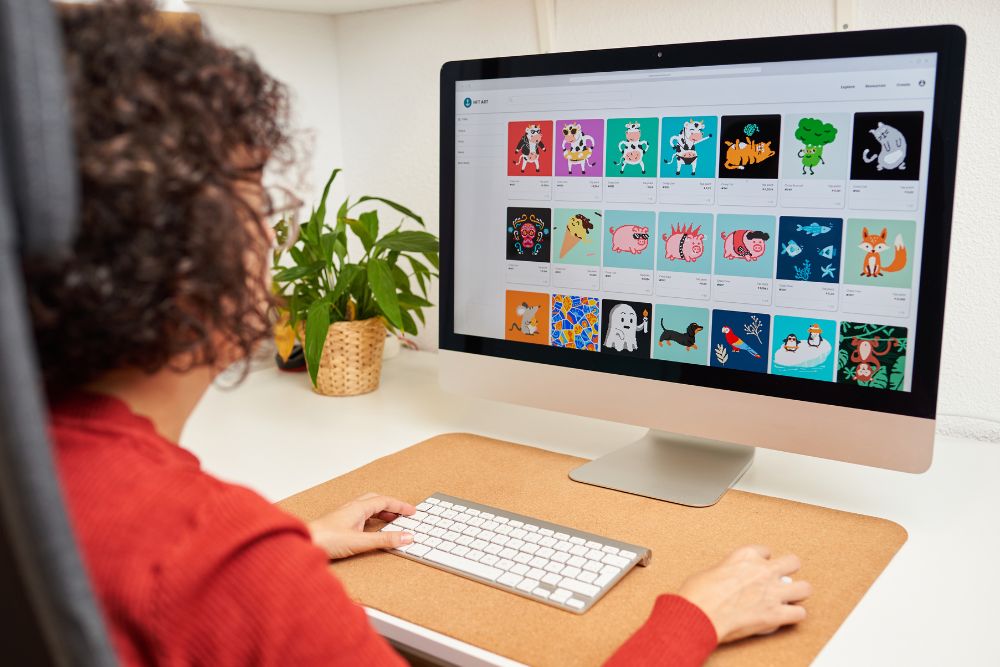
Yes, in a nutshell, but make sure you do your homework.
Reputable sites like Singulart, Saatchi Art, and other independent artist platforms give you access to global artists and a wide range of price points. Look for these things:
- Clear, close-up images
- Artist biographies, artwork details and process descriptions
- Return policies and shipping protection
- Real customer reviews
And don’t hesitate to message the artist or gallery with questions. If something feels off, trust your gut.
Budgeting For Art: What To Expect
It is possible to begin collecting with a small budget. Here’s a quick guide:
- Under $100: Digital downloads or small open-edition prints. This is great for testing your taste.
- $100 to $500: Limited-edition prints or signed works by emerging artists. These are affordable and unique.
- $500 to $2,000: One-of-a-kind original paintings, framed and ready to display.
- $2,000 and up: Valuable pieces, gallery exclusives, or works by well-known artists.
No matter your budget, go for the piece that makes you feel excited. That emotional connection is worth more than any price tag.
Why Abstract Art Is More Than Just Decor
Abstract art becomes a companion in your daily life. You don’t just glance at it. You live with it. Over time, you may find yourself drawn to different aspects of the same piece, discovering new meanings depending on your mood or what you’re going through. It creates a sense of presence, making you feel both surrounded and anchored by its energy.
For many first-time buyers, choosing an abstract painting is a surprisingly intimate step. It feels like embracing a part of your identity. A reflection of taste, values, and even dreams. That’s why art collecting can feel deeply personal. When you bring a piece into your home, you’re not just adding to your decor. You’re curating your own story that is uplifting, strengthening and inspiring.
How To Place Abstract Art In Your Home
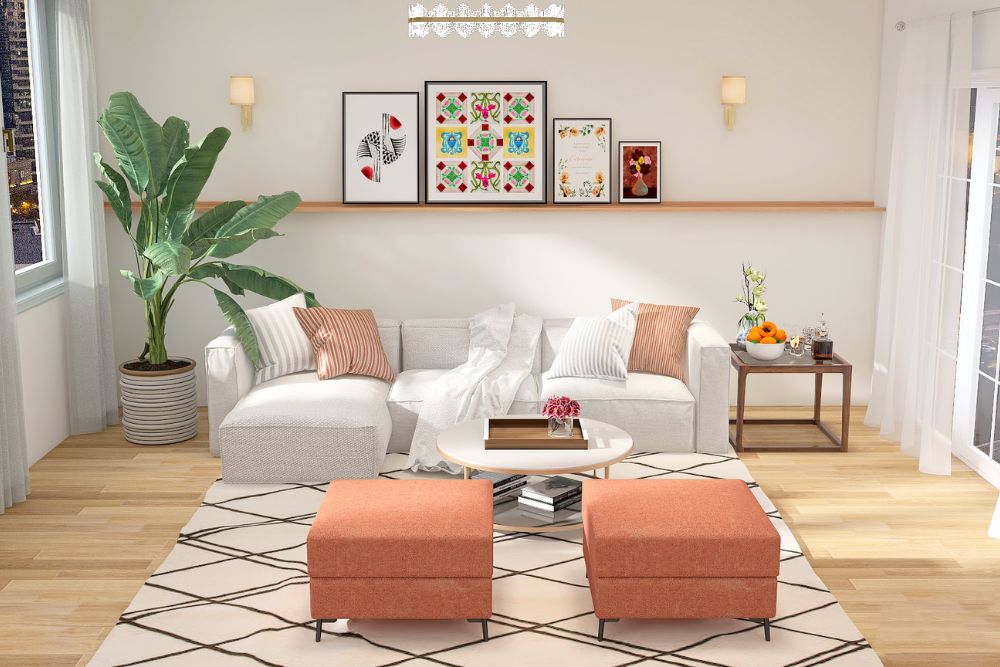
Once you’ve found your piece, placement is crucial. Here’s how to make it stand out.
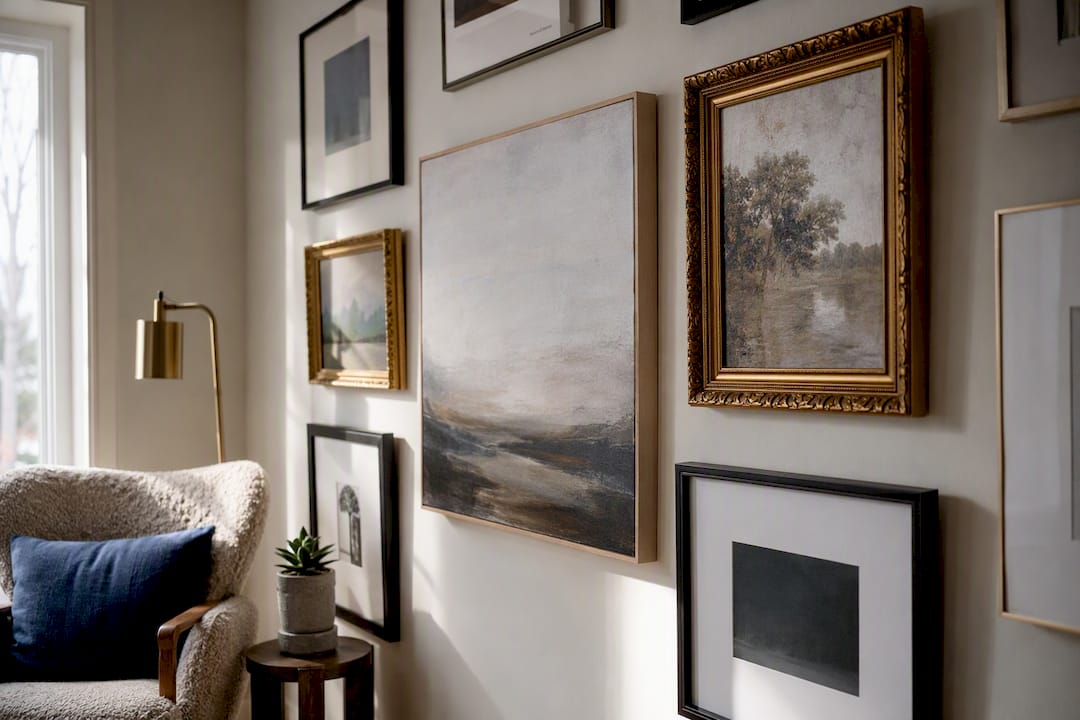
- Match the vibe: Calming pieces work well in bedrooms. Bold, dramatic art fits living rooms or entryways.
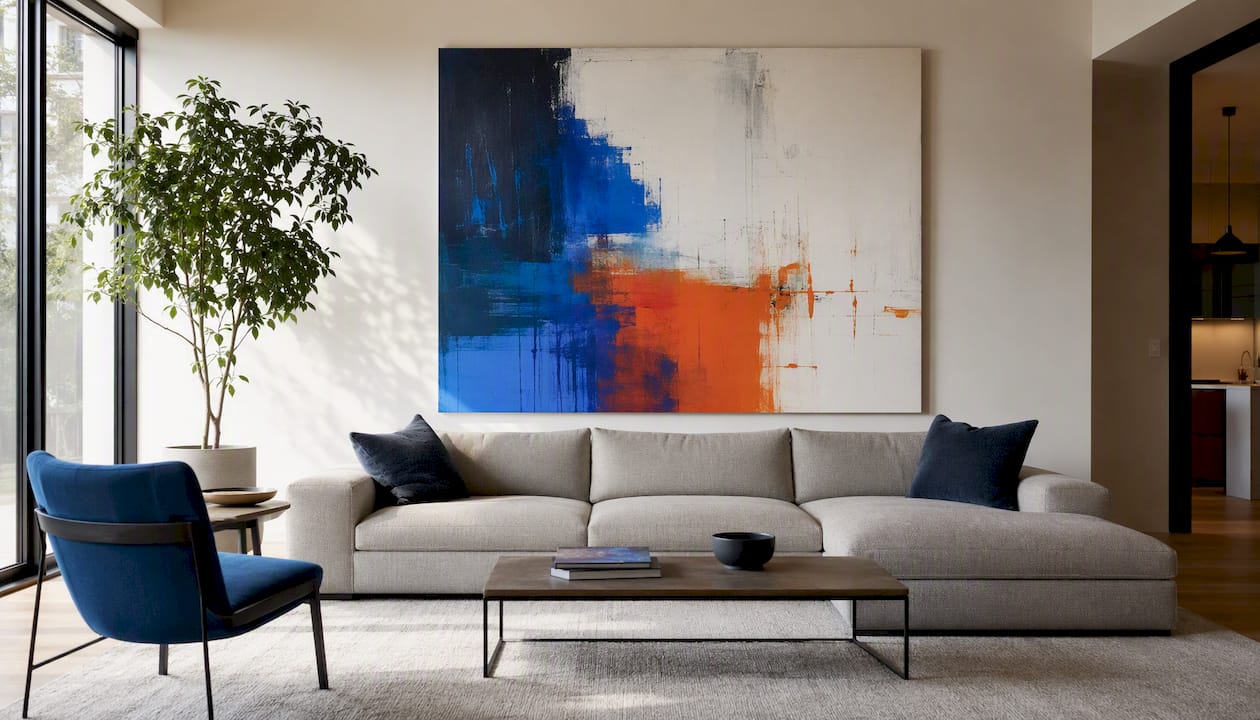
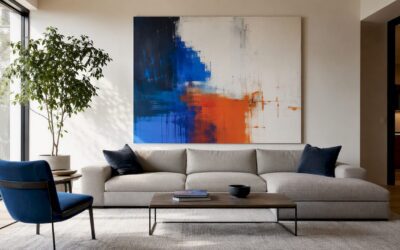
- Go big over the sofa or bed: A large canvas becomes a focal point above furniture.
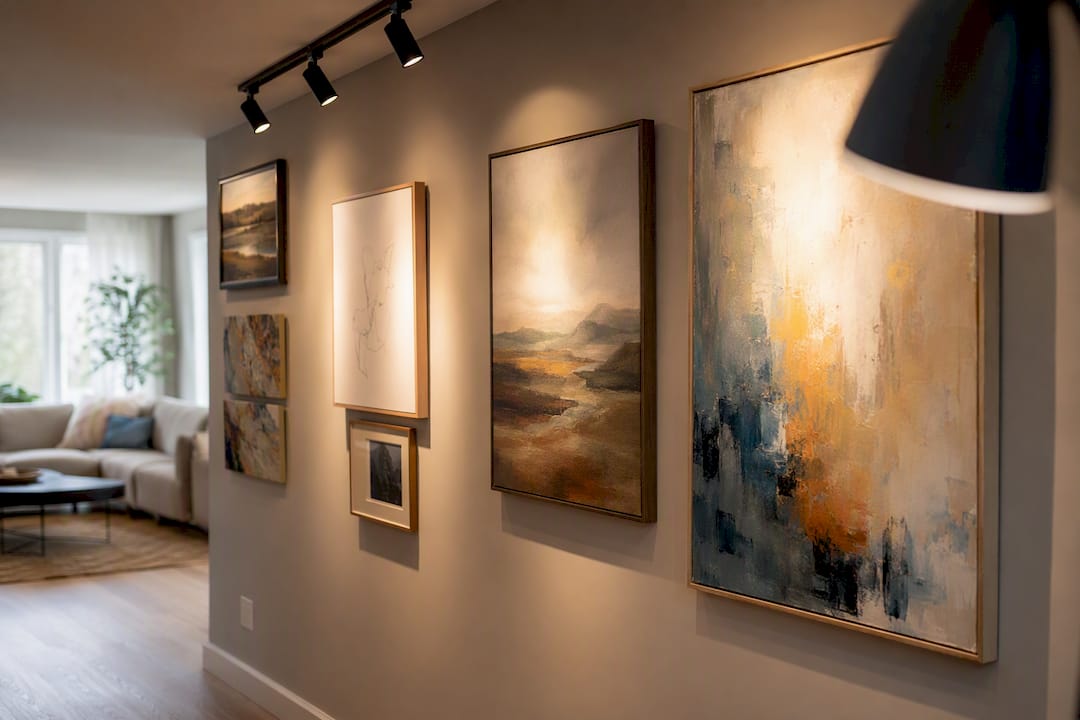
- Play with height in hallways or staircases: Use a vertical piece to draw the eye upward.
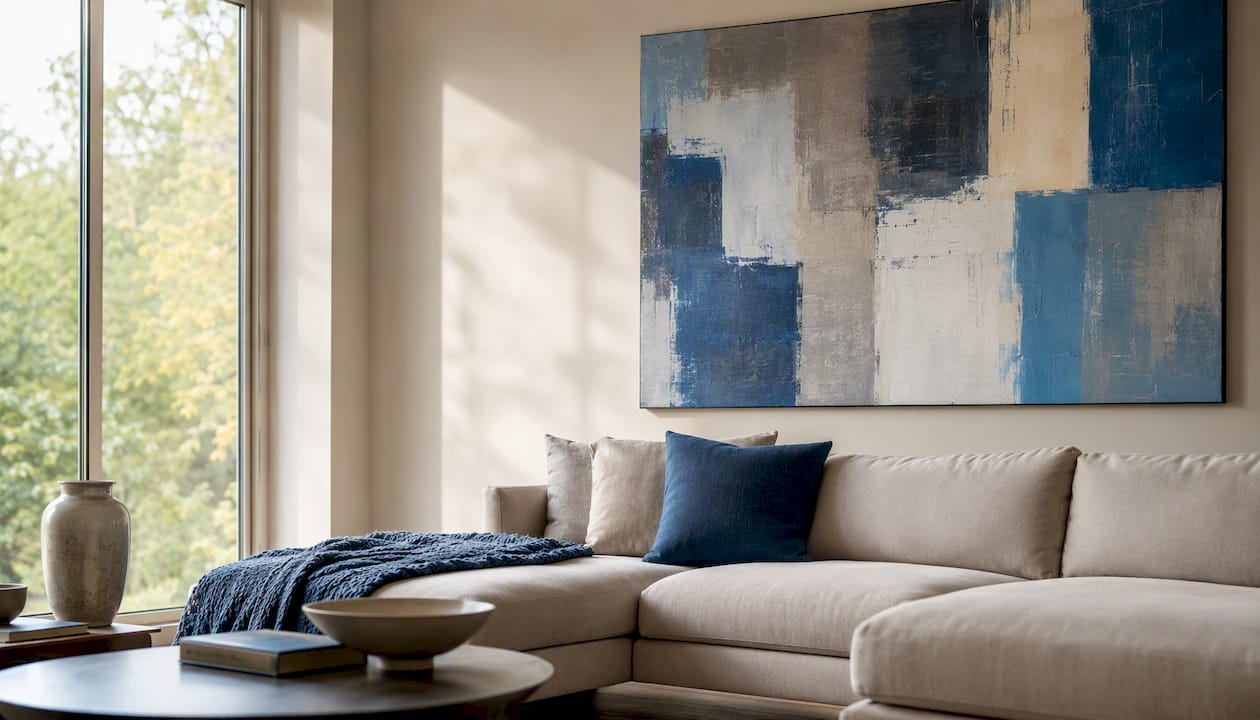
- Use colours from the painting: Tie the space together by repeating tones on pillows, rugs, or throws.
- Choose the right frame: Originals look great in floating mounts. Minimalist works stand out in thin black or white frames.
You Don't Need To Be An Expert
You don’t need a degree in art to buy great abstract art. Just need to be open, curious, and ready to trust your own taste.
Let your gut guide you. If a piece catches your eye, makes you smile, or gives you chills, that’s your sign. Art should move you, not confuse or bother you.
So take your time, explore thoughtfully, and enjoy the journey.