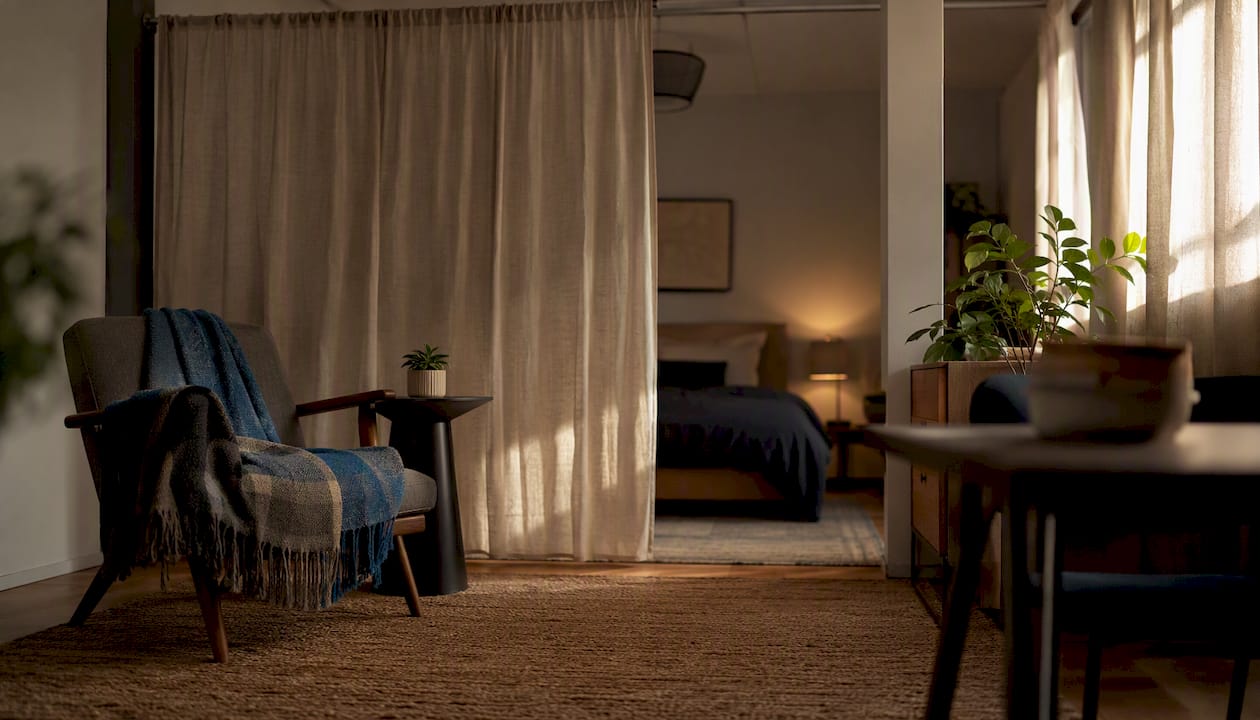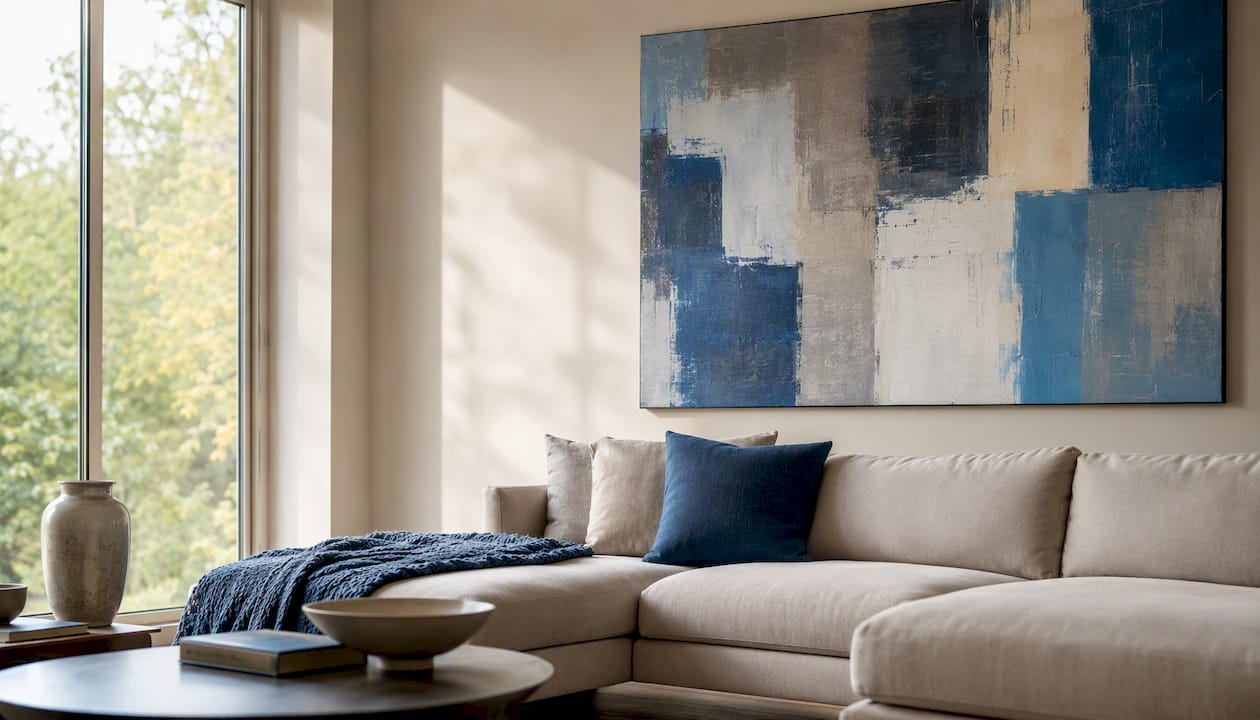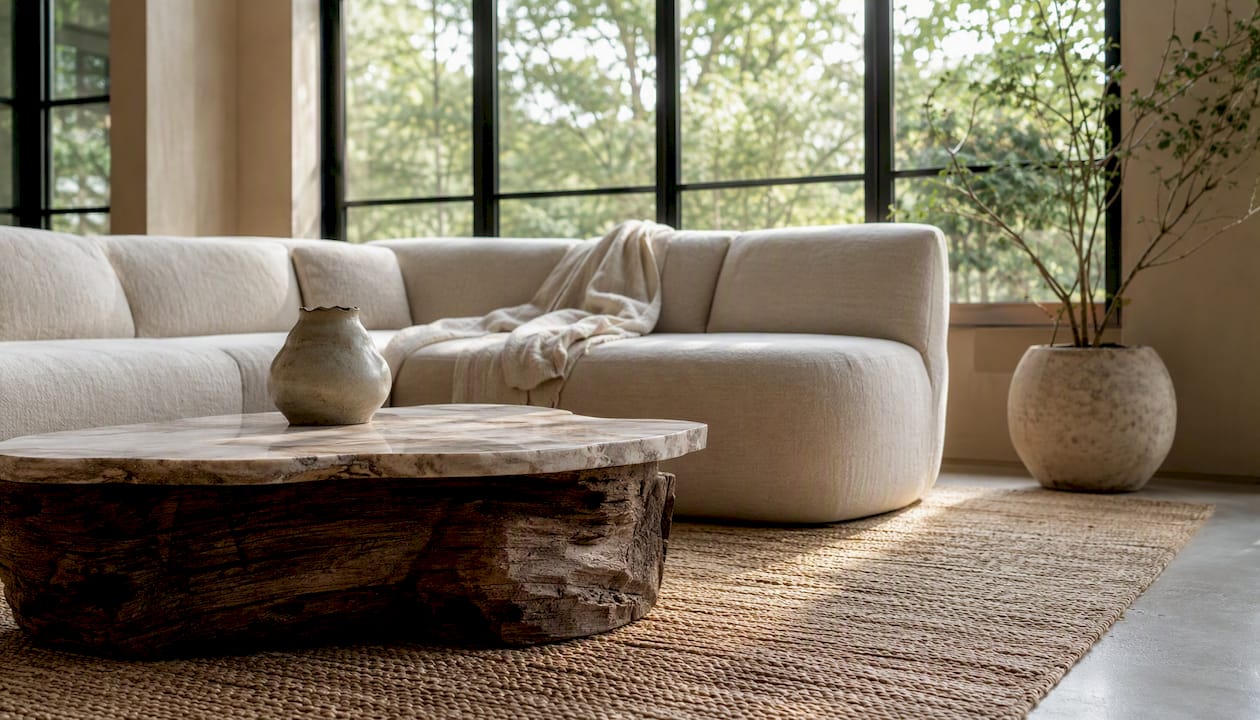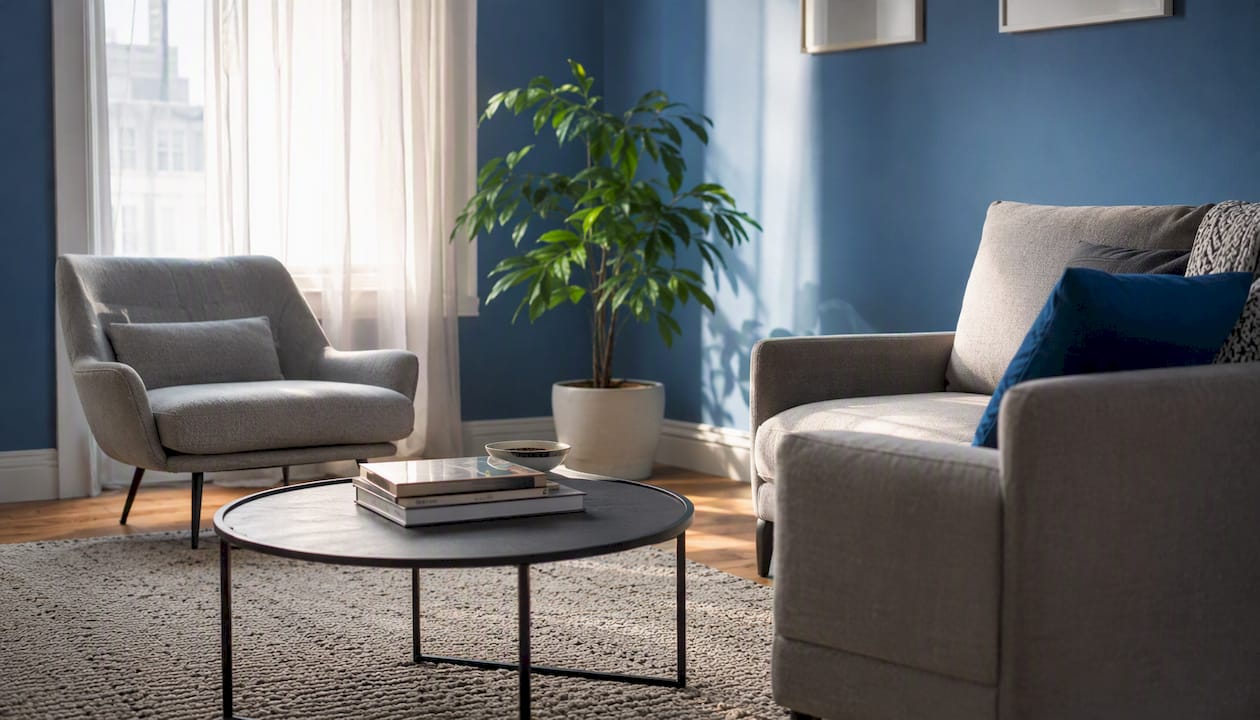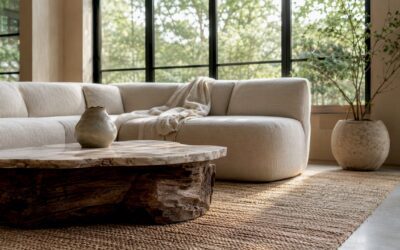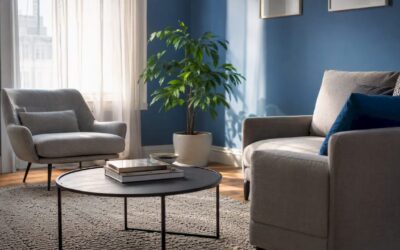
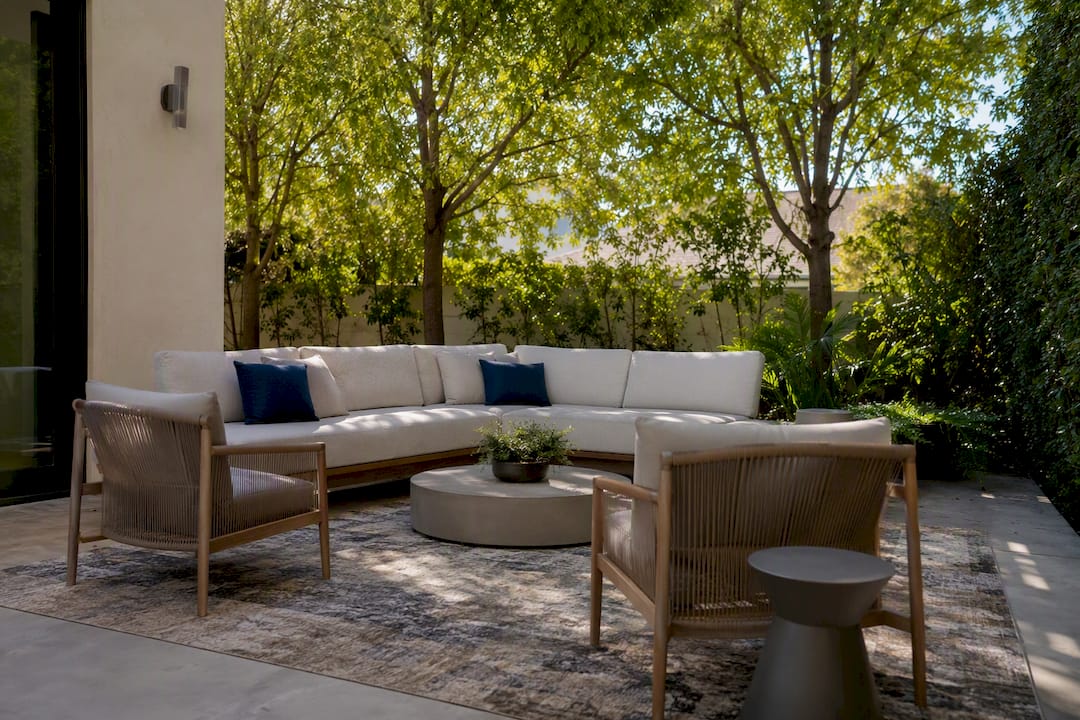
For most living rooms, the correct rug measures 8 feet by 10 feet or 9 feet by 12 feet, and the single rule that governs every good choice is this: size the rug to your seating group, never to the walls of the room. A rug becomes the visual anchor for a sofa, two chairs, and a coffee table. Get that footprint right, and the room reads as intentional. Get it wrong, and even beautiful furniture looks like it is drifting.
A few quick rules make this easier before you shop: For a detailed overview, consult this rug size guide: how to choose the right size.
- Front legs on, back legs off: the sofa and chairs’ front legs rest on the rug while the back legs sit on the floor, a workable middle ground for tighter rooms.
- All legs on: every piece of seating sits fully on the rug, which typical living room rug sizes like 9’x12’ or 10’x14’ handle well in larger spaces.
- Width minimum: the rug should extend at least 6 to 8 inches past each side of the sofa, with 8 to 12 inches considered the ideal buffer.
- Fallback sizes: 5’x8’ for compact apartments and reading nooks, 6’x9’ for small-to-medium rooms, 8’x10’ for standard layouts, 9’x12’ and up for open-plan or sectional-heavy spaces.
Before you buy, tape out your seating area on the floor. It takes ten minutes and saves you a return shipment.
Key Takeaways
Rug size should always follow the seating group’s footprint, not the room’s total square footage, with 8’x10’ and 9’x12’ covering most standard living rooms.
| Point | Details |
|---|---|
| Size to furniture, not walls | Measure your seating group’s outer footprint first, then add margin for the rug. |
| Standard starting sizes | 8’x10’ fits most three-seat sofa layouts; 9’x12’ suits sectionals or all-legs-on setups. |
| Minimum sofa overhang | Extend the rug at least 6 to 8 inches past each side of the sofa, 8 to 12 ideal. |
| Coffee table framing | Leave roughly 12 to 16 inches of visible rug on each side of the coffee table. |
| Test before buying | Tape out your seating footprint on the floor to confirm the size before ordering. |
Table of Contents
- What Rules Govern Rug Size and Placement in a Living Room?
- Which Standard Rug Size Fits Your Seating Group?
- How Do You Measure Your Living Room for a New Rug?
- How Should Rugs Fit Around Sofas, Sectionals, and Coffee Tables?
- Should You Choose a Round, Rectangular, or Runner Rug?
- What Materials and Pile Heights Work Best for Living Rooms?
- What Rug Mistakes Do Homeowners Make Most Often?
- What Do Interior Designers Recommend for Living Room Rugs?
- Frequently Asked Questions
- Sources
What Rules Govern Rug Size and Placement in a Living Room?
Interior designers work from three placement approaches, and picking the right one determines everything else about your rug’s dimensions.
- All legs on the rug. Every sofa, chair, and side table sits entirely within the rug’s borders. This reads as the most formal, grounded look, and it demands the largest rug, usually 9’x12’ or larger, depending on how much seating you have.
- Front legs on the rug. Sofas and chairs have their front legs on the rug while the back legs rest on bare floor. This is the most common compromise in mid-size living rooms because it visually unifies the furniture without requiring a massive rug.
- Floating rug. A smaller rug sits in the center of the seating group with no furniture touching it at all. This works in small rooms or as a deliberate, minimalist styling choice, but it can look accidental if the proportions are off.
Numbers matter more than instinct here. Aim for 6 to 12 inches of overlap under front legs, and leave 18 to 36 inches of walkway clearance between the rug’s edge and any adjacent furniture group, like a media console or entry hallway. If your room is open-plan or built around an L-shaped sectional, size up. A rug that looks generous on paper often looks correctly scaled once a nine-foot sectional sits on it. Rug sizing works best when it follows the furniture’s footprint rather than the dimensions of the room itself, which is why two identically sized living rooms can call for two completely different rugs depending on what sits inside them.
Smaller rugs are not automatically a mistake. In a reading nook or a secondary sitting area, a deliberately modest rug can define a zone without overwhelming it.
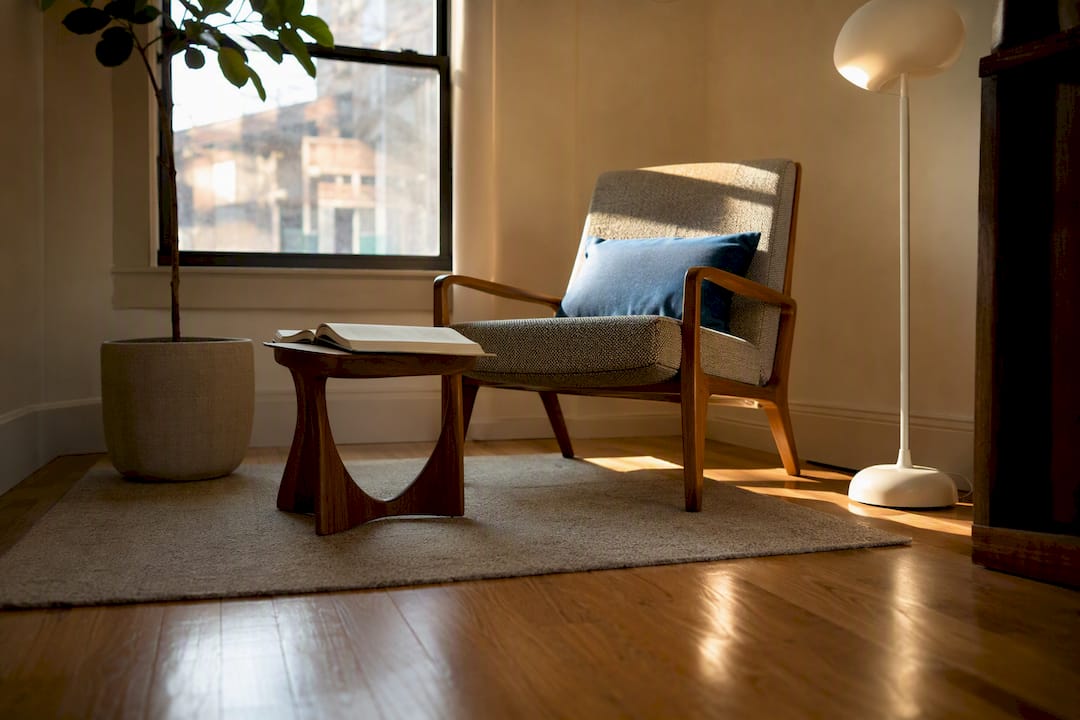
Pro Tip: Choose a low-pile or flat-weave rug under coffee tables and heavy furniture. High-pile rugs look luxurious but let table legs sink and wobble, and a rug pad underneath prevents both slipping and premature wear.
Which Standard Rug Size Fits Your Seating Group?
Use this as a starting point, then adjust based on your specific furniture footprint and layout style.
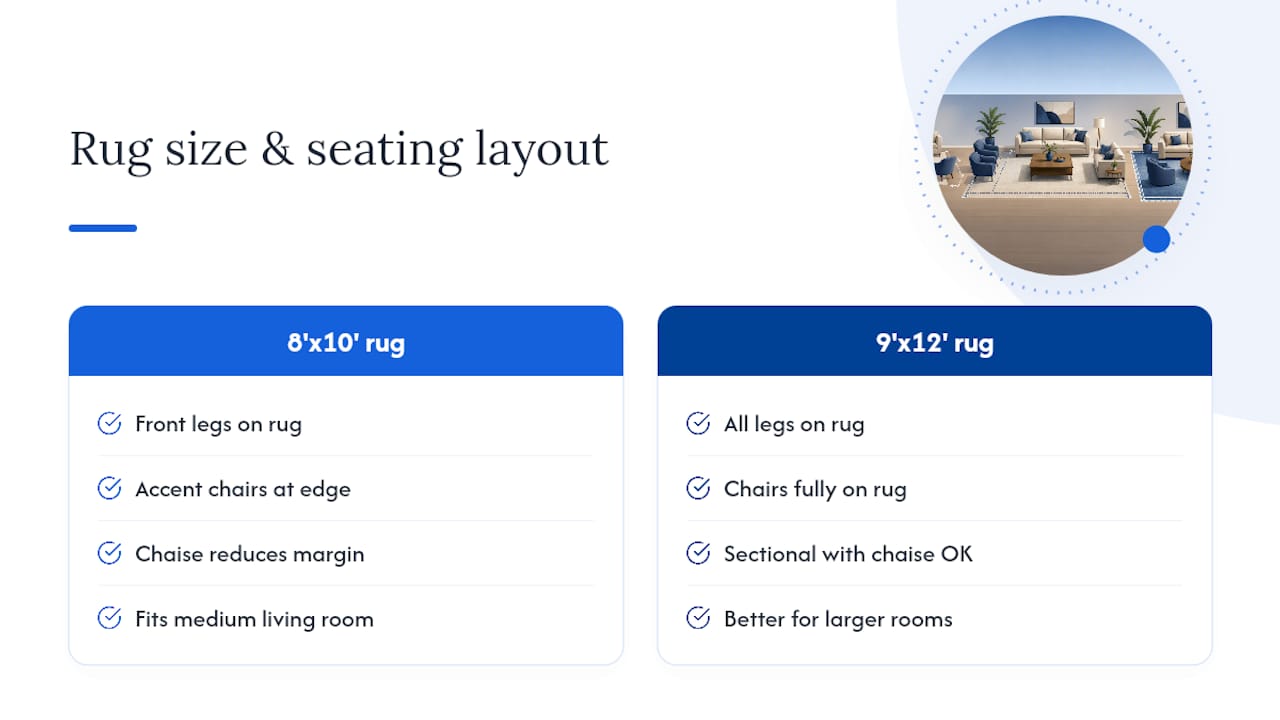
An 8’x10’ rug is the workhorse size for a standard three-seat sofa with front legs resting on the rug and two accent chairs angled just at its edge. Step up to 9’x12’ the moment you add an all-legs-on layout or a sectional with a chaise, since that extra depth eats into your margin fast. As a general guide, an 8’x10’ often fits comfortably in a typical medium-sized living room, while anything larger benefits from stepping up to a 9’x12’ or 10’x14’.
How Do You Measure Your Living Room for a New Rug?
Grab a tape measure, a roll of painter’s tape or kraft paper, a marker, and ideally a second set of hands. This ten-minute exercise prevents the single most expensive mistake in rug shopping.
- Arrange your furniture the way you actually want it, or mark where it will go.
- Measure the outer footprint of your seating group, including any chaise, ottoman, or side table you want anchored.
- Add your desired margin, typically 6 to 12 inches for front-legs-on layouts or 18 inches and up if you’re sizing generously.
- Tape out that rectangle directly on the floor using painter’s tape or cut kraft paper.
- Walk the space. Check sight lines from the entry, and confirm walkways still have 18 to 36 inches of clearance.
- Test at least two size options side by side before committing.
Most buyers eyeball rug size and end up undersized, which is exactly what this exercise prevents. If you’re shopping online, measure any return window’s fine print before ordering, and remember that sectionals or deep chaise sections often need a size larger than the tape template suggests once the actual rug arrives with its finished binding.
How Should Rugs Fit Around Sofas, Sectionals, and Coffee Tables?
The coffee table is where most living rooms succeed or fail visually. Aim for roughly 12 to 16 inches of rug visible on each side of the table so the table looks framed rather than accidentally placed. A table with half its legs off the rug edge reads as a mistake, not a style choice.
- Sofa overhang: choose a rug wider than the sofa by several inches to create visual balance.
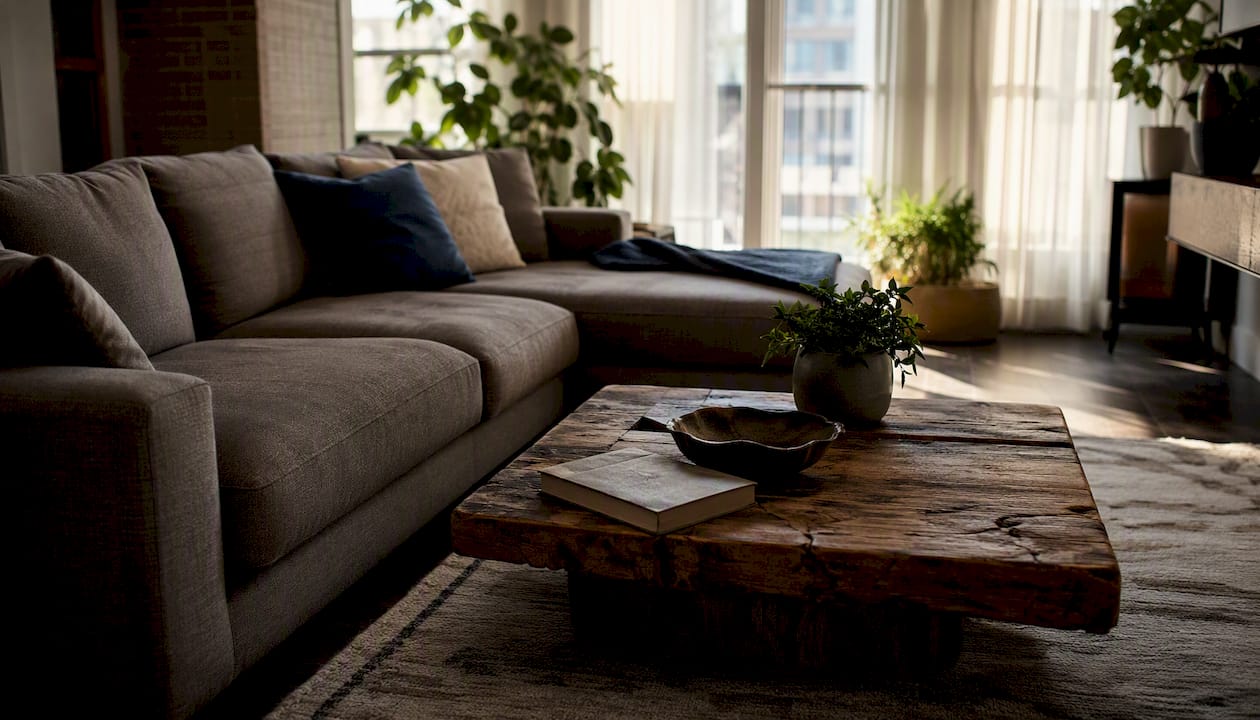
- Sectionals: L-shaped and U-shaped sectionals almost always need a size larger than a standard sofa footprint suggests, since chaise depth extends well past a typical seat cushion.
- Large U-shaped layouts: two coordinated rugs, or a single rug in the 12’x15’ range, often work better than forcing one oversized rectangle.
- Side and console tables: these don’t need to sit on the rug at all, but if they flank the sofa, having their front legs touch the rug edge helps tie the grouping together.
- Media consoles: keep these off the rug entirely in most layouts, since the rug’s job is anchoring seating, not the whole wall.
Should You Choose a Round, Rectangular, or Runner Rug?
Room shape and furniture grouping should drive this decision more than personal preference alone.
- Round rugs work best in square rooms or when seating is arranged around a round coffee table, since they echo that circular geometry.
- Runners suit long, narrow living rooms, hallway-adjacent seating areas, or as a layering piece alongside a larger rug.
- Rectangular rugs should align with the room’s dominant axis, running parallel to the longest wall or the seating group’s orientation, not perpendicular to it.
- Bold medallion patterns or large-scale prints need extra breathing room around the edges, or the design gets visually cut off by furniture legs.
What Materials and Pile Heights Work Best for Living Rooms?
Wool holds up to daily traffic and resists stains reasonably well, though it costs more upfront. Synthetic blends offer a budget-friendly, stain-resistant option for busy households. Jute and sisal add texture but wear rough underfoot and don’t love spills. Cotton works well for lighter-use spaces but flattens faster under heavy furniture.
- Low-pile: best for stability under coffee tables and in high-traffic zones.
- High-pile or plush: comfortable underfoot but tricky to level furniture legs against.
- Rug pads: always use one to reduce slipping and extend the rug’s life, and a good pad also makes a rug feel larger and more substantial underfoot.
Pro Tip: If budget limits the size you can afford, layer a smaller decorative rug over a large, inexpensive neutral base like sisal or jute. You get the visual scale of a big rug without the cost of an oversized wool piece.
What Rug Mistakes Do Homeowners Make Most Often?
- Buying too small: the single most common error is not measuring the seating group first; fix it by adding at least 18 inches to each side of your furniture footprint before choosing a size.
- Wrong orientation: a rectangular rug running against the room’s natural axis looks off no matter how nice the pattern is; simply rotate it 90 degrees.
- Ignoring sectional depth: chaise sections eat rug real estate fast, so measure the full L-shape, not just the main seat run.
- Furniture legs floating off the edge: a rug that leaves major legs hanging off the border looks unfinished; either size up or shift to a front-legs-on layout.
- Returning versus adapting: if the rug is off by just a few inches, try repositioning furniture first. If it’s a full size category too small, exchange it rather than fight the layout.
What Do Interior Designers Recommend for Living Room Rugs?
Prioritize furniture footprint over floor plan every time. Scale your rug’s pattern to its size, since a busy medallion print on a 5’x8’ rug reads cluttered, while the same pattern on a 9’x12’ can breathe. Neutral base rugs remain a smart long-term investment because they let you layer smaller statement pieces on top as trends shift without replacing the whole floor.
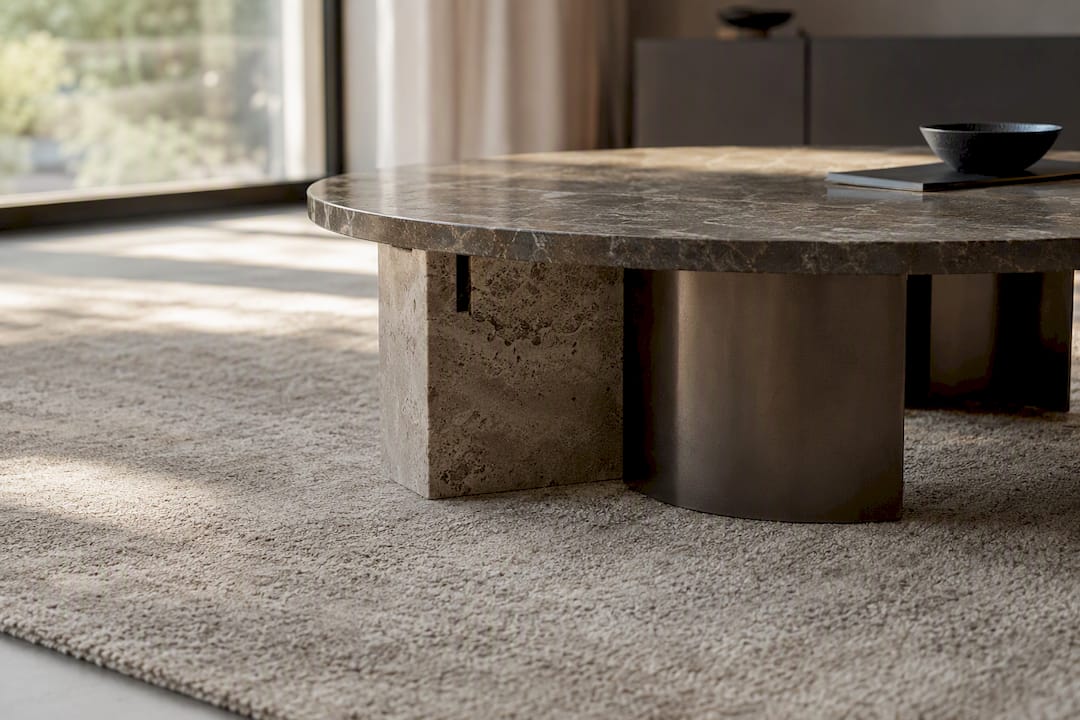
Coordinate rug tone with nearby coffee table materials and finishes so the seating group feels considered rather than assembled piece by piece. For further layout inspiration, reviewing common living room arrangements before you tape out your template can help confirm your seating group’s true footprint.
Why the Furniture Comes First
Rooms don’t have a single “correct” rug size on paper. They have a correct rug size relative to the furniture living inside them. That distinction is why Artinlifestyle keeps returning to seating footprint as the starting measurement, not square footage.
Frequently Asked Questions
How big should a rug be for a living room with a standard sofa?
For a typical 84-inch sofa, an 8’x10’ rug works well with a front-legs-on layout, giving you 8 to 12 inches of overhang on each side.
How big should the rug be under a dining table?
Add at least 24 inches on all sides of the dining table so chairs stay on the rug even when pulled out, which usually means sizing up from what feels intuitive.
Do all four sofa legs need to be on the rug?
No. Front-legs-on is a common and visually solid compromise, especially in small to medium rooms where an all-legs-on layout would require an oversized rug.
What’s the best rug size for a sectional sofa?
Most sectionals need one size larger than a standard sofa calls for, often 9’x12’ or bigger, because chaise depth extends past typical seat measurements.
Can a rug be too big for a living room?
Rarely. Oversized rugs generally look more intentional than undersized ones, as long as you leave at least a few inches of bare floor visible around the room’s perimeter.
Ready to pull your whole room together once the rug is right? Artinlifestyle’s Art Concierge service helps homeowners match rugs, art, and furniture into one cohesive design plan.
Sources
Consult Emily Henderson’s sizing guide and the Rug Industry News layout guide for published charts and templates.
- Choosing THE RIGHT Rug Size For Every Room (All Of Our Tips And Tricks) – Emily Henderson
- How to Place a Rug in a Living Room: Sizing and Layout for Every Space – D and G Flooring
- Living Room Rugs: Size, Placement & Style Guide – ADORNO DESIGN
- How to Choose the Right Rug Size for a Living Room – Rug Industry News
- 10 Area Rug Placement Dos and Don’ts – The Spruce
Recommended
- Area Rug Trends 2025: What’s In for Your Home
- Apartment Flowers for Small Spaces: Easy Picks and Styling
- French Alps Interior Inspiration: Chalet Chic Shopping Guide