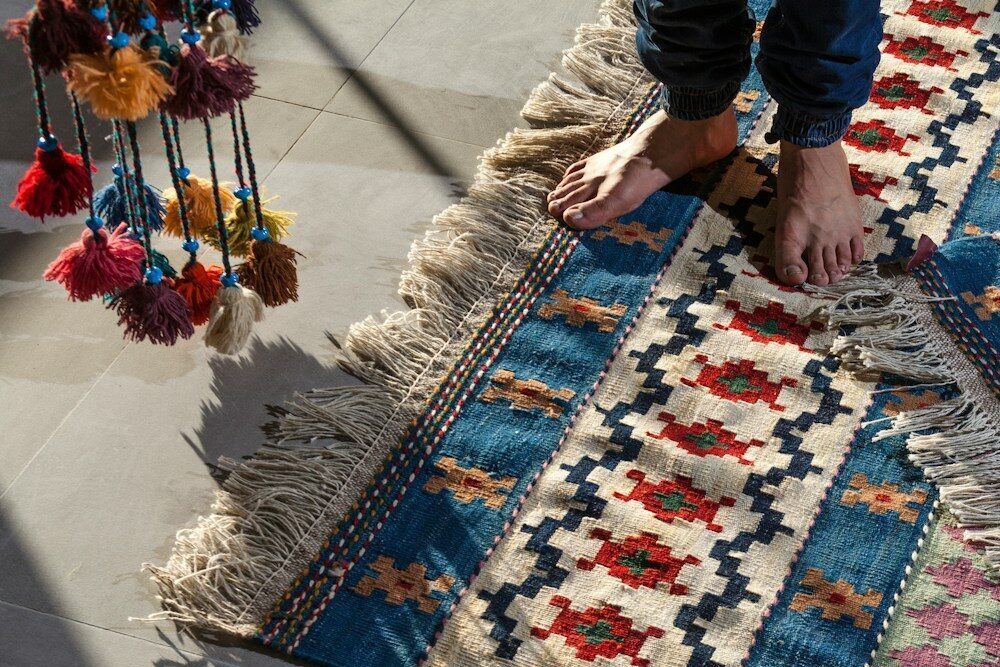
The defining area rug trends for 2026 center on warmth, texture, and quiet intention. Earth tones have replaced high-contrast maximalism. Handcrafted materials are outperforming synthetic novelties. Organic shapes are softening rigid floor plans. Here is a quick scan of what is leading the conversation this year:
- Warm neutrals and earthy palettes: terracotta, olive green, sandstone, mossy green, and burnt sienna
- High-pile and textured rugs: high-low piles, tufted details, and woven constructions that read as sculptural
- Handcrafted and durable materials: hand-knotted wool, jute, sisal, and sustainable recycled fibers
- Vintage revival with distressed finishes: faded medallions, worn florals, and antique-inspired patinas
- Organic and irregular shapes: ovals, rounded edges, and asymmetrical outlines replacing the standard rectangle
- Simplified geometric and minimalist patterns: tonal grids and soft geometrics over busy maximalist prints
- Sustainable and eco-friendly materials: natural fibers with low environmental impact
- Washable and performance-driven luxury: durable polyester and washable constructions from brands like Ruggable
- Cultural and geographic influences: Persian, Moroccan, and tribal motifs reinterpreted in muted palettes
- Technology integration: smart textiles and washable luxury constructions entering the mainstream
Brands like Salam Hello Rugs, Rugs USA, Loloi Rugs, and Ruggable are each reflecting these shifts in their current collections, offering homeowners access to these trends at a range of price points.
Table of Contents
- 1. Warm neutrals and earthy palettes define 2026 rug colors
- 2. Texture is the quiet hero of 2026 rug design
- 3. Vintage revival and organic shapes are reshaping the floor
- 4. Simplified patterns are replacing maximalist overload
- 5. Rug styles designers say to leave behind in 2026
- 6. New materials and shapes are pushing rug design forward
- 7. Mixing modern and old styles creates the most interesting rooms
- 8. Smart and performance-driven rugs are entering the mainstream
- 9. Cultural and geographic influences are shaping 2026 rug designs
- 10. Sizing and placement trends are shifting toward intentionality
- Key Takeaways
1. Warm neutrals and earthy palettes define 2026 rug colors
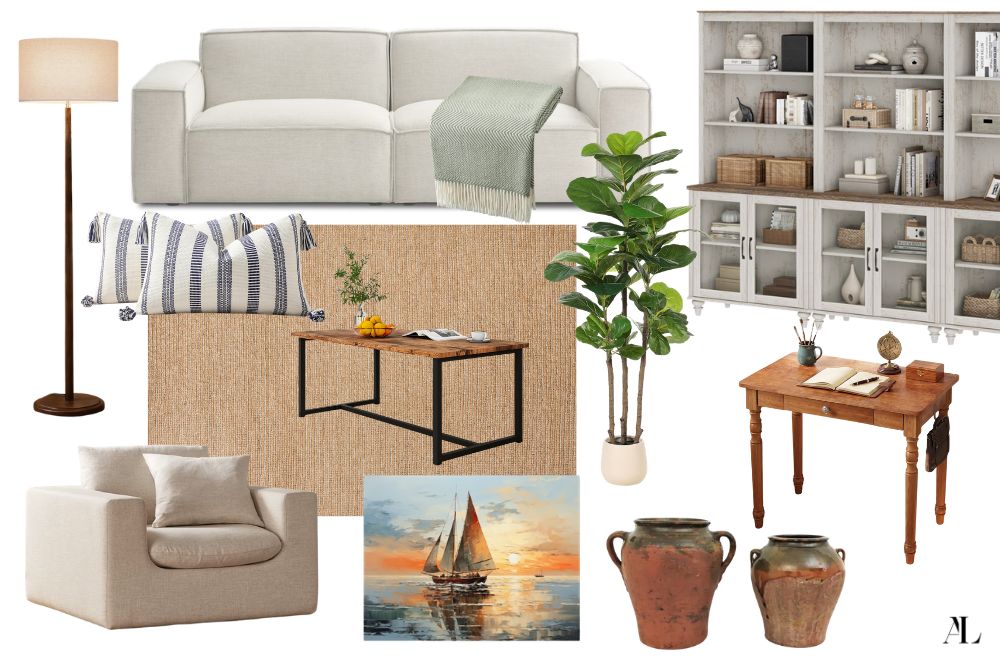
Earthy and muted color palettes dominated the rug market in 2026, with terracotta, olive green, sandstone, mossy green, and burnt sienna replacing the high-contrast maximalism of recent years. These shades carry a grounded, almost geological quality. They do not compete with furniture or art; they anchor the room beneath everything else.
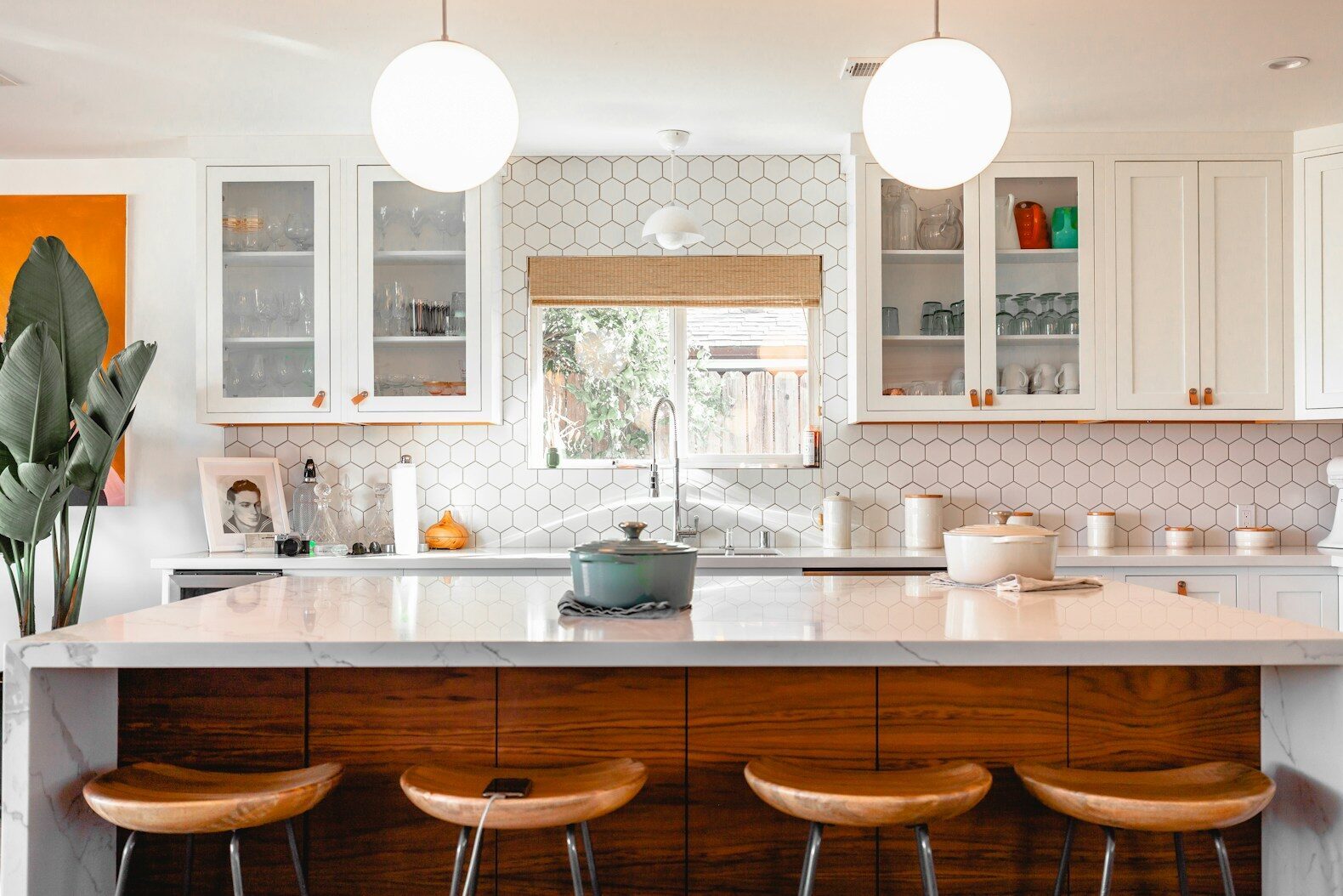
Earth tones pair naturally with wood finishes and neutral furnishings, creating a cozy, inviting atmosphere that feels organic rather than decorated. The appeal is partly sensory: warm ochres and dusty greens evoke the outdoors, supporting the biophilic design instinct that has shaped interiors for several years now. These trending color palettes also appear across kitchen and living room updates, making them easy to coordinate across an entire home.
- Terracotta and burnt sienna for living rooms with warm wood tones
- Olive and mossy green for spaces with linen, rattan, or ceramic accents
- Sandstone and warm beige as neutral foundations for layered rug arrangements
Pro Tip: When selecting an earthy rug, pull one color from an existing element in the room, whether a throw pillow, a ceramic vase, or exposed wood grain, and match the rug’s undertone to it. Tone-on-tone coordination reads as intentional rather than accidental.
2. Texture is the quiet hero of 2026 rug design
Textured rugs with high pile, shaggy fibers, and woven designs are among the most significant shifts in 2026 home decor rug trends. Where pattern once did the heavy lifting, texture now carries the room. Designer Regan Baker puts it plainly: “Clients are seeking more texture rather than pattern when it comes to rugs.” That means monochrome pieces with sections of high and low pile, woven rugs with visible construction details, and tufted surfaces that catch light differently depending on the angle.
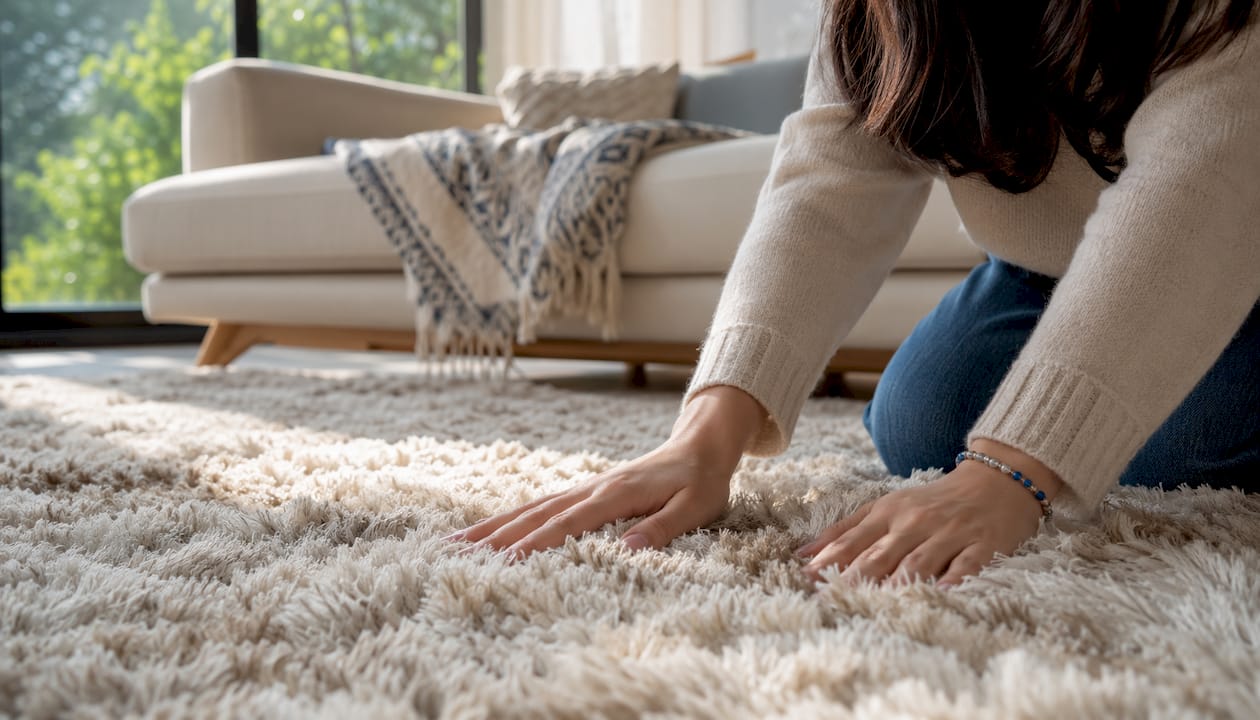
The 2026 “living luxury” trend balances artisanal quality with durable construction, making hand-knotted wool and silk rugs practical for daily use rather than fragile showcase pieces. This is a meaningful shift. A rug that cannot survive a household is not a design asset.
Desirable material features for 2026:
- Wool: natural resilience, warmth underfoot, and long-term durability
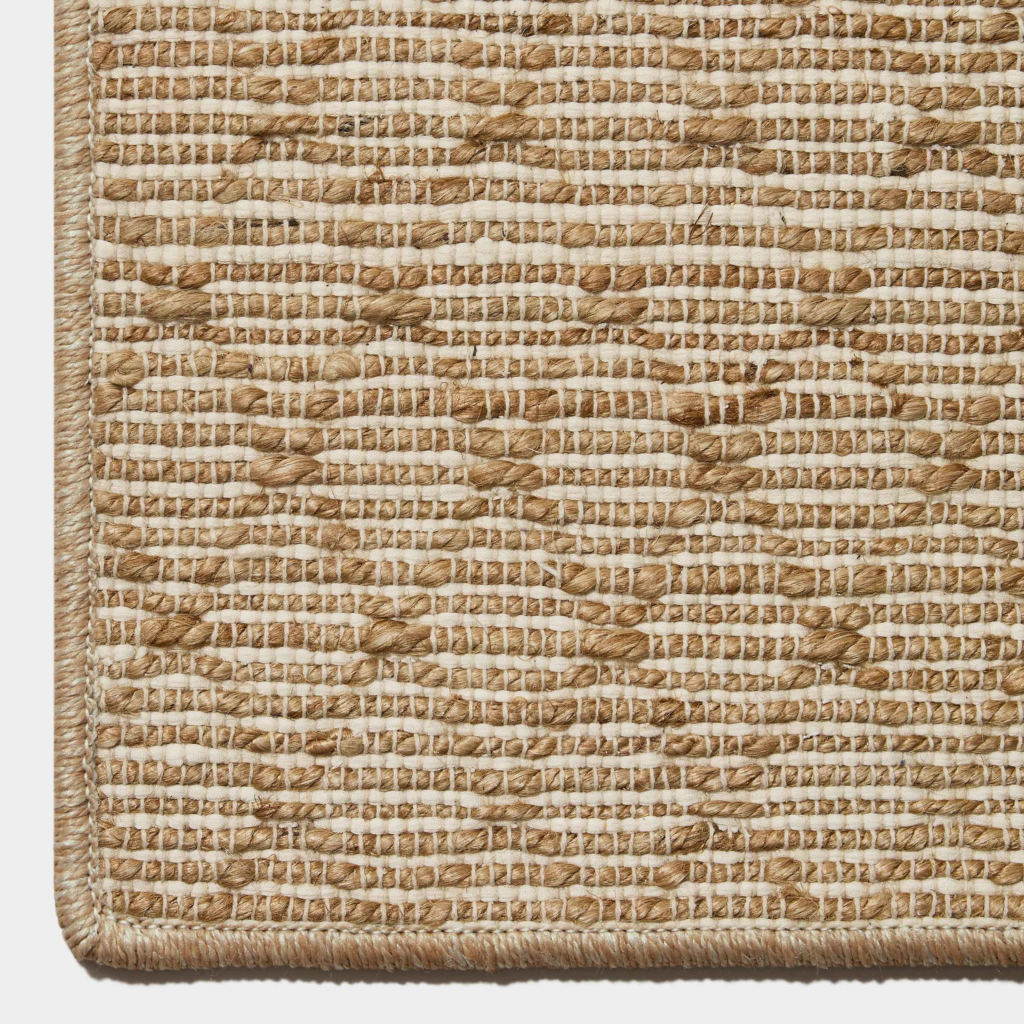
- Jute and sisal: breathable, sustainable, and visually grounding
- High-low pile constructions: sculptural depth without visual noise
- Hand-knotted and hand-tufted finishes: artisanal marks that read as craftsmanship, not just texture
- Recycled and sustainable fibers: increasingly available through brands like Loloi Rugs
Pro Tip: In high-traffic areas, choose a flat-weave or low-pile wool over a shag construction. The tactile warmth remains; the maintenance burden drops considerably.
3. Vintage revival and organic shapes are reshaping the floor
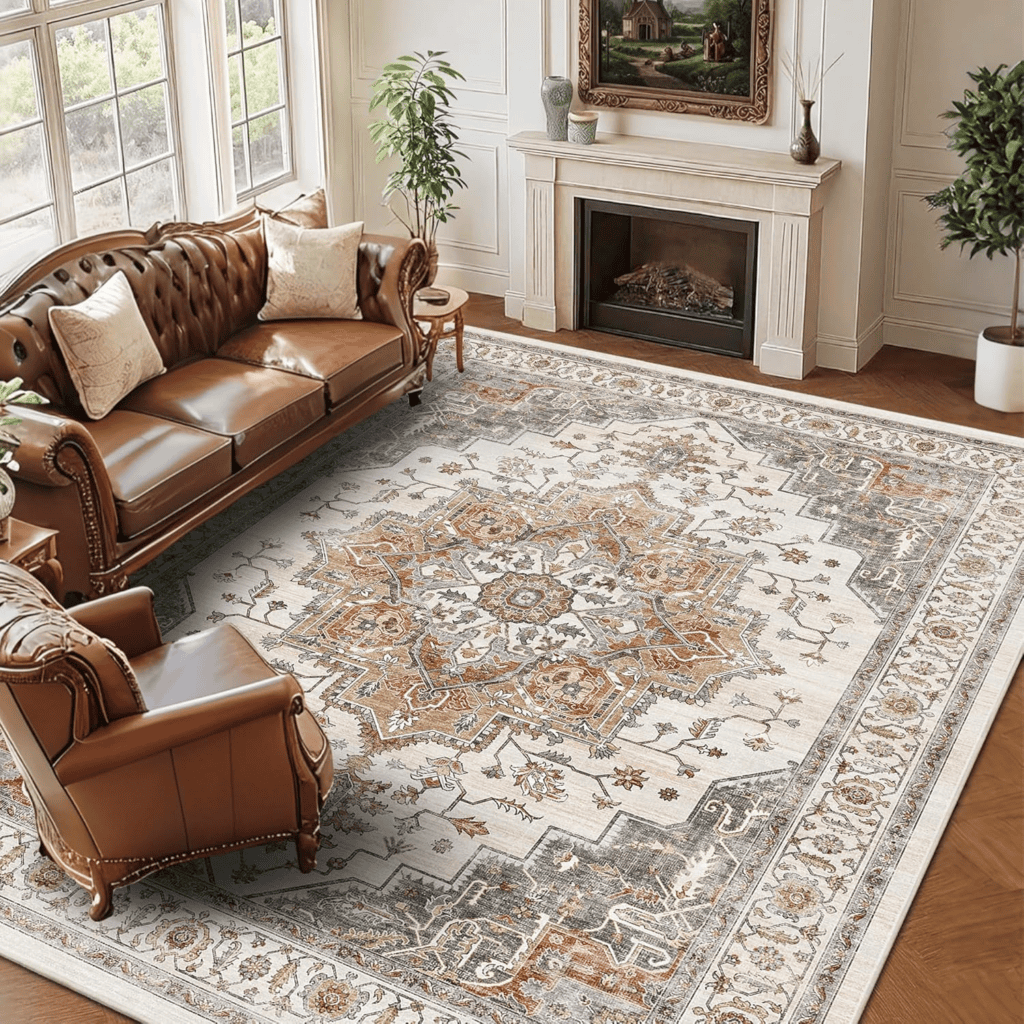
The vintage revival is not nostalgia for its own sake. Faded medallion patterns, worn florals, and distressed Persian-inspired motifs are being updated with muted 2026 palettes, giving them a freshness that purely antique pieces cannot offer. Loloi Rugs has built much of its identity around exactly this tension between old-world craft and contemporary color sensibility, and its collections reflect how well the two can coexist.
Organic and irregular rug shapes are equally prominent. Homeowners are choosing ovals, rounded edges, and asymmetrical outlines over traditional rectangles, often to complement architectural features rather than fight them. Baker describes the logic well: “Rather than wall-to-wall rugs, clients are choosing to follow the shape of the room, embracing what’s there, such as a fireplace or other architectural element.” A round rug near a curved sofa, or an irregular organic shape that echoes a bay window, creates intimacy rather than imposing geometry.
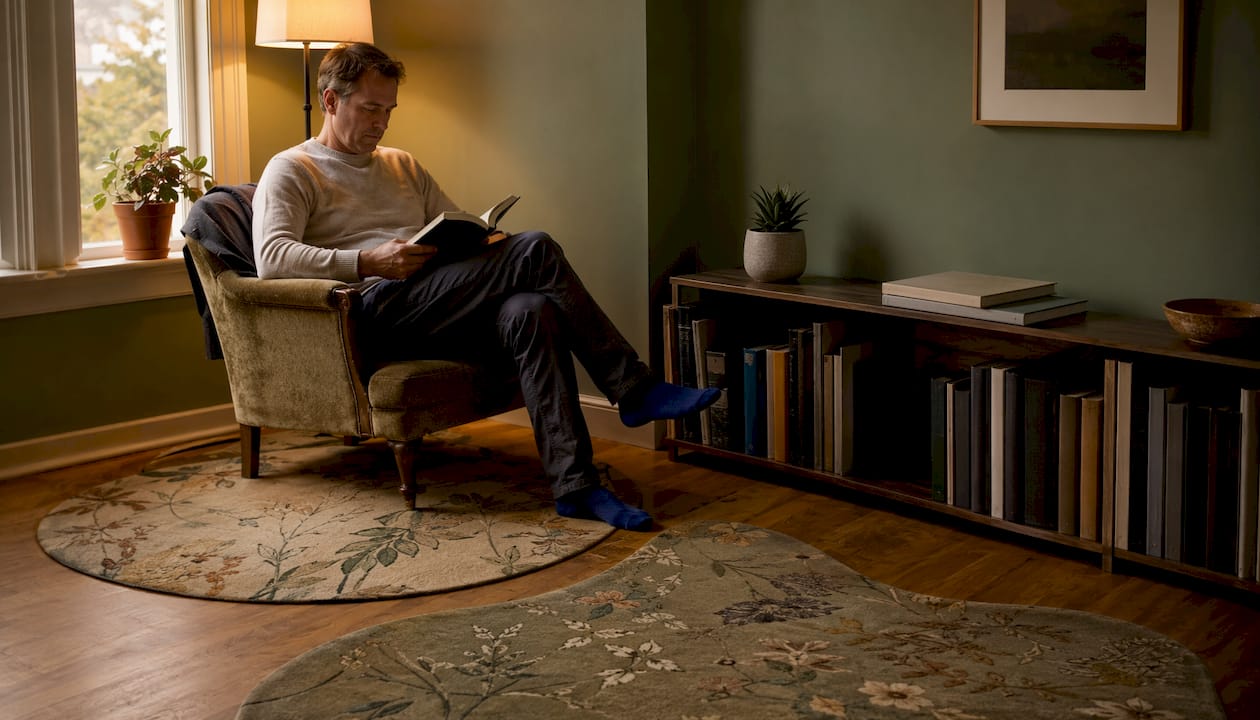
| Style | What makes it current | Best pairing |
|---|---|---|
| Distressed vintage medallion | Muted palette update on traditional motifs | Minimalist or transitional interiors |
| Faded floral Persian | Worn finish adds depth without heaviness | Eclectic or layered spaces |
| Oval or round organic | Softens rigid furniture grids | Living rooms with curved or asymmetric furniture |
| Asymmetric abstract outline | Sculptural, editorial quality | Open-plan spaces needing zone definition |
Pro Tip: Before committing to an irregular or organic shape, outline the proposed footprint on your floor with painter’s tape. This simple step reveals whether the shape harmonizes with your room’s architecture or simply creates visual confusion.
4. Simplified patterns are replacing maximalist overload
Bold geometric patterns are returning in simplified and tonal forms, replacing the high-contrast, multi-color maximalism that dominated recent years. Think green-on-green stripes, hand-knotted square patterns in maroon and beige, or soft plaid constructions that read as quiet rather than loud. The checkerboard and paisley intensity of the early 2020s has given way to something more considered.
This shift aligns with the broader move toward transitional interiors, where statement furniture from different periods shares a room and needs a unifying floor element rather than a competing one. A tonal grid or a softened geometric does not demand attention; it provides visual rest.
| Trending in 2026 | Fading out |
|---|---|
| Tonal stripe (tone-on-tone color) | High-contrast checkerboard |
| Soft geometric grid | Busy multi-color paisley |
| Abstract painterly motif | Literal watercolor print |
| Simplified folk or tribal pattern | Generic multicolored geometric |
Pro Tip: If your furniture already carries pattern, choose a rug with a single-color field or a barely-there tonal weave. The rug becomes a textural amplifier rather than a visual competitor.
5. Rug styles designers say to leave behind in 2026
Some styles have simply run their course. Design experts advise avoiding these in 2026 if a cohesive, current interior is the goal:
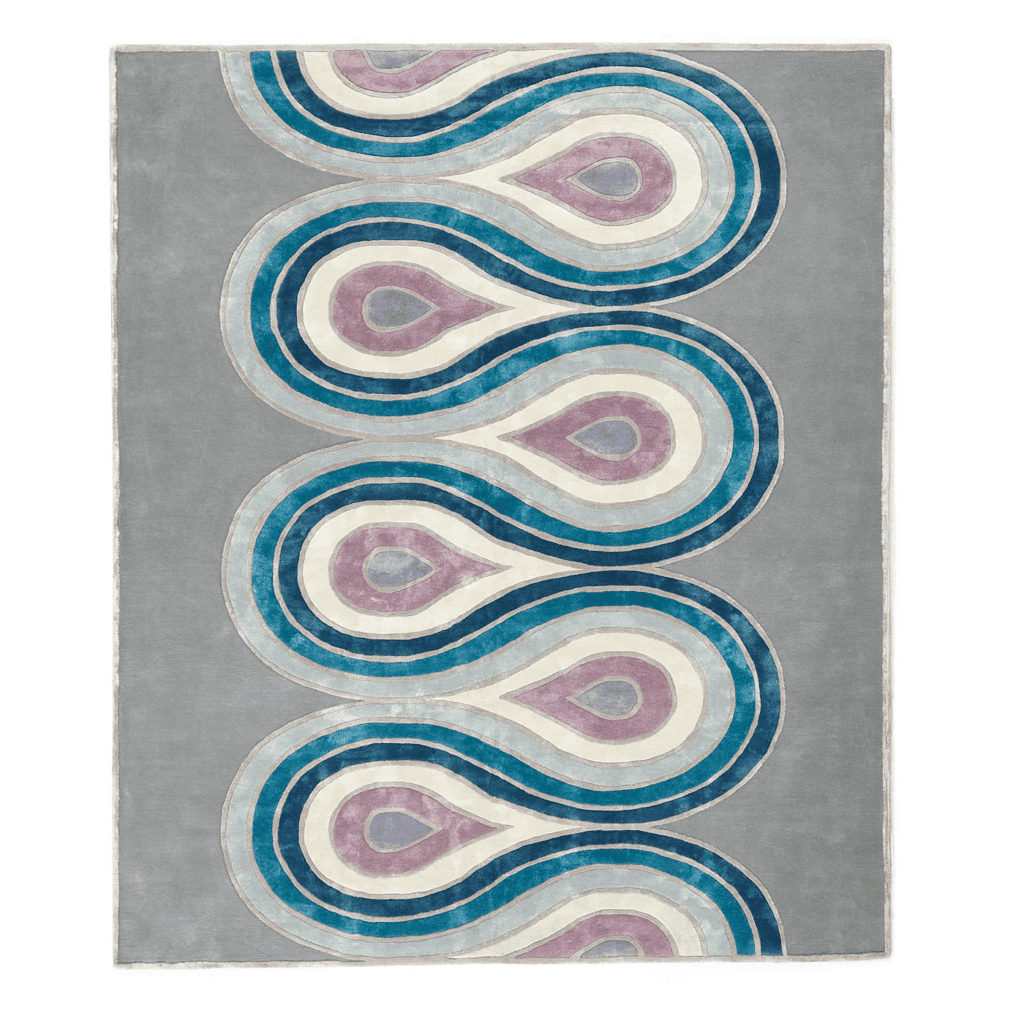
- Stark solid gray: once a safe neutral, now reads as cold and dated against the warmth-forward palette of 2026 interiors
- Bold watercolor prints: the illustrative quality clashes with the tactile, material-focused direction of current rug design
- Faux-faded patterns: manufactured distressing without genuine craft behind it looks unconvincing next to authentic vintage or artisan pieces
- Generic multicolored geometric rugs: the high-contrast, rainbow-palette geometric has been overproduced and now signals a lack of curation
The better alternative in each case is not necessarily expensive. A warm-toned solid in wool or jute, or a simplified tonal geometric from a brand like Rugs USA, addresses the same functional need while reading as current. For context on how dated design elements cycle in and out of favor, the pattern is consistent: styles that once felt safe eventually feel stale when the broader aesthetic conversation moves on.
6. New materials and shapes are pushing rug design forward
Eco-friendly and sustainable rug materials such as wool, jute, sisal, and recycled fibers are increasingly in demand, driven by both environmental awareness and a genuine appreciation for how natural fibers age. Wool softens beautifully over time. Jute develops a patina. Recycled fiber constructions now rival synthetic alternatives in durability without the environmental cost.
Technology is also entering the category in practical ways. Ruggable’s washable rug system, built on a two-piece construction of a cover and a pad, has shifted consumer expectations around maintenance. Luxury polyester constructions from brands like Loloi Rugs now survive pets, spills, and daily foot traffic while retaining a gallery-worthy appearance. These are not compromises; they are genuinely better products for how people actually live.
Irregular shapes, meanwhile, are not just aesthetic choices. They improve spatial flow in open-plan architecture by creating intuitive zones without hard boundaries. Professionals consistently recommend outlining the proposed shape on the floor before purchase, a step that costs nothing and prevents expensive mistakes.
Pro Tip: For an open-plan living and dining space, consider two smaller organic-shaped rugs rather than one large rectangle. The pair defines each zone while allowing the floor to breathe between them.
7. Mixing modern and old styles creates the most interesting rooms
The most compelling interiors of 2026 are not purely contemporary. They layer periods deliberately: a clean-lined modern sofa over a hand-knotted Persian-inspired rug, or a mid-century credenza anchored by a distressed vintage flatweave. The rug is often what makes the combination work, providing a visual bridge between pieces that might otherwise feel disconnected.
Solid-color rugs are particularly useful here. Baker recommends styling them in a tone-on-tone manner, matching the rug to wallpaper or furniture to create cohesion when the room’s other elements are already doing expressive work. A Loloi Rugs collection piece in a warm neutral, for instance, can hold together a room that mixes a vintage rattan chair with a contemporary marble side table without competing with either. The rug becomes the quiet foundation rather than another statement.
8. Smart and performance-driven rugs are entering the mainstream
Technology in rugs is moving beyond novelty. Washable constructions, stain-resistant treatments, and anti-slip backing systems have become standard expectations rather than premium features. Ruggable’s machine-washable system is the most visible example: the cover detaches from the pad and goes directly into a standard washing machine, a practical solution that has resonated strongly with families and pet owners.
Beyond washability, smart textile research is exploring rugs with embedded sensors capable of monitoring foot traffic patterns or detecting falls, particularly relevant for aging-in-place applications. These are not yet mainstream consumer products, but they represent the direction the category is heading. For now, the most meaningful technological advancement for most homeowners remains performance fiber construction: rugs that look handcrafted and feel luxurious but handle real life without requiring professional cleaning.
9. Cultural and geographic influences are shaping 2026 rug designs
Persian, Moroccan, Turkish, and tribal design traditions are all present in 2026 rug collections, but rarely in their original, unedited forms. The current approach reinterprets these traditions through a contemporary lens: Moroccan diamond patterns rendered in muted olive and sand rather than bold red and black; Persian medallions printed on a distressed ground that softens their formality; tribal geometric motifs woven in natural jute with a simplified palette.
This cross-cultural fluency reflects a broader design appetite for pieces that carry history and craft without feeling like museum reproductions. Salam Hello Rugs specializes in exactly this territory, offering handcrafted pieces rooted in traditional weaving techniques but calibrated for modern interiors. The role of area rugs in design has always included cultural storytelling; what is different now is the deliberateness with which designers are selecting and contextualizing those stories.
10. Sizing and placement trends are shifting toward intentionality
The instinct to cover as much floor as possible with a single large rug is giving way to something more considered. Designers are recommending that homeowners choose rug sizes that define specific zones rather than blanketing entire rooms. In a living room, this might mean a rug that fits entirely under the coffee table and front legs of the sofa, creating a defined seating island rather than a wall-to-wall field.
Round and oval rugs are gaining ground in dining rooms and reading nooks, where their shape echoes the furniture above them and softens the room’s geometry. Layering two rugs of different scales is another placement strategy gaining traction: a large neutral jute base with a smaller, more expressive piece layered on top. This approach, explored in depth in Artinlifestyle’s DIY home decor guide, allows for seasonal updates without replacing the foundational layer. The underlying principle across all of these placement choices is the same: a rug should define space, not simply fill it.
Key Takeaways
The 2026 area rug trends reward homeowners who choose texture, natural materials, and organic shapes over pattern-heavy maximalism, making thoughtful rug selection one of the highest-impact decisions in any interior update.
| Point | Details |
|---|---|
| Earthy palettes lead color | Terracotta, olive green, and sandstone are the dominant tones, replacing high-contrast maximalism. |
| Texture over pattern | High-low pile, hand-knotted, and tufted constructions add sculptural depth without visual noise. |
| Organic shapes define space | Ovals, rounded edges, and asymmetrical outlines complement architecture better than rigid rectangles. |
| Avoid dated styles | Stark solid gray, bold watercolor prints, and faux-faded patterns disrupt cohesive 2026 interiors. |
| Sustainability and performance | Wool, jute, sisal, and washable constructions meet both environmental and practical household demands. |