Choose honed marble if you want a low-sheen, lived-in surface that hides scratches but asks for more frequent sealing. Choose polished marble if you want high gloss and deeper color with lower everyday stain risk, but a surface where every etch mark shows. The right pick depends less on the stone and more on how forgiving you need your surfaces to be.
TL;DR:
- Honed marble requires more frequent sealing due to its higher porosity but better conceals scratches and hides light etches.
- Polished marble offers deeper color and a dramatic, reflective surface but shows scratches, etches, and water spots more clearly.
- Busy kitchens and flooring benefit from honed marble’s durability and slip resistance, while polished surfaces suit formal, decorative areas with less daily wear.
- Sealing plays a crucial role in stain and etch prevention, and resealing frequency depends on household use and finish type.
- A simple light reflection check helps distinguish honed from polished marble: mirrored image indicates polish, diffuse glow indicates honed.
Table of Contents
- Honed vs Polished at a Glance
- Honed Marble: Process, Look, and Everyday Fit
- Polished Marble: How It’s Made and What You Trade for Shine
- Keeping Marble Looking Right: Sealing and Etch Care
- Matching the Finish to the Room
- How to Tell If Marble Is Honed or Polished
- Before You Order: A Decision Checklist
- A Design Editor’s Take on Honed and Polished Marble
- Where to Find Marble Care Essentials: Store Finds
- FAQ
- Sources
Honed vs Polished at a Glance
The two finishes come from the same slab and the same mineral, but the final steps change how marble behaves in daily life. Honed marble is ground to a matte or satin surface and stopped before the high-polish stage, while polished marble continues through progressive abrasive steps until it reaches a mirror-like shine. That single manufacturing choice ripples into how visible scratches and etches become, how often you reseal, and where each finish feels most at home.
- Sheen: honed reads soft and matte, polished reads glassy and reflective.
- Scratch visibility: honed hides fine scratches well, polished reveals them against the shine.
- Etch susceptibility: both finishes etch from acid exposure, but marks show more obviously on polished surfaces.
- Stain resistance and sealing: honed’s more open surface typically needs sealing more often, per UseNaturalStone’s care guidance.
- Recommended uses: honed suits busy kitchens and casual rooms, polished suits formal islands, vanities, and decorative surfaces.
| Attribute | Honed marble | Polished marble |
|---|---|---|
| Sheen | Matte to satin | High gloss, mirror-like |
| Scratch visibility | Low, easily masked | Higher, shows against shine |
| Etch susceptibility | Visible but softer contrast | More visible against glossy base |
| Stain resistance / sealing | More porous, more frequent sealing | Less porous feel, lower sealing frequency |
| Best uses | Kitchens, floors, casual rooms | Formal islands, vanities, walls |
If your household cooks often, has kids or pets, or simply wants a forgiving surface, honed tends to fit better. If you want a showpiece finish for a feature wall or a low-traffic vanity, polished delivers the richer color and depth most people picture when they imagine marble.
Honed Marble: Process, Look, and Everyday Fit
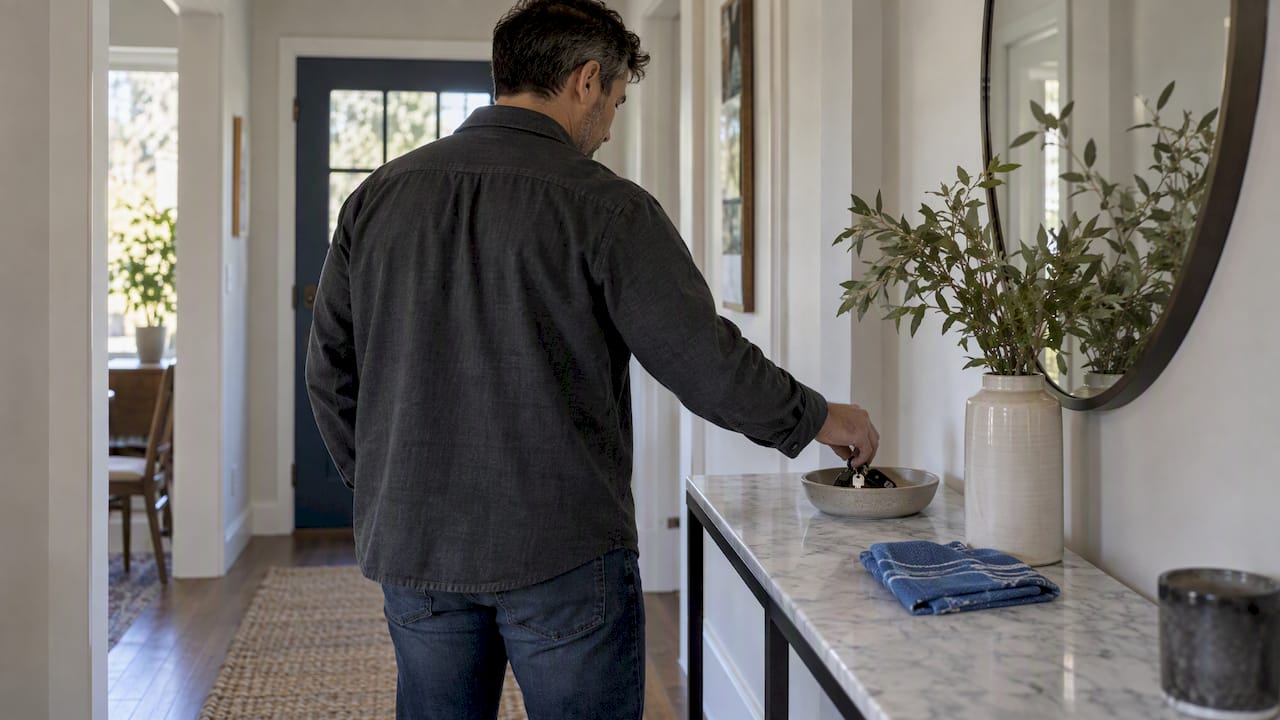
A honed finish comes from grinding the stone’s surface with abrasives, then stopping the process before the final buffing stage that creates high gloss. The result is a matte to satin surface that mutes the marble’s natural veining slightly and softens its color intensity compared to a polished slab, a point echoed in UseNaturalStone’s overview of finish effects. Touch a honed surface and you notice a velvety quality rather than a slick one, which also happens to be forgiving on bare feet.
That same texture does double duty: it hides fine scratches far better than a glossy surface, which matters in a kitchen that sees daily knife work and sliding cookware. The trade-off sits in porosity. Honed marble’s more open surface tends to absorb liquids more readily, which raises staining risk and calls for sealing on a tighter schedule.
- Produced by stopping abrasive grinding before the polishing stage.
- Softens color and veining while masking light scratches.
- Needs more frequent sealing due to higher porosity.
- Fits casual, organic, or rustic interiors and high-traffic kitchens.
Pro Tip: If you love the look of honed marble but worry about stains, ask your fabricator about a penetrating sealer rated for food-contact surfaces before the slab ever reaches your kitchen.
Polished Marble: How It’s Made and What You Trade for Shine
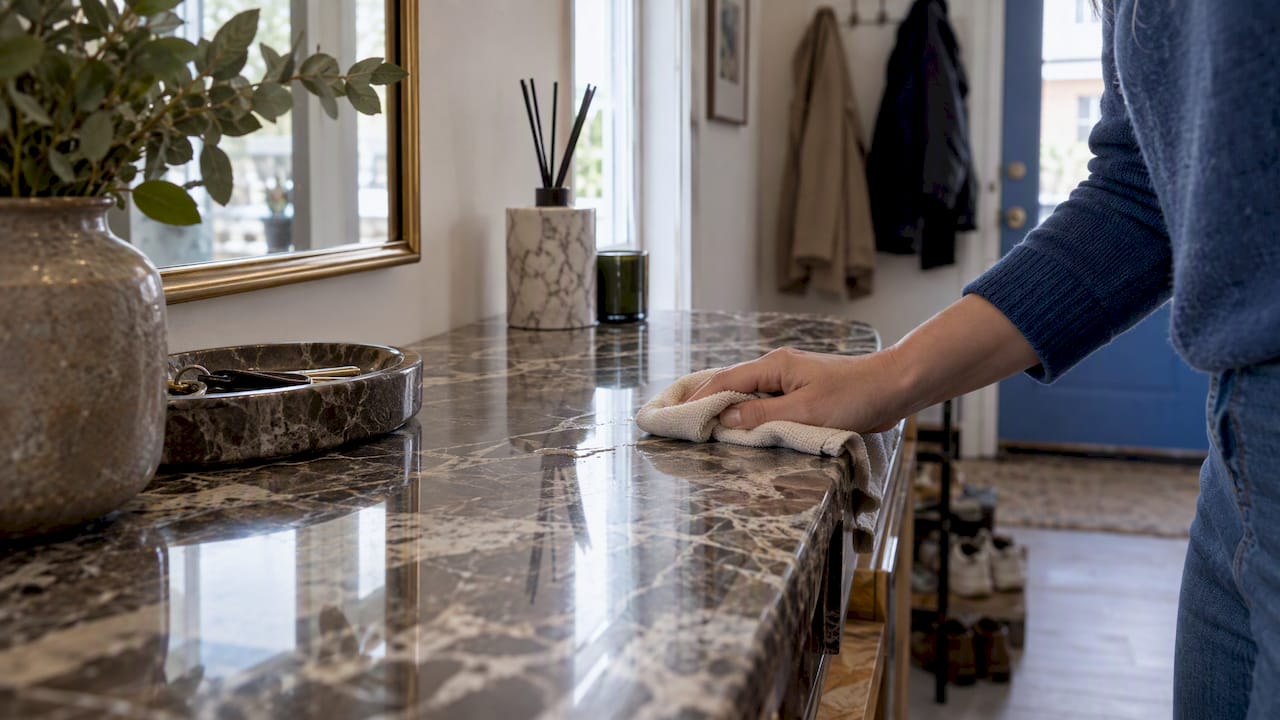
Polishing pushes the same grinding process further, moving through progressively finer abrasives until the surface reaches a reflective, mirror-like finish. That extra step intensifies color and deepens the visual impact of veining, which is why polished slabs often look richer and more dramatic in showrooms, according to UseNaturalStone’s selection guidance. The glossy surface also tends to feel less porous day to day, which can mean less frequent sealing than honed marble requires.
The shine comes at a cost. Every scratch, water spot, and acid etch stands out sharply against a mirrored background, so a polished countertop near citrus, wine, or vinegar will show its wear faster. Refinishing becomes more of an expectation than an exception over time.
- Achieved through progressive fine abrasives after initial grinding.
- Produces deeper color, sharper veining, and mirror-like reflection.
- Generally needs sealing less often, but marks are more visible.
- Suits formal kitchens, feature islands, vanity tops, and decorative panels.
Fabricators and industry sources note that polished marble tends to show etching more readily than honed finishes, with refinishing often estimated every two to three years for polished surfaces compared with roughly three to five years for honed, depending on household wear.
Keeping Marble Looking Right: Sealing and Etch Care
Marble is calcium carbonate, which reacts with acid on contact. That reaction is what causes etching: a dulled or roughened patch where lemon juice, vinegar, or wine sat for even a few minutes, and it can happen without leaving any actual stain behind, according to Natural Stone Institute’s cleaning guidance. Staining is a separate issue, caused by liquids absorbing into the stone’s pores rather than reacting chemically with it.
Sealing addresses the staining side of that equation. A quality sealer is typically oliophobic, resisting both water and oil, and a quality sealer can last several years, according to Natural Stone Institute’s sealing guidance. Real-world cadence depends on the finish and how hard the surface works: a busy honed kitchen counter may need resealing closer to the shorter end of that range, while a lightly used polished vanity can stretch toward the longer end.
- Wipe spills immediately, especially citrus, wine, tomato, and vinegar.
- Skip acidic or abrasive cleaners; use a pH-neutral stone cleaner instead.
- Reseal on a schedule suited to your household’s use, not a fixed calendar date.
- Call a fabricator for professional refinishing once etching or dullness becomes widespread.
Practical, brand-neutral guidance on daily upkeep, like the routines outlined in Simmons Interior Supply’s marble care habits, reinforces the same basics: gentle products, prompt cleanup, and a sealing routine that matches real use rather than guesswork.
Matching the Finish to the Room
Where marble lives in your home should drive the finish decision as much as personal taste does. A busy kitchen island that takes daily abuse benefits from honed marble’s forgiving texture, while a quieter butler’s pantry or bar top can carry polished marble’s shine without much risk. Kitchen countertop height and layout planning is worth discussing with your fabricator alongside the finish, since both decisions happen at the same install stage.
Bathrooms split the difference: honed often wins on vanity tops and floors where bare feet and spilled toiletries are a daily reality, while polished can still shine on shower walls that see less direct acid exposure. Flooring applications favor honed almost universally, since its texture offers better footing and material choice measurably affects a home’s long-term value when buyers evaluate durability.
- Kitchens: honed for daily-use counters, polished for low-contact islands or backsplashes.
- Bathrooms: honed for vanities and floors, polished for accent walls.
- Floors: honed for slip resistance and wear tolerance.
- Walls and fireplace surrounds: polished often looks best where hands and liquids rarely touch.
How to Tell If Marble Is Honed or Polished
A quick hands-on check tells you more than a catalog photo ever will.
- Look for reflection: polished marble throws back a clear mirror-like image, honed marble shows a soft, diffused glow.
- Check grain clarity: polished surfaces sharpen veining and color, honed surfaces mute it slightly.
- Touch the surface: polished feels slick and glassy, honed feels soft and slightly textured, almost like suede.
- Angle a light source across the slab: polished throws a tight highlight, honed scatters light more evenly.
- Ask your fabricator for a labeled sample or finish documentation if you’re still unsure before ordering.
Before You Order: A Decision Checklist
A few honest questions now save frustration later.
- How often do you cook, entertain, or run a busy household through this space?
- Do kids or pets make scratch resistance more valuable than mirror shine?
- Are you aiming for a formal, polished look or a relaxed, textured one?
- Are you comfortable resealing every few years, or do you want the lowest-maintenance option available?
- Ask suppliers which sealer they recommend, what warranty applies, and whether finished samples are available to test at home.
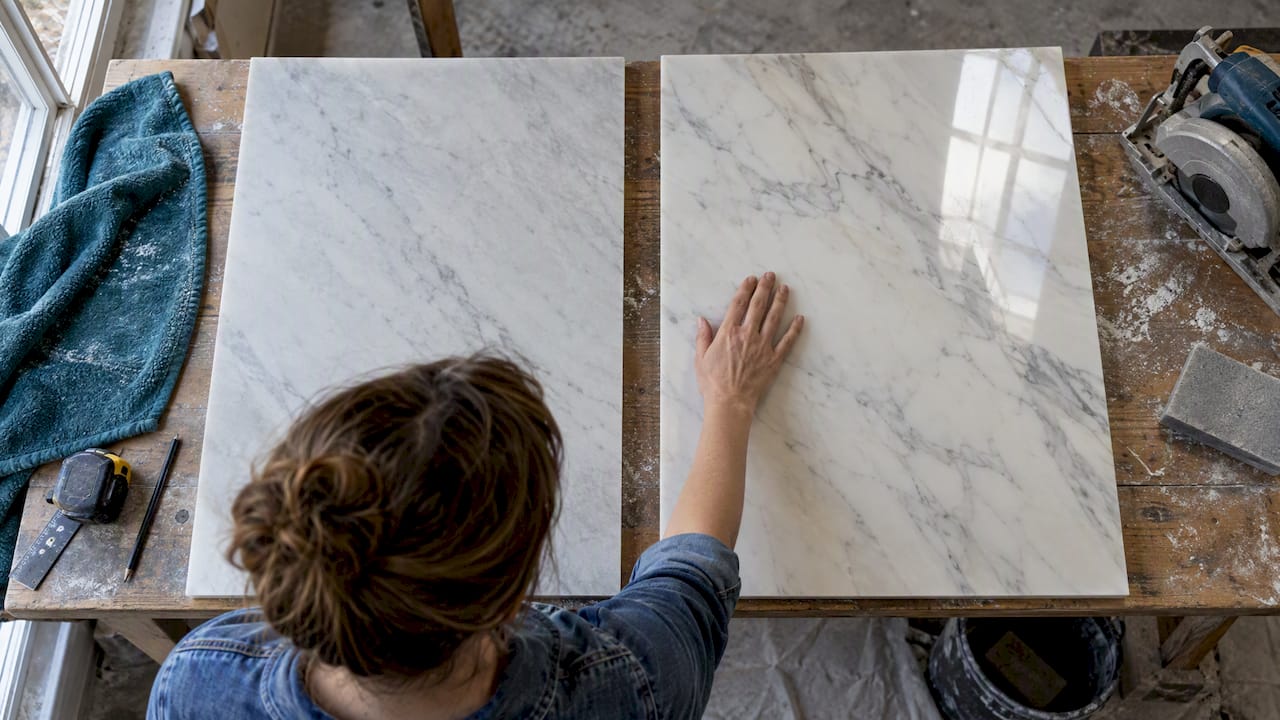
Pro Tip: Request both a honed and a polished sample of the same slab before deciding. The color difference under your own kitchen lighting is often more dramatic than showroom lighting suggests.
A Design Editor’s Take on Honed and Polished Marble
We lean honed for rooms that need to feel lived-in and forgiving, and polished for the one surface in a home meant to catch the light and hold attention.
— Nealda
Where to Find Marble Care Essentials: Store Finds
Once you’ve settled on a finish, the right sealer, pH-neutral cleaner, and a few styling pieces make the difference between marble that ages gracefully and marble that looks tired within a year. Our Store Finds collection curates cleaning and sealing products alongside decor that pairs naturally with honed and polished surfaces, so you can shop care and style in one stop.

Browse the shop to find what suits your new marble before the first spill happens.
FAQ
Is honed marble hard to maintain?
Honed marble is not hard to maintain, but it does need more frequent sealing than polished marble because its surface is more porous and absorbs liquids more readily. With a consistent sealing routine and prompt spill cleanup, it holds up well in daily use.
Is honed better than polished?
Neither finish is objectively better; the right choice depends on your priorities. Honed suits households that want scratch concealment and a soft look, while polished suits those who prioritize color depth and shine over everyday wear visibility.
What is the best finish for marble?
There is no single best finish since the right one depends on the room and how it gets used. Busy kitchens and floors generally do better with honed marble, while formal or low-contact surfaces often look their best polished.
How to tell if marble is honed or polished?
Check the surface’s reflection: polished marble shows a clear, mirror-like image while honed marble gives a soft, diffused glow. Touch is another clue, since polished feels slick and glassy while honed feels soft, almost like suede.
Sources
- Natural Stone Institute – Learn About Cleaning Products for Natural Stone
- UseNaturalStone – How to care for your marble countertops