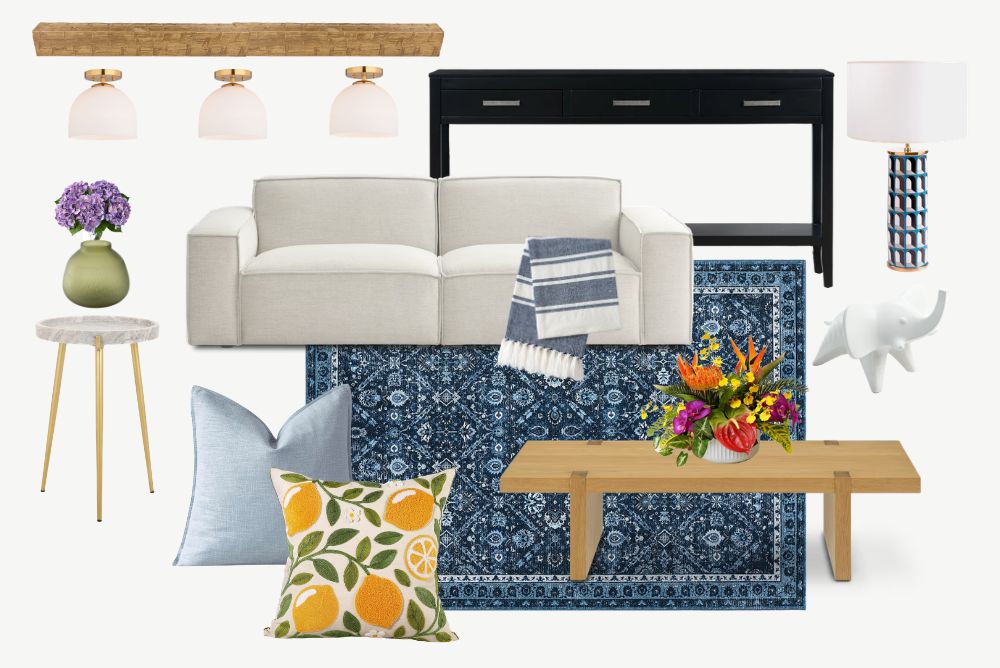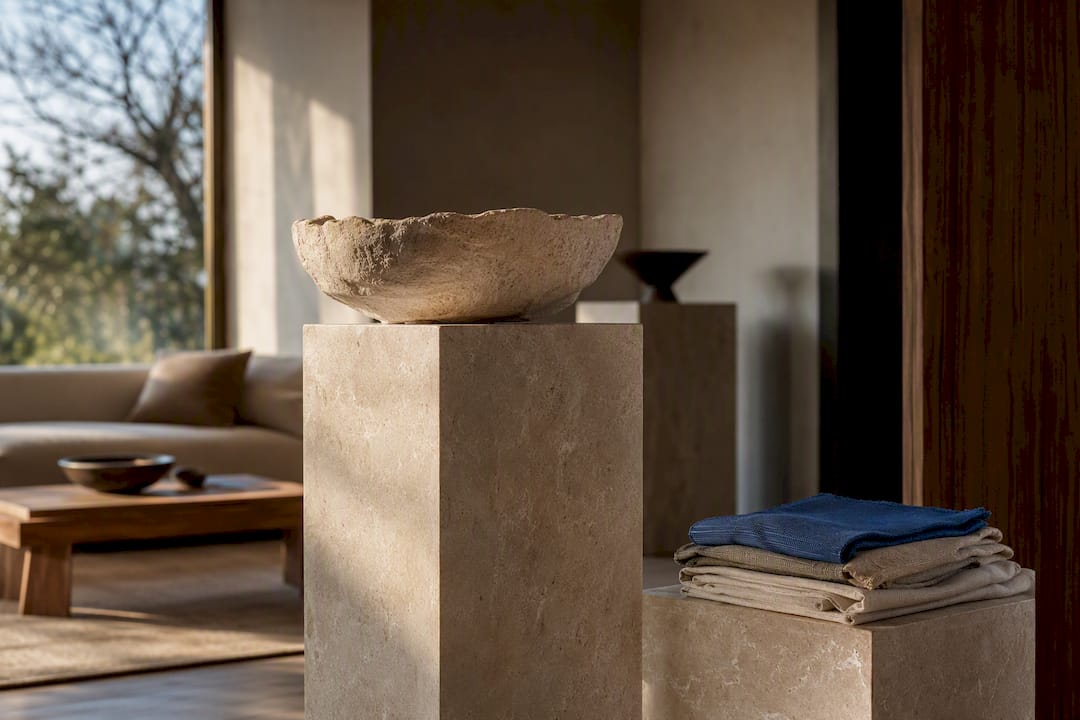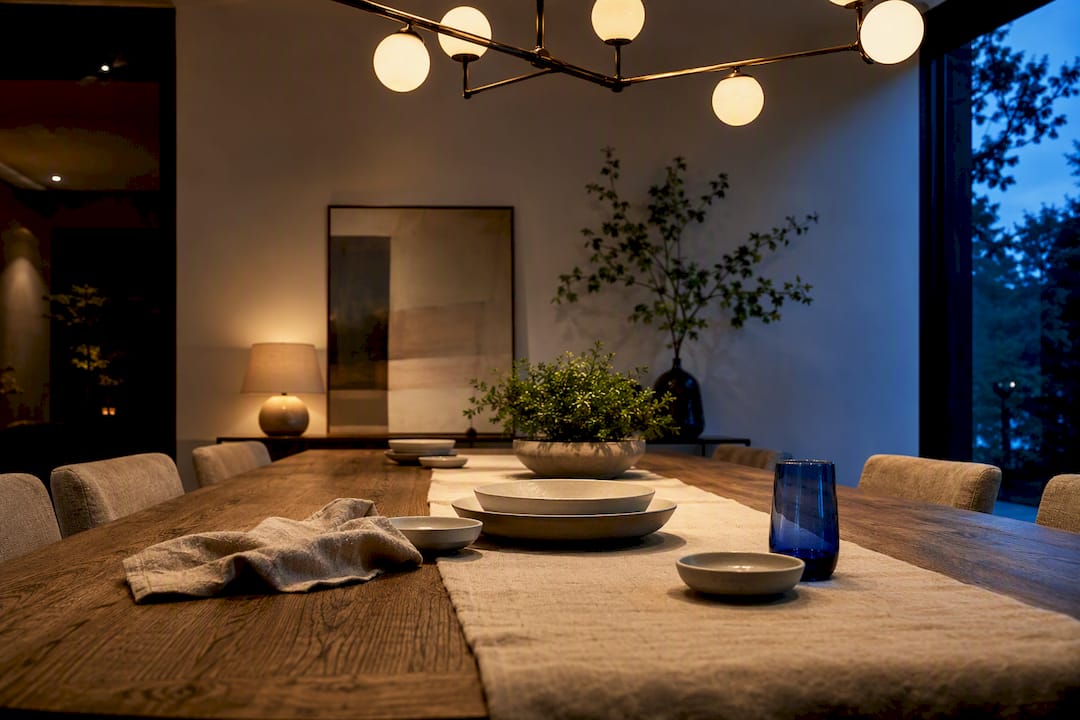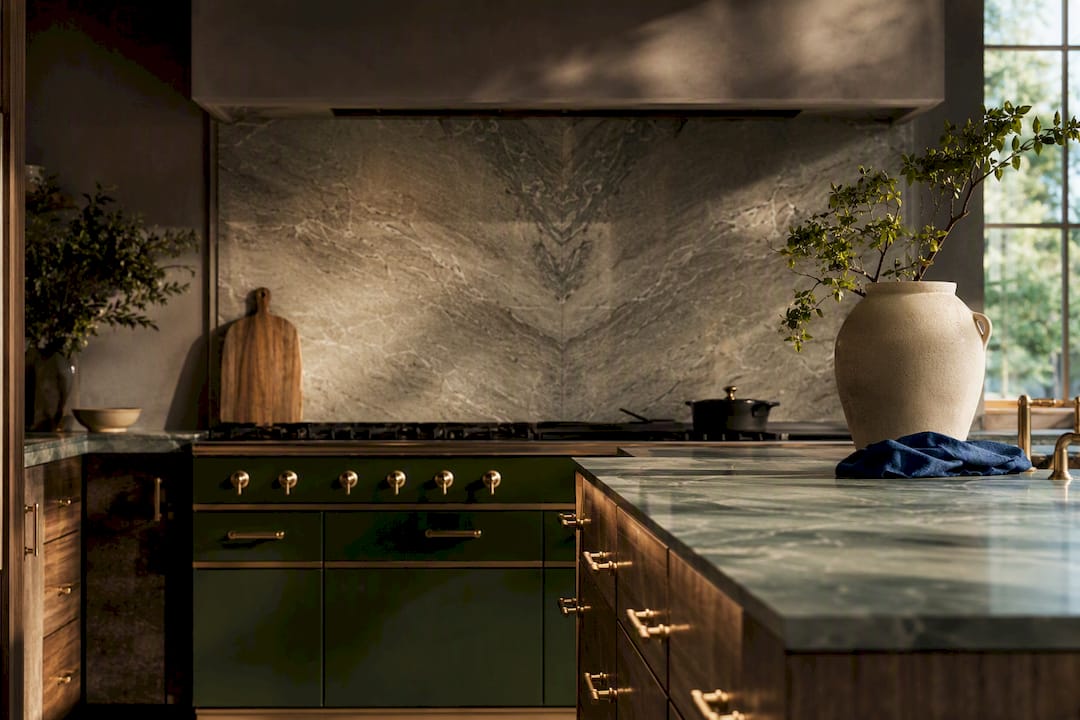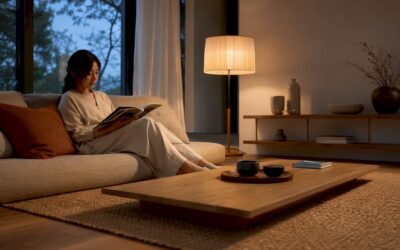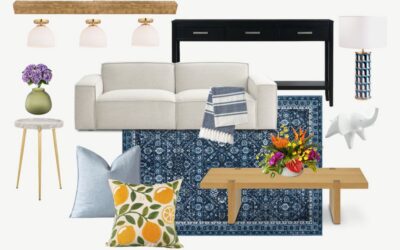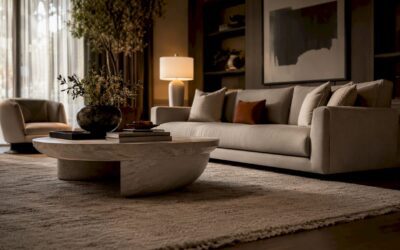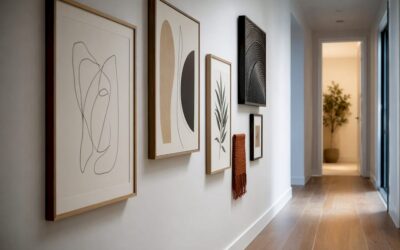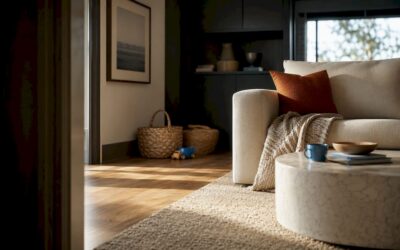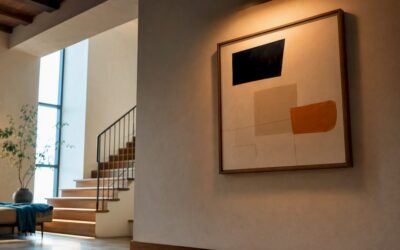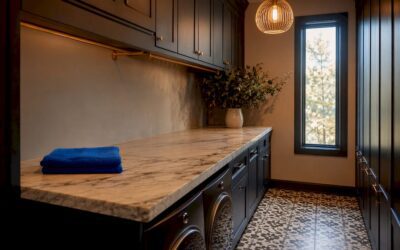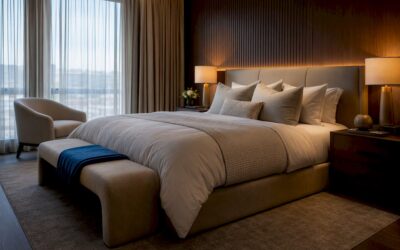
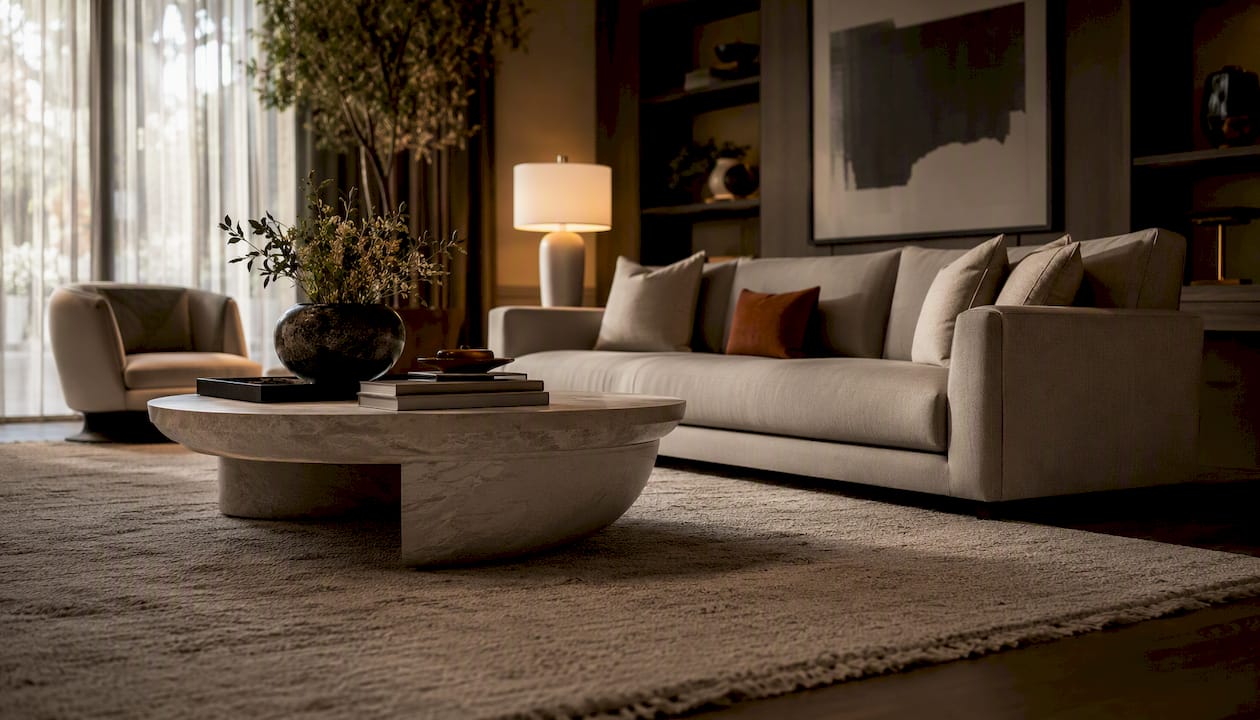
A luxury living room rests on a short list of moves that repeat across every high-end space worth copying: layered lighting on a warm color temperature, one oversized anchor piece of art, a well-proportioned quality sofa, built-ins or trim detail that reads architectural, and materials that mix warmth with a little shine. These five or six choices scale from a $500 refresh to a full renovation. Styling coverage often emphasizes the principle: restraint plus one strong focal point beats a room full of small gestures.
TL;DR:
- Oversized artwork over the sofa should be scaled to roughly two-thirds of its width to create a more luxurious and balanced focal point.
- Layering rugs in different sizes and weaves enhances texture and depth, especially in open-plan rooms, defining zones subtly.
- Use warm lighting at 2700 to 3000K with dimmers and zoned switches to produce a cozy, flexible atmosphere that elevates room luxury.
- Incorporating a mix of materials such as marble, warm wood tones, and aged metals creates richness without appearing cluttered or overdone.
- Prioritize durable, performance fabrics on key furniture pieces to ensure longevity and practicality while maintaining an upscale appearance.
Table of Contents
- 12 Luxury Living Room Ideas Worth Copying
- Choosing Anchor Furniture and Getting the Layout Right
- Color Palettes and Materials That Feel Luxurious
- Layering Light So the Room Actually Glows
- Making a Fireplace and Built-Ins Look Custom
- Layering Textiles and Textures for a Tactile Feel
- Styling Art and Accessories Like a Curated Room
- Where to Spend and Where to Save
- What Editors at Art in Lifestyle Keep Coming Back To
- Smart Home Technology That Stays Out of Sight
- Bespoke Furniture and the Craftsmanship That Shows
- Flooring That Anchors a Luxury Room
- Planning the Room for Flow and Scale
- Keeping a Luxury Living Room Looking Its Best
- A Living Room Should Still Feel Like Home
- Shop Store Finds for the Pieces That Pull a Room Together
- Sources
- FAQ
12 Luxury Living Room Ideas Worth Copying
These are the specific, repeatable moves that separate a room that looks expensive from one that just looks busy. Some need a contractor; most need an afternoon and a good eye for proportion.
- Floor-to-ceiling built-ins flanking a fireplace. Keep upper shelves shallow, around 10 to 11 inches deep, so the cabinetry reads as original architecture rather than an add-on.
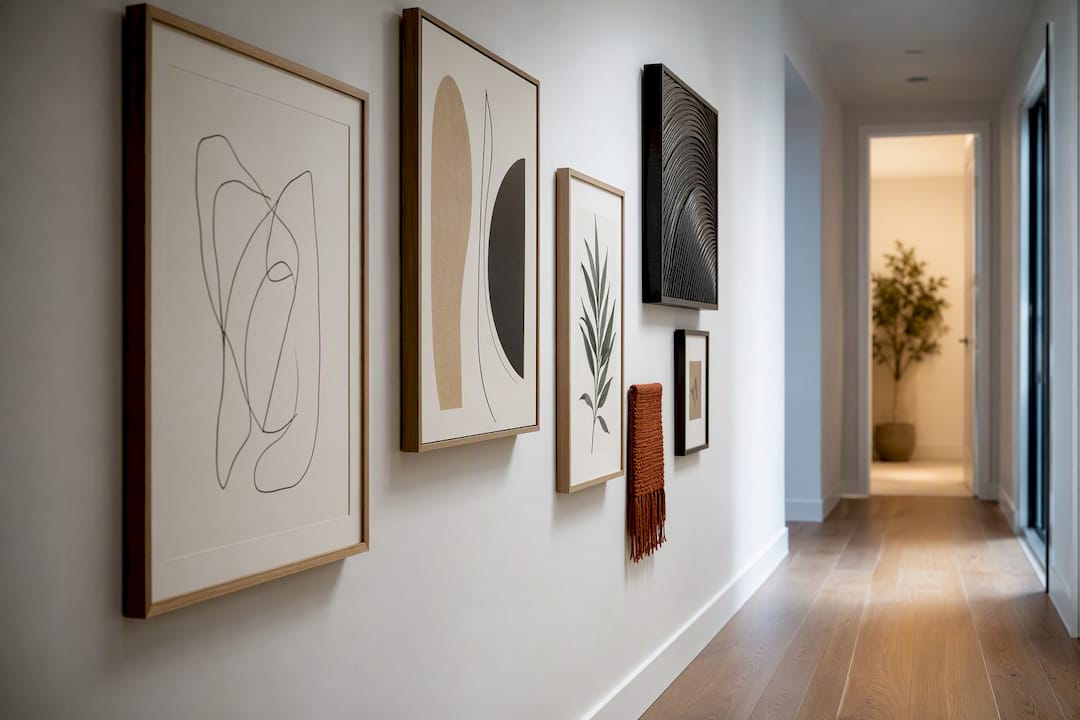
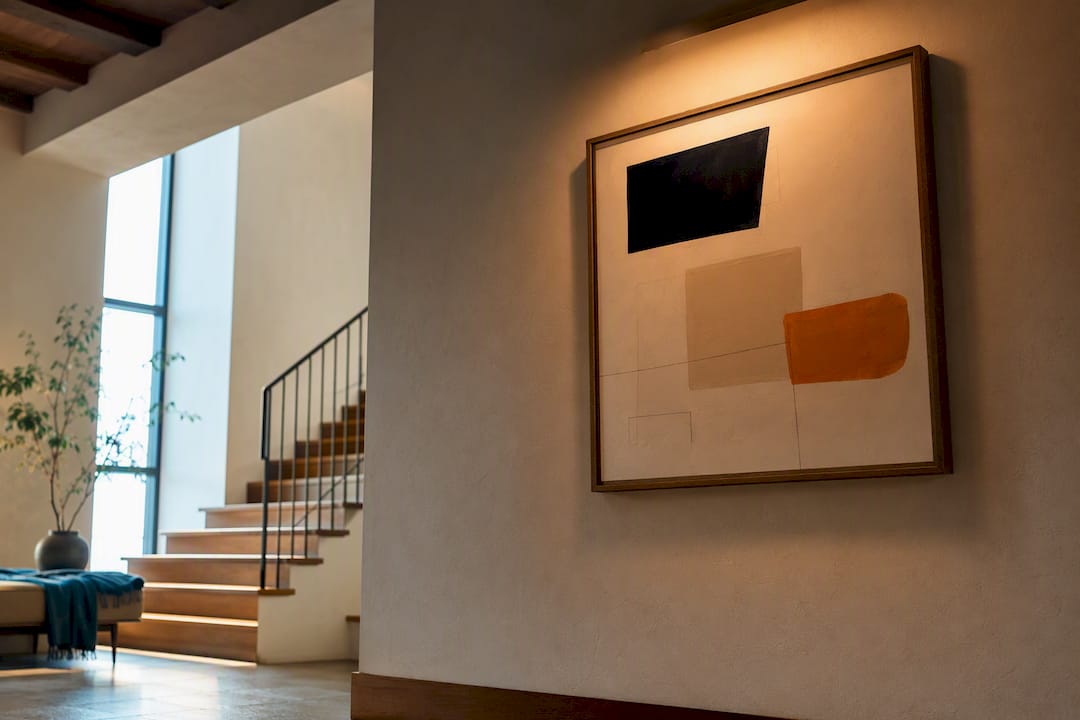
- Oversized artwork as the anchor. One large piece over the sofa or mantel reads more expensive than a cluster of small frames when it’s properly scaled.
- A statement chandelier or sculptural pendant that doubles as ceiling-level art, not just a light source.
- Layered rugs stacked to add depth and quietly define separate zones within an open room.
- Velvet or leather seating with tailored, not overstuffed, proportions.
- Floor-to-ceiling drapery, mounted close to the ceiling line to stretch the perceived height of the wall.
- Recessed TV niches that hide the screen’s bulk and keep the wall visually clean.
- Mixed-metal accents, brass paired with aged bronze, for warmth that plain chrome can’t deliver.
- A plinth or sculptural coffee table treated as an object, not just a surface for coasters.
- Architectural joinery, fluted panels or a waterfall-edge mantel, for a custom-carpentry look.
- Curated shelving that leaves visible negative space and hides integrated lighting inside the case.
- Invisible tech, hidden cords and a retractable screen, so the room reads calm instead of wired.
Choosing Anchor Furniture and Getting the Layout Right
The sofa sets the tone for everything else in the room, so get its scale right before anything else. Look for a seat depth in the 34 to 40 inch range and a durable, luxe-feeling fabric like performance velvet or heavyweight linen that can handle daily use without looking worn in six months.
- Layout style matters as much as the pieces themselves. A symmetrical arrangement feels formal and grand; a conversational grouping feels warmer; zoned seating works best in open-plan rooms with more than one activity happening at once.
- Keep walkways clear. Aim for at least 30 inches of circulation space around major furniture so the room doesn’t feel cramped.
- Size the coffee table to roughly two-thirds the length of the sofa, with side tables set at arm height on either end.
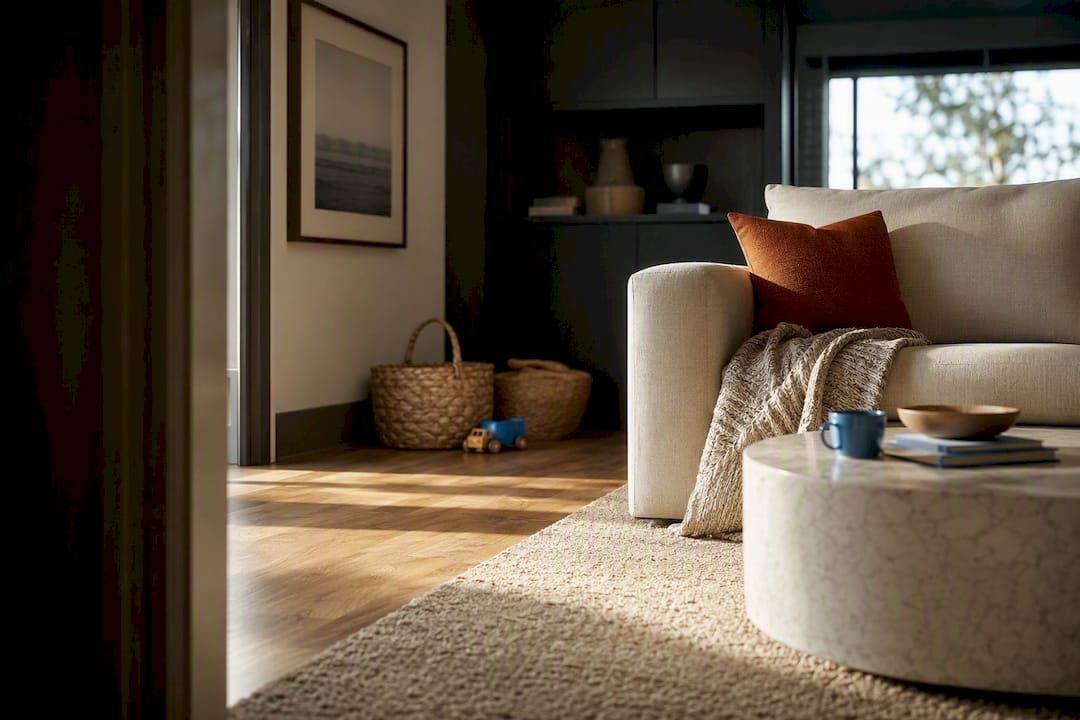
- Get the rug right before anything else goes on top of it. A properly sized rug should extend under the front legs of the seating group, not float in the middle of the floor.
Color Palettes and Materials That Feel Luxurious
A useful framework here is the 70/20/10 rule: 70 percent neutral base, 20 percent secondary tone, 10 percent accent color. It keeps a room from feeling either flat or chaotic.
- Pair natural stone or marble with warm wood tones and a touch of aged metal for a mix that reads rich without trying too hard.
- Deep painted built-ins in navy, charcoal, or forest green create drama in a room with good natural light; layered neutrals work better in smaller or darker spaces.
- Keep wall finishes matte and save gloss or metallic sheen for select accents, like a lacquered tray or a metal lamp base.
- Modern luxury pairs warm materials with layered textures and mixes furniture from different eras rather than matching everything to one period.
Layering Light So the Room Actually Glows
Luxury lighting works in three layers, not one. Ambient light comes from a chandelier or recessed ceiling fixtures; accent light comes from picture lights and wall sconces; task light comes from floor and table lamps positioned where people actually read or work.
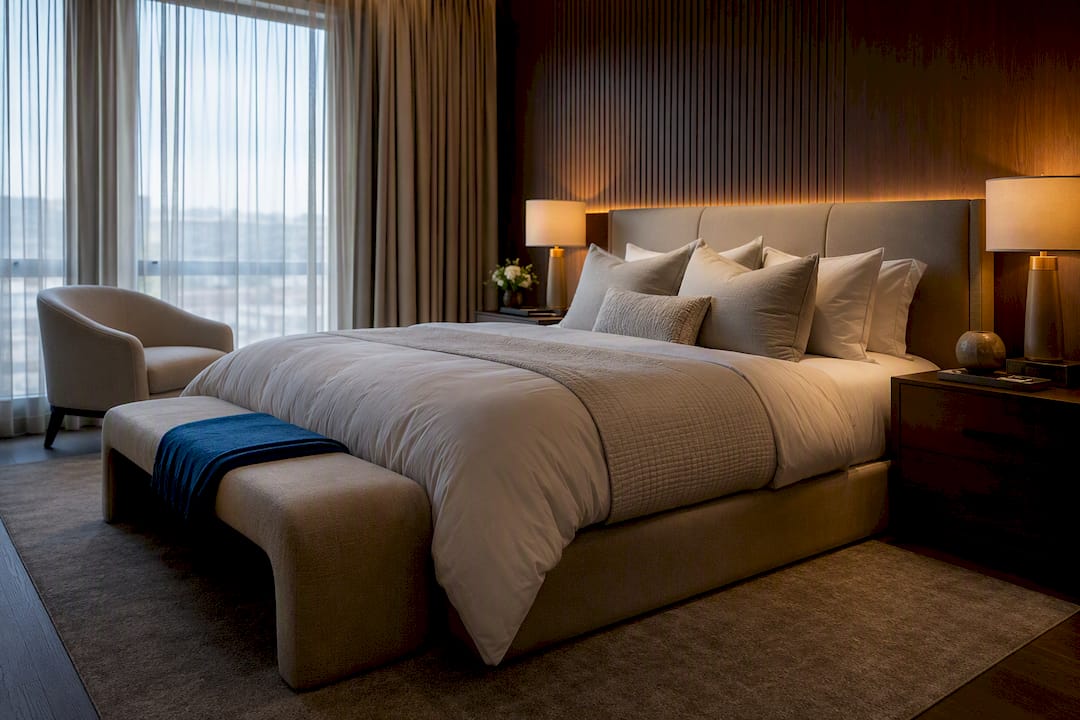
- Stick to a 2700 to 3000K color temperature. Warmer light consistently reads as more luxurious than cool white bulbs, which tend to flatten a room.
- Add dimmers on at least the ambient layer so the mood can shift from bright and functional to low and relaxed.
- Zone switches by fixture group instead of one master switch for the whole room.
- On a budget, plug-in sconces and battery LED picture lights add real polish without an electrician.
Making a Fireplace and Built-Ins Look Custom
Proportion does more work here than money. Keeping upper shelf depth lean, around 10 to 11 inches, along with a crownline that carries across the entire wall rather than stopping abruptly at the fireplace, is what makes new cabinetry look like it was built with the house.
- Match the trim profile and paint sheen used elsewhere in the room so the built-in doesn’t look bolted on.
- Paint the back panel of open shelving in a contrasting color, or hang a small wallpaper panel, and add integrated shelf lighting for depth.
- On a tighter budget, refreshing a plain surround with paint, a floating mantel shelf, and better trim can cost $300 to $1,200, while full custom millwork sits well above that.
- Flat-pack cabinetry, painted and trimmed to fit the wall exactly, gets surprisingly close to a custom look for a fraction of the price.
Pro Tip: If your fireplace wall is oddly proportioned, bringing the cabinetry slightly forward to create a shallow recess around the firebox often looks more balanced than forcing shelves to stay flush with an awkward wall.
Layering Textiles and Textures for a Tactile Feel
Texture is what separates a room you look at from a room you want to sit in.
- Prioritize wool or silk rugs, velvet cushions, linen throws, and at least one leather accent for contrast.
- Layer rugs by scale and weave. Choose a tighter pile for high-traffic zones and a plusher pile for a formal seating area that sees less foot traffic.
- Hang drapery floor to ceiling, mounted a few inches below the crown molding, with enough fullness and a proper lining so the fabric actually drapes instead of hanging flat.
- Rotate cushions seasonally and have rugs professionally cleaned every 12 to 18 months to keep fibers from matting down.
Styling Art and Accessories Like a Curated Room
One large, well-scaled piece of art almost always reads more luxurious than five small ones competing for attention on the same wall. That’s the principle behind “tidy maximalism,” a dominant focal point supported by a few carefully chosen pieces, rather than everything shouting at once.
- Scale wall art to the furniture below it. A piece that’s too small over a large sofa reads as an afterthought.
- Style shelves in odd-numbered groupings and repeat one material or color across the objects to tie them together.
- Add sculptural or tactile pieces in ceramic, glass, or brass to break up flat surfaces.
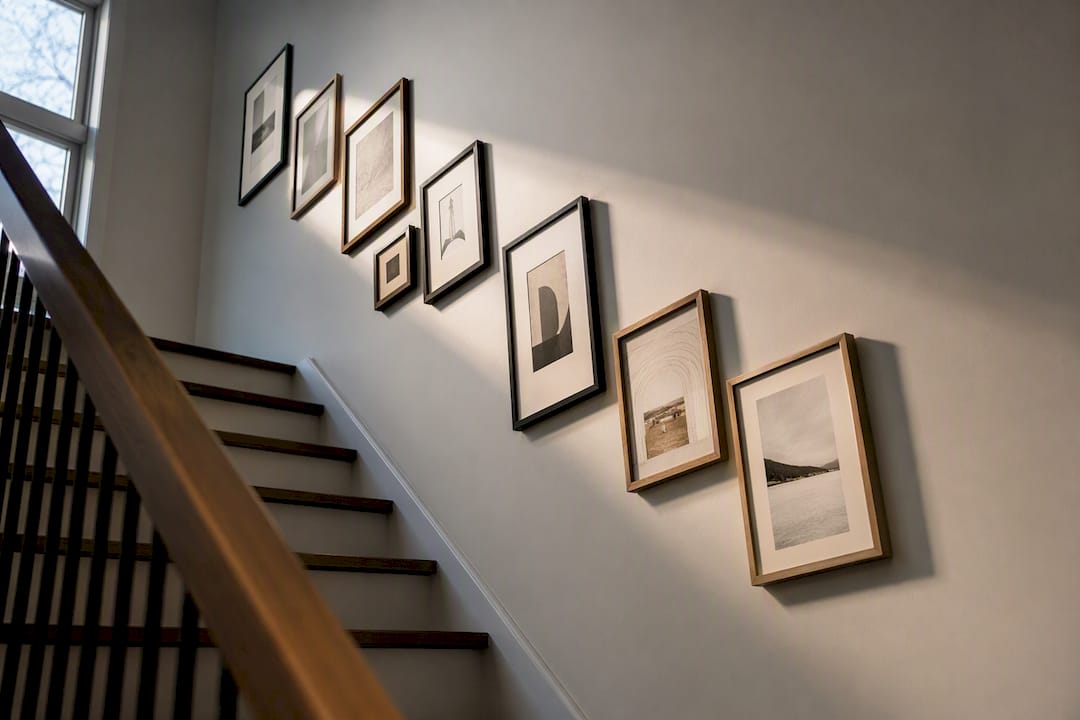
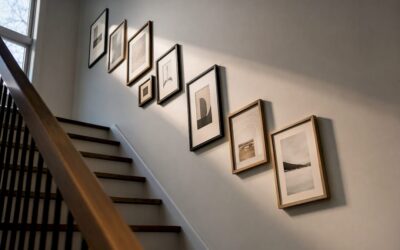
- A gallery wall arrangement works as an alternative when one oversized piece isn’t practical for the wall.
- Live plants add warmth that no object on a shelf can fake.
Where to Spend and Where to Save
The sofa, the rug, and the primary light fixture return the most perceived value per dollar spent, according to design coverage tracking current high-end living room trends. These figures are rough guidance, not fixed pricing, and vary widely by market and contractor.
What Editors at Art in Lifestyle Keep Coming Back To
Three rules show up again and again in the rooms that actually work: establish the focal point before anything else goes on the wall, leave visible negative space rather than filling every surface, and group objects in odd numbers instead of even pairs. A living room with a single oversized painting over a well-scaled sofa and one clean run of built-ins almost always outperforms a room with a dozen scattered decisions.
A client once swapped a wall of small framed prints for a single large abstract canvas and repainted a plain fireplace surround with a mantel shelf and hidden shelf lighting. Nothing else in the room changed, yet the whole space suddenly read as designed rather than decorated.
Smart Home Technology That Stays Out of Sight
The best smart home upgrades in a luxury living room are the ones nobody notices until they realize the room has no visible cords, switches, or remotes cluttering the coffee table. Motorized shades that respond to a voice command or a scheduled sunset time remove one of the biggest visual distractions in a formal seating area, and they protect rugs and upholstery from fading at the same time.
Lighting control is where automation earns its keep fastest. A whole-room lighting scene, set to shift from bright ambient light during the day to warm, dimmed accent lighting in the evening, does more for mood than any single fixture could on its own. Pair that with the 2700 to 3000K warm bulbs already recommended for accent lighting, and the transition from afternoon to evening feels intentional rather than accidental.
Retractable or pocketing television screens keep the room from reading as a media room disguised as a living room. Multi-room audio, tucked into ceiling speakers or a media cabinet rather than a visible soundbar, adds another sensory layer without adding visual clutter. Climate zoning through a smart thermostat rounds this out. Comfort matters as much as looks in a room meant for actual living, and a room that’s too warm or too cold never feels luxurious no matter how good it looks.
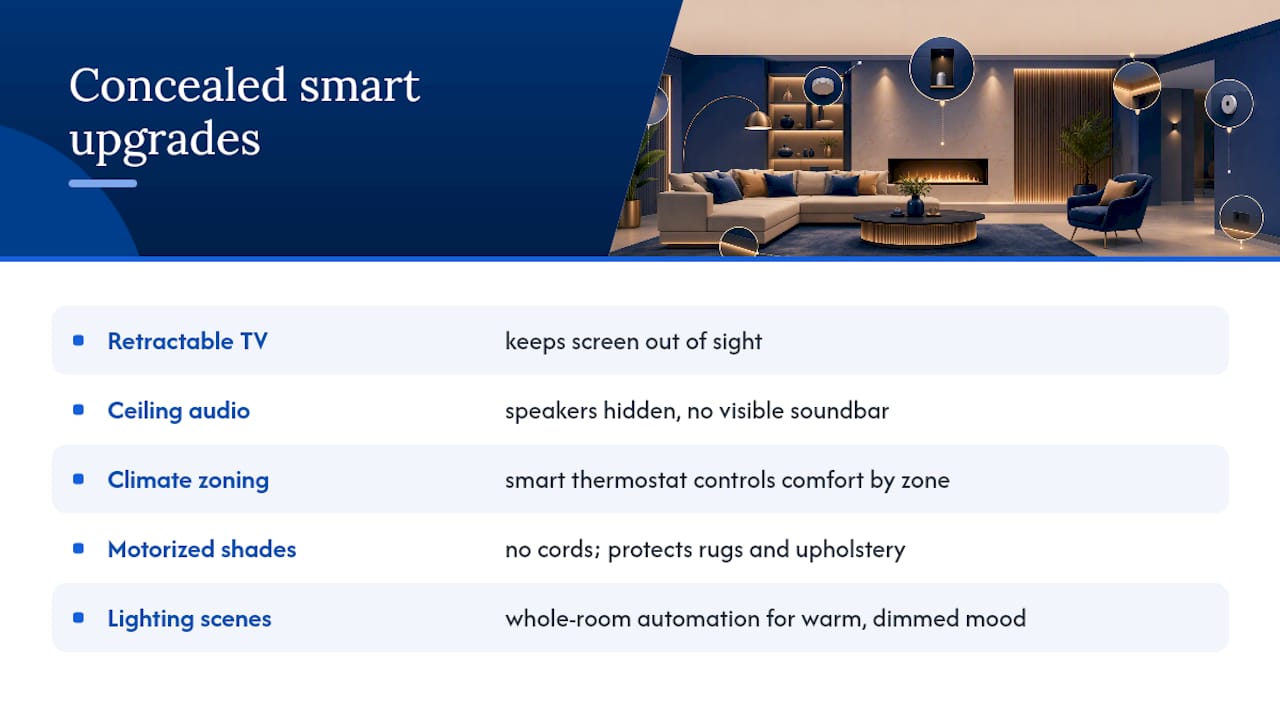
The through-line across all of it: the technology should support the room’s atmosphere without becoming the focal point itself. A wall of visible remotes and exposed wiring undoes every other design decision made in the space.
Bespoke Furniture and the Craftsmanship That Shows
Custom furniture earns its price through details a mass-produced piece can’t replicate: hand-finished wood joinery, upholstery cut and tailored to a specific frame, and proportions built for a specific room rather than a showroom floor. A waterfall-edge coffee table or a vintage design piece with real provenance carries a story that a catalog item simply can’t.
Artisan craftsmanship shows up most obviously in seating. A hand-tailored sofa with a frame built for the client’s specific seat depth and arm height fits a room in a way that off-the-shelf furniture rarely does, and the fabric grade tends to be a full tier above what’s available at big retailers. The same logic applies to case goods. A custom media console or bookshelf built to the exact dimensions of a wall, rather than sized to fit whatever gap is left, eliminates the awkward sliver of empty space that makes a room feel unfinished.
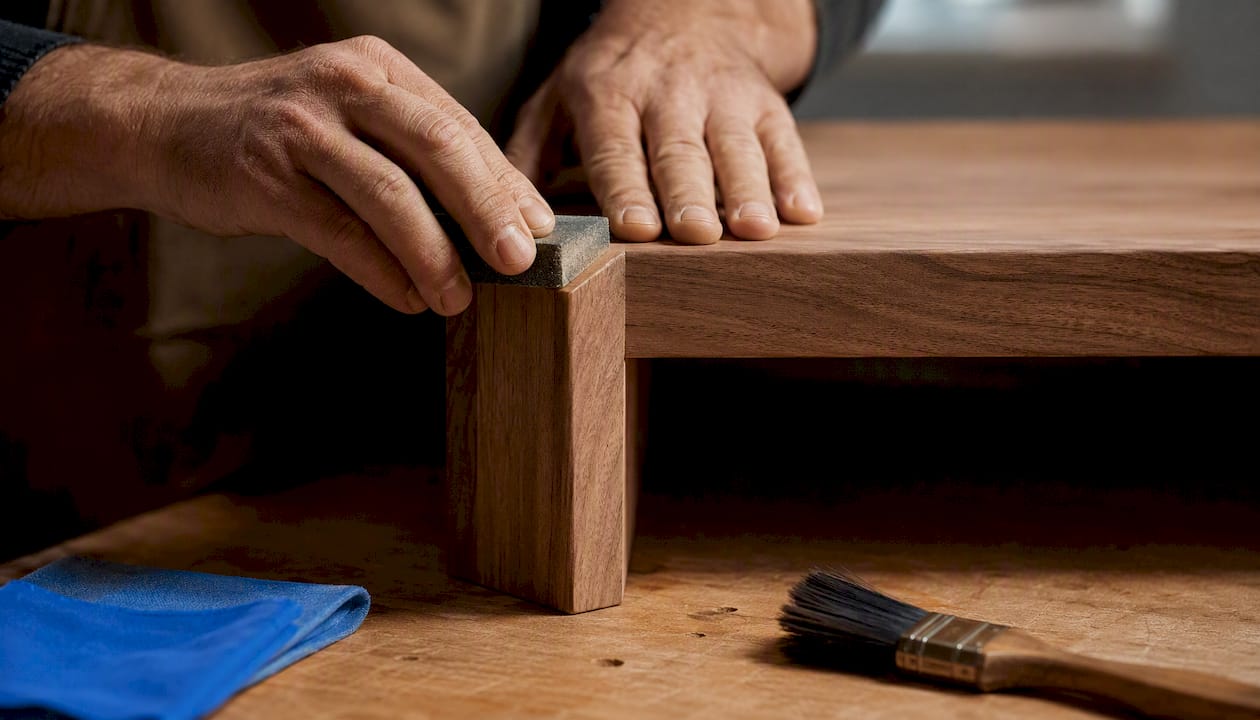
Not every piece needs to be commissioned. Mixing one or two bespoke anchor pieces, a sofa or a coffee table, with well-chosen vintage and retail pieces keeps a budget realistic while still delivering the custom feel. Vintage furniture with visible age and craftsmanship, a well-worn leather chair or a mid-century case piece, does a lot of the same work as a fully custom commission at a fraction of the cost. The goal isn’t to custom-build the whole room. It’s to place one or two pieces that clearly weren’t picked from a catalog, and let everything else support them.
Flooring That Anchors a Luxury Room
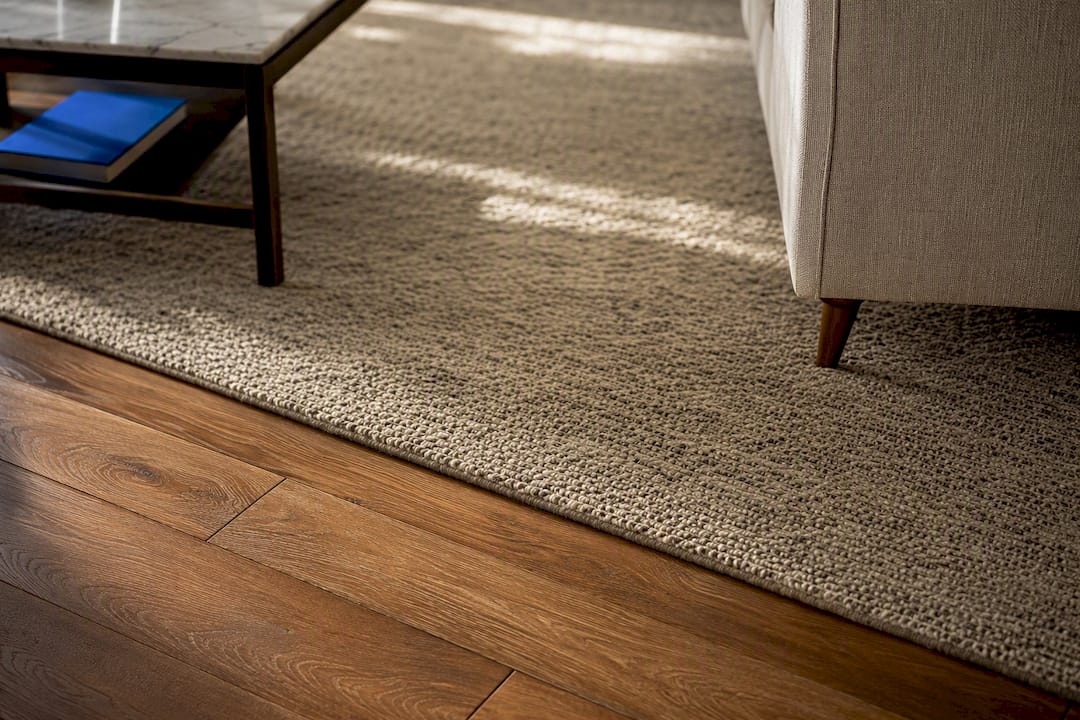
Flooring sets the tone before a single piece of furniture goes in the room, and it’s one of the most expensive elements to change later, which makes it worth getting right the first time. Wide-plank hardwood in a warm, medium tone reads more luxurious than narrow strip flooring or anything with a heavy orange undertone, and it pairs well with both traditional and contemporary furniture styles.
Natural stone, marble or limestone, works beautifully in transitional spaces between a living room and an entry, though it’s a cooler, harder surface that most homeowners soften with a substantial rug in the seating area itself. For homeowners who want the visual weight of stone without the cost or maintenance, large-format porcelain tile in a stone-look finish has become a common substitute, and it holds up better against moisture and scratching.
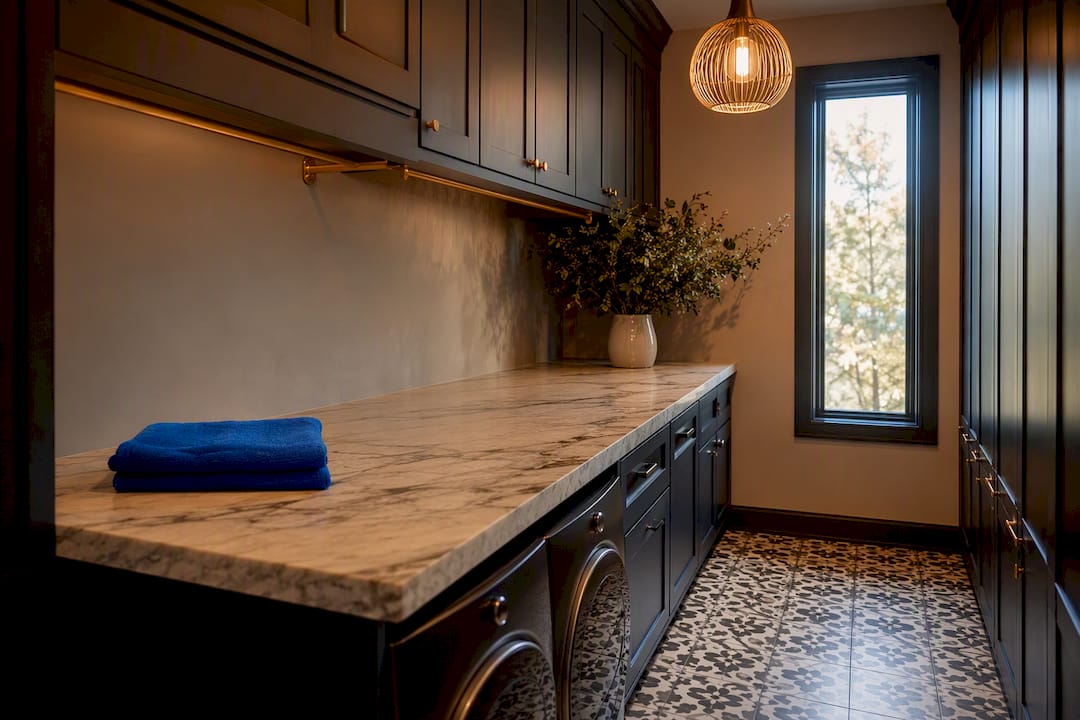
High-contrast patterned flooring, checkerboard tile or a herringbone parquet, can read as ultra-luxurious when used with restraint, typically in an entry or a defined zone rather than across an entire open floor plan. Wall-to-wall pattern tends to compete with furniture and art rather than support them.
Whatever the flooring, a layered rug does more to elevate the room than the floor material itself in most cases. A wool or silk rug adds the texture and warmth that even the best hardwood can’t provide on its own, and it’s a far less expensive way to upgrade the room’s feel than replacing the floor.
Planning the Room for Flow and Scale
A living room feels grand less because of square footage and more because of how easily people can move through it. The biggest mistake in space planning is pushing every piece of furniture against the walls, which leaves a dead, awkward void in the middle of the room instead of a usable seating area.
Pull the sofa away from the wall when the room allows for it, and float the seating group around a rug and coffee table instead. This single move does more to make an average-sized room feel expansive than almost any other layout decision. Keep clear sightlines from the main entry point into the room’s focal point, whether that’s the fireplace, a piece of art, or a window. A room where the eye travels straight to something intentional feels considered in a way that a room full of visual obstacles never does.
In open-plan homes, use furniture placement and rugs to imply boundaries between the living room and adjacent kitchen or dining areas without adding walls. A rug under the seating group, paired with a lighting fixture set at a different height than the kitchen’s, does enough to signal a change in function. Leave at least 36 inches of clearance in primary walkways and closer to 30 inches in secondary paths, so the room reads open rather than obstructed even when it’s fully furnished.
Keeping a Luxury Living Room Looking Its Best
A luxury living room only stays luxurious with a bit of ongoing care, and most of it takes minutes rather than hours. Rotate cushions and throw pillows every few weeks so one side of a velvet sofa doesn’t wear down faster than the other, and vacuum upholstery with a soft brush attachment weekly to keep fibers from matting.
Rugs need the most consistent attention. Rotate a rug every six months if it sits in direct sunlight, since UV exposure fades wool and silk unevenly over time. Have wool and silk rugs professionally cleaned on a regular cycle rather than waiting until they visibly need it, since embedded dirt wears down fibers faster than foot traffic alone.
Dust built-in shelving and any integrated lighting fixtures monthly, since dust shows more obviously on matte painted surfaces and glass shelving than on busier finishes. Polish brass and bronze accents a few times a year with a product made for that specific metal. Over-cleaning can strip the aged patina that made the piece look intentional in the first place.
Leather furniture needs conditioning every six to twelve months to keep it from drying and cracking, especially in rooms with a lot of direct sun or a nearby fireplace. Wood surfaces, whether a coffee table or built-in shelving, do best with a dedicated furniture polish rather than an all-purpose cleaner, which can dull a finish over time.
A Living Room Should Still Feel Like Home
Luxury falls apart the moment a room stops functioning like a place people actually live. The best high-end spaces mix a durable performance fabric into the seating plan long before anyone asks about stain resistance, because a beautiful sofa nobody’s allowed to sit on isn’t luxury. It’s a showroom. Choose materials that can survive a family or a dog, and save the fragile, precious pieces for surfaces nobody touches. A room that photographs well and still holds up to daily life is worth more than one that only works for company.
— Nealda
Shop Store Finds for the Pieces That Pull a Room Together
A curated shop is built around exactly the kind of pieces this article keeps pointing to: the oversized art, the sculptural objects, and the vases and decorative details that turn a well-laid-out room into a finished one. Store Finds is a curated collection, not a big-box catalog, so browsing it feels closer to shopping a designer’s source list than scrolling a marketplace.
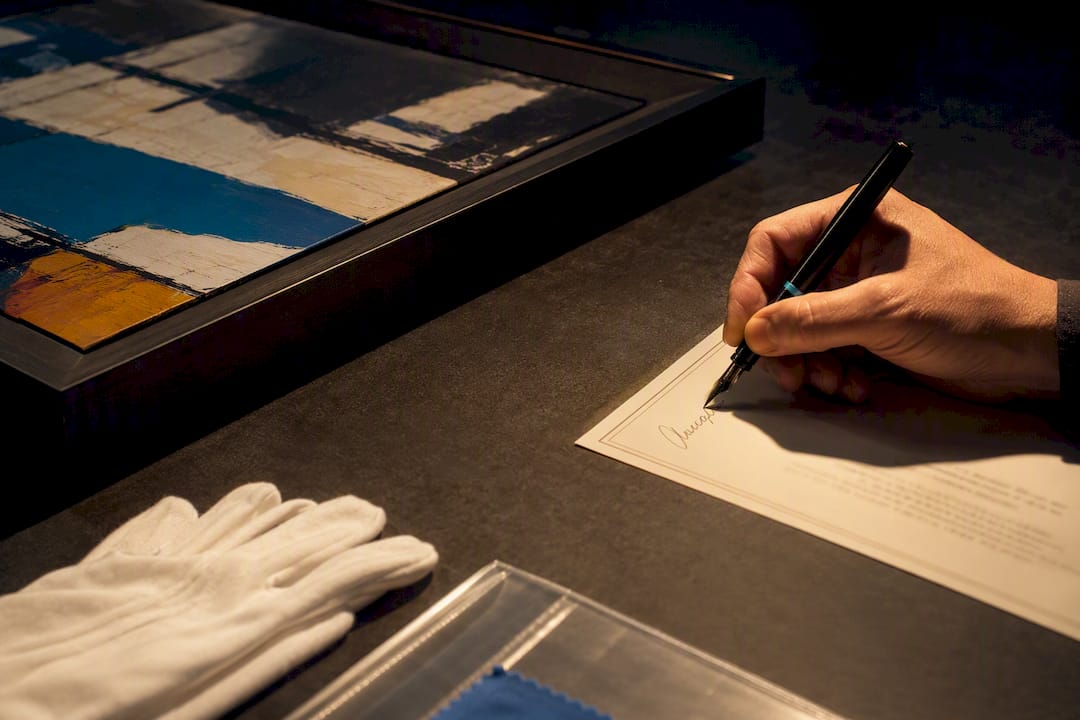
The vase category and home fragrance selection both map directly to the styling advice above: odd-numbered groupings, repeated materials, and a few tactile objects that do more work than a shelf full of clutter. If a large-format piece is on the list, Art in Lifestyle’s Art Concierge service can help track down a specific work, and a specialized art mover is worth using for anything oversized or fragile once it arrives. Start by browsing curated selections for the one anchor piece your room is missing.
Sources
- Houzz discussion: paint colors for built-ins — making the space cohesive
- Livingetc: What is tidy maximalism?
- Elle Decor: Best living room ideas
- Osmoz: Easy mantel shelf and surround ideas for a built-in look
- Canvas Art Rocks: How to choose wall art for a living room
FAQ
What makes a living room look luxurious on a budget?
Paint, a warm-toned lighting swap to 2700 to 3000K bulbs, one oversized piece of art, and a quality rug typically deliver the biggest visual change for the least money.
How big should artwork be over a sofa?
Art should span roughly two-thirds to three-quarters of the sofa’s width; a single large piece generally reads more expensive than several small framed prints.
What color temperature is best for luxury lighting?
Warm white in the 2700 to 3000K range reads as more luxurious and inviting than cool white light, especially on dimmers.
How much does a built-in fireplace surround refresh cost?
A paint, mantel shelf, and trim refresh typically runs $300 to $1,200, while full custom millwork costs considerably more.
Where can I find curated pieces to style a luxury living room?
Art in Lifestyle’s Store Finds shop carries curated art, vases, and decorative objects suited to the layering and anchor-piece strategies covered here.