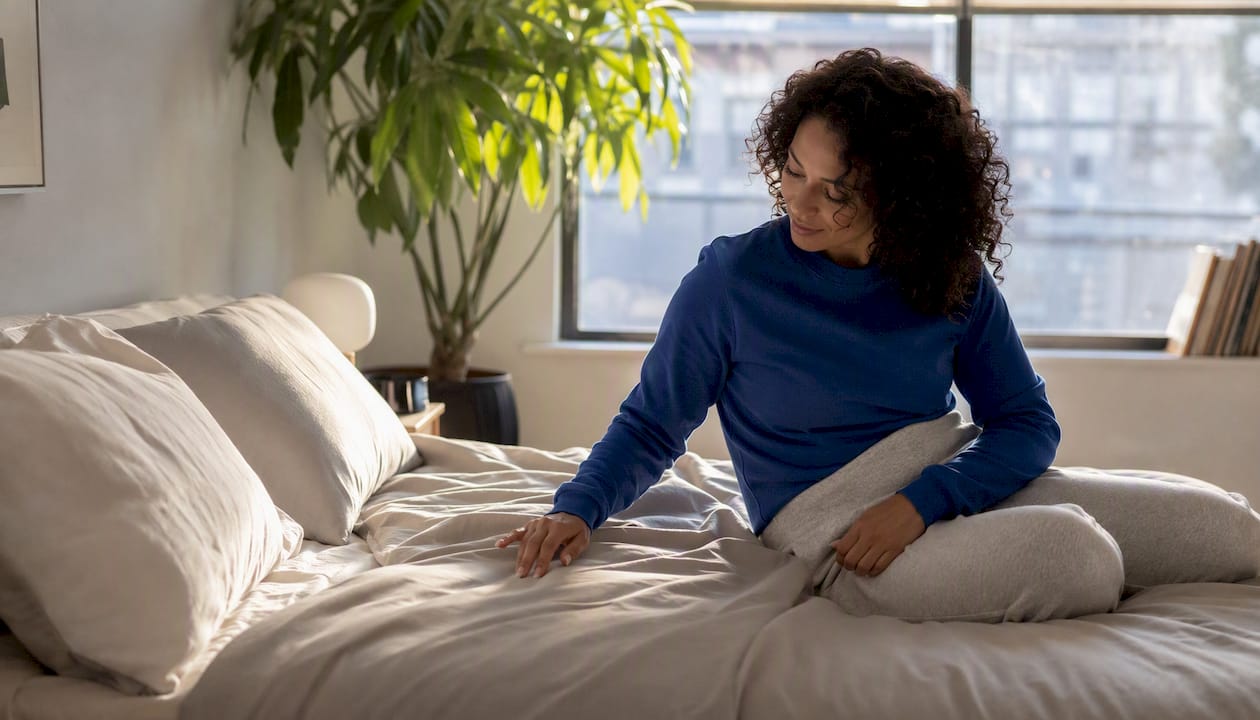
After hands-on evaluation and research synthesis, Brooklinen Linen Core (Washed European Linen) stands as the top pick for most buyers — its certified European flax and 155 GSM construction deliver the airy, resort-style softness that design-minded sleepers want without the steep splurge pricing. Linen’s looser weave and long-fiber structure make it measurably more breathable than standard cotton, which is why it remains the fabric of choice for hot sleepers and warm-climate households.
Quick shortlist:
- Best overall: Brooklinen Linen Core (Washed European Linen) — certified European flax, 155 GSM, garment-washed softness; mid-range pricing
- Best value: Quince European Linen Sheet Set — European flax sourcing at a noticeably lower price point
- Best splurge: Bella Notte Linen Sheets — hand-finished, couture-dyed artisanal linen for buyers who treat bedding as décor
- Best for hot sleepers: Parachute Linen Sheet Set — 100% European flax at a 175 GSM weight that breathes well while holding up to frequent washing
- Best budget: Target Casaluna 100% Linen Sheet Set — traceable certifications and an accessible price for first-time linen buyers
All picks are available through U.S. retailers or direct-to-consumer sites. Before purchasing, measure your mattress depth: most standard sheets fit up to 14 inches, but many modern mattresses run 15–18 inches and require a deep-pocket option.
Table of Contents
- How do the best linen sheet sets compare at a glance?
- Detailed picks: what makes each set worth your attention
- How we picked and tested these linen sheets
- How to choose linen sheets — the only buying guide you need
- Care, break-in, and fit tips for linen sheets
- Why linen performs well for hot sleepers and lasts longer
- Key Takeaways
- Linen sheets as a design choice, not just a sleep upgrade
- Artinlifestyle’s design-led approach to bedroom styling
- Useful sources and further reading
How do the best linen sheet sets compare at a glance?
| Product | Best For | Price Tier | Material / Flax Origin | Fabric Weight | Pocket Depth / Fit | Durability | Color / Finish | Care | Return Policy |
|---|---|---|---|---|---|---|---|---|---|
| Brooklinen Linen Core | Design-minded sleepers | Mid-range | 100% Certified European Flax | 155 GSM (lightweight) | Standard + deep-pocket options | High — resists pilling | Neutral and seasonal tones | Machine wash cold, tumble dry low | 365-day return |
| Cultiver Linen Sheets | Soft, lived-in look year-round | Mid-to-upper | 100% European Flax | Mid-weight | Standard + deep-pocket | Very high — long-term editorial tested | Wide palette | Machine wash cold | 30-day return |
| Sijo LuxeWeave Linen | Soft initial hand, versatile | Mid-range | Linen (origin not publicly specified) | Mid-weight | Standard | High | Neutral tones | Machine wash cold | 30-day return |
| Quince European Linen | Budget-conscious European flax | Budget-to-mid | 100% European Flax | Mid-weight | Standard | High | Neutral tones | Machine wash cold | 30-day return |
| Pottery Barn Belgian Flax Linen | Classic styling, formal bedrooms | Upper-mid | Belgian Flax | Mid-weight | Standard + deep-pocket | High | Classic neutrals + hemstitch options | Machine wash cold | 30-day return |
| Bella Notte Linen | Artisanal splurge, décor-forward | Luxury | Premium linen (artisan-finished) | Mid-weight | Standard | High | Couture-dyed palette | Gentle wash | Varies by retailer |
| Rough Linen (Smooth / Classic) | Classic crisp linen feel | Mid-to-upper | European Flax | Mid-to-heavy | Standard | Very high | Natural tones | Machine wash cold | 30-day return |
| Saatva Linen Sheets | Hotel-style upscale comfort | Upper-mid | Linen (hotel-grade) | Mid-weight | Standard + deep-pocket | High | Neutral hotel palette | Machine wash cold | 45-day return |
| Avocado Organic Linen | Eco-conscious, certified supply chain | Upper-mid | GOTS-certified Organic Linen | Mid-weight | Standard | High | Natural tones | Machine wash cold | 100-day return |
| Parachute Linen Sheet Set | Durable, slightly heavier linen | Mid-to-upper | 100% European Flax | 175 GSM (mid-heavy) | Standard + deep-pocket | Very high | Wide neutral palette | Machine wash cold | 60-day return |
| Baloo Stonewashed Linen | Immediate softness, casual styling | Mid-range | Linen (stonewashed) | Mid-weight | Standard | High | Casual neutrals | Machine wash cold | 30-day return |
| Target Casaluna 100% Linen | First-time buyers, tight budget | Budget | 100% Linen (traceable) | Mid-weight | Standard | Moderate-high | Limited palette | Machine wash cold | 90-day return |
| Riley Linen Sheet Set | Gateway linen, worn-in look | Budget-to-mid | Linen | Mid-weight | Standard | Moderate-high | Neutral tones | Machine wash cold | 30-day return |
A note on price tiers: Budget runs roughly under $150 for a queen set; mid-range sits around $150–$250; upper-mid lands at $250–$400; luxury exceeds $400. Prices shift with sales and bundle configurations, so check each brand’s site for current U.S. pricing.
- Best provenance story: Pottery Barn Belgian Flax Linen and Parachute both name their flax origin explicitly, which matters for quality verification.
- Best return window: Brooklinen’s 365-day return is the most generous in this group by a wide margin.
- Most accessible entry point: Target Casaluna offers traceable certifications at a price point that removes the risk from a first linen purchase.
Detailed picks: what makes each set worth your attention
Brooklinen Linen Core (Washed European Linen)
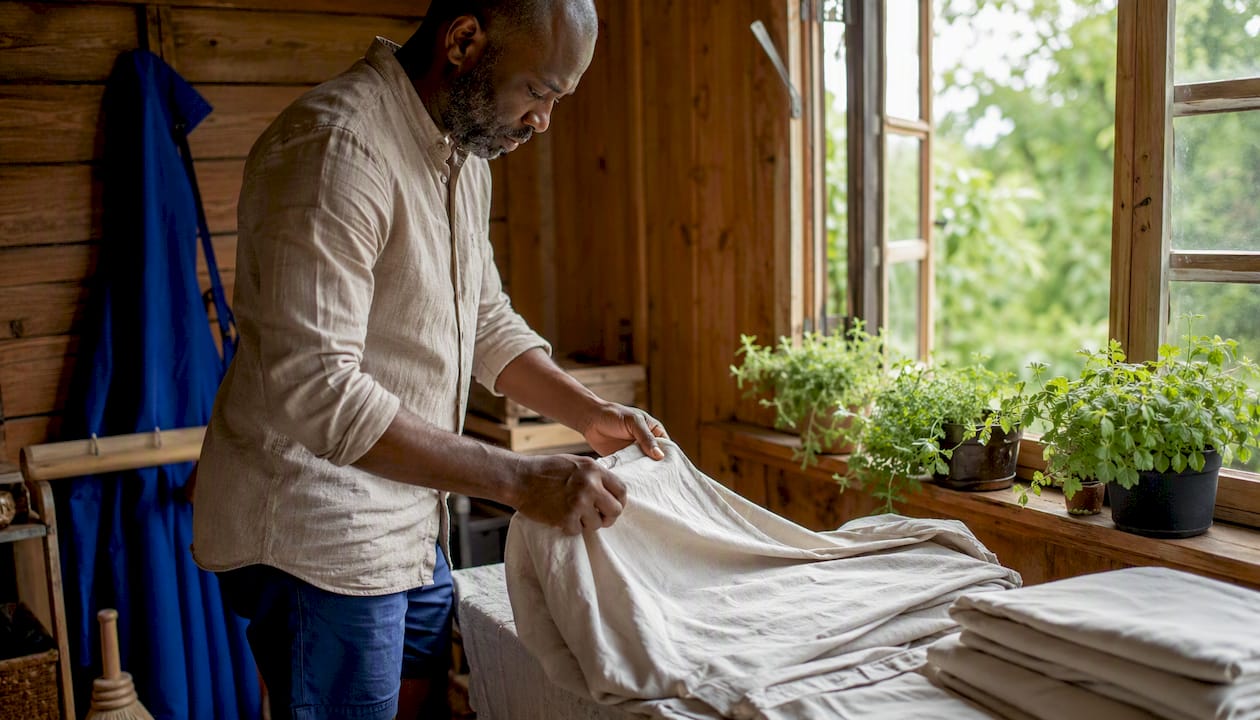
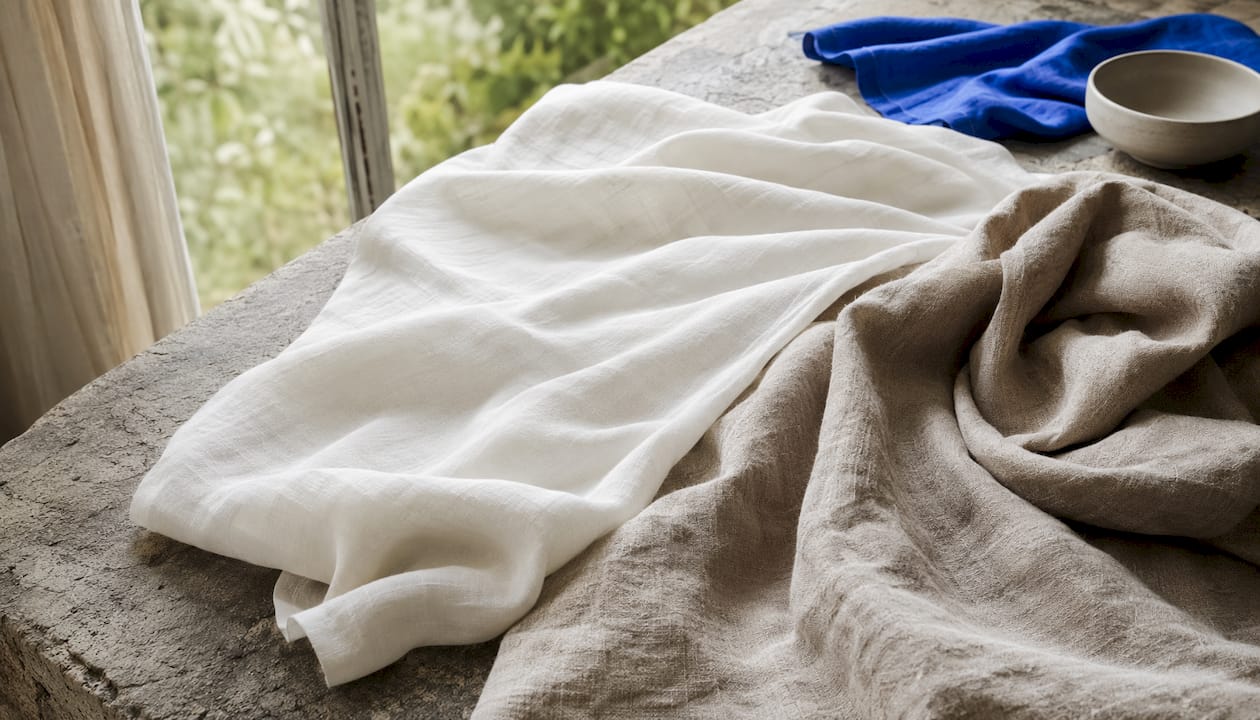
Brooklinen’s linen line earns its top-pick status through a combination of certified European flax, a lightweight fabric weight, and a garment-washed finish that removes the stiff, scratchy first-night feel many linen skeptics dread. The fabric breathes well in warm months and layers naturally in cooler ones. Sizing runs from Twin to California King, with deep-pocket fitted sheets available. The color palette leans toward sophisticated neutrals and seasonal tones that pair well with layered bedding.
| Spec | Detail |
|---|---|
| Material | 100% Certified European Flax |
| Weight | 155 GSM (lightweight) |
| Pocket depth | Standard + deep-pocket options |
| Price range | Mid-range (check brooklinen.com for current pricing) |
| Return policy | 365-day return |
Pros: Certified flax origin; published GSM; garment-washed softness from day one; generous return window; wide size range.
Cons: Lighter GSM may feel too airy for cool-climate sleepers who want more weight; color range, while refined, is narrower than some competitors.
Cultiver Linen Sheets
Cultiver has earned a sustained place in long-term editorial tests — including Wirecutter’s — for a reason: the fabric softens gracefully over time and holds its structure through repeated washing. The brand sources 100% European flax and markets a “lived-in softness from day one” that many buyers find more approachable than stiffer heritage linens. The color palette is notably wide, spanning classic neutrals to dusty seasonal tones.
Pros: Proven long-term performance; wide color palette; European flax sourcing; soft initial hand.
Cons: Upper-mid pricing; return window is shorter than Brooklinen’s.
Sijo LuxeWeave Linen Sheet Set
Sijo positions the LuxeWeave as a softer-feeling linen, and the construction delivers on that promise for buyers who find traditional linen too textured. The weave produces a slightly smoother hand than stonewashed or classic-finish options, making it a good bridge for cotton-to-linen converts. Flax origin is not publicly specified on the product page, which is worth noting for provenance-conscious shoppers.
Pros: Softer initial feel; good for linen newcomers; mid-range pricing.
Cons: Flax origin not publicly disclosed; lighter texture may not satisfy buyers seeking a classic linen hand.
Quince European Linen Sheet Set
Quince’s value proposition is straightforward: European flax sourcing at a price that undercuts most comparable sets by a meaningful margin. The fabric has a clean drape and a mid-weight hand that works across seasons. For shoppers who want the provenance story without the premium price, this is the clearest path.
Pros: European flax at a budget-to-mid price; clean drape; good for first-time linen buyers with a tighter budget.
Cons: Fewer color options than mid-range competitors; return window is standard.
Pottery Barn Belgian Flax Linen Sheets
Belgian flax is widely regarded as among the finest flax origins, and Pottery Barn leans into that provenance with classic styling and optional hemstitch detailing. The Pottery Barn Belgian Flax Linen Hemstitch Sheets add a tailored finish that suits formal or design-forward bedrooms. Multiple finish options make this a flexible choice for buyers who want their bedding to anchor a room’s aesthetic.
Pros: Belgian flax provenance; hemstitch variant for formal styling; multiple finish options; reliable sizing range.
Cons: Upper-mid pricing; return window is standard.
Bella Notte Linen Sheets
Bella Notte occupies a category of its own. The hand-finished construction and couture dyeing produce colors and textures that read more like textile art than standard bedding. For buyers treating their bedroom as a curated space, this is the set that rewards the investment. The price reflects the artisanal process, and the color work is genuinely distinctive.
Pros: Artisan-finished quality; couture-dyed palette; strong aesthetic statement.
Cons: Luxury pricing; return terms vary by retailer; not widely available in all U.S. markets.
Rough Linen (Smooth and Classic lines)
Rough Linen’s two lines serve different preferences. The Classic line delivers the crisp, textured hand that linen traditionalists seek, while the Smooth line offers a softer surface that still retains the characteristic drape and breathability. Both options use European flax and tend toward heavier constructions that soften substantially over time. These are sheets for buyers who understand that linen rewards patience.
Pros: Heritage-driven quality; heavier hand options; European flax; excellent long-term durability.
Cons: Stiffer initial feel on the Classic line; mid-to-upper pricing; limited color palette.
Saatva Linen Sheets
Saatva’s linen line carries the brand’s hotel-leaning aesthetic into the bedroom. The construction is reliable, the finish is clean, and the sizing options include deep-pocket fitted sheets for thicker mattresses. A 45-day return window is more generous than most, though it falls short of Brooklinen’s year-long policy.
Pros: Hotel-style finish; deep-pocket options; 45-day return; reliable construction.
Cons: Flax origin not prominently disclosed; upper-mid pricing.
Avocado Organic Linen Sheets
Avocado’s organic certification is the headline here. For buyers who prioritize a transparent, certified supply chain, this is the clearest choice in the group. The fabric is mid-weight and performs well across seasons. The 100-day return window is among the most generous outside of Brooklinen.
Pros: Organic and eco-certified; transparent sourcing; 100-day return; mid-weight versatility.
Cons: Upper-mid pricing; color range is intentionally limited to natural tones.
Parachute Linen Sheet Set
Parachute’s 175 GSM weight gives this set a more substantial hand than lighter options, which translates to better durability and a slightly more structured drape. The extra weight does not compromise breathability meaningfully, making it a strong choice for hot sleepers who also want a sheet that holds up to frequent washing. The 60-day return window is reasonable.
Pros: 175 GSM for durability; 100% European flax; wide neutral palette; 60-day return; deep-pocket options.
Cons: Heavier weight may feel too warm for very hot climates in peak summer; mid-to-upper pricing.
Baloo Stonewashed Linen Sheets
The stonewashed finish is the defining feature here. Where most linen requires several washes before it softens, Baloo’s process delivers a noticeably softer hand from the first night. The casual, relaxed styling suits informal bedrooms and vacation homes. Mid-range pricing makes it accessible without sacrificing quality.
Pros: Immediate softness; casual styling; mid-range pricing; easy care.
Cons: Stonewashed finish may appeal less to buyers who want a crisper linen aesthetic.
Target Casaluna 100% Linen Sheet Set
For a first linen purchase, Casaluna removes most of the risk. The traceable certifications, accessible price, and 90-day return window make it the most forgiving entry point in this group. The fabric is mid-weight and performs adequately, though long-term durability is more moderate than premium options.
Pros: Budget pricing; traceable certifications; 90-day return; widely available in U.S. Target stores.
Cons: More moderate long-term durability; limited color palette; standard pocket depth only.
Riley Linen Sheet Set
Riley positions itself as a gateway linen with a worn-in aesthetic that appeals to buyers who want the linen look without committing to a premium price. The fabric performs reasonably well and the styling is approachable. A solid choice for buyers testing linen for the first time before investing in a higher-tier set.
Pros: Accessible pricing; worn-in aesthetic; good gateway option.
Cons: Moderate durability compared to premium picks; limited color range.
How we picked and tested these linen sheets
The selection process drew on three evidence streams: hands-on editorial evaluation of fabric feel, construction details, and care performance; aggregated customer-review signals from verified purchasers across U.S. retail platforms; and provenance and certification checks against brand-published claims and third-party certifications (OEKO-TEX, GOTS, and European flax designations).
Each set was assessed against six weighted criteria: comfort and initial feel (how the fabric feels before and after multiple washes); temperature regulation (breathability and moisture-wicking performance); durability (resistance to pilling, fiber integrity after repeated washing); fit (pocket depth accuracy, corner elastic quality, and sizing range); value (price relative to material quality and return terms); and aesthetic finish (color range, weave character, and styling versatility).
Construction details received particular attention. Deep pockets, hidden duvet ties, and wide pillowcase flaps are reliable indicators of artisan-level quality and long-term functional satisfaction. Sets that lacked these details or carried vague provenance claims were ranked lower regardless of marketing language.
Transparency note: Artinlifestyle earns affiliate commissions on some product links in this article. That relationship does not influence rankings; sets are ordered by editorial merit. Reviewer: Nealda, design and home editor at Artinlifestyle.
How to choose linen sheets — the only buying guide you need
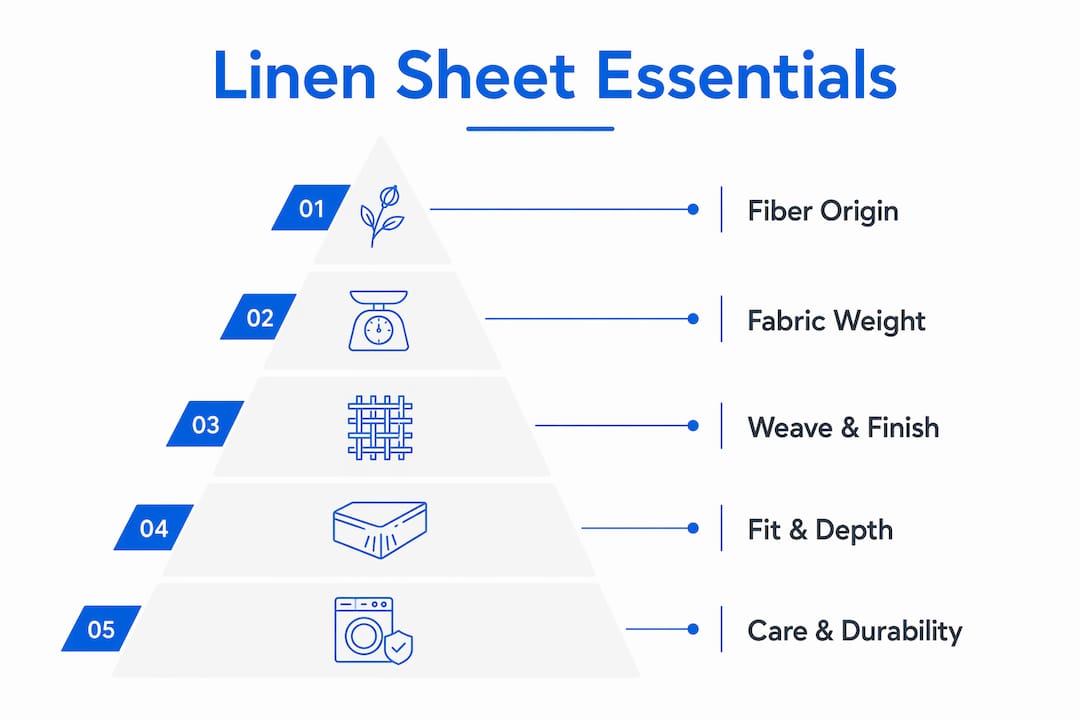
The four dimensions that actually matter
Fiber origin is the first filter. European flax, and Belgian flax in particular, is grown in a climate that produces longer, stronger fibers. Longer fibers mean fewer joins in the yarn, which translates directly to smoother texture and greater durability. A sheet that lists “linen” without naming the flax origin is a yellow flag.
Fabric weight (GSM) tells you how the sheet will feel across seasons. Lighter weights (around 155 GSM) are airier and suit warm climates or hot sleepers year-round. Mid-weights (around 165–175 GSM) offer more structure and work well across seasons. Heavier constructions suit cooler climates or buyers who prefer a more substantial drape. Thread count is irrelevant for linen — fiber origin, processing, and GSM are the meaningful quality indicators.
Weave and finish shape the initial experience. Stonewashed and garment-washed linens feel softer from the first night. Classic or smooth-finish linens start crisper and soften over multiple washes. Neither is objectively better; the choice depends on whether you want immediate comfort or are willing to invest in a break-in period for a more traditional linen hand.
Construction details determine long-term satisfaction. Look for deep-pocket fitted sheets (especially if your mattress exceeds 14 inches), corner elastic that wraps fully around the mattress, and wide pillowcase flaps that keep pillows from slipping out. Hidden duvet ties on duvet covers are a small detail that signals careful construction throughout.
Three questions to ask before you buy
- How deep is your mattress? Measure from the top of the mattress to the floor, subtract the bed frame height, and add two inches of buffer. If the result exceeds 14 inches, filter for deep-pocket options immediately.
- Do you want softness from night one, or are you comfortable with a break-in period? Stonewashed and garment-washed finishes suit the former; classic and smooth finishes suit the latter and often develop a more distinctive linen character over time.
- What are the return terms? Linen feels different after washing. A return window of at least 30 days post-purchase is the minimum; Brooklinen’s 365-day policy and Avocado’s 100-day window are the benchmarks.
Red flags to avoid
- Vague provenance claims: “Premium linen” or “natural linen” with no flax origin named is a signal that the sourcing may not withstand scrutiny.
- Thread-count marketing: Any brand leading with thread count for linen is either uninformed or deliberately obscuring the quality indicators that matter.
- Missing return policy: A brand that does not publish return terms is asking you to commit without recourse.
- Standard-only pocket depth with no disclosure: If a brand does not mention pocket depth at all, assume standard (14 inches or less).
- Impossibly low GSM claims for “heavy” linen: A sheet marketed as heavyweight at under 140 GSM is a contradiction.
Quick checklist by sleeper type
- Hot sleepers: Prioritize lighter GSM (around 155), European or Belgian flax, and a stonewashed or garment-washed finish for maximum airflow.
- Cool sleepers or cooler climates: Look for mid-to-heavy GSM (165–175), which adds warmth without sacrificing breathability.
- Allergy-sensitive sleepers: Seek OEKO-TEX or GOTS certification; avoid chemical-softened finishes that may leave residue on fibers.
- Vacation homes or low-maintenance use: Stonewashed finishes and sets with generous return windows minimize care complexity.
- Design-forward bedrooms: Belgian flax options (Pottery Barn) or artisan-finished sets (Bella Notte) offer the most distinctive aesthetic character.
Care, break-in, and fit tips for linen sheets
The break-in period is real, and it’s worth it
New linen feels stiffer than cotton, sometimes noticeably so. That initial texture is not a defect. Practitioners recommend washing sheets 3–5 times before forming a final opinion on softness, and the transformation is genuine. By the fifth wash, even classic-finish linens develop a suppleness that cotton rarely matches. Avoid fabric softeners entirely: they coat the fibers and reduce linen’s natural moisture-wicking, which is one of the primary reasons you bought linen in the first place.
Washing and drying
Machine wash in cold water on a gentle cycle. Use a mild, pH-neutral detergent. Tumble dry on low heat and remove the sheets while slightly damp to minimize wrinkles. Air drying is gentler on fibers and extends lifespan, though it leaves more pronounced wrinkles. Linen’s natural wrinkles are part of its character, but if a smoother look matters, a warm iron on slightly damp fabric works well.
Pro Tip: Add a clean tennis ball or dryer ball to the tumble-dry cycle. It breaks up clumping and reduces drying time without the heat damage that high settings cause.
Fit and pocket depth
Measure your mattress depth before ordering. A fitted sheet that pops off corners overnight negates every quality advantage the fabric offers. Deep-pocket construction and secure corner elastic are as important as fabric quality for nightly satisfaction. If your mattress runs deep and your chosen set offers only standard depth, sheet suspender clips are a practical fix, though a proper deep-pocket option is always preferable.
Lifespan expectations
Well-made linen resists pilling and, with proper care, outlasts many cotton sheets by years. The key variables are wash temperature (cold preserves fiber integrity), detergent choice (mild and pH-neutral), and drying heat (low or air-dry). Heavier GSM linens tend to hold up particularly well in cooler months, while lighter weights benefit from gentler care in warm-weather rotation. For general bed care guidance that complements linen maintenance, Artinlifestyle’s upholstered bed care piece covers laundering principles that apply across bedding types.
Why linen performs well for hot sleepers and lasts longer
Linen’s performance advantage over standard cotton comes down to fiber structure. The long, hollow fibers of the flax plant create a looser weave that allows air to circulate more freely, and the fiber’s natural moisture-wicking draws perspiration away from the skin rather than holding it against the body. Sleep Doctor identifies these properties as the primary reason linen is favored by hot sleepers — the breathability and moisture management work together to reduce the heat-trapping effect that plagues tightly woven cotton percale.
“Linen is as much a lifestyle choice as a technical one. The decision often comes down to preferred fabric weight and the desired look — crisp and structured versus soft and drapey — rather than purely functional considerations.”
Forbes Personal Shopper, How To Buy Linen Sheets 2026
That framing captures something real. Buyers who choose linen are often responding to an aesthetic sensibility as much as a sleep-comfort need. The fabric’s natural irregularities, its tendency to wrinkle beautifully rather than crisply, and its capacity to soften into something almost sculptural over years of use make it a material that rewards long-term ownership.
Why thread count is the wrong metric for linen
Thread count measures how many threads are woven into a square inch of fabric, a metric that has genuine relevance for tightly woven cotton percale. For linen, the weave is intentionally looser, and a higher thread count would actually reduce breathability. Quality in linen is driven by fiber origin, processing method, and GSM. A sheet with a high thread count and no named flax origin is almost certainly a lower-quality product dressed in a familiar-sounding number.
GSM and seasonality
Lighter GSM linens (around 155) favor warm climates and hot sleepers year-round. Mid-weight options (around 165–175 GSM) work across seasons and suit most U.S. climates. Heavier GSM linens perform better in cooler months while lighter weights favor hot climates — a practical guide for buyers in regions with pronounced seasonal temperature swings.
Linen vs. cotton vs. bamboo
- Linen vs. cotton: Linen breathes more freely, wicks moisture more effectively, and typically outlasts cotton when cared for properly. Cotton feels softer initially; linen surpasses it after the break-in period.
- Linen vs. bamboo: Bamboo (viscose/rayon) is often marketed as the softest option and has good moisture-wicking properties, but it is a semi-synthetic fabric that may not match linen’s durability or natural fiber integrity over years of use.
- Linen vs. cotton percale: Percale’s crisp, cool hand is the closest cotton equivalent to linen’s feel, but it lacks linen’s moisture-wicking depth and tends to pill more readily over time.
Key Takeaways
The single most important decision in buying linen sheets is fiber origin: European or Belgian flax, combined with a published GSM and a transparent return policy, separates genuinely quality sets from marketing-forward options.
| Point | Details |
|---|---|
| Top pick for most buyers | Brooklinen Linen Core (155 GSM, certified European flax) offers the best balance of quality, softness, and return terms. |
| Thread count is irrelevant | For linen, fiber origin, processing method, and GSM are the meaningful quality indicators — ignore thread-count marketing. |
| Break-in requires patience | Wash sheets 3–5 times before judging softness; avoid fabric softeners, which reduce linen’s natural moisture-wicking. |
| Fit matters as much as fabric | Measure mattress depth before ordering; deep-pocket options and secure corner elastic prevent the most common linen frustration. |
| Artinlifestyle’s editorial lens | Artinlifestyle pairs sleep-performance research with design guidance, helping readers choose linen that works both as bedding and as a room’s textural anchor. |
Linen sheets as a design choice, not just a sleep upgrade
There is a moment, usually around the third or fourth wash, when a quality linen sheet stops feeling like a purchase and starts feeling like a room. The fabric settles into its natural drape, the color deepens slightly, and the bed takes on the kind of effortless, lived-in quality that no amount of decorative pillows can manufacture on its own. That quality is what draws interior designers to linen repeatedly, and it is what makes the break-in period worth every slightly stiff morning.
Linen pairs naturally with the layered, texture-forward bedroom aesthetic that defines 2026 bedroom trends — raw materials, organic forms, and a deliberate restraint in color that lets texture carry the room. A set of Belgian flax sheets in a warm stone tone, layered with a chunky knit throw and a single piece of abstract wall art, creates a visual rest that no high-thread-count cotton can replicate. For readers building that kind of bedroom, pairing linen bedding with thoughtful curtain choices amplifies the textural story considerably.
Artinlifestyle’s editorial approach has always been to treat the bedroom as a complete sensory environment, not a checklist of purchases. The picks in this guide were chosen with that in mind: not just which sheets perform well, but which ones contribute something lasting to the room they inhabit.
rms a good purchase into a great room. Browse the latest bedroom trend features and design guides at artinlifestyle.com.
Useful sources and further reading
The following sources informed the testing methodology, product specifications, material science, and buying guidance in this article.
- Sleep Doctor — Best Linen Sheets: Expert-reviewed picks with focus on breathability, moisture-wicking, and hot-sleeper performance. Used in the perspective/research and product-comparison sections.
- Wirecutter (NYT) — The 6 Best Linen Sheets of 2026: Long-term hands-on testing with emphasis on provenance, construction details, and wear performance over time. Used in methodology, buying guide, care, and product detail sections.
- Forbes Personal Shopper — How To Buy Linen Sheets 2026: Interior-designer perspective on GSM guidance and linen as a lifestyle choice. Used in the buying guide and perspective/research sections.
- Brooklinen — Washed European Linen Sheets: Product page for fabric-weight claims (155 GSM) and certified European flax provenance. Used in product specs and comparison table.
- Parachute Home — Linen Sheet Set: Product page for 175 GSM weight claim and European flax sourcing. Used in product specs and GSM comparison.
- Sleepopolis — Best Linen Sheets Review: Reviewer emphasis on fit, deep-pocket construction, and duvet closures as functional quality indicators. Used in the care/fit and buying guide sections.
- Cultiver — 100% European Flax Linen (USA): Brand source for European flax provenance and product range. Used in product detail section.