The best apartment flowers are peace lilies, African violets, snake plants, orchids, alstroemeria, dried bunches, petunias, and ZZ plants. Each one earns its place through a specific strength: low light tolerance, long bloom windows, minimal care, or compact scale.
At a glance:
- Peace lily — low light, air-purifying, elegant white blooms
- African violet — low light, repeat bloomer, compact footprint
- Snake plant — near-indestructible, architectural, pet-caution (mildly toxic)
- Orchid (Phalaenopsis) — long-lasting blooms, low watering, sculptural
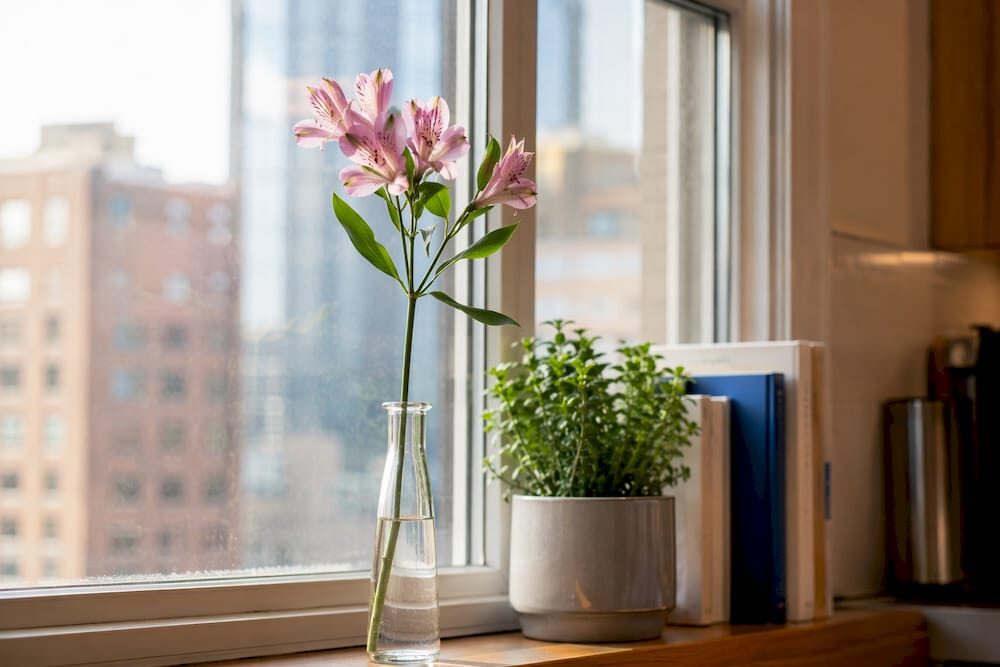
- Alstroemeria (cut flower) — vase life up to two weeks, cheerful color range
- Dried bunches (pampas, lunaria, statice) — zero maintenance, year-round texture
- Petunias — balcony/bright-light container star, continuous color
- ZZ plant — glossy foliage, handles neglect, low light
Pro Tip: Pick up one narrow bud vase and a single stem of alstroemeria today. Place it on a bathroom shelf or nightstand. That one move costs under $5 and immediately shifts the sensory quality of the room.
Table of Contents
- Which apartment flowers work best for your space and lifestyle?
- Potted flowering plants vs. cut flowers: which fits your apartment?
- How to arrange flowers in a small apartment using the 3-5-8 rule
- How to keep apartment blooms and potted bloomers healthy
- Placement, scent, and pet safety in shared apartments
- Where to buy apartment-friendly flowers in the U.S.
- Quick styling ideas for apartment corners, ledges, and tiny tables
- Artinlifestyle’s styling checklist for flowers in small spaces
- Key Takeaways
Which apartment flowers work best for your space and lifestyle?
Not every flower suits every apartment. Light exposure, surface area, scent sensitivity, and whether a pet shares the space all shape the right choice. The categories below let you match a pick to your primary constraint.
Low-light flowering plants
Peace lilies and African violets are the two most reliable flowering plants for rooms with indirect or filtered light. The peace lily’s low-light tolerance is well-documented; it prefers indirect conditions and should dry out completely between waterings. African violets reward consistent indirect light with blooms in white, pink, and purple throughout the year. Both stay compact enough for a shelf or console.
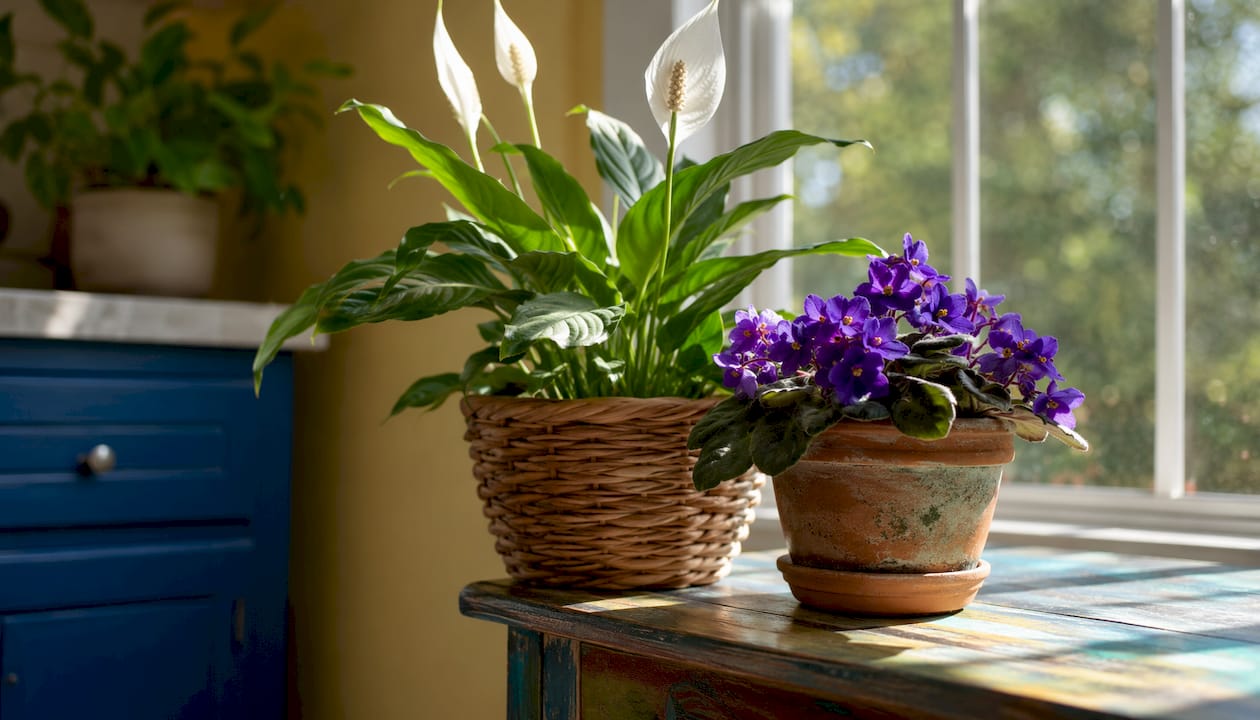
Pet note: Peace lilies are toxic to cats and dogs. African violets are generally considered non-toxic, making them the safer choice for pet-friendly apartments.
Long-lasting cut flowers for vases
Alstroemeria regularly lasts about two weeks in a vase with proper care. Chrysanthemums and carnations are similarly long-lived and widely available at grocery stores year-round. Sunflowers bring scale and warmth but typically last 6–12 days. For the longest vase life, choose flowers that are still in bud when you buy them.
Pet note: Chrysanthemums are toxic to cats and dogs. Sunflowers and alstroemeria are generally safer, though always confirm with the ASPCA’s plant toxicity database for your specific pet.
Balcony and bright-light container annuals
Petunias, geraniums, marigolds, impatiens, and begonias are reliable container annuals with strong bloom rates and low maintenance. They thrive on a south- or west-facing balcony with at least four hours of direct sun. Wait until frost risk has passed before moving warm-season annuals outdoors.
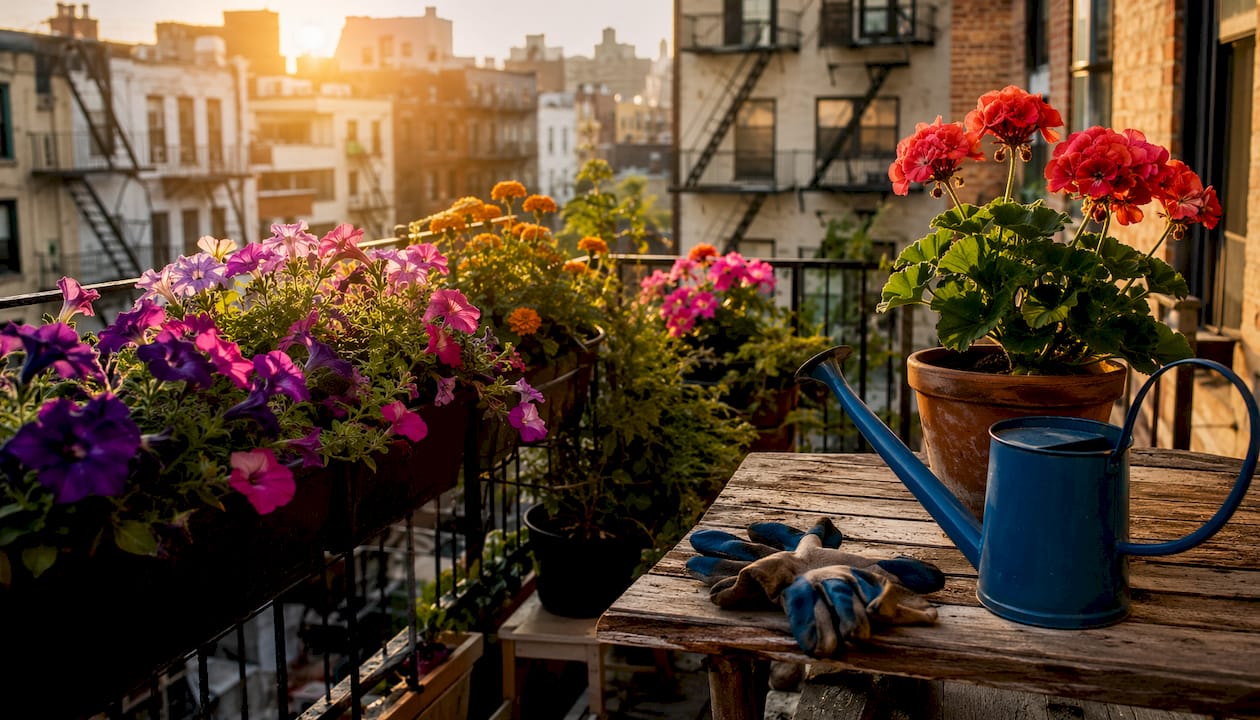
Pet note: Marigolds can cause mild irritation in pets. Impatiens and begonias are generally lower risk but worth keeping out of reach.
Dried and preserved options
Pampas grass, lunaria (money plant), statice, and dried lavender require no water, no light matching, and no deadheading. They hold their form for months and work beautifully in sculptural vases. Scent fades quickly after drying, which makes them ideal for scent-sensitive or shared apartments.
Pet note: Most dried botanicals are low risk, but lavender can cause mild digestive upset in cats. Elevated placement is always prudent.
Comparison at a glance
| Category | Best for | Maintenance | Size and scale | Bloom longevity | Scent intensity |
|---|---|---|---|---|---|
| Low-light bloomers | Low light / pets (African violet) | Easy | Compact (bud vase → small pot) | Repeat blooming | Mild to none |
| Long-lasting cut flowers | Bright spots / color | Easy | Bud vase → medium bouquet | 7–14 days | Mild to moderate |
| Container annuals | Balcony / bright light | Moderate | Medium → large planter | Seasonal (3–5 months) | Mild to strong |
| Dried/preserved | Low maintenance / scent-free | Easy | Tiny bunch → sculptural vase | Months to years | None to faint |
Potted flowering plants vs. cut flowers: which fits your apartment?
Choose a potted flowering plant when you want something that lasts months or years and you can commit to weekly light and watering checks. Choose cut flowers when you want a quick, low-cost refresh with no ongoing care beyond changing the water every couple of days.
Three practical criteria separate the two options cleanly.
Available light. Potted bloomers like peace lilies and African violets need consistent indirect light to rebloom. Matching a plant to its natural light preference is the single biggest predictor of success. Cut flowers are indifferent to light levels, so they work anywhere in the apartment.
Daily care time. Cut flowers need a stem trim and water change every two days. Potted bloomers need watering once or twice a week, occasional feeding, and deadheading to encourage new growth. Neither is demanding, but cut flowers require more frequent attention in shorter bursts.
Display surface and scale. A single cut stem in a bud vase occupies almost no surface area. A potted orchid or peace lily needs a stable, level surface with room for the pot and saucer. For apartments where every inch of counter space is contested, vertical planters and hanging solutions free up surfaces and keep greenery present.
Cut flowers typically cost a moderate amount per bunch and last about one to two weeks. A potted peace lily or orchid runs $15–$40 and can thrive for years with basic care.
How to arrange flowers in a small apartment using the 3-5-8 rule
The 3-5-8 arranging principle means selecting 3–5 focal stems, adding 4–7 medium supporting stems, and filling remaining space with greenery. Odd numbers produce a more organic, natural-looking result than even groupings.
Vase sizing for small spaces
Vase choice shapes the arrangement before a single stem goes in. Tall vases suit long stems like tulips and roses; low bowls suit dome-shaped arrangements with shorter stems; bud vases are ideal for single stems or intimate surfaces like a nightstand or bathroom shelf. A narrow-neck vase naturally holds stems upright without any additional support.
Step-by-step: one small apartment bouquet
- Choose your stems. Pick a few focal flowers (such as roses, ranunculus, or sunflowers), several medium supporting stems (like spray carnations, wax flowers, or small eucalyptus), and some sprigs of greenery.
- Trim at 45°. Cut each stem at a 45-degree angle, about an inch from the bottom, to maximize water uptake.
- Remove submerged foliage. Strip any leaves that would sit below the waterline to prevent bacterial growth.
- Create a stem grid. For a wide-mouth vase, tape a simple grid of clear floral tape across the opening. This holds stems in position without being visible through the glass.
- Place focal stems first. Insert the 3 focal flowers at slightly different heights, leaning them gently outward.
- Fill with supporting stems and greenery. Tuck medium stems between the focal flowers, then add greenery to fill gaps and soften the silhouette.
- Position the vase. Place it at eye level or slightly below for the best visual impact from a seated position.
Pro Tip: Stagger stem lengths deliberately. A difference of 2–3 inches between the tallest and shortest stem creates depth and prevents the arrangement from reading as a flat disk of color.
How to keep apartment blooms and potted bloomers healthy
The single most effective thing you can do for cut flowers is trim stems at a 45° angle and remove foliage below the waterline, then change the water every two days. For potted bloomers, matching light to the plant’s natural preference matters more than any fertilizer or product.
Cut-flower care checklist
- Trim stems at a 45° angle each time you change the water.
- Remove all foliage below the waterline immediately.
- Change vase water every 2 days; rinse the vase at the same time.
- Use the included flower food packet, or add a small pinch of sugar plus a drop of bleach as a home alternative.
- Keep the vase away from direct heat sources, ripening fruit, and direct sun.
- If flowers begin to droop in warm weather, move the vase to a cool spot overnight.
Potted-flower care checklist
- Match the plant to available light before buying. Low-light performers like snake plants, ZZ plants, philodendrons, and cast iron plants handle fluctuating temperatures and infrequent watering.
- Check soil moisture with a finger before watering. If it feels damp an inch below the surface, wait.
- Feed potted bloomers with a balanced liquid fertilizer once a month during active growth; skip feeding in winter.
- Deadhead spent blooms promptly to redirect energy toward new flowers.
- Rotate pots a quarter turn weekly so all sides receive even light.
- Wipe dust from leaves with a damp cloth so they absorb light efficiently.
Common pests and quick fixes
- Mealybugs: White cottony clusters on stems and leaf joints. Dab with a cotton swab dipped in rubbing alcohol; repeat weekly until clear.
- Spider mites: Fine webbing and stippled leaves, usually in dry indoor air. Increase humidity around the plant and rinse leaves with water.
- Root rot: Yellowing lower leaves, mushy stem base, foul-smelling soil. Remove the plant, trim rotted roots, repot in fresh well-draining mix, and reduce watering frequency.
- Fungus gnats: Tiny flies hovering around soil. Let the top inch of soil dry completely between waterings; this breaks the larval cycle.
Placement, scent, and pet safety in shared apartments
Strongly scented flowers belong in ventilated spots. Designers recommend placing high-scent blooms away from shared hallways and sleeping areas to avoid affecting roommates or triggering sensitivities. A living room near an operable window is usually the right compromise.
Scent intensity by flower type
Low scent: Alstroemeria, orchids, chrysanthemums, sunflowers, dried botanicals. These are the safest choices for bedrooms, shared hallways, and apartments with allergy-prone occupants.
Medium scent: Roses, lavender, sweet peas, freesia. Pleasant in a well-ventilated living room; potentially strong in a small bathroom.
High scent: Stargazer lilies, gardenias, tuberose, hyacinths. Reserve these for large, well-ventilated spaces. Stargazer lilies are also highly toxic to cats, making them unsuitable for any pet-sharing apartment.
Placement by room
Hallway console: A single bud vase with a low-scent stem like an orchid or alstroemeria adds a quiet welcome without overwhelming the narrow space.
Bathroom: Humidity-tolerant plants like peace lilies and pothos thrive here. Bathrooms are genuinely underused as plant locations, and the ambient moisture reduces how often you need to water.
Windowsill: Ideal for African violets, petunias, or small herb pots that need consistent indirect or direct light. South- and east-facing sills offer the most reliable light in most U.S. apartments.
Balcony railing: Window boxes with petunias, geraniums, or trailing lobelia work well. Anchor seasonal displays with evergreen elements like dwarf spruce or ivy so the arrangement retains structure when seasonal flowers fade.
Pet safety note: The ASPCA’s Animal Poison Control database is the most reliable U.S. reference for confirming which plants are toxic to cats and dogs. When in doubt, elevate any plant out of reach rather than removing it entirely.
Where to buy apartment-friendly flowers in the U.S.
For speed, a grocery store floral section is unbeatable. For design quality and seasonal variety, a local florist is worth the extra few dollars. For regular refreshes without the weekly trip, a flower subscription service delivers pre-conditioned stems on a schedule.
- Grocery stores (Trader Joe’s, Whole Foods, Kroger): Best for same-day, budget-friendly cut stems. Selection is limited but reliable. Alstroemeria, roses, and carnations are almost always available.
- Local florists: Offer design advice, seasonal stems, and pre-made arrangements sized for small spaces. Ideal when you want something that looks intentional rather than assembled.
- Farmers markets: Peak selection runs from late spring through early fall. You’ll find locally grown stems, unusual varieties, and often better vase life because flowers haven’t traveled far.
- Online subscription services (The Bouqs Co., UrbanStems, Bloomsybox): Weekly or biweekly delivery of pre-conditioned stems. Good for apartment dwellers who want fresh flowers consistently without planning around a store trip.
- Garden centers and nurseries: The right source for potted bloomers, container annuals, and balcony plants. Spring (March through May) brings the widest selection of annuals; fall (September through October) is ideal for mums and ornamental kale.
Seasonal note: Spring bulbs (tulips, daffodils, hyacinths) peak in grocery stores and florists from February through April. Summer annuals for balcony containers are most available from May through July. Dried botanicals are available year-round and are often most affordable in late summer when pampas grass and grasses are harvested.
Quick styling ideas for apartment corners, ledges, and tiny tables
A single well-placed stem often does more for a room than a large arrangement fighting for space. These ideas scale from a nightstand to a balcony railing.
- Single stem in a bud vase: One ranunculus or garden rose in a slender ceramic vase on a nightstand. Pair with a linen textile or a small framed print for a composed, restful vignette. Scale: tiny.
- Trio of bud vases: Three vases of varying heights, each holding one or two stems of different textures (one flower, one grass, one dried branch). Works beautifully on a floating shelf or alongside gallery wall art. Scale: small.
- Narrow bouquet on a console: A tight, vertical arrangement of 5–7 stems in a tall narrow-neck vase. Pairs with a mirror or a piece of abstract line art above the console. Scale: medium.
- Dried bunch in a sculptural vase: Pampas grass or lunaria in a matte ceramic vessel. Zero maintenance, strong visual texture, and a natural complement to minimalist or geometric decor. Scale: small to medium.
- Balcony planter with trailing petunias: A window box at railing height with petunias spilling over the edge and an upright geranium at the back. Anchor with a small dwarf conifer for winter structure. Scale: medium to large.
- Stacked pot tower: Three pots of descending size on a balcony corner, each planted with a different annual. Vertical stacking frees floor space while creating a layered, garden-like effect. Scale: medium.
- Bathroom shelf with a peace lily: A small potted peace lily on a bathroom shelf benefits from ambient humidity and adds a spa-like calm to the room. Scale: compact.
Seasonal refresh tip: Swap one element each season rather than replacing the whole display. A dried lavender bunch in summer becomes a small pine sprig in winter. The vase and the placement stay constant; only the botanical changes.
Artinlifestyle’s styling checklist for flowers in small spaces
The guiding rule from Artinlifestyle’s editorial perspective: scale first, color second. An arrangement that is too large for its surface competes with everything around it; one that is correctly scaled becomes part of the room’s composition.
Designer’s checklist:
- Scale to the surface. A bud vase belongs on a nightstand; a medium bouquet belongs on a dining table or console. Never place an arrangement taller than two-thirds the height of the surface it sits on.
- Use odd numbers. Three stems, five stems, or seven stems read as natural. Even numbers tend to look arranged rather than grown.
- Leave negative space. Resist filling every inch of the vase. The space between stems is part of the composition, not a gap to be corrected.
- Tie color to the room. Pull one color from an existing textile, artwork, or cushion and echo it in the flower choice. A single color thread between the arrangement and the room creates cohesion without effort. Artinlifestyle’s color pairing guide is a useful reference for matching floral tones to room palettes.
- Vary texture, not just color. Combine a smooth bloom (rose, ranunculus) with a textural element (dried grass, eucalyptus, berry branch) for visual depth.
- Keep arrangements from competing with wall art. Position floral displays below or beside artwork, never directly in front of it. The arrangement should frame the art, not obscure it.
Pro Tip: When a room already has strong pattern or bold art, choose a monochromatic or all-white arrangement. The restraint lets both the flowers and the art breathe.
Key Takeaways
The most effective approach to apartment flowers is matching the plant or stem to your specific light, space, and lifestyle before worrying about aesthetics.
| Point | Details |
|---|---|
| Match plant to light first | Low-light rooms suit peace lilies, African violets, ZZ plants, and snake plants; cut flowers work anywhere. |
| Use the 3-5-8 rule | Choose 3–5 focal stems, add 4–7 supporting stems, and fill with greenery for a natural-looking arrangement. |
| Trim stems and change water | Cut stems at a 45° angle and change vase water every 2 days to extend cut-flower life significantly. |
| Control scent by placement | Keep high-scent flowers like hyacinths and gardenias in ventilated living areas; use low-scent picks in bedrooms and shared hallways. |
| Artinlifestyle for styling guidance | Artinlifestyle’s curated decor and DIY home ideas help readers pair flower choices with room palettes and small-space layouts. |
A note from the editor
There is a quiet confidence that comes from a room with one well-chosen stem in the right vase. Not a lavish arrangement, not a botanical statement. Just a single ranunculus on a bathroom shelf, or three dried lunaria branches in a matte ceramic vessel beside a stack of books. What strikes me about apartment flower styling is how little it takes to shift a room’s emotional register. The readers who get the most from these ideas are usually the ones who start small, stay curious, and resist the urge to fill every surface at once. Try one idea from this piece today. See how the room responds. That is where the real design education begins.
Useful sources and further reading
| Source | Why it’s helpful |
|---|---|
| Pennsylvania Horticultural Society — 15 Common Houseplants | Authoritative plant profiles covering light, watering, and toxicity for popular houseplants including peace lily and African violet. |
| Gardenista — Best Houseplants for Low Light | Expert-backed low-light plant list with honest notes on what “low light” actually means in apartment conditions. |
| Proven Winners — 10 Best Annual Flowers | Reliable container annual recommendations with bloom-rate and maintenance data for balcony gardeners. |
| The Kitchn — How to Keep Cut Flowers Fresh | Step-by-step cut-flower care with practical home additives and stem-trimming technique. |
| Flower Thinking — The 3-5-8 Principle | Clear explanation of the 3-5-8 arranging rule with examples for home arrangers. |
| The Perfect Petal — Rules of Floral Arranging | Practical arranging rules including the floral tape grid technique for small vases. |
| Draper and Kramer — Apartment Flower Tips | Apartment-specific vase sizing and arrangement guidance with placement ideas. |
| Mossify — Top 10 Indoor Plants for Low Light | Detailed profiles of low-light performers including snake plants, ZZ plants, and philodendrons. |