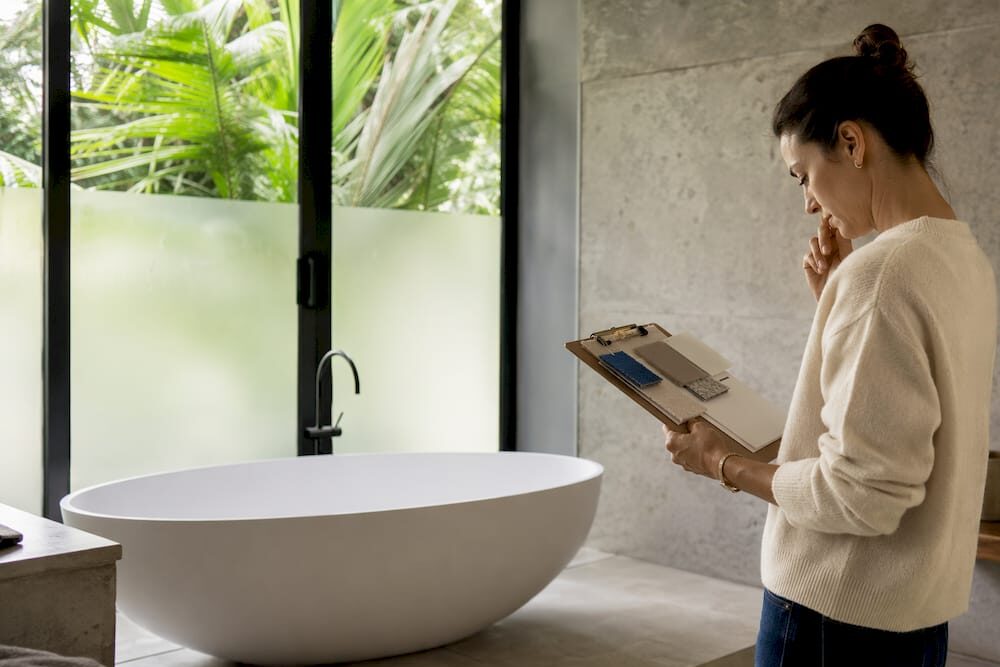
Freestanding, wellness-ready tubs with warm matte finishes are the defining bathtub story of 2026. The NKBA’s 2026 Bath Trends Report frames the primary bathroom as a personal wellness retreat, with spa features, natural materials, and expanded footprints driving design decisions at every price point. Designers and plumbing professionals echo that signal: freestanding tubs dominate luxury remodels, acrylic remains the practical workhorse, and stone resin is gaining ground for its sensory warmth.
Quick picks by use case:
- Small bath: A compact alcove soaker or a shorter-but-deeper Japanese-style tub keeps the footprint tight without sacrificing the soaking experience.
- Family bath: A standard 60-inch alcove tub with a shower combo balances daily practicality with easy cleaning and a modest budget.
- Primary-suite spa: A sculptural freestanding oval or egg-shaped tub in stone resin, paired with a floor-mounted filler and chromotherapy, turns the bathroom into the retreat the NKBA describes.
Table of Contents
- What’s in and what’s out for tubs in 2026
- Which bathtub style actually fits your space?
- What material should your 2026 tub be made from?
- Which wellness and smart features are actually worth it?
- What does a bathtub install actually cost in 2026?
- Should you keep your bathtub or replace it with a shower?
- How to choose the right bathtub for your home
- How to clean and maintain your tub so it lasts
- How to style your 2026 tub so the whole room works
- Key Takeaways
- The tub as a design commitment, not just a fixture
- Useful sources and further reading
What’s in and what’s out for tubs in 2026
The clearest signal from designer roundups and industry reporting is that the bathtub has stopped being purely functional and started acting as the room’s emotional anchor.
In:
- Freestanding and sculptural tubs as the luxury centerpiece
- Wellness technology: hydrotherapy jets, chromotherapy, heated backs, integrated audio
- Matte finishes and earthy color palettes (sage green, warm taupe, slate blue, terracotta)
- Back-to-wall freestanding variants for tighter footprints
- Deep soaking formats and Japanese-influenced designs
- Water-saving features and repairable solid-surface materials
Out:
- Ornate Victorian excess without a modern edit (clawfoot is back, but in matte black, not polished chrome)
- Shallow, purely utilitarian tubs as the default primary-bath choice
- Glossy white acrylic as the only finish option
Wellness-driven technology — from hydrotherapy jets to app-controlled fills — has moved from novelty to a mainstream expectation in higher-end installs. Sustainability is also sharpening: water efficiency and repairable materials are now active considerations, not afterthoughts. For a broader read on where interiors are heading, our 2026 home trends guide maps the same material and color directions across every room.
Which bathtub style actually fits your space?
Format is the first decision, and it shapes everything that follows: plumbing placement, floor-load requirements, cleaning access, and the room’s visual weight.
| Format | Best for | Typical footprint | Space note |
|---|---|---|---|
| Freestanding oval | Primary suite, spa aesthetic | 55–67" L × 28–32" W | Needs clearance on all sides (min. 12") |
| Egg-shaped freestanding | Design-forward primary bath | — × 30" W | Statement piece; requires open floor plan |
| Clawfoot | Classic or eclectic style | — | Plumbing exposed; allow rear access |
| Back-to-wall freestanding | Tighter footprints, cleaner look | — | Plumbing hidden in wall; easier cleaning |
| Alcove (shower-tub combo) | Families, secondary baths | 60" standard | Most space-efficient; three-wall surround |
| Corner tub | Larger baths with angled layouts | 60" per side | Underused in small rooms; suits open layouts |
| Walk-in tub | Accessibility, aging-in-place | 27–32" W × 52–60" L | Requires watertight door seal; longer fill time |
| Japanese ofuro soaker | Small baths, deep-soak priority | 47–55" L × 26–28" W | Shorter but deeper; ergonomics over length |
Use-case guide:
- Families with young children: The alcove format wins on practicality. The three-wall surround simplifies tile work, and the shower-combo setup handles daily routines without a second fixture.
- Small or secondary bathrooms: A shorter Japanese-style soaker often gets more use than an oversized tub. Reachable edges and a deeper basin matter more than sheer length.
- Accessibility needs: Walk-in tubs with low-threshold entry and built-in grab bars are the professional recommendation for aging-in-place remodels. Plumbers consistently flag these as the format where installation detail matters most.
- Spa suite seekers: Back-to-wall freestanding tubs offer the sculptural presence of a standalone unit while closing the gap against the wall, which simplifies plumbing and makes floor cleaning far less frustrating.
Seven freestanding styles are currently leading the design conversation: oval soaking, concrete, natural wood, minimalist, Japanese, custom-color, and high-tech. Each reads differently in a room, so consider the tub’s silhouette against your tile and ceiling height before committing.
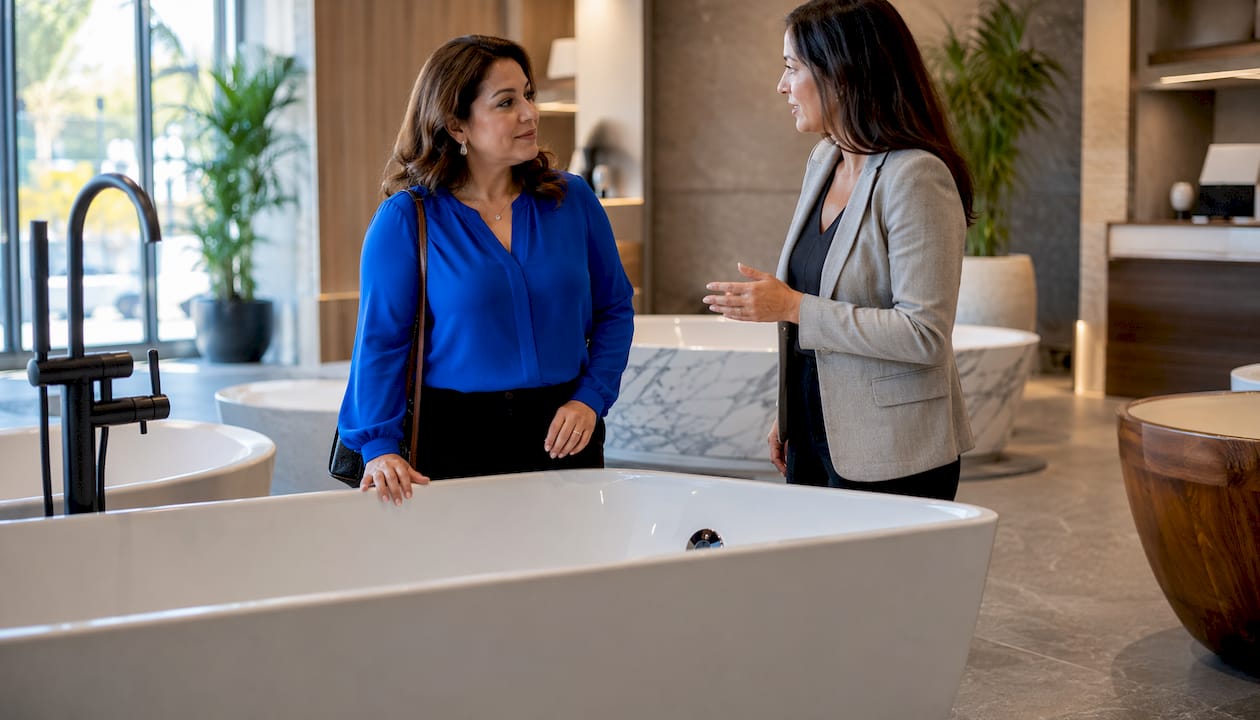
What material should your 2026 tub be made from?
Material choice determines how the tub feels underfoot, how long it holds heat, how much your floor needs to support, and how the surface ages. No single material wins on every dimension.
| Material | Weight (empty) | Heat retention | Relative cost | Lifespan | Maintenance |
|---|---|---|---|---|---|
| Acrylic | 50 lbs | Moderate | $ (entry–mid) | 10 years | Easy; avoid abrasives |
| Fiberglass | 40 lbs | Low | $ (entry) | 10 years | Easy; scratches more readily |
| Stone resin / solid surface | — | High | $$–$$$ | 20 years | Easy; repairable surface |
| Cast iron | — | Very high | $$–$$$ | 50+ yrs | Moderate; re-enamel if chipped |
| Natural stone (marble, granite) | 300–500+ lbs | High | $$$$ | Decades | High; sealing required |
| Copper | — | Moderate–high | $$$$ | Decades | High; patina management |
Finish and color in 2026: Matte surfaces have largely displaced high-gloss as the aspirational choice. Earthy tones — sage green, warm taupe, slate blue, and soft terracotta — are the dominant palette, with bold accent colors (deep navy, matte black, forest green) reserved for statement pieces. Textured exteriors, particularly on stone-resin shells, add tactile depth that photographs beautifully and ages gracefully. The same surface-and-finish logic shaping bathtub design is visible in furniture, too; our piece on bobbin furniture trends shows how matte and textured surfaces are influencing every category of home design.
Installation notes tied to material:
- Cast iron, natural stone, and heavy stone-resin tubs often exceed standard floor-joist capacity once filled with water. A structural review before ordering is not optional for these materials.
- Acrylic and fiberglass ship and maneuver easily; heavy stone or cast iron may require a crane lift or stair-carry plan, adding to labor costs.
- Copper develops a living patina over time. Some homeowners love it; others find the maintenance commitment underestimated at purchase.
Pro Tip: Choosing between acrylic and stone resin comes down to three factors: budget, floor structure, and how long you plan to stay. Acrylic costs less upfront and weighs a fraction of stone resin, but stone resin holds heat noticeably longer and its surface can be sanded and refinished if scratched. If your floor joists are standard 2×10 construction and you’re planning a 10-year-plus stay, stone resin is worth the premium.
Which wellness and smart features are actually worth it?
The wellness-driven bathtub has moved from a hotel amenity to a realistic home upgrade. The question is which features earn their cost and complexity.
Feature checklist and honest tradeoffs:
- Hydrotherapy jets: Genuine therapeutic value for muscle tension and circulation. The maintenance commitment is real: jets need regular cleaning to prevent biofilm buildup, and the pump system requires accessible service panels.
- Chromotherapy (LED lighting): Low maintenance, high sensory impact. Color-spectrum lighting integrated into the tub shell creates mood shifts that feel surprisingly effective. LED systems are long-lived and rarely need servicing.
- Heated back panels: Radiant warmth against the spine is one of the most underrated comfort features. Adds modest cost and minimal maintenance.
- Aromatherapy diffusers: Built-in diffuser ports deliver essential oils through the water or air stream. Useful if you already use aromatherapy; adds little if you don’t.
- Integrated audio (Bluetooth speakers): Waterproof Bluetooth systems are now reliable and relatively affordable. Worth including if the tub is your primary relaxation space.
- App and voice controls: Lets you pre-fill the tub to a set temperature before you arrive. Genuinely useful for busy households. Requires Wi-Fi connectivity and occasional firmware updates.
- Auto-fill with level and temperature stop: Prevents overflow and scalding. A practical safety feature, not just a luxury add-on.
- Anti-scald thermostatic valves: Recommended by plumbing professionals for any household with children or elderly users.
The maintenance reality for powered features: jetted systems need a monthly cleaning cycle (run the jets with a diluted cleaner, then flush), filters checked every three months, and professional servicing every two to three years. Chromotherapy and audio systems are largely set-and-forget. If serviceability matters to you, ask the installer about panel access before the tub is set.
For a wider look at how wellness principles are reshaping home spaces, the wellness home styling guide at Root & Still covers the same calm-first philosophy across living and sleeping spaces.
What does a bathtub install actually cost in 2026?
Cost ranges vary significantly by material, format, and feature level. Entry-level fiberglass and acrylic tubs start at modest prices for the unit alone; midrange soaking tubs vary in cost; premium stone-resin or smart spa tubs have a higher price range including options for custom or natural-stone materials.
Cost tiers at a glance:
- Entry-level (fiberglass/acrylic alcove): $300–$900 unit + $500–$1,500 installation
- Midrange (acrylic freestanding, soaking tubs): $1,500–$4,000 unit + $1,000–$2,500 installation
- Premium (stone resin, cast iron, smart spa): $4,000–$12,000+ unit + $2,000–$5,000+ installation
- Add-ons: Jetted systems add $1,000–$3,000; chromotherapy adds $500–$1,500; smart controls add $500–$2,000
Installation sequence:
- Structural assessment: confirm floor-joist capacity for the chosen material and filled weight.
- Plumbing rough-in: drain, overflow, and supply lines positioned to the tub’s spec sheet.
- Delivery and placement: coordinate stair carry or crane access for heavy units well in advance.
- Tub set and leveling: shim and mortar bed for cast iron; direct set for acrylic and stone resin.
- Finish plumbing: filler, drain, overflow trim installed and tested.
- Surround and tile work: completed after the tub is set and plumbing is confirmed leak-free.
- Final inspection: required in most jurisdictions for new plumbing rough-in.
Realistic timeline: From selection to a usable tub, budget 8–16 weeks for a midrange freestanding install. Custom or natural-stone tubs can carry 12–20 week lead times from overseas manufacturers. Contractor scheduling in most U.S. markets adds 2–4 weeks on top of material lead time.
Should you keep your bathtub or replace it with a shower?
Many homeowners remove their tubs to expand shower footprints, and practical reasons for eliminating tubs in favor of larger walk-in showers are well documented in remodeling coverage. But the decision is rarely straightforward.
| Reason to keep the tub | Reason to remove it |
|---|---|
| Young children in the household | Tub used fewer than once a week |
| Resale value in family-oriented markets | Primary bath too small for both fixtures |
| Wellness/soaking as a regular ritual | Mobility limitations make tub entry difficult |
| Only bathroom in the home | Larger shower would serve the household better |
| Aging-in-place planning (walk-in tub) | Shower-only remodel frees significant floor space |
Decision questions to work through:
- How often does anyone in the household actually bathe (not shower) in a given month?
- Are there children under 10, or plans for children, in the next five years?
- Does anyone in the household have mobility considerations now or in the foreseeable future?
- Is this the only full bathroom in the home? (Removing the sole tub can affect resale in most U.S. markets.)
- Would the freed floor space meaningfully improve daily function?
Plumbing professionals consistently note that freestanding tubs suit luxury and practicality in primary suites, while alcove tubs remain the sensible choice for secondary baths and family homes. Walk-in tubs are the clear professional recommendation for accessibility-driven remodels.
How to choose the right bathtub for your home
A structured selection process prevents the most common mistakes: ordering a tub that’s too heavy for the floor, too long for the room, or too complex to service.
- Define your use case. Daily soaker, occasional luxury bath, family tub, or accessibility-first? The answer narrows format and feature choices immediately.
- Measure the space. Note the room’s length, width, door swing, and plumbing rough-in locations. Allow minimum 12-inch clearance around freestanding tubs.
- Assess your floor structure. If you’re considering cast iron, natural stone, or heavy stone resin, have a contractor verify joist capacity before ordering.
- Set a total budget. Include unit, delivery, installation labor, plumbing rough-in adjustments, tile work, and any feature add-ons.
- Choose material based on heat, weight, and longevity priorities. (See the material table above.)
- Select finish and color. Matte earthy tones are the durable design choice; bold accents work best as a single statement piece.
- Decide on wellness features. Prioritize features you’ll use weekly, not aspirationally.
- Confirm lead time. Order before contractor scheduling, not after.
Questions to ask your installer:
- What is the floor-load capacity here, and does it need reinforcement for this tub?
- Where are the existing drain and overflow locations, and what does moving them cost?
- How is delivery handled for a tub of this weight?
- What is the warranty on the tub shell, and who services the jetted system?
- Is a permit required for this plumbing work in this jurisdiction?
The NKBA recommends treating the primary bath as a holistic wellness space, which means the tub selection should align with lighting, ventilation, and storage decisions, not be made in isolation. For accessibility considerations, walk-in tubs with door seals and grab bars address both safety and independence; these are worth specifying early because they affect plumbing rough-in placement.
How to clean and maintain your tub so it lasts
Maintenance is where many beautiful tubs quietly deteriorate. The right routine by material keeps finishes intact and jetted systems sanitary.
By material:
- Acrylic: Wipe down after each use with a soft cloth. Clean weekly with a non-abrasive liquid cleaner (dish soap or a dedicated acrylic cleaner). Never use steel wool, scouring powder, or acetone-based products.
- Stone resin / solid surface: Similar to acrylic for daily care. Minor scratches can be buffed out with fine-grit wet sandpaper, which is the material’s key advantage over acrylic.
- Cast iron (enameled): Non-abrasive cleaners only. If the enamel chips, address it promptly with a repair kit or professional re-enameling; exposed cast iron rusts.
- Copper: Rinse and dry after every use to slow patina development. Use a copper-specific cleaner if you want to maintain brightness; leave it alone if you prefer the natural patina.
Do not use on any tub surface: bleach-based abrasive powders, steel wool, harsh acid cleaners (muriatic acid), or solvent-based strippers.
Jetted system maintenance schedule:
- Monthly: Run a cleaning cycle with a low-foam cleaner designed for jetted tubs; flush thoroughly.
- Quarterly: Check and clean the filter (if the system has one); inspect jet nozzles for debris.
- Annually: Have a plumber inspect the pump, motor connections, and any air-induction lines.
- Every 2–3 years: Professional servicing of the pump and motor assembly.
Mold and mildew around the tub surround are a separate concern. The CDC’s guidance on mold recommends keeping bathroom humidity below 50% with adequate ventilation, and wiping tile grout lines dry after bathing when possible.
How to style your 2026 tub so the whole room works
A beautifully chosen tub can still feel disconnected if the surrounding finishes pull in different directions. Cohesion comes from treating the tub as the room’s anchor and building outward.
Faucet and trim coordination:
- Matte black fixtures pair naturally with earthy-toned stone-resin tubs and matte white acrylic.
- Brushed gold or unlacquered brass warms up a white or cream freestanding tub and reads as quietly luxurious.
- Brushed nickel is the versatile neutral: it works across most tub colors and doesn’t compete with bold tile choices.
- Match the overflow and drain trim to the faucet finish. Mismatched metal tones are the most common styling mistake in otherwise well-executed bathrooms.
Three signature looks for 2026:
- Minimal spa suite: A matte white or warm gray stone-resin oval tub, floor-mounted brushed nickel filler, large-format porcelain tile in a warm white or greige, and recessed lighting with a dimmer. No clutter on the tub deck.
- Warm-earth modern: A sage green or taupe acrylic freestanding tub, brushed brass filler, terracotta or zellige-style wall tile, and a woven linen bath mat. The palette does the work; accessories stay minimal.
- Bold accent centerpiece: A matte black or deep navy freestanding tub against white or pale gray tile, with a sculptural floor-mounted filler in matte black. One piece of wall art above the tub completes the composition. For color-palette inspiration, Jonathan Adler’s summer art collection shows how saturated accent colors can anchor a neutral room without overwhelming it.
Tile and lighting guidance: Large-format tiles (24×24 or larger) make small bathrooms read as more spacious and reduce grout lines, which simplifies cleaning. For lighting, LED systems offer the most flexibility: a recessed overhead circuit on a dimmer for task light, and a secondary accent circuit (wall sconces or toe-kick lighting) for atmosphere. The two-circuit approach is the single most impactful lighting upgrade in a bathroom remodel.
For faucet selection guidance, our roundup of stylish bathroom faucets covers the finish and form choices that work with current tub styles. And if you’re tiling adjacent spaces at the same time, the 2026 kitchen backsplash trends piece shows how the same earthy palette translates across rooms for a coherent home.
Pro Tip: For a photography-ready layout, position the tub so natural light hits it from the side, not directly from behind. Side light reveals the tub’s form and surface texture far better than backlit silhouettes. Keep the tub deck clear of products during any shoot or showing.
Key Takeaways
The dominant bathtub story of 2026 is a freestanding, wellness-ready tub in a matte earthy finish, chosen for its material’s heat retention and floor-load compatibility, and styled as the room’s sensory anchor.
| Point | Details |
|---|---|
| Freestanding leads luxury | Sculptural freestanding tubs in stone resin or acrylic are the defining 2026 luxury choice. |
| Material drives the decision | Stone resin holds heat longer and is repairable; acrylic costs less and weighs far less. |
| Floor structure comes first | Cast iron and stone tubs require a structural review before ordering; skip this step at real cost. |
| Smart features need a service plan | Jetted systems require monthly cleaning cycles and professional servicing every 2–3 years. |
| Keep the tub if resale matters | Removing the only tub in a family-market home typically affects resale value negatively. |
The tub as a design commitment, not just a fixture
There is a temptation, when browsing 2026 bathtub trends, to treat the decision as primarily aesthetic. The sculptural oval in sage green looks extraordinary in a mood board. But the tub is one of the few bathroom elements that is genuinely difficult and expensive to change once installed. The floor structure, the plumbing rough-in, the wall tile, the filler placement: all of them are built around the tub’s specific dimensions and weight.
The most rewarding bathtub choices in 2026 share a quality that goes beyond finish color or smart features: they were chosen with the same care as a piece of furniture, with attention to ergonomics, serviceability, and how the tub will feel to use on an ordinary Tuesday, not just a staged Saturday evening. A shorter, deeper soaker that fits the room and gets used three times a week is a better investment than an oversized spa tub that becomes a storage surface.
For homeowners planning a primary-suite upgrade, the recommendation is to start with material and floor structure, then format, then finish, and treat wellness features as a considered layer rather than a default add-on. The tub that earns its place is the one that makes the room feel complete and the ritual feel effortless.
Useful sources and further reading
The claims and cost ranges in this article draw on the following authoritative sources. Each adds a distinct layer of credibility to the guidance above.
| Source | Why it adds credibility |
|---|---|
| NKBA 2026 Bath Trends Report (via CTASC) | Industry association annual report; the primary authority on U.S. bath design and remodeling trends |
| Horow 2026 Buyer’s Guide & Trends | Category-level buyer’s guide covering material preferences, format types, and cost ranges |
| Horow Modern Bathtub Ideas 2026 | Trend analysis covering wellness tech, matte finishes, and water-saving design directions |
| Editorialge: 7 Freestanding Styles Making a Comeback | Style-focused roundup of the seven freestanding formats leading 2026 design conversations |
| Badeloft: What Plumbers and Experts Recommend | Installer and plumber perspectives on format choices, practical priorities, and accessibility |
| CSL Interior: Why Homeowners Are Removing Tubs | Remodeling-focused analysis of the shower-vs-tub tradeoff and practical removal rationale |
| EPA WaterSense | U.S. government program; primary authority on water-efficiency standards for bathroom fixtures |
| U.S. DOE: LED Lighting | Primary government source for energy-efficient lighting guidance relevant to bathroom design |
| CDC: Mold | Primary public health authority on humidity, ventilation, and mold prevention in bathrooms |